
7 WAYS TO FUND YOUR STARTUP
BY HARIO SETO
CHAPTER INDEX
7 WAYS TO FUND YOUR STARTUP
FROM YOUR OWN SAVINGS TO VENTURE CAPITAL
A startup needs capital to build products, hire people, acquire customers, and survive until revenue becomes predictable.
Founders can finance this journey through ownership, community support, grants, investors, programs, or debt.
UNDERSTAND THE TRADE-OFF
FUNDING IS NEVER SIMPLY FREE MONEY
EVERY DOLLAR HAS A PRICE
KNOW WHAT YOU ARE EXCHANGING
Bootstrapping costs personal capital.
Equity funding costs ownership and control.
Loans create repayment obligations. Grants require eligibility and reporting. Accelerators demand time and may take equity.
Choose based on the company you are building.
FOUNDER-CONTROLLED CAPITAL
FUND THE COMPANY WHILE PROTECTING OWNERSHIP
1. BOOTSTRAPPING
ILLUSTRATIVE OWNERSHIP RETAINED: 100%
Bootstrapping means using personal savings, early revenue, or existing resources to finance the startup.
You keep full ownership and decision-making power. Growth may be slower because spending is limited by available cash.
WHEN BOOTSTRAPPING WORKS
BEST FOR CAPITAL-EFFICIENT BUSINESSES
Bootstrapping works well when you can launch a small version quickly, generate revenue early, and improve the product using customer payments.
It is common for SaaS, agencies, marketplaces, digital products, and service businesses.
2. CROWDFUNDING
RAISE CAPITAL FROM A LARGE COMMUNITY
Crowdfunding allows many people to contribute smaller amounts toward a product, business, or campaign.
It can provide capital, validate demand, attract early customers, and create public attention before the product is fully launched.
CROWDFUNDING MODELS
CHOOSE THE STRUCTURE CAREFULLY
Reward crowdfunding offers products or benefits to supporters.
Equity crowdfunding gives investors ownership. Donation crowdfunding expects no financial return.
Success usually requires a strong story, clear offer, trusted founder, and existing audience.
3. STARTUP GRANTS
ILLUSTRATIVE RANGE: $10K–$2M
Governments, universities, foundations, and nonprofit organizations offer grants to support innovation.
Grants are usually non-dilutive, meaning founders do not surrender equity. Applications can be competitive and often require milestones, documentation, and reporting.
HOW STARTUP GRANTS WORKS
FUNDING WITHOUT GIVING UP EQUITY
Startup grants are funds provided by governments, universities, foundations, and innovation programs.\n\nUnlike investment, grants usually do not require founders to surrender ownership or repay the money.\n\nMost programs require clear objectives, eligibility, milestones, documentation, and progress reports.
INVESTOR CAPITAL
EXCHANGE OWNERSHIP FOR MONEY AND LEVERAGE
4. ANGEL INVESTORS
ILLUSTRATIVE RANGE: $25K–$500K
Angel investors are individuals who invest their own money in early-stage companies.
Strong angels may also contribute experience, credibility, industry knowledge, customer introductions, and access to future investors.
WHAT ANGELS EXPECT
POTENTIAL, TRUST, AND MEANINGFUL OWNERSHIP
Angel investors usually evaluate the founder, market opportunity, early evidence, business model, and future return potential.
They invest before everything is proven, so founder credibility and speed of execution are especially important.
5. STARTUP ACCELERATORS
CAPITAL COMBINED WITH STRUCTURED SUPPORT
Accelerators provide funding, mentorship, education, networks, and investor introductions through a structured program.
They can help founders improve positioning, refine the product, strengthen metrics, and prepare for a larger fundraising round.
THE ACCELERATOR TRADE-OFF
SPEED AND ACCESS IN EXCHANGE FOR EQUITY
Accelerators may invest a fixed amount in exchange for company ownership.
The real value depends on mentor quality, alumni network, investor access, program reputation, and whether the accelerator understands your market.
6. VENTURE CAPITAL
ILLUSTRATIVE INVESTMENT: $1M+
Venture capital firms invest in startups capable of growing rapidly and becoming very large companies.
VC funding can support aggressive hiring, product development, expansion, marketing, acquisitions, and entry into new markets.
VC CHANGES THE COMPANY
HIGH GROWTH BECOMES AN OBLIGATION
Venture capital brings money, networks, credibility, and strategic support.
It also creates expectations for rapid growth, future fundraising, investor governance, and a major exit through acquisition or public listing.
DEBT CAPITAL
BORROW MONEY WITHOUT SELLING OWNERSHIP
7. BANK LOANS
ILLUSTRATIVE AVAILABILITY: UP TO SEVERAL MILLION
Banks and government-backed lenders may provide business loans to qualified founders.
Loans preserve ownership, but the company must repay principal and interest regardless of whether growth meets expectations.
WHEN DEBT MAKES SENSE
USE LOANS FOR PREDICTABLE RETURNS
Debt is more suitable when the company has revenue, stable cash flow, valuable assets, purchase orders, or predictable expansion economics.
Using loans to fund an unproven experiment can create serious financial pressure.
CHOOSE THE RIGHT FUNDING
MATCH THE CAPITAL TO THE COMPANY
MATCH FUNDING TO YOUR STAGE
DIFFERENT STAGES REQUIRE DIFFERENT CAPITAL
Idea stage: savings, grants, or small angel checks.
Validation stage: bootstrapping, crowdfunding, angels, or accelerators.
Growth stage: venture capital, strategic investors, revenue, or debt.
Mature stage: larger debt facilities or institutional investment.
ASK THESE FIVE QUESTIONS
BEFORE ACCEPTING ANY FUNDING
How much capital do we actually need?
What milestone will this money achieve?
How much ownership or control are we giving up?
Can the company meet repayment or growth expectations?
Does this funding source improve our probability of success?
THE SMART FUNDING SEQUENCE
REDUCE RISK BEFORE RAISING MORE
Start with the smallest amount needed to prove the next important assumption.
Build evidence through products, users, revenue, retention, or partnerships. Stronger evidence improves your valuation, negotiating position, and access to better capital.
FUNDING IS A TOOL
THE BUSINESS STILL CREATES THE VALUE
Raising money is not the final achievement.
Capital only gives the startup more time and resources to execute. The real objective remains the same: solve an important problem, create customer value, build sustainable economics, and grow.

CHAPTER INDEX
THE ONE-PRODUCT OPPORTUNITY
HOW NARROW PRODUCTS BUILD LARGE BUSINESSES
Some businesses do not win by selling everything.
They win by solving one clear problem for one specific customer.
The model is simple: find demand, identify weak competition, build the best-fit product, then own the search and story around it.
WHY THIS MODEL WORKS
DEMAND ALREADY EXISTS
Customers are already searching for solutions.
The opportunity appears when search demand is real, competition is weak, and existing brands treat the problem as a small category.
A focused company can build the product, content, and brand around that exact need.
THE CORE FORMULA
ONE MARKET. ONE PROBLEM. ONE FLAGSHIP PRODUCT.
1. Find a specific problem.
2. Confirm people search for it.
3. Check that competition is low.
4. Build a product matched to the search.
5. Use SEO, creators, referrals, and demos to dominate the niche.
START NARROW
BUILD AROUND ONE SPECIFIC NEED
SPECIFIC BEATS GENERAL
OWN A SMALLER CATEGORY FIRST
A broad product competes with everyone.
A specific product becomes the obvious choice for a smaller group.
Instead of selling a pillow, sell the pillow for side sleepers. Instead of selling a mattress, sell the mattress for heavier people.
NARROW CREATES RELEVANCE
THE OFFER FEELS MADE FOR THE BUYER
When product, message, and customer match closely, conversion becomes easier.
The buyer sees their exact problem in the headline, product design, reviews, content, and recommendations.
That relevance becomes a competitive advantage.
EIGHT ONE-PRODUCT BUSINESSES
REAL EXAMPLES OF FOCUSED POSITIONING
PILLOW CUBE
A PILLOW DESIGNED FOR SIDE SLEEPERS
Pillow Cube started with a cube-shaped pillow for side sleepers.
The transcript says the company sold more than 500,000 pillows and over $35 million in product sales.
Its growth was linked to searches such as “best pillow for side sleepers” and “best pillow for neck pain.”
WHY PILLOW CUBE WORKED
A COMMON PROBLEM WITH A SPECIFIC SOLUTION
The company did not market a generic pillow.
It connected the product shape to a clear sleeping position and pain-related need.
That made the brand easy to explain, search for, demonstrate, and recommend.
BIKE TOW LEASH
A LEASH FOR CYCLING WITH A DOG
Bike Tow Leash sells a high-ticket leash that attaches a dog safely to a bicycle.
The transcript cites an older revenue figure of about $20,000 per month.
Its traffic came from several low-competition searches around biking with dogs.
WHY BIKE TOW LEASH WORKED
SMALL KEYWORDS CAN FORM A REAL MARKET
No single keyword needed massive volume.
Together, searches like “dog bike leash,” “bike attachment for dog,” and “riding bike with dog” revealed a clear use case.
The product then became the direct answer to that use case.
MINDJOURNAL
A GUIDED JOURNAL DESIGNED FOR MEN
MindJournal focused on men who wanted to build a journaling habit.
The transcript says it sold more than 200,000 journals, representing over $10 million at roughly $50 each.
The product turned a broad category into a gender-specific, giftable offer.
WHY MINDJOURNAL WORKED
POSITIONING MADE A FAMILIAR PRODUCT FEEL NEW
The product itself was simple: a journal.
The differentiation came from audience, design, language, and habit guidance.
Low-cost ads, search demand, and influencer referrals helped the brand reach men who did not identify with traditional journaling products.
BIG BARKER
ORTHOPEDIC BEDS FOR LARGE DOGS
Big Barker built premium dog beds for large breeds.
The transcript says the brand generated more than $30 million in sales.
Its offer matched searches for large dog beds, orthopedic dog beds, and the best beds for bigger dogs.
WHY BIG BARKER WORKED
HIGHER VALUE INSIDE A FOCUSED NICHE
The company combined a specific customer problem with a high-ticket product.
Large-dog owners needed durability, comfort, and support that generic beds often lacked.
Strong search intent made organic traffic especially valuable.
KNKG
GYM BAGS BUILT AS THE MAIN CATEGORY
KNKG focused heavily on gym bags and men’s gym duffel bags.
The transcript estimates around $80,000 per month from website sales.
Its advantage came from treating gym bags as the core business while larger brands treated them as a small accessory line.
WHY KNKG WORKED
FOCUS CAN OUTPERFORM BIGGER BRANDS
Large sports brands sell gym bags, but they do not always build their entire website around them.
KNKG created deeper product pages, content, and relevance for searches like “gym bag,” “best gym bag,” and “gym backpack.”
NUTR
A MACHINE FOR MAKING PLANT-BASED MILK
Nutr sells a machine for making almond, cashew, oat, and other plant-based milks at home.
The transcript says more than 100,000 units were sold at about $189.
The company benefited from growing interest in milk alternatives and home preparation.
WHY NUTR WORKED
A VISUAL PRODUCT FITS SOCIAL MEDIA
The product was easy to demonstrate.
Short videos could show ingredients going in and fresh plant milk coming out.
Search demand confirmed the need, while TikTok and Instagram demos made the value understandable in seconds.
BIG FIG
A MATTRESS FOR HEAVIER INDIVIDUALS
Big Fig entered the crowded mattress market with a mattress designed for heavier people.
The transcript says the brand generated millions in sales and about $2 million in referral revenue in one year.
Its specificity made it a common recommendation in mattress roundups.
WHY BIG FIG WORKED
A NARROW SEGMENT INSIDE A HUGE MARKET
Big Fig did not try to win the entire mattress category.
It became highly relevant for searches around mattresses for heavier people, plus-size sleepers, and heavier couples.
That made referral partners more likely to feature it as the specialist choice.
VESSI
REGULAR-LOOKING WATERPROOF SHOES
Vessi built a brand around fully waterproof shoes that still looked suitable for everyday use.
The transcript says the business grew beyond $100 million in annual revenue.
It captured demand around waterproof shoes for men and women.
WHY VESSI WORKED
ONE STRONG PROMISE CREATED A CATEGORY
The product combined everyday style with waterproof function.
The promise was easy to understand, demonstrate, and search for.
By owning that message, Vessi built a broad brand from one focused problem.
WHAT THE EXAMPLES REVEAL
THE PATTERNS BEHIND FOCUSED BUSINESSES
START WITH AN UNDERSERVED SEARCH
FIND VISIBLE DEMAND
Each company found people actively looking for a solution.
The opportunity was not hidden demand.
It was visible demand that existing companies served poorly, too broadly, or without a dedicated product and brand.
BUILD FOR ONE USE CASE
LET THE SITUATION SHAPE THE PRODUCT
The strongest products were designed around a specific situation:
side sleeping, cycling with a dog, journaling for men, large dogs, gym use, homemade nut milk, heavier sleepers, or wet weather.
The use case shaped the entire offer.
USE A CLEAR PRODUCT STORY
MAKE THE VALUE EASY TO REPEAT
Each product could be explained in one sentence.
That matters because simple stories travel faster through search results, creator videos, referrals, reviews, and word of mouth.
If the buyer understands the product immediately, distribution becomes easier.
HIGH-TICKET IMPROVES THE ECONOMICS
FOCUSED VALUE CAN SUPPORT PREMIUM PRICING
Several examples used premium pricing.
A focused product can justify higher value when it solves a painful problem well.
Higher order value also makes SEO, affiliate commissions, product development, and customer acquisition more sustainable.
EXPAND AFTER OWNING THE NICHE
EARN THE RIGHT TO GROW
Many brands later added variations, accessories, or adjacent products.
The sequence matters:
First, become known for one flagship solution.
Then expand into nearby needs without weakening the original positioning.
FIND YOUR OWN OPPORTUNITY
TURN MARKET SIGNALS INTO A PRODUCT
LOOK FOR SPECIFIC QUESTIONS
LISTEN TO THE LANGUAGE CUSTOMERS USE
Start with searches, comments, forums, reviews, support requests, and marketplace complaints.
Look for phrases that describe a precise customer, use case, limitation, or desired result.
Specific language often points to a product opportunity.
MEASURE THE MARKET
CHECK DEMAND AND COMPETITION
Check search volume, keyword difficulty, ad costs, marketplace saturation, and social content activity.
You are looking for enough demand to support a business and weak enough competition to enter with a focused offer.
STUDY CURRENT ALTERNATIVES
TURN COMPLAINTS INTO A PRODUCT BRIEF
Read negative reviews and compare existing products.
Find what users repeatedly dislike: poor fit, weak durability, confusing design, missing features, wrong size, bad aesthetics, or lack of trust.
Turn the recurring complaint into the product brief.
CREATE ONE SHARP PROMISE
NAME THE CUSTOMER, PROBLEM, AND RESULT
The promise should be easy to repeat.
“The pillow for side sleepers.”
“The orthopedic bed for large dogs.”
“Everyday waterproof shoes.”
Clear positioning reduces the cost of explaining why the product matters.
TEST BEFORE BUILDING TOO MUCH
VALIDATE WITH REAL BEHAVIOR
Validate the idea with a landing page, prototype, preorder, small production run, or manual service.
Test whether people click, join a waitlist, pay, or refer others.
Evidence from real behavior is stronger than positive feedback.
CHOOSE THE RIGHT GROWTH CHANNEL
MATCH DISTRIBUTION TO BUYING BEHAVIOR
SEO works when people already search for the solution.
Short-form video works when the product creates a visible transformation.
Affiliates work when experts publish comparisons.
Choose the channel that matches how buyers discover and evaluate the product.
THE MAIN LESSON
OWN ONE VALUABLE PROBLEM
DO NOT START BROAD
ENTER THE MARKET THROUGH A FOCUSED WEDGE
A small niche is not always a small business.
It can be the entry point into a much larger market.
The goal is to become the obvious answer for one valuable problem, build trust and distribution, then expand from a position of strength.
ONE PRODUCT CAN BE ENOUGH
DEPTH CAN CREATE SCALE
The examples show that a focused product can generate meaningful revenue when demand, differentiation, price, and distribution align.
The opportunity is not simply selling one item.
It is owning one problem better than anyone else.
YOUR NEXT MOVE
FIND THE SEARCH NOBODY SERVES WELL
Write down ten specific problems customers already search for.
Score each by demand, competition, pain, willingness to pay, and ease of demonstration.
Pick one problem. Build the smallest credible solution. Test the market before expanding.
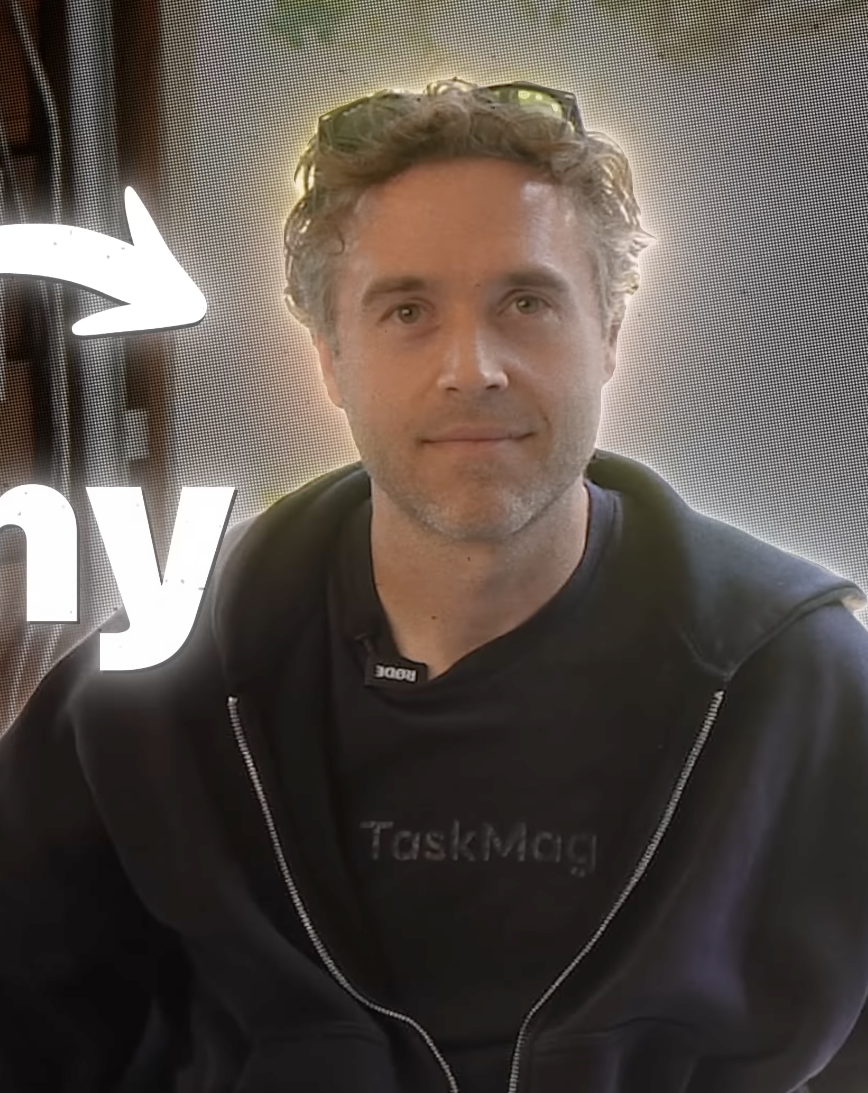
WHAT CAN WE LEARN FROM A SAAS MILLIONAIRE?
YOUTUBE SUMMARY : STARTER STORY
CHAPTER INDEX
THE NEW SAAS PLAYBOOK
CHAPTER 1
A DM STARTED IT ALL
THE STORY BEGINS WITH PROOF
The story starts with a direct message.
Jeremy claimed he had built and sold a SaaS business for millions.
That immediately raised the real question: was this luck, timing, or a repeatable system that still works in the AI era?
WHY THIS STORY MATTERS
NOT JUST SUCCESS THEATER
This was not interesting because of the house, the car, or the sale alone.
It mattered because Jeremy was pointing to a deeper shift: software may no longer be built as one isolated product.
It can now be built as an ecosystem.
THE BIG QUESTION
IS SAAS STILL ALIVE?
With AI tools rising fast, many people say SaaS is dead.
Jeremy’s case argues the opposite.
SaaS is not dead.
But the old way of building one product and forcing all growth through it may be getting weaker while ecosystem-driven products get stronger.
THE BUSINESS BEHIND IT
TASKMAGIC IN ONE LINE
Taskmagic was built to automate browser-based human actions.
It solved a gap left by tools like Zapier, which were often limited by APIs.
Instead of waiting for formal integrations, Taskmagic let users automate messy behavior directly in the browser.
REAL TRACTION
THIS WAS NOT A TINY SIDE PROJECT
The business reportedly scaled to more than 60,000 users and around 8,000 paying customers.
Some months went above $400,000 in revenue and the company reached about $3 million annually.
This gives real weight to the strategy behind it.
ONE FOUNDER, TINY TEAM
LEVERAGE OVER HEADCOUNT
A striking part of the story is team size.
Jeremy describes building and scaling the company with only one employee, his CTO.
That matters because it shows how modern software, no-code, and focused execution can multiply output without building a large org.
FROM NON-TECHNICAL TO SAAS
YOU DO NOT NEED THE PERFECT START
Jeremy did not begin as a traditional technical founder.
He started by hacking together an early product using no-code tools.
That first version was imperfect, but it was enough to validate demand, make money, and fund the next version.
VERSION 1 WAS IMPERFECT
BUT IT WAS USEFUL ENOUGH
The first product was described as a slow no-code app builder.
That could have killed momentum if perfection had been the goal.
Instead, it served a better role: proof of demand.
Once monetized, it created the room to hire and rebuild properly.
MONETIZATION CREATES OPTIONS
REVENUE IS STRATEGIC OXYGEN
Early revenue changes everything.
It turns ideas into options.
Once the first version made money, Jeremy could hire help, rebuild the product, and improve speed and quality.
A weak first version can still be powerful if it gets paid validation early.
A STRATEGIC PIVOT
LISTEN TO WHAT USERS REPEAT
After getting the first version to seven figures, the team stepped back and asked a bigger question.
What did customers keep asking for?
The answer was automation.
That repeated demand led them toward the larger opportunity instead of staying stuck in the first model.
THEY FOLLOWED THE PULL
CUSTOMER LANGUAGE IS MARKET DIRECTION
The important move was not inventing a random adjacent idea.
It was following the strongest signal from existing users.
Customers kept asking how to automate tasks.
That pull shaped the future business and helped turn a few hundred thousand into millions over time.
THE EXIT WAS TIMED
SELLING AT A PEAK IS A STRATEGY TOO
After strong growth and recognition, including landing on the Inc. 5000 list, Jeremy and his team saw that they might be near a meaningful peak.
Instead of assuming endless upside, they considered a sale while the story, numbers, and momentum were attractive.
THE CORE IDEA
CHAPTER 2
WHAT IS THE TENTPOLE STRATEGY?
ONE CORE PRODUCT WITH SUPPORTING PRODUCTS
The tentpole strategy means building one main product as the core business, then creating smaller products around it.
Those smaller products solve nearby problems, attract their own traffic, rank independently, make revenue, and feed users into the core product.
THE OLD WAY VS THE NEW WAY
FROM ONE PRODUCT TO AN ECOSYSTEM
The old model is simple: build one software product and push all marketing into it.
The tentpole model is different.
You build several focused products that support each other.
Each one becomes both a business asset and a distribution channel for the others.
TASKMAGIC WAS THE CORE
THE MAIN TENTPOLE
In Jeremy’s case, Taskmagic was the core tentpole.
It was the central automation engine.
Everything around it was designed to solve adjacent needs while naturally leading people back to Taskmagic when they needed more power, integration, or scale.
WHY THIS WORKS NOW
AI AND NO-CODE CHANGE THE ECONOMICS
This approach becomes more powerful in a world where shipping software is faster and cheaper.
When building mini-products no longer requires a huge team, products can be treated almost like content: fast to create, highly specific, and strategically connected.
SELL FUNCTIONALITY, NOT CONTENT
A CRITICAL MINDSET SHIFT
Jeremy makes a key point.
Instead of only creating free information tools or content for marketing, modern builders can create small functional software products.
Those tools do real jobs for users and can rank, convert, monetize, and upsell far better than content alone.
START WITH THE NEXT PROBLEM
THE RIGHT ADJACENCY MATTERS
Step one in the strategy is not building random add-ons.
It is identifying the next problem your current customer has after using your main product.
That next problem is where the supporting product should be built because the path between products stays natural.
SPECIFICITY WINS
NARROW PRODUCTS CAN GROW FASTER
A smaller and more specific tool can often rank and convert faster than a broad one.
Specificity sharpens search intent, value proposition, and customer fit.
That means a mini-product may attract users more efficiently than trying to make one giant all-in-one solution.
MINI PRODUCTS ARE NOT A DISTRACTION
THEY ARE PART OF THE SAME MACHINE
The supporting products are not meant to become unrelated side hustles.
That would scatter focus.
The point is to build an ecosystem where every product strengthens the same customer journey and deepens the same market position.
THE FIRST SATELLITE PRODUCT
MAIL LEAD
One supporting product they built was Mail Lead, a simple outbound email tool.
It addressed a clear need among their audience: business owners, agencies, freelancers, and sales-focused users who needed ways to do outreach before they needed deeper automation.
WHY MAIL LEAD MADE SENSE
IT MATCHED THE CUSTOMER JOURNEY
This product fit because Taskmagic users already cared about getting leads and driving action.
Outbound email was a direct next-step use case.
That made Mail Lead feel native to the ecosystem, not forced.
Good adjacency is what makes cross-product motion work.
SPECIFIC TOOLS GET SEO LIFT
ONE PRODUCT CAN OWN ONE INTENT
Mail Lead could target a narrow search intent better than a broad automation brand page.
That is part of the advantage.
Each focused product can rank around a specific problem, then introduce users to the wider product family once trust is earned.
A NATURAL UPGRADE PATH
UPSELL WORKS WHEN THE NEXT STEP IS OBVIOUS
The strategy becomes powerful when the smaller product naturally reaches a ceiling.
Users start with the simple tool.
Then they hit a limit, need integration, automation, or more complexity.
At that moment, the main product becomes the logical next purchase.
EMBEDDED HAND-OFFS MATTER
MOVE USERS ACROSS PRODUCTS SEAMLESSLY
Jeremy described connecting products through direct pathways.
A user doing email outreach could click into automation and land in Taskmagic.
That matters.
Cross-sell works best when it feels like feature expansion, not a separate sales pitch.
PRICING WAS PART OF THE MODEL
LOWER FRICTION AT THE ENTRY POINT
An important insight was that some customers did not want a recurring subscription immediately.
Using lifetime deals and usage-based pricing helped get adoption early.
This reduced resistance and let the ecosystem bankroll itself while increasing the chance of future upsells.
THEN THEY STACKED MORE
ADD THE NEXT PRODUCT IN THE CHAIN
After Mail Lead came another supporting tool: a lead discovery product.
The logic stayed consistent.
If users need to send outreach, they first need leads.
That means one tool creates the input and another tool acts on it, while the core product handles automation.
AN ECOSYSTEM COMPOUNDS
EACH PRODUCT FEEDS ANOTHER
This is where the model becomes powerful.
Leads feed email.
Email feeds automation.
Automation deepens product usage.
Each product has standalone value, but together they create a flywheel where acquisition, monetization, and retention reinforce each other.
PRODUCT AS DISTRIBUTION
CHAPTER 3
PRODUCTS CAN BE MARKETING
NOT JUST REVENUE ASSETS
One of the deepest ideas in this transcript is that products themselves can become a marketing layer.
Each mini-product is not only a revenue stream.
It is also a discoverability engine, a search entry point, and a trust-building surface for the wider ecosystem.
THIS CHANGES HOW BUILDERS THINK
FROM APP TO PORTFOLIO
Many founders think in terms of one app, one homepage, one funnel.
The tentpole model pushes a different view.
Think like a portfolio builder.
Create multiple precise assets that each capture demand and route users deeper into your broader business.
THE POWER OF SEARCH INTENT
OWN THE EXACT NEED
Broad brands are harder to rank and harder to explain.
Focused tools can win because they map tightly to one job.
The clearer the job, the clearer the search, the page, the hook, the conversion, and the next-step offer back into the tentpole.
AI MAKES THIS FASTER
SHIPPING NO LONGER COSTS THE SAME
What used to require larger teams and longer timelines can now be done much faster.
AI lowers the cost of prototyping, coding, writing, and launching.
That makes ecosystem building more practical for solo founders and lean teams than it was before.
THE NEW RISK
EVERYONE CAN BUILD FASTER NOW
AI does not only lower your cost.
It lowers everyone’s cost.
That means a single generic product becomes easier to copy and harder to defend.
An interconnected ecosystem with shared customer flow can become more defensible than one isolated tool.
SAAS IS EVOLVING, NOT DYING
THE WINNING SHAPE IS CHANGING
The transcript suggests a more accurate view than ‘SaaS is dead.’
Software still matters.
But the shape of winning software may shift from one large monolith toward smaller connected products built around a single market and a shared customer journey.
ONE IDEA STILL MATTERS
EVERY ECOSYSTEM STARTS SOMEWHERE
Even with the tentpole model, the process still begins with one working idea.
The difference is what happens next.
Instead of exhausting all growth inside one product, the founder expands outward into neighboring tools that increase distribution and monetization.
DO NOT BUILD RANDOMLY
EXPANSION NEEDS DISCIPLINE
A big danger is using AI speed to launch too many disconnected products.
That creates noise, not leverage.
The stronger interpretation of the strategy is disciplined adjacency: one audience, one ecosystem, several products, and a clear movement between them.
THE STRATEGIC LENS
ASK ONE HARD QUESTION
For every new product idea, ask:
Does this solve the next problem for the same customer and route them naturally back into the core business?
If the answer is yes, it may strengthen the tent.
If not, it may only split your attention.
THE EXIT REALITY
CHAPTER 4
THE SALE LOOKED GLAMOROUS
BUT THE INSIDE WAS DIFFERENT
From the outside, a seven-figure exit looks clean and aspirational.
Inside the process, it was stressful, uncertain, and emotionally heavy.
That contrast matters because public founder stories often show the outcome while hiding the cost of getting there.
HE WANTED OUT BEFORE 38
A PERSONAL DEADLINE SHAPED THE MOVE
Jeremy had a personal goal to exit before turning 38.
He also had family pressure and real financial obligations.
Those factors mattered.
The sale was not only a strategic event.
It was also tied to life stage, risk tolerance, and responsibility at home.
THE PROCESS WAS HEAVY
INTEREST DOES NOT EQUAL EASE
The business was listed and received strong interest, including more than one hundred messages.
But buyer attention does not remove the emotional weight.
The process still involved uncertainty, endurance, negotiation pressure, and the fear of things falling apart.
DEBT BEHIND THE EXIT
SUCCESS STORIES OFTEN HIDE THIS PART
One of the strongest moments in the transcript is the financial strain during the sale process.
Jeremy described personal debt and pressure mounting while waiting for the deal to close.
That exposes the messy truth behind many polished founder outcomes.
FOUNDERS CARRY PRIVATE FEAR
PUBLIC CONFIDENCE CAN BE MISLEADING
The fear was not abstract.
It was tied to family, mortgage, bills, and the possibility of having to explain failure at home.
That level of pressure often stays invisible online, but it shapes founder decisions more than public narratives usually admit.
EMOTIONAL ANCHORS MATTER
CLARITY IS NOT ALWAYS TACTICAL
Jeremy said one of the only things that brought calm was being with his daughter.
That detail matters.
In hard seasons, the stabilizing force is not always another tactic.
Sometimes it is the personal anchor that keeps someone psychologically steady enough to continue.
THE WIN DOES NOT ERASE THE WEIGHT
RELIEF COMES WITH A NEW QUESTION
After the sale, the financial result was life-changing.
But the transcript also hints at the strange emptiness after a major exit.
Once the pressure lifts, a founder often faces a new question:
what is my life and routine now that the mission changed?
WHAT FOUNDERS HIDE
CHAPTER 5
TOXIC POSITIVITY ONLINE
A REAL WARNING
Jeremy’s closing advice is sharp.
He says many people online present endless positivity, constant wins, and polished gratitude.
But they often hide the bad stretch, the doubt, the debt, the fatigue, and the moments where everything feels fragile.
WHY THIS MATTERS
FALSE SIGNALS DISTORT JUDGMENT
When founders only see polished stories, they misread reality.
They assume struggle means they are failing while others are winning cleanly.
That distortion creates shame and bad decisions.
Honest operating realities are more useful than success theater.
FOCUS ON PROBLEMS
NOT ON IMAGE MANAGEMENT
His advice was not to become negative.
It was to stay grounded in actual problems.
Problem focus leads to better product choices, clearer communication, and more resilient judgment.
Image focus often leads to pretending, drifting, and delayed correction.
SHARE THE HARD PARTS
AUTHENTICITY CAN BE STRATEGIC
There is also a brand lesson here.
Sharing bad days, failed attempts, and real constraints can create stronger trust than acting invincible.
People do not only connect with outcomes.
They connect with honest process and believable struggle.
THIS APPLIES BEYOND SAAS
A BROADER FOUNDER PRINCIPLE
The lesson is larger than software.
In any business, ecosystem thinking, honest operating narratives, and solving adjacent customer problems can beat the shallow approach of building one offer and wrapping it in artificial hype.
PRACTICAL LESSONS
CHAPTER 6
LESSON 1: START WITH DEMAND
DO NOT BEGIN WITH FANTASY
Jeremy’s path reinforces a core rule.
Start with a problem that already hurts enough for people to pay.
The first product does not need to be beautiful.
It needs to be useful enough to reveal demand and finance the next level of execution.
LESSON 2: FOLLOW CUSTOMER PULL
THE NEXT OFFER IS ALREADY IN THE SIGNALS
The best adjacent product is often hidden inside repeated user requests.
Listen to what your customers ask before and after they use the main offer.
Those repeated frictions can map the next product far better than brainstorming in isolation.
LESSON 3: BUILD SMALL BUT SHARP
SPECIFICITY BEATS VAGUE AMBITION
Small products can outperform broad ones when they solve one clear job.
Sharper use cases make search intent cleaner, messaging tighter, and conversion easier.
In the tentpole model, precision is not a limitation.
It is a growth advantage.
LESSON 4: DESIGN THE UPGRADE PATH
CROSS-SELL SHOULD FEEL INEVITABLE
Do not just build multiple tools.
Design their sequence.
What does the user need first?
What do they need next?
Where do they hit limits?
A strong ecosystem is built around logical movement, not random collections of products.
LESSON 5: LET PRICING REDUCE FRICTION
ADOPTION FIRST, EXPANSION LATER
Different entry points may require different pricing logic.
For some users, lifetime deals or usage-based pricing create enough trust to start.
Once value is proven, subscription or deeper product adoption becomes far easier to justify.
LESSON 6: USE AI FOR SPEED
BUT KEEP STRATEGY HUMAN
AI can help ship faster, test faster, and build more with less.
But speed alone is not strategy.
What matters is where you point that speed: toward the same audience, the same ecosystem, and the same compounding customer journey.
LESSON 7: BUILD DEFENSIBILITY THROUGH FLOW
NOT JUST THROUGH FEATURES
A single feature can be copied.
A product flow across several connected tools is harder to replace.
Defensibility can come from the movement between products, the data they create, the trust they build, and the convenience of staying inside one ecosystem.
LESSON 8: REVENUE BUYS TIME
CASH GIVES YOU STRATEGIC ROOM
One reason the story matters is that early monetization funded learning and rebuilding.
Revenue reduces dependence on theory.
It creates oxygen for iteration, hiring, patience, and optionality.
Founders should respect money as strategic leverage, not vanity.
LESSON 9: THE FOUNDER STORY MATTERS
TRUTH BUILDS STRONGER TRUST
People are tired of polished founder mythology.
A more durable brand comes from sharing what is real: the risk, the pressure, the missteps, and the logic behind decisions.
That kind of honesty can attract the right audience and deepen credibility.
LESSON 10: BUILD THE TENT, NOT JUST THE POLE
THE FINAL TAKEAWAY
The biggest lesson is this:
Do not think only about one product.
Think about the market you want to own, the sequence of needs inside it, and the cluster of tools that can serve that sequence.
The future may belong to connected product ecosystems.