

5 SAAS MOATS THAT MATTER MORE IN THE AI ERA
YOUTUBE SUMMARY : ROB WALLING
CHAPTER INDEX
GREAT METRICS ARE NO LONGER ENOUGH
THE NEW SAAS VALUATION PROBLEM
A SaaS company can have strong growth, strong retention, and serious buyer interest—and still receive no private equity offer.
The question has changed:
1. Will this revenue still exist next year?
2. What stops someone from rebuilding the product?
WHY SAAS VALUE IS CHANGING
THE NEW BUYER MINDSET
AI IS NOT MAKING SAAS DISAPPEAR
AI IS STILL SOFTWARE
Einar Vollset’s view is simple: AI is powerful, but it is still software.
That means SaaS companies are not automatically obsolete. Software teams may actually be among the best positioned to deploy AI because they already know how to build, ship, maintain, and improve software products.
AI IS MAKING SOFTWARE FASTER TO BUILD
DEVELOPMENT COST IS FALLING
Inside TinySeed’s portfolio, founders report shipping features in weeks that once took months.
AI can dramatically reduce development time and cost.
That creates opportunity for founders—but it also means basic software functionality can be reproduced much faster by competitors.
WHY FOUNDERS SHOULD CARE ABOUT MOATS
EVEN IF YOU NEVER PLAN TO SELL
A company is still an asset.
Founders may eventually sell because of fatigue, life changes, opportunity, or a compelling offer.
Even if you never sell, understanding what makes the business valuable helps reveal whether you are building something durable—or something that can easily disappear.
THE TRADITIONAL SAAS MOATS
WHAT ALREADY MATTERED
The traditional SaaS playbook already valued:
1. Deep integrations
2. Strong brand
3. High switching costs
4. Owned traffic channels such as SEO
These still matter. AI changes how defensibility is judged and raises the value of assets that competitors cannot recreate simply by writing better code.
A FEATURE IS NOT A MOAT
UNIQUE FUNCTIONALITY IS EASY TO COPY
Developers often treat a clever feature as defensibility.
But features were never a strong moat—and AI makes them even weaker.
If competitors can reproduce the feature quickly, the real value must exist around it: data, workflow, trust, networks, hardware, integrations, or switching costs.
THE FIVE MOATS BUYERS NOW CARE ABOUT
DURABILITY OVER NOVELTY
MOAT 1 — HARDWARE
SOFTWARE TIED TO THE PHYSICAL WORLD
Hardware once looked like a SaaS disadvantage because it was slower and harder to scale.
Now tightly integrated hardware can increase defensibility.
Replacing the software may also require replacing devices, installations, maintenance processes, employee routines, and physical infrastructure.
WHY HARDWARE BECOMES HARD TO REPLACE
PHYSICAL CONSEQUENCES CREATE FRICTION
Examples from the TinySeed portfolio include:
1. Digital scales in grocery stores
2. Software inside EV chargers
3. Printers deployed in warehouses
A competitor cannot simply recreate the code and instantly replace a system already embedded inside real-world operations.
THE HARDWARE MOAT TEST
NOT EVERY DEVICE CREATES DEFENSIBILITY
Hardware becomes a moat when it is tightly connected to the value the product delivers.
An ordinary off-the-shelf device with an open API may still be easy to replace.
The stronger moat appears when software, device, installation, workflow, and operational dependency work as one system.
MOAT 2 — TWO-SIDED MARKETPLACE
SUPPLY ATTRACTS DEMAND
A marketplace becomes stronger as both sides grow.
More supply attracts more demand.
More demand attracts more supply.
When that loop works, the network itself becomes difficult to recreate because a new competitor must rebuild both sides of the market—not just copy the software.
MARKETPLACE MOATS ARE HARD TO BUILD
DISTRIBUTION COMES FIRST
The challenge is getting the marketplace started.
Bootstrapping one from zero is extremely difficult unless you already have access to one or both sides.
The software may be easy to build. Creating enough buyers and sellers at the same time is the difficult part.
MARKETPLACE EXAMPLE — TINYSEED
START WITH AN EXISTING NETWORK
TinySeed works like a marketplace connecting founders and investors.
It had an advantage at launch because there was already access to founders—and eventually investors as well.
The lesson: marketplaces work better when distribution exists before the marketplace itself is launched.
MARKETPLACE EXAMPLE — DYNAMITE JOBS
AUDIENCE BECOMES DISTRIBUTION
Dynamite Jobs was built by people who already had access to a remote-work audience through Tropical MBA.
That existing community reduced the marketplace cold-start problem.
The moat was not simply the job-board software. It was access to the people needed to make the marketplace useful.
MOAT 3 — SYSTEM OF RECORD
WHERE THE BUSINESS ACTUALLY OPERATES
The hardest software to remove is often where the business actually runs.
Messages, approvals, states, decisions, coordination, history, and shared context accumulate inside the product.
Eventually the software becomes more than a tool. It becomes part of the company’s operating infrastructure.
WHY COLLABORATION CREATES STICKINESS
EVERY USER ADDS CONTEXT
Ten identical user accounts create limited organizational dependency.
But ten people coordinating work, sending approvals, exchanging messages, updating statuses, and making decisions inside one platform create something much harder to move.
The accumulated coordination becomes part of the moat.
SLACK IS THE SIMPLE EXAMPLE
EASY TO COMPLAIN ABOUT, HARD TO LEAVE
Teams may complain about Slack and even experiment with alternatives.
But years of messages, channels, habits, integrations, relationships, and team coordination make switching difficult.
Slack is no longer only chat software. It becomes part of the organization’s operating memory.
HOW A SYSTEM OF RECORD FORMS
WORKFLOW CREATES DEPENDENCY
A system of record grows when important work starts happening inside the product:
1. Communication
2. Approvals
3. Status changes
4. Historical records
5. Team coordination
6. Business context
The more operational history accumulates, the more difficult migration becomes.
MOAT 4 — EXCLUSIVE, FRESH DATA
DATA THAT KEEPS GETTING BETTER
A strong data moat captures information competitors cannot easily reproduce.
The strongest version is continuously refreshed.
A one-time copy becomes stale while the original product keeps receiving new information, building history, expanding coverage, and improving the value of its dataset.
THE DATA MOAT TEST
CAN COMPETITORS TAKE EVERYTHING OUT?
The moat weakens if someone can export the complete dataset, timestamps, history, and structure through an API.
The stronger model is:
Data flows in.
Value is created from it.
The continuously refreshed dataset cannot simply be cloned and moved into a competing application.
FRESHNESS IS PART OF THE MOAT
YESTERDAY’S SNAPSHOT LOSES VALUE
Imagine a database that continuously tracks companies, technologies, markets, or transactions.
Copying the database once does not recreate the business.
You still need next month’s information, then the month after that. The ongoing collection engine becomes more valuable than a single snapshot.
EXAMPLES OF DATA MOATS
CONTINUOUS COLLECTION MATTERS
The transcript points to products such as BuiltWith, fiscal.ai, and DealForma.
Their value depends on information that keeps changing.
A customer does not only need today’s dataset. They need the system continuously collecting, organizing, refreshing, and maintaining that information.
MOAT 5 — HIGH SWITCHING COSTS
THE STRONGEST PRACTICAL DEFENSE
Here is the test:
A competitor offers everything you provide for half the price. Does the customer still stay?
If switching creates migration cost, retraining, downtime, operational risk, lost history, or business disruption, customers may prefer to continue paying the incumbent.
MISSION-CRITICAL SYSTEMS CREATE SWITCHING COST
RISK MATTERS MORE THAN PRICE
Think about finance software, ERP, or warehouse systems.
A cheaper alternative may exist, but replacing the system can affect approvals, inventory, shipping, reporting, payroll, or financial operations.
For a serious business, the downside risk can be far larger than the subscription savings.
SWITCHING COST IS MORE THAN MIGRATION
THE WHOLE ORGANIZATION MUST MOVE
Real switching costs can include:
1. Moving data
2. Rebuilding integrations
3. Retraining employees
4. Recreating workflows
5. Changing internal processes
6. Accepting downtime risk
The harder these pieces are to move safely, the stronger the incumbent becomes.
BRAND AND TRUST REINFORCE THE MOAT
BUSINESSES PAY FOR RELIABILITY
Customers are not only buying features.
They are buying confidence that the vendor will remain available, fix failures, answer support requests, and prioritize serious problems.
For mission-critical software, trust in the company behind the product can matter as much as the technology itself.
WHY VIBE-CODED REPLACEMENTS HAVE LIMITS
CHEAP SOFTWARE CAN CREATE EXPENSIVE RISK
A technical individual may tolerate spending hours fixing a self-built tool.
A company with employees, customers, payroll, and millions in revenue has a different risk profile.
Saving a small amount on software may not justify the possibility of failure inside a critical business process.
AI-NATIVE SAAS FACES A HIGHER BAR
FAST GROWTH DOES NOT PROVE DURABILITY
FAST ARR CAN STILL COLLAPSE
BUYERS FEAR RAPID REPLACEMENT
AI products can grow from zero to millions in ARR extremely quickly.
But buyers have also seen fast-growing AI companies collapse just as quickly.
That makes durability more important: what keeps customers paying when models improve, competitors appear, or the underlying technology becomes commoditized?
THE PRIVATE EQUITY QUESTION
CAN THIS REVENUE SURVIVE?
Private equity buyers are not only asking whether the company is growing today.
They need confidence in future cash flow.
Their concern is simple: if building software becomes dramatically easier, what prevents another company from recreating the product and taking those customers?
THE INVESTMENT COMMITTEE FILTER
SOME COMPANIES NEVER REACH THE TABLE
According to the interview, some buyers may refuse to bring businesses without meaningful moats to their investment committee.
That matters because the committee is the group that approves whether the firm can issue an LOI and continue pursuing the acquisition.
THE ZYRATALK CASE
GREAT METRICS, UNEXPECTED OUTCOME
ZYRATALK LOOKED HIGHLY ATTRACTIVE
AI VOICE AGENTS FOR SERVICE BUSINESSES
ZyraTalk was an AI voice-agent business serving industries such as HVAC.
According to Einar, it had strong growth, strong retention, integrations, and significant market interest.
By traditional SaaS metrics, it looked like the kind of company that should attract many acquisition offers.
22+ BUYER MEETINGS
INTEREST WAS NOT THE PROBLEM
During the sale process, ZyraTalk reportedly held roughly 22–23 management meetings with interested buyers.
That is a high level of engagement.
Based on the company’s metrics and the number of meetings, Einar expected an avalanche of letters of intent from potential acquirers.
ZERO PRIVATE EQUITY LOIS
THE MARKET HAD CHANGED
Not a single private equity firm submitted an LOI.
The company itself was not weak. Growth and retention were strong.
The issue was durability. Buyers were evaluating whether the revenue would survive and whether another AI company could rebuild enough of the product to threaten the business.
ZYRATALK STILL SOLD
STRATEGIC VALUE WON
ZyraTalk ultimately sold to EverCommerce, described in the transcript as a large public strategic buyer.
The acquisition became a competition between strategic buyers rather than private equity.
The case shows how the same SaaS business can look very different depending on the buyer’s strategic logic.
THE QUESTION BEHIND ALL FIVE MOATS
WHAT BUYERS REALLY WANT TO KNOW
Every moat answers the same two questions:
1. A year from now, will this revenue still be here?
2. What prevents another company from rebuilding the product and taking the customer?
Growth proves demand today.
A moat gives buyers confidence about tomorrow.
THE SAAS MOAT CHECKLIST
AUDIT YOUR DEFENSIBILITY
1. HARDWARE
ARE YOU EMBEDDED PHYSICALLY?
Ask:
Does replacing our software also require replacing hardware, installation, devices, or physical operating processes?
The more deeply your product connects software to the real world, the harder it becomes for competitors to replace you simply by recreating your application.
2. MARKETPLACE
DOES THE NETWORK COMPOUND?
Ask:
Does every new participant make the product more valuable to other participants?
A true marketplace moat becomes stronger as supply and demand reinforce each other. Competitors then need to reproduce the network itself rather than merely reproduce the software interface.
3. SYSTEM OF RECORD
DOES IMPORTANT WORK LIVE HERE?
Ask:
Are customers storing messages, approvals, decisions, workflows, history, and organizational context inside the product?
The more business activity that lives inside your system, the more disruptive migration becomes—and the less likely customers are to leave casually.
4. EXCLUSIVE DATA
DOES YOUR DATASET IMPROVE CONTINUOUSLY?
Ask:
Are we collecting unique information that becomes more valuable over time?
Could a competitor export everything and reproduce it tomorrow?
The strongest data moat comes from information that is difficult to obtain, continuously refreshed, historically useful, and deeply integrated into the product.
5. SWITCHING COSTS
WOULD HALF-PRICE ACTUALLY MAKE THEM LEAVE?
Ask:
If a competitor offered the same features at half our price, would customers move?
If migration threatens operations, data, integrations, workflows, training, reliability, or revenue, the customer may stay because switching risk matters more than the money they could save.
BUILD BEYOND FEATURES
THE FOUNDER TAKEAWAY
AI makes software faster and cheaper to build.
So defensibility increasingly has to exist beyond the code itself.
Build products that become embedded in operations, relationships, proprietary data, customer trust, physical systems, and recurring workflows.
The goal is to become difficult to replace.
CHAPTER INDEX
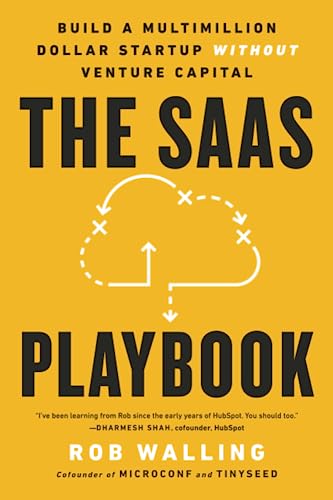
THE SAAS PLAYBOOK
BUILD A MULTI-MILLION-DOLLAR SAAS WITHOUT VC
Rob Walling’s core idea: you do not need venture capital to build a serious software company.
The goal is not fundraising.
The goal is a profitable, durable SaaS that customers pay for, founders control, and a team can grow.
WHO IS ROB WALLING?
OPERATOR, INVESTOR, TEACHER
Rob Walling has built multiple software companies, bootstrapped Drip, founded MicroConf and TinySeed, and invested in 125+ startups.
His advice comes from operating companies and watching thousands of founders make the same decisions repeatedly.
WHO THIS PLAYBOOK IS FOR
INDEPENDENT SAAS FOUNDERS
Best for:
• Technical founders learning business
• Non-technical founders learning SaaS
• Side-project founders trying to scale
• Bootstrappers replacing income
• Founders deciding whether to raise a small round
WHO IT IS NOT FOR
NOT A UNICORN-AT-ALL-COSTS PLAYBOOK
This is not designed for founders whose only goal is a billion-dollar VC outcome.
It is also not for people looking for easy motivation.
The book focuses on execution, trade-offs, customer value, metrics, and long-term founder sustainability.
THE CORE PREMISE
BUILD THE BUSINESS, NOT THE SLIDE DECK
Funding is a tool, not a goal.
A real startup creates value for customers and turns that value into durable revenue.
Investor approval is optional.
Customer demand is not.
WHY BOOTSTRAPPING MATTERS
HIGHER CONTROL, DIFFERENT ODDS
Bootstrapping may take longer, but it can give founders more control over ownership, pace, hiring, product direction, and exits.
The trade-off: you must learn to survive on customer revenue instead of using investor money to cover mistakes.
FOUNDATIONS
CHOOSE YOUR OPERATING MODEL
THE FUNDING SPECTRUM
THERE IS MORE THAN BOOTSTRAP VS VC
Four common paths:
1. Bootstrapped — grow from revenue
2. Self-funded — use profits from another business
3. Mostly bootstrapped — raise a small founder-friendly round
4. Venture-funded — raise repeatedly for a very large outcome
BOOTSTRAPPED
CUSTOMER REVENUE FUNDS GROWTH
You start with limited resources and grow as customers pay you.
Advantages:
• High control
• Less dilution
• Strong discipline
Disadvantages:
• Slower hiring
• Smaller margin for mistakes
• Founder time becomes a major constraint
SELF-FUNDED
USE ONE BUSINESS TO FINANCE ANOTHER
A profitable product can fund the next one.
Walling used profits from earlier products to invest roughly $150K–$200K into Drip before it became profitable.
This gives you more speed without immediately giving up equity.
MOSTLY BOOTSTRAPPED
SMALL CAPITAL WITHOUT THE VC TREADMILL
Some founders raise a modest amount from angels, friends, family, or bootstrapper-friendly funds.
The goal is not to raise every 18 months.
The goal is to buy time or capability while still operating like a capital-efficient business.
VENTURE-FUNDED
OPTIMIZED FOR VERY LARGE OUTCOMES
Venture capital works when the company can plausibly grow into a massive outcome.
It usually means repeated fundraising, dilution, aggressive growth targets, and pressure toward acquisition or IPO.
It is powerful, but it changes the game you are playing.
WHAT ACTUALLY MATTERS
REAL PRODUCT. REAL CUSTOMERS. REAL MONEY.
Walling uses “bootstrapped” broadly.
What matters is the operating philosophy:
Build something useful.
Find customers.
Charge them.
Retain them.
Grow from value created.
The source of the first dollars matters less than the discipline.
THE STAIRSTEP METHOD
BUILD SKILL BEFORE COMPLEXITY
STAIRSTEP OVERVIEW
THREE LEVELS OF ENTREPRENEURSHIP
The Stairstep Method reduces risk by increasing complexity gradually.
Step 1: simple product
Step 2: repeat and grow
Step 3: standalone SaaS
Each step builds cash, confidence, marketing skill, and customer knowledge for the next.
STEP 1: SIMPLE PRODUCT
ONE PRODUCT, ONE CHANNEL
Start with something simpler than full SaaS.
Examples:
• WordPress plugin
• Shopify add-on
• Niche utility
• Small digital tool
Goal: learn customer research, basic marketing, support, pricing, and product iteration while generating revenue.
STEP 2: REPEAT WHAT WORKS
BUILD INCOME AND OWNERSHIP OF TIME
Use the lessons from Step 1 to launch or grow additional products.
Improve the channels that already work.
Walling suggests reaching roughly $5K–$30K/month across products before taking on the full complexity of standalone SaaS.
STEP 3: STANDALONE SAAS
NOW TAKE ON THE HARDER GAME
Standalone SaaS adds more moving parts:
• Ongoing product development
• Retention
• Support
• Billing
• Pricing
• Multiple channels
• Team management
• Metrics
The stairs exist so you face these with more skill and resources.
CAN YOU SKIP THE STAIRS?
YES, BUT RISK RISES
Many founders go directly into SaaS and succeed.
The warning is about difficulty, not permission.
If you skip the earlier stages, you must learn product, sales, marketing, pricing, support, and metrics at the same time.
WHY SAAS IS ATTRACTIVE
THE BUSINESS MODEL COMPOUNDS
SaaS has several structural advantages:
• Recurring revenue
• High gross margins
• Predictable MRR
• Expansion revenue
• Strong retention potential
• Premium acquisition values
The model gets stronger when customers stay and grow.
MARKET
THE FOUNDATION OF EVERYTHING
MARKET SELECTION FIRST
A GREAT PRODUCT CANNOT SAVE A WEAK MARKET
Walling’s strongest market lesson:
A mediocre product in a strong market can become successful.
A great product in a weak market can still fail.
Start where customers already feel pain and already spend money solving it.
WHAT IS PRODUCT-MARKET FIT?
A MARKET THAT TRULY WANTS THE PRODUCT
PMF means a meaningful group of customers wants your product and is willing to pay for it.
The strongest signal is not praise.
It is behavior:
• They stay
• They use it
• They upgrade
• They refer others
• They would be upset if it disappeared
PMF IS CONTINUOUS
YOU KEEP EARNING IT
Product-market fit is not a permanent badge.
Customers change.
Competitors improve.
Technology shifts.
Your job is to keep refining who the product is for, what problem matters most, and why your solution is worth paying for.
HOW TO TEST PMF
LOOK AT RETENTION BEFORE EXCITEMENT
Useful PMF signals:
• Retention is improving
• Churn is falling
• Customers describe the product as essential
• Referrals increase
• Usage becomes habitual
• Growth happens without constant persuasion
High trial volume alone does not prove PMF.
FEATURE REQUEST RULE
DO NOT BUILD EVERY REQUEST
Before building a feature, ask:
1. What problem are they actually trying to solve?
2. What percentage of customers would use this?
3. Does it fit the product vision?
Every feature creates future maintenance and opportunity cost.
USAGE THRESHOLD
ESTIMATE HOW BROADLY A FEATURE MATTERS
A rough rule:
If fewer than 5–10% of customers would use it, question whether it belongs in the core product.
If 20%+ would benefit, it deserves serious consideration.
Do not let one loud customer define your roadmap.
INTEGRATE BEFORE YOU REBUILD
USE THE ECOSYSTEM
Many requests can be solved faster through integrations.
Benefits:
• Faster shipping
• Less code to maintain
• More customer value
• New partnerships
• Higher switching costs
A good API integration can replace weeks of native development.
COMPETITION CAN BE GOOD
A CROWDED MARKET PROVES DEMAND
A competitive market is often attractive because customers already understand the problem and already pay for solutions.
Your task is not to invent demand.
Your task is to find an underserved angle, segment, buying experience, or product weakness.
COMPETE ON PRICE
USEFUL AS AN ENTRY WEDGE
If large incumbents became expensive, a simpler product can enter at a lower price.
This works best when you can deliver most of the value at much lower cost.
Price can win early adopters, but it should not be your only long-term advantage.
COMPETE ON SALES MODEL
REMOVE BUYING FRICTION
Some incumbents require demos, setup fees, sales calls, and contracts.
A new entrant can win by offering:
• Public pricing
• Self-service signup
• Free trial
• Faster onboarding
• No mandatory sales call
How customers buy can be a major differentiator.
COMPETE ON PRODUCT
MODERN UX CAN BEAT LEGACY SOFTWARE
Large companies often carry old code and complicated interfaces.
A newer product can win with:
• Faster workflows
• Cleaner UX
• Better onboarding
• Simpler setup
This advantage fades over time, so use it to gain traction while building deeper moats.
USE JUDO AGAINST INCUMBENTS
TURN THEIR SIZE INTO YOUR ADVANTAGE
Large competitors are often slower, more complex, and harder to change.
Help frustrated customers leave them.
Make migration easy.
Target their weakest customer segment.
Speak clearly about the pain they create.
Do not try to outspend them.
HOW MUCH TO WATCH COMPETITORS
STAY INFORMED, NOT OBSESSED
Watch two things:
1. Major announcements: funding, acquisitions, major launches, positioning changes
2. Deals you are losing: learn exactly why prospects choose them
Ignore daily noise. Competitor obsession destroys focus without improving customer value.
MOATS
BUILD ADVANTAGES THAT COMPOUND
WHAT IS A REAL MOAT?
SOMETHING HARD TO COPY AND STRONGER OVER TIME
A moat protects your business from competitors.
A useful moat should become more valuable as the company grows.
Walling highlights four:
1. Integrations
2. Brand
3. Owned traffic
4. Switching costs
MOAT 1: INTEGRATIONS
EVERY CONNECTION INCREASES STICKINESS
Integrations make the product more embedded in customer workflows.
The more systems connected, the harder switching becomes.
Large integration ecosystems can become extremely difficult for new competitors to reproduce.
MOAT 2: BRAND
YOUR REPUTATION IN THE MARKET
Brand is not the logo.
Brand is what customers and prospects say about you when you are not there.
A strong brand creates recognition, trust, category authority, and preference before the buyer compares every feature.
MOAT 3: OWNED TRAFFIC
CONTROL A SOURCE OF DEMAND
High-intent SEO, a strong audience, content library, newsletter, or community can become a durable source of leads.
The benefit compounds over time.
But do not depend entirely on one algorithm. Search and social platforms can change overnight.
MOAT 4: SWITCHING COSTS
MAKE THE PRODUCT DEEPLY EMBEDDED
High switching costs appear when leaving requires time, risk, developer work, retraining, data migration, or organizational approval.
Examples:
• APIs
• Complex workflows
• Team collaboration
• Large data stores
Useful products become harder to replace.
THE FALSE MOAT: FEATURES
FEATURES ARE TEMPORARY
A unique feature can differentiate you for months.
Then competitors copy it.
Features are valuable, but they rarely create long-term protection by themselves.
A real moat compounds and becomes harder to reproduce over time.
AVOID TRANSLATION TOO EARLY
LOCALIZATION MULTIPLIES OPERATIONS
Translation sounds simple but creates new work:
• Marketing
• Support
• Documentation
• Community
• Product QA
Do it when real customer demand justifies it, not because global expansion sounds impressive.
AVOID WHITE LABELING
PROTECT FOCUS AND BRAND
White-label requests often come from people who want your product to power their business.
But you may inherit custom requirements, support, and brand invisibility.
Walling suggests only considering it when the upfront economics are substantial.
AVOID NEW VERTICALS TOO EARLY
DO NOT CONFUSE EXPANSION WITH GROWTH
When growth slows, founders often target adjacent customer types.
This can multiply product complexity before the original niche is strong.
First ask:
Have we actually saturated our best segment, or are we avoiding the harder work of fixing PMF and acquisition?
PRICING
THE BIGGEST UNDERUSED LEVER
UNDERPRICING IS COMMON
USUALLY DRIVEN BY PSYCHOLOGY
Founders often price too low because of:
• Fear of rejection
• Low confidence
• Cheap competitors
• Underestimating customer value
The result: more customers are required to reach the same revenue, and many paid acquisition channels stop working economically.
A USEFUL PRICING SIGNAL
SOME COMPLAINTS ARE HEALTHY
If nobody ever says the product feels expensive, you may be underpriced.
Pricing should create some resistance.
The goal is not to maximize complaints.
The goal is to charge in proportion to the value delivered and the cost of serving the customer.
PRICE BY CUSTOMER SEGMENT
DIFFERENT BUYERS SUPPORT DIFFERENT ECONOMICS
Rough market logic:
• Consumer: low price, no-touch
• SMB: higher price, light support
• Mid-market: demos may make sense
• High-touch: $1K+/month can support sales
• Enterprise: annual contracts must support procurement and service
SEGMENT BEFORE BUILDING TIERS
START WITH VALUE DIFFERENCES
Ask how customers differ in:
• Company size
• Usage
• Risk
• Workflow complexity
• Support needs
• Value received
Good tiers reflect real customer differences, not arbitrary feature bundles.
EXPANSION REVENUE
CUSTOMERS PAY MORE AS THEY GAIN VALUE
Expansion revenue means existing customers increase spending over time.
That can happen through:
• More usage
• More seats
• Higher limits
• Premium features
• Larger plans
It is one of the strongest SaaS growth mechanisms.
VALUE METRIC
TIE PRICE TO CUSTOMER SUCCESS
A value metric is the unit that determines what customers pay.
Good examples:
• Subscribers
• Seats
• Storage
• Transactions
• Usage hours
The ideal metric rises as the customer receives more value, making upgrades feel natural.
WHEN SEAT PRICING WORKS
SEATS NEED DISTINCT USER VALUE
Seat-based pricing makes sense when adding users increases the product’s value and different users need their own access.
If everyone sees exactly the same thing, customers may simply share one login.
Choose the metric that best reflects value, not convention.
FEATURE GATING
CHARGE MORE FOR PREMIUM CAPABILITY
Feature gating gives larger plans access to advanced functionality.
Example:
A premium analytics integration may appeal mainly to larger customers.
This can work well, but value metrics usually create more natural expansion because customer growth itself drives upgrades.
COMBINE MODELS LATER
KEEP EARLY PRICING SIMPLE
Mature SaaS products often combine usage, seats, and feature tiers.
Early founders should resist excessive complexity.
Start with one understandable pricing model.
Add sophistication only after customer behavior shows where the value truly differs.
ENTERPRISE PRICING
CHARGE FOR ENTERPRISE COMPLEXITY
Enterprise customers may require:
• Security reviews
• Procurement
• Custom contracts
• Dedicated support
• Integrations
• Account management
If enterprise pricing is only 2–3× standard pricing, the account can become unprofitable.
ENTERPRISE RULE OF THUMB
OFTEN 10–20× THE STANDARD PLAN
Walling suggests enterprise pricing may need to be roughly 10–20× your standard plan.
Why?
The buyer is not only paying for software.
They are paying for sales effort, compliance, support, implementation, and organizational complexity.
WHEN FREEMIUM WORKS
FREE MUST CREATE STRATEGIC VALUE
Freemium works best when:
1. The product is easy to understand
2. Users get value quickly
3. Support cost is low
4. Free users create distribution
5. Serving them is cheap
Free users should help growth, not merely increase signup counts.
WHEN FREEMIUM FAILS
FREE USERS CAN BECOME A COST CENTER
Freemium is risky when:
• Setup is complex
• Support is expensive
• Free users rarely upgrade
• There is little viral exposure
• Cash is constrained
Venture-backed companies can subsidize free users longer than most bootstrappers can.
CREDIT CARD UPFRONT
HIGHER FRICTION, BETTER INTENT
Requiring a card before a trial usually reduces signup volume but increases intent.
Benefits:
• Fewer tire-kickers
• Cleaner conversion data
• Lower support waste
Removing the card may create many more trials, but most extra trials may never pay.
WHEN TO REMOVE THE CARD
ONLY WHEN THE FUNNEL CAN HANDLE IT
Removing the card can work when:
• You know your metrics deeply
• Support can absorb more trials
• You need employees without company cards to try the product
• You measure trial-to-paid and churn after the change
Do not judge the experiment on signup volume alone.
RAISE PRICES REGULARLY
REVISIT EVERY 6–12 MONTHS
Products improve. Markets change. Customer value grows.
Revisit pricing every 6–12 months.
Possible moves:
• Raise prices
• Reduce included usage
• Hide the cheapest plan
• Add a premium tier
• Target a higher-value segment
ROB'S RULE OF 10
DO NOT CREATE PAIN FOR TINY UPSIDE
If increasing prices for existing customers will not grow MRR by at least about 10%, Walling says the support burden, churn risk, and brand damage may not be worth it.
If the impact is small, grandfathering existing customers can be simpler.
ASPIRATIONAL PRICING
BUILD TOWARD THE PRICE
If customers say the product is too expensive, one option is not to discount.
Instead ask:
“What would make this price feel obvious?”
Then improve the product until the value justifies the number.
Pricing can become a product-development target.
MARKETING
DISTRIBUTION IS A FOUNDER SKILL
PRODUCTS DO NOT SELL THEMSELVES
MARKETING IS NON-NEGOTIABLE
A good product does not automatically create growth.
Founders need to learn:
• Who the buyer is
• Where they look for solutions
• What message creates action
• Which channels can acquire customers profitably
• Which channels can scale
THREE FUNNEL TYPES
MATCH THE FUNNEL TO THE ECONOMICS
Walling describes three common approaches:
1. High-touch — sales-assisted
2. Low-touch — self-service
3. Dual funnel — both at once
The right funnel depends on price, complexity, buyer behavior, and sales effort.
HIGH-TOUCH FUNNEL
HUMAN INTERACTION CLOSES LARGER DEALS
Best when products are expensive or complex.
Typical journey:
Lead → qualification → demo → sales conversation → close → onboarding → customer success
High prices justify the time spent by sales and success teams.
LOW-TOUCH FUNNEL
SELF-SERVICE WINS THROUGH VOLUME
Best when the product is easy to understand and the market is broad.
Typical journey:
Search/ad/content → site → trial → onboarding → payment
Conversion may be lower, but acquisition cost and sales effort can be much lower.
DUAL FUNNEL
SERVE SMB AND ENTERPRISE TOGETHER
A dual funnel serves two segments:
• Low-touch: smaller customers, high volume
• High-touch: larger customers, lower volume
The self-service funnel builds awareness and market presence.
The high-touch funnel captures larger contracts.
DIAGNOSE BOTTOM-UP
FIX RETENTION BEFORE TRAFFIC
Use this order:
1. High churn → PMF or retention issue
2. Trial but no purchase → onboarding/value issue
3. Traffic but no trial → messaging/positioning issue
4. Not enough traffic → acquisition issue
More traffic does not fix a broken funnel.
CHANNEL 1: SEARCH
FIND WHERE BUYERS ALREADY LOOK
Search is broader than Google.
Customers may search inside:
• YouTube
• Shopify
• WordPress
• App stores
• Chrome Store
• Software marketplaces
• Industry directories
Go where the problem is already being searched.
CHANNEL 2: PAID ADS
FAST TRAFFIC WHEN ECONOMICS SUPPORT IT
Paid acquisition can generate traffic quickly through Google, LinkedIn, Meta, YouTube, marketplaces, and directories.
But the channel only works if CAC can be recovered fast enough.
Higher ACV usually supports more expensive acquisition.
CHANNEL 3: COLD OUTREACH
BEST WITH STRONG TARGETING SIGNALS
Cold email, phone, LinkedIn, and DMs work best when you can identify prospects likely to need the product now.
Signals can include:
• Competitor usage
• Hiring
• Growth
• Contract timing
• Technology changes
Relevance beats volume.
CHANNEL 4: INTEGRATION MARKETING
BUILD WITH COMPLEMENTARY PRODUCTS
Find tools customers use before, after, or alongside yours.
Build a minimum viable integration first.
If both sides agree to promote it, expand the partnership.
Integrations can create leads for years while strengthening switching costs.
CHANNEL 5: CONTENT
TEACH THE MARKET
Content includes:
• Blog posts
• Ebooks
• Podcasts
• Video
• Courses
• Webinars
• Social posts
Content can create trust, links, referrals, and awareness even when it does not rank immediately in search.
OTHER CHANNELS
USE BASED ON FIT
Additional options:
• Affiliates
• Events
• Free tools
• Product Hunt
• AppSumo
• Guest posts
• Podcast tours
• YouTube appearances
• Other people's audiences
Each has different speed, cost, and scalability.
THE 3-FACTOR CHANNEL TEST
SPEED × COST × SCALABILITY
Evaluate each channel on:
1. Speed — how quickly can it work?
2. Cost — how much money does it require?
3. Scalability — can we increase volume without matching increases in effort?
Early founders often need one fast and one slow channel.
FAST VS SLOW CHANNELS
RUN BOTH AT THE SAME TIME
Fast channels:
• Cold outreach
• Partnerships
• Paid traffic
Slow channels:
• SEO
• Content
• Brand
Fast channels create learning and revenue now.
Slow channels build durable acquisition over time.
USE ICE SCORING
PRIORITIZE EXPERIMENTS
Score each experiment on:
• Impact — potential upside
• Confidence — likelihood it works
• Ease — difficulty of execution
Then start with the highest-scoring options.
This turns marketing into a disciplined testing system.
KEEP A MARKETING CHANGE LOG
KNOW WHAT CAUSED THE NUMBERS TO MOVE
Record every meaningful marketing change:
• Copy
• Pricing
• Landing pages
• Campaigns
• Targeting
• Offers
• Funnel changes
When conversion moves later, the log helps you trace the cause instead of guessing.
MEASURE ATTRIBUTION
KNOW WHERE CUSTOMERS REALLY COME FROM
Use:
• UTMs
• Referral cookies
• Signup surveys
• CRM data
• Customer interviews
Do not automatically label unknown traffic as word of mouth.
If you do not know the source, you cannot scale the source.
DO NOT SPREAD TOO THIN
DEPTH BEATS CHANNEL COLLECTING
Many successful SaaS companies reach 7–8 figures by becoming excellent at only one or two acquisition channels.
Learn one channel deeply.
Build repeatability.
Then diversify.
Trying ten channels weakly often produces no real advantage.
THE TRUTH ABOUT WORD OF MOUTH
REAL, BUT OFTEN OVERSTATED
Word of mouth matters, but founders often overestimate it because unattributed traffic gets labeled as referrals.
At Drip, strong word of mouth still represented only part of new customer growth.
Most acquisition came from identifiable channels.
SALES IS EDUCATION
HELP THE PROSPECT SOLVE THE PROBLEM
A good SaaS sales conversation is not about pressure.
Act like an expert helping the buyer understand the problem and evaluate whether your software fits.
The goal is a good decision, not a forced yes.
QUALIFY BEFORE THE DEMO
PROTECT SALES TIME
Before a live demo, ask:
• Budget
• Company size
• Timeline
• Use case
• Current solution
• Decision process
Do not spend high-value sales time on prospects who cannot buy or do not fit.
A DEMO IS NOT A PRODUCT TOUR
SHOW PROOF AROUND THE PROSPECT'S PAIN
Do not show every feature.
Instead:
1. Ask what problem they need solved
2. Understand how they solve it today
3. Show only the features that prove your solution
4. Confirm the next decision step
Relevance closes better than completeness.
TEAM
TURN FOUNDER EFFORT INTO AN ORGANIZATION
PEEL OFF THE HATS
FOUNDERS CANNOT KEEP EVERY ROLE
Early founders handle support, code, marketing, sales, onboarding, and operations.
Growth requires systematically transferring responsibility.
The founder should gradually move toward work that requires founder-level judgment.
DELEGATE ROLES, NOT TASKS
GIVE OWNERSHIP, NOT ERRANDS
Bad delegation:
“Please do this task.”
Better delegation:
“You own customer support.”
Role ownership lets people build judgment, improve systems, and remove recurring decisions from the founder.
HOW TO CHOOSE THE NEXT HIRE
FIND THE HIGHEST-LEVERAGE BOTTLENECK
Track your time for 1–2 weeks.
Then ask:
• What am I bad at?
• What do I dislike?
• What can stop?
• What can someone already own?
• Which missing role would unlock growth?
Hire around the constraint.
TYPICAL EARLY ROLES
SUPPORT OFTEN COMES FIRST
Common functions:
• Support
• Customer success
• Engineering
• Marketing
• Sales
• Operations
Support is often an early hire because it is repetitive, time-consuming, and usually lower leverage than founder-level growth work.
COMBINE ROLES CAREFULLY
EARLY TEAMS NEED GENERALISTS
Some roles can be combined when neither requires full-time capacity.
Examples:
• Support + customer success
• Sales + customer success
• Marketing + sales
Separate them later as volume and specialization increase.
DO NOT INVENT JOB TITLES
USE TITLES CANDIDATES UNDERSTAND
Creative titles can make hiring harder because candidates do not search for them and salary benchmarks disappear.
Use standard SaaS titles whenever possible.
Clear titles improve recruiting, expectations, and career paths.
THE TECHNICAL FOUNDER TRAP
CODE IS NOT THE ANSWER TO EVERY PROBLEM
Technical founders often respond to every issue by building:
Revenue stalls → features
Churn rises → features
Sales weaken → features
Many of these problems are really marketing, sales, onboarding, pricing, or PMF issues.
MAKER SCHEDULE VS MANAGER SCHEDULE
GROWTH CHANGES HOW FOUNDERS WORK
Developers need long blocks of deep focus.
Company leaders face calls, recruiting, sales, reviews, and decisions.
Trying to maintain a full maker schedule while running a growing company can create constant context switching and weak execution in both roles.
NON-TECHNICAL FOUNDER RISK
DEVELOPER QUALITY IS HARDER TO JUDGE
Most bootstrapped SaaS companies have technical founders.
Without one, you may need to hire developers before you can properly evaluate their work.
If possible, your first key technical partner should be someone trusted, aligned, and accountable to the outcome.
BUILD A TEAM, NOT A FAMILY
PERFORMANCE NEEDS PROFESSIONAL BOUNDARIES
Companies are teams.
Teams can:
• Set standards
• Give hard feedback
• Change roles
• Remove underperformance
Calling employees “family” can blur the boundary between care and accountability.
HIRE SLOWLY, FIRE QUICKLY
DO NOT PROTECT CHRONIC UNDERPERFORMANCE
A weak performer creates hidden costs:
• More management time
• Lower standards
• Frustration for strong employees
• Slower execution
Founders usually regret waiting too long, not acting too early.
SUPERVISOR VS LEADER
MANAGEMENT CONTAINS TWO JOBS
Supervisor work:
• Reviews
• Vacation
• Compensation
• HR process
Leadership work:
• Direction
• Mentorship
• Technical guidance
• Priorities
One person can do both, but the skills are different.
3 LEVELS OF THINKERS
TASK → PROJECT → OWNER
Task-level thinkers execute the current work.
Project-level thinkers coordinate weeks or months of priorities.
Owner-level thinkers improve systems, anticipate problems, and make strategic decisions.
Scaling requires more project and owner-level thinking.
WHEN TO ADD MANAGERS
MANAGEMENT FOLLOWS TEAM SIZE
Walling’s rough guideline:
• 2–3 people in a function: add a lead
• 4–5 people: management becomes useful
Promote internally when it fits, but remember: great individual contributors are not automatically great managers.
HOW BOOTSTRAPPERS ATTRACT TALENT
COMPETE ON MEANING, NOT ONLY SALARY
Your advantages may include:
• Remote work
• Small team
• Founder access
• Fast learning
• Visible impact
• Less politics
• Interesting problems
Write job descriptions like sales pages explaining why the role matters.
EQUITY, OPTIONS, PROFIT SHARE
MATCH INCENTIVES TO COMPANY STRATEGY
Equity fits companies aiming for a future exit.
Stock options are common and easier to standardize.
Profit sharing fits durable, profitable companies that may not sell soon.
Choose incentives based on the outcome you actually want.
DO YOU NEED A CO-FOUNDER?
NO, BUT THE RIGHT ONE CAN ADD LEVERAGE
Ask:
1. Are your skills complementary?
2. Have you worked together before?
3. Does this person materially increase the odds of success?
4. Is equity vested?
Do not add a co-founder mainly for emotional comfort.
DATE BEFORE YOU MARRY
TEST COLLABORATION BEFORE SPLITTING EQUITY
Co-founder relationships are long and intense.
Work on a smaller project first.
Observe decision making, conflict, speed, reliability, and values.
Then structure vesting so equity is earned over time, usually across four years.
METRICS
USE DATA AS THE COMPANY’S COPILOT
THE 80/20 OF METRICS
TRACK FEWER, BETTER NUMBERS
Too many dashboards create noise.
Walling focuses on the small set of metrics that explain most SaaS performance.
Start with:
• MRR
• Growth rate
• 3 Low metrics
• 3 High metrics
Then segment the numbers to find the real story.
NORTH STAR 1: MRR
HOW FAR THE COMPANY HAS TRAVELED
Monthly Recurring Revenue tells you the size of the recurring revenue base.
Track it weekly or monthly.
MRR is a lagging indicator: it reports the result of product, acquisition, pricing, expansion, and churn decisions already made.
NORTH STAR 2: MRR GROWTH
HOW FAST THE COMPANY IS MOVING
Growth rate tells you the speed of the business.
Two companies with the same MRR can have very different futures if one grows 2% monthly and the other grows 15%.
MRR plus growth gives a basic picture of distance and velocity.
THE 3 LOW METRICS
PUSH THESE DOWN
Minimize:
1. CAC — customer acquisition cost
2. Sales effort — time and touches to close
3. Churn — recurring revenue lost
These determine how expensive growth is and how much revenue leaks out of the system.
CAC
WHAT IT REALLY COSTS TO ACQUIRE A CUSTOMER
CAC should include:
• Advertising
• Sales salaries
• Marketing tools
• Contractors
• Founder time
CAC = total acquisition cost ÷ new customers.
Bootstrappers usually need a much shorter payback period than VC-backed companies.
CAC PAYBACK
HOW QUICKLY ACQUISITION MONEY RETURNS
If you spend $1,000 to acquire a customer paying $250/month gross revenue, the payback is roughly four months before gross-margin adjustments.
Shorter payback means cash can be recycled into growth faster.
SALES EFFORT
HOW HARD IS EACH DEAL TO CLOSE?
Track:
• Days from first contact to close
• Number of calls
• Number of decision makers
• Salesperson time
Reduce effort through better qualification, education before demos, simpler onboarding, and self-service where possible.
CHURN
THE SAAS ACHILLES HEEL
Gross revenue churn measures recurring revenue lost from cancellations.
High churn destroys compounding because every month you must replace lost revenue before you can grow.
A product can look healthy at the top of the funnel while churn silently creates a ceiling.
CHURN BENCHMARKS
INTERPRET THE NUMBER BY MARKET
Walling gives rough monthly churn ranges for bootstrapped B2B SaaS:
• 10%+ catastrophic
• 8–10% poor
• 6–7% mediocre
• 4–5% acceptable
• 2–3% good
Higher-priced annual contracts should generally churn much less.
THE PLATEAU FORMULA
CHURN PREDICTS YOUR CEILING
Approximation:
Maximum MRR ≈ New MRR added each month ÷ Monthly churn rate
Example:
$5K new MRR ÷ 10% churn ≈ $50K plateau
$5K ÷ 2% churn ≈ $250K plateau
Small churn improvements create huge differences.
THE 3 HIGH METRICS
PUSH THESE UP
Maximize:
1. ACV — annual contract value
2. Expansion revenue
3. Referrals
Together with the 3 Low metrics, these describe the economics of acquisition, retention, growth, and future scale.
ACV
FOCUS ON NEAR-TERM CUSTOMER VALUE
ACV is roughly what a customer pays over one year.
Walling prefers it to LTV for many bootstrappers because cash timing matters.
Increase ACV by:
• Raising prices
• Targeting larger companies
• Annual contracts
• Enterprise tiers
EXPANSION REVENUE
GROW WITHOUT FINDING ANOTHER CUSTOMER
Expansion comes from upgrades, usage growth, seats, or tier increases.
When existing customers spend more over time, growth becomes easier because you are building on relationships already acquired.
REFERRALS
CUSTOMER SUCCESS LOWERS CAC
Track what percentage of new customers come from existing customers.
Referred prospects often convert faster because trust is transferred.
You can ask happy customers for referrals 60–90 days after activation through a simple automated email.
VIRALITY
USAGE ITSELF CREATES EXPOSURE
Virality means every user creates some chance of another user discovering the product.
Strong loops:
• Invitations
• Shared docs
• Scheduling links
• E-signatures
Weak loops:
• Watermarks
• “Powered by” labels
Virality is easiest to design early.
SEGMENT CHURN
AVERAGES HIDE EXPENSIVE PROBLEMS
Break churn down by:
• Pricing tier
• Customer size
• Marketing channel
• Signup cohort
• Use case
A low-value plan can churn heavily while a larger plan expands.
Aggregate churn can hide both.
CHURN BY CHANNEL
NOT EVERY ACQUISITION SOURCE IS EQUAL
A channel may produce cheap signups that churn quickly.
Another may create fewer customers who stay for years.
Compare acquisition source with downstream retention before scaling spend.
Cheap CAC is meaningless if the customers disappear.
CHURN BY COHORT
TIMING REVEALS THE CAUSE
Early churn often points to onboarding problems: users never reached value.
Late churn often points to deeper PMF gaps: the product no longer meets ongoing needs.
The same churn percentage can require completely different fixes.
MINIMUM PATH TO AWESOME
FIND THE FIRST REAL VALUE MOMENT
The MPA is the smallest path that gets a new user to say, “Now I understand why this matters.”
Map the steps.
Track completion.
Remove unnecessary friction.
Activation metrics often predict trial-to-paid conversion before the trial ends.
VANITY METRICS
NUMBERS WITHOUT DOWNSTREAM VALUE
Examples:
• Website visitors
• Email subscribers
• Free trials
• Social followers
These only matter if they improve paid conversion, retention, or revenue.
A large top-of-funnel number can hide a weak business.
NET NEGATIVE CHURN
THE MOST POWERFUL COMPOUNDING DYNAMIC
Net negative churn happens when expansion revenue exceeds gross churn.
Your existing customer base grows in revenue even if you acquire zero new customers that month.
Achieve it through low churn plus strong expansion tied to customer value.
MINDSET
THE FOUNDER IS PART OF THE SYSTEM
FOUNDER PSYCHOLOGY MATTERS
THE INTERNAL GAME AFFECTS THE EXTERNAL RESULT
Walling argues that much of founder performance comes from managing your own psychology.
Bad patterns create procrastination, panic, burnout, and poor decisions.
Mindset is not motivational decoration.
It changes execution quality.
THREE INPUTS TO SUCCESS
HARD WORK, SKILL, LUCK
Outcomes depend on:
1. Hard work
2. Skill
3. Luck
Luck cannot be controlled.
But better skills, more attempts, stronger networks, and faster action create more opportunities for favorable luck to appear.
BIAS TOWARD ACTION
MOVEMENT CREATES INFORMATION
Strong founders tend to act when uncertain.
They ship.
Talk to customers.
Run experiments.
Decide.
Learn.
Adjust.
Analysis is useful only when it changes the next action.
FOUNDER GUT
EXPERIENCE COMPRESSED INTO INTUITION
Founder gut develops through repeated decisions and exposure to strong operators.
Accelerate it through:
• Mentors
• Masterminds
• Communities
• Books
• Podcasts
• Studying other founders’ mistakes
Borrow experience where possible.
RISK VS CERTAINTY
DELEGATE KNOWN WORK
Certainties are tasks with known solutions:
• Payroll
• Routine development
• Reports
• Standard support
Risks have unknown answers:
• PMF
• Positioning
• Growth
• Strategy
Delegate certainties. Keep founder attention on risks.
EFFICIENCY VS EFFECTIVENESS
FAST IS NOT THE SAME AS IMPORTANT
Efficiency asks:
“How quickly can I do this?”
Effectiveness asks:
“Should I do this at all?”
A founder can finish ten low-value tasks and still avoid the one decision that actually changes the company.
SPEED BUMPS VS ROADBLOCKS
MOST PROBLEMS ARE SURVIVABLE
A lost deal, failed campaign, competitor funding round, or bad month can feel existential.
Usually it is a speed bump.
Ask:
What is Plan B?
Plan C?
Plan D?
Optionality reduces panic and improves decisions.
FUNDING DECISION
MONEY CAN SAVE YEARS
Funding can accelerate:
• Senior hiring
• Compliance
• Marketing
• Product development
• Founder runway
But it only creates value if you know how to deploy it.
More money before PMF can simply produce bigger mistakes faster.
RAISE AFTER MEANINGFUL PMF
CAPITAL SHOULD ACCELERATE, NOT SEARCH BLINDLY
Walling recommends caution about raising before meaningful PMF.
Before PMF:
• Valuation is lower
• Burn can increase
• Mistakes get larger
• Strategy is still unclear
After PMF, capital can speed up a path already showing evidence.
PROTECT THE CAP TABLE
BAD EQUITY DECISIONS LAST FOR YEARS
Avoid:
• Huge stakes for agencies
• Oversized adviser grants
• Selling too much too early
• Unvested founder equity
If a co-founder leaves after six months with a huge permanent stake, the remaining team may carry that mistake for a decade.
FOUNDER VESTING
MAKE EQUITY MATCH CONTRIBUTION OVER TIME
A common structure is four-year vesting with a one-year cliff.
If someone leaves early, unvested equity returns to the company.
This protects the business and remaining founders.
Use qualified legal advice for the actual structure.
MASTERMINDS
PEERS IMPROVE JUDGMENT AND ACCOUNTABILITY
A mastermind is a small group of founders who meet regularly.
Benefits:
1. Advice from relevant peers
2. Blind-spot detection
3. Accountability
4. Emotional support
The best groups contain founders facing similar stages and problems.
CHOOSE MENTORS CAREFULLY
FOLLOW A PATH YOU RESPECT
Ask:
• Have they achieved what I want?
• Could they do it again?
• Do they treat people well?
• Do I respect their life outside work?
• Am I willing to make similar trade-offs?
Success alone does not make someone a useful model.
BURNOUT WARNING SIGNS
SUCCESS CAN STILL FEEL TERRIBLE
Warning signs can include:
• Listlessness
• Lack of motivation
• Constant frustration
• Poor presence at home
• Staring at work without acting
• Deep long-term exhaustion
Burnout can appear even while revenue is growing.
THE THREE-CIRCLE FRAMEWORK
GOOD AT IT DOES NOT MEAN YOU SHOULD KEEP DOING IT
Three circles:
1. Work you enjoy
2. Work you are good at
3. Work the company needs
The danger zone is work in circles 2 and 3 but outside 1.
You can perform well while slowly draining yourself.
FOUNDER RETREATS
CREATE SPACE TO THINK CLEARLY
A founder retreat means deliberate solo reflection without work, podcasts, movies, or constant input.
Bring a notebook.
Let the mind settle.
The purpose is not productivity.
It is clarity about strategy, life, stress, and what you are avoiding.
REFERENCE FRAMEWORKS
THE PLAYBOOK AT A GLANCE
FRAMEWORK 1: STAIRSTEP
INCREASE COMPLEXITY GRADUALLY
Step 1: simple product + one channel
Step 2: repeat what works and build income
Step 3: standalone SaaS
Use the stairs to build customer skill, marketing skill, cash, and confidence before taking on more complexity.
FRAMEWORK 2: 3 HIGH / 3 LOW
CONTROL SAAS ECONOMICS
Push DOWN:
• CAC
• Sales effort
• Churn
Push UP:
• ACV
• Expansion revenue
• Referrals
Together with MRR and growth rate, these give a compact view of business health.
FRAMEWORK 3: CHANNEL SELECTION
SPEED × COST × SCALABILITY
Choose marketing channels based on:
• Speed — time to results
• Cost — cash required
• Scalability — ability to increase volume
Then use ICE scoring to rank specific experiments inside those channels.
FRAMEWORK 4: RISK VS CERTAINTY
WHERE FOUNDERS SHOULD SPEND TIME
Known problem + known solution = certainty → delegate.
Unknown problem + unclear solution = risk → founder attention.
As the company grows, progressively remove yourself from certainty so you can focus on the unknowns that shape the future.
FRAMEWORK 5: EFFECTIVENESS
DO THE WORK THAT MATTERS
Efficiency is doing tasks quickly.
Effectiveness is choosing the right tasks.
A founder working four focused hours on the main constraint can create more value than one spending ten hours clearing a long to-do list.
THE 6 SAAS CHEAT CODES
STRUCTURAL ADVANTAGES THAT COMPOUND
1. Recurring revenue
2. Expansion revenue
3. Dual funnels
4. Virality
5. Net negative churn
6. Durable moats
The strongest SaaS businesses deliberately design several of these into the model.
THE 4 MOATS
PROTECTION THAT STRENGTHENS OVER TIME
1. Integrations
2. Brand
3. Owned traffic
4. High switching costs
Do not mistake temporary feature differentiation for a moat.
Real moats become harder to reproduce as your business grows.
PRICING FRAMEWORK
A CONDENSED OPERATING RULE
Remember:
• Revisit pricing every 6–12 months
• Price enterprise for real complexity
• Use value metrics where possible
• Build expansion revenue
• Do not grandfather forever by default
• Treat uncertain changes as experiments
CHURN FRAMEWORK
FIND THE CAUSE, NOT ONLY THE PERCENTAGE
Early stage:
Understand why customers leave.
Growth stage:
Track churn rate and plateau math.
Always segment by:
• Tier
• Channel
• Cohort
• Customer type
Then fix the cause: onboarding, PMF, pricing, or product fit.
THE ROADMAP
FROM $0 TO A DURABLE SAAS COMPANY
PHASE 1: FIND PMF
$0 → $10K MRR
Primary goal: prove people want the product.
Do:
• Founder-led sales
• Customer calls
• Manual onboarding
• Rapid product iteration
• Qualitative churn analysis
Do not scale traffic aggressively until retention starts to make sense.
PHASE 2: ESCAPE VELOCITY
$10K → $50K MRR
Now make acquisition and onboarding repeatable.
Focus on:
• Trial-to-paid conversion
• Lower churn
• First key hires
• One proven growth channel
• One long-term channel
• Pricing improvements
• Plateau calculation
PHASE 3: SCALING
$50K → $250K MRR
Build systems around the company.
Focus on:
• Stronger team structure
• Project and owner-level thinkers
• Better pricing
• Expansion revenue
• Integrations
• Brand
• Content
• More deliberate competitive moats
PHASE 4: OPERATING AT SCALE
$250K+ MRR
At scale, optimize the machine:
• Professional leadership
• Multiple working channels
• Strong retention
• Net negative churn
• Brand authority
• High switching costs
• Durable process
Then choose whether to keep compounding or sell.
WHAT FOUNDERS GET WRONG
THE RECURRING FAILURE PATTERNS
Most common mistakes:
1. Underpricing
2. Ignoring marketing
3. Building instead of selling
4. Hiring too slowly
5. Obsessing over competition
6. Chasing new verticals
7. Adding complexity
8. Neglecting founder psychology
WHAT STRONG FOUNDERS DO
THE RECURRING SUCCESS PATTERNS
They:
• Find PMF before scaling
• Raise prices deliberately
• Master 1–2 channels
• Track the right metrics
• Segment churn
• Delegate roles
• Build moats
• Join strong communities
• Protect energy
• Keep acting
FOUNDER WEEKLY REVIEW
SEVEN QUESTIONS TO ASK
Every week ask:
1. Is PMF getting stronger?
2. Is MRR growing?
3. What is churn telling us?
4. Which channel works?
5. Are we priced correctly?
6. What can I delegate?
7. What unresolved risk deserves my attention?
THE FINAL PRINCIPLE
BUILD A COMPANY CUSTOMERS KEEP PAYING FOR
The playbook is simple to describe:
Choose a strong market.
Build real value.
Price it properly.
Learn distribution.
Retain customers.
Measure the engine.
Hire around bottlenecks.
Protect your psychology.
Then compound for years.

HOW TO START A SAAS WITH NO MONEY
YOUTUBE SUMMARY : ROB WALLING
CHAPTER INDEX
START WITH WHAT MATTERS
THE BOOTSTRAP SAAS PLAYBOOK
You do not need venture capital, a large team, or months of runway to start.
The real challenge is simpler:
1. Find a problem worth solving
2. Build the smallest useful product
3. Find people willing to pay
4. Keep improving from real feedback
THE FIRST PRINCIPLE
REVENUE BEFORE STARTUP THEATER
BUILDING IS NOT THE BIGGEST COST
DISTRIBUTION IS THE HARD PART
First-time founders often overestimate the cost of building and underestimate the cost of getting anyone to care.
The product can be cheap.
Finding customers costs time, money, or both. Marketing, sales, and distribution are usually the real bottleneck.
NO CUSTOMER = NO BUSINESS YET
VALIDATE BEFORE FORMALIZING
Before revenue, avoid spending energy on things that feel like progress but do not prove demand.
Do not obsess over:
1. Company structure
2. Bank accounts
3. Business cards
4. Logos
A paying customer is stronger evidence than polished setup.
REVENUE VALIDATES THE BUSINESS
EVERYTHING ELSE IS SECONDARY
Founders can spend months perfecting a product, filing paperwork, and organizing operations while having zero customer conversations.
That is dangerous.
The strongest early signal is simple: someone has a problem, understands your solution, and is willing to pay for it.
CUT 80% OF THE EXPENSE LIST
MOST EARLY COSTS ARE OPTIONAL
Many perceived startup costs can be delayed until the business earns revenue.
Early SaaS needs only what helps you:
A. Build
B. Deliver
C. Collect payment
D. Learn from customers
If an expense does none of these, question whether you need it now.
BUILD THE MVP CHEAPLY
THREE PATHS TO A WORKING PRODUCT
YOUR MVP CAN BE VERY CHEAP
USE FREE TIERS AGGRESSIVELY
A functional MVP can often run on free or inexpensive tools.
Examples from the source:
• Vercel free tier
• Supabase free tier
• Cloud startup credits
• AI coding tools
• Low-cost domains
A careful founder may keep hard-dollar MVP costs under $100.
OPTION A — BUILD IT YOURSELF
BEST PATH IF YOU CAN CODE
If you are a developer, build nights and weekends while keeping your job or consulting income.
AI coding assistants can compress development time dramatically.
The advantage is not only speed. You can maintain, fix, and extend the product yourself because SaaS is never truly finished.
SHRINK THE SCOPE RUTHLESSLY
SPEED COMES FROM SAYING NO
AI lets you build more, but that does not mean you should build more.
Focus on one core use case.
Ship the smallest version that solves it, put it in front of potential customers, then iterate from evidence. Do not spend weeks building features based only on assumptions.
TARGET: A FAST MVP
WEEKS, NOT ENDLESS POLISHING
For a developer using modern AI tools, a small MVP may be realistic in under four weeks of nights-and-weekends work.
The goal is not a finished product.
The goal is a product good enough to test whether the problem is real and whether people care enough to keep using or paying for it.
OPTION B — AI-ASSISTED BUILDING
FOR NON-TECHNICAL FOUNDERS
Non-developers can now build prototypes with AI-assisted tools or no-code platforms.
This works especially well for:
1. Prototypes
2. Simple CRUD apps
3. Landing pages with functionality
4. Internal tools
5. MVPs designed for customer feedback
KNOW THE LIMITS OF AI BUILDING
COMPLEXITY APPEARS AT THE EDGES
AI-assisted development becomes harder with complex business logic, deep integrations, scaling, and long-term maintenance.
A practical path:
1. Build a prototype
2. Test willingness to pay
3. Learn to maintain it
4. Hire technical help after revenue if needed
OPTION C — TECHNICAL COFOUNDER
BRING EQUIVALENT VALUE
A technical cofounder is a valid path, but an idea alone is not enough.
If your partner writes the code, your job is everything around demand:
• Customer conversations
• Demos
• Sales
• Landing pages
• Marketing
• Partnerships
You must create equivalent leverage.
CHOOSE COMPLEMENTARY COFOUNDERS
SOMEONE MUST OWN DEMAND
Strong cofounder teams usually have shared context and complementary responsibilities.
Two builders who both only want to code can create a major gap.
One person must clearly own customer acquisition, sales, and marketing. A product without someone driving demand can stay invisible.
DISTRIBUTION WITH NO BUDGET
TRADE MONEY FOR TIME
MARKETING IS THE REAL EXPENSE
SOMEONE MUST CARE ENOUGH TO PAY
Once the product exists, the next job is getting it into the hands of people who need it.
With no ad budget, your main currency is time.
The source highlights four practical channels:
1. SEO + content
2. Cold outreach
3. Partnerships + integrations
4. Communities + events
CHANNEL 1 — SEO + CONTENT
SLOW, BUT IT COMPOUNDS
Useful content can answer real questions and attract customers repeatedly.
SEO is broader than Google. It can include:
• YouTube
• App stores
• Reddit
• Niche directories
• AI answer engines
The payoff can take months, but successful content can keep generating traffic.
CHANNEL 2 — COLD OUTREACH
FAST WHEN YOU HAVE A SIGNAL
Cold outreach is cheap and fast, but random outreach becomes spam.
The key is a signal: an external cue showing that someone likely needs your product now.
Find the moment when the pain becomes urgent. Then contact people around that signal with a specific, relevant message.
CHANNEL 3 — PARTNERSHIPS
BORROW ALIGNED DISTRIBUTION
Partner with complementary products, communities, or tools that already serve your target customer.
Good partnerships can include:
1. Integrations
2. Co-marketing
3. Referrals
4. Joint education
They cost time to build, but a strong partnership can produce leads for years.
CHANNEL 4 — COMMUNITIES
SHOW UP WHERE CUSTOMERS GATHER
Your customers already gather somewhere: meetups, Slack groups, subreddits, Facebook groups, Discord servers, or industry communities.
Do not enter only to pitch.
Be genuinely useful. Answer questions, learn the language of the market, and let early relationships turn into product conversations.
USE ONE FAST + ONE SLOW CHANNEL
BALANCE SURVIVAL AND COMPOUNDING
A practical mix is:
FAST:
Outreach or communities for immediate conversations.
SLOW:
SEO or content for compounding discovery.
Fast-only means constantly chasing the next lead. Slow-only means waiting months for traffic. Run both at the same time.
AI CONTENT THAT ACTUALLY WORKS
ORIGINALITY BECOMES THE ADVANTAGE
AI MAKES AVERAGE CONTENT CHEAP
MORE OUTPUT IS NOT ENOUGH
AI can help you produce content faster, but everyone has access to the same leverage.
That means volume alone is weak differentiation.
A thousand generic AI-generated posts may be less valuable than one useful piece created by someone who deeply understands the customer's problem.
FEED AI WHAT OTHERS DO NOT HAVE
EXPERTISE CREATES DIFFERENTIATION
The strongest content comes from inputs that generic AI cannot invent for you:
1. Original thinking
2. Proprietary data
3. Real expertise
4. Customer experience
5. Unique frameworks
Use AI to organize, expand, and refine those inputs—not to replace them with average output.
THE FOUNDER OPERATING MODEL
FOR A WHILE, YOU ARE THE COMPANY
EXPECT TO WEAR EVERY HAT
SALES, SUPPORT, CODE, MARKETING
In the first year, possibly longer, you may be the entire company.
You will handle:
• Sales
• Customer support
• Engineering
• Bug fixes
• Marketing
This is not an exception to the bootstrap path. It is the bootstrap path. Build systems slowly as recurring work becomes obvious.
KEEP THE DAY JOB
REMOVE THE TICKING CLOCK
The common bootstrap path is to keep your job and build nights and weekends.
That income gives you runway without burning savings every month.
It reduces desperation, lets you make better decisions, and gives slow channels enough time to work before your personal cash reserve disappears.
THE TIMELINE IS UNPREDICTABLE
PLAN FOR UNCERTAINTY
Your SaaS may take 3 months, 6 months, 18 months, or longer to become meaningful.
A fixed cash reserve creates pressure to force the timeline.
A steady paycheck gives you patience. That patience can become a competitive advantage when the product or market needs more iterations than expected.
SUCCESS = WORK + SKILL + LUCK
CONTROL WHAT YOU CAN
THREE INGREDIENTS
HARD WORK, SKILL, AND LUCK
Successful startups usually contain three ingredients in different proportions:
1. Hard work
2. Skill
3. Luck
You cannot control luck. You can control how much your outcome depends on it by improving skill, increasing useful attempts, and directing effort toward real customer problems.
HARD WORK NEEDS DIRECTION
GRINDING IS NOT A STRATEGY
Hard work is often necessary, but it is not sufficient.
Founders can work intensely for years on the wrong product, feature, or channel.
The question is not only: “How hard am I working?”
Ask: “Am I learning what customers need, building the right thing, and reaching them effectively?”
SKILL DIRECTS THE WORK
LEARN FASTER THAN THE PROBLEM CHANGES
Founder skill includes:
1. Marketing
2. Product sense
3. Customer listening
4. Knowing what to build
5. Knowing how to distribute it
Systematically improving these skills reduces dependence on luck. Better judgment turns the same amount of effort into more useful progress.
FIND A PROBLEM WORTH SOLVING
THE MOST IMPORTANT STARTING SKILL
GREAT IDEAS USUALLY START AS FRICTION
PAY ATTENTION TO BROKEN WORKFLOWS
Strong SaaS ideas do not always arrive as flashes of inspiration.
They often come from observing repetitive pain:
• Broken workflows
• Manual processes
• Spreadsheets used as systems
• Repeated copy-paste work
• Expensive handoffs
Your day job can be a research lab for problems people already understand.
RUN A 9-TO-5 AUDIT
LOOK FOR RECURRING PAIN
Audit the work around you.
Ask:
1. What do people repeat every week?
2. What requires too many manual steps?
3. Where do errors happen?
4. What do people hate doing?
5. What do teams already pay to solve badly?
Recurring pain with budget and urgency is a strong SaaS starting point.
THE WRONG IDEA MAKES EVERYTHING HARDER
PROBLEM SELECTION COMES FIRST
Cheap building, free marketing, and nights-and-weekends execution do not matter if the product solves the wrong problem.
Before scaling effort, validate the problem itself.
Talk to users. Look for repeated pain. Test willingness to pay. Build only enough to learn the next important thing.
THE ZERO-MONEY SAAS PLAYBOOK
PUT THE WHOLE SYSTEM TOGETHER
STEP 1 — FIND PAIN
START WITH THE PROBLEM
Observe a workflow where people repeatedly lose time, money, attention, or revenue.
Do not begin with features.
Write the problem in one sentence and identify exactly who experiences it. The narrower and more urgent the pain, the easier the next steps become.
STEP 2 — TALK BEFORE YOU BUILD
VALIDATE DEMAND EARLY
Speak with potential customers before investing months in product development.
Learn:
1. How they solve it now
2. What the current solution costs
3. How often the problem happens
4. What happens if they ignore it
5. Whether they would pay for a better solution
STEP 3 — SHIP THE SMALLEST MVP
SOLVE ONE CORE USE CASE
Use the cheapest practical path: code it yourself, build with AI/no-code, or work with a complementary technical cofounder.
Cut everything that is not required to test the core value.
The MVP is an experiment designed to generate customer evidence, not a miniature version of a huge future product.
STEP 4 — RUN TWO DISTRIBUTION LOOPS
FAST FEEDBACK + SLOW COMPOUNDING
Choose one fast acquisition channel and one slow channel.
Example:
FAST — targeted outreach based on a strong buying signal.
SLOW — useful content answering the exact questions your market searches for.
Use customer conversations from the fast loop to improve what you publish in the slow loop.
STEP 5 — LET REVENUE UNLOCK SPENDING
EARN THE RIGHT TO ADD COMPLEXITY
Delay unnecessary complexity until real demand appears.
As revenue grows, you can justify more infrastructure, specialists, legal structure, paid tools, or development help.
The sequence matters:
Problem → Customer → MVP → Payment → Iteration → Expansion.
Let evidence unlock the next cost.
BUILD THE BUSINESS, NOT THE THEATER
THE FINAL RULE
A bootstrap SaaS does not win because it looks like a company early.
It wins because it repeatedly solves a painful problem for customers who pay.
Start small. Keep your runway. Ship early. Talk to users. Build distribution. Improve your skills.
Then let revenue prove what deserves to grow.

HOW ATTACHMENT SHAPES YOUR SELF-IMAGE
YOUTUBE SUMMARY : TEDX
CHAPTER INDEX
YOUR INNER VOICE IS RUNNING YOUR LIFE
HOW ATTACHMENT SHAPES SELF-IMAGE
Self-talk is the voice running in the background of your life.
It interprets what happens, shapes how you feel, and influences what you do next.
The key idea: your inner voice was learned — which means it can also be changed.
SELF-TALK: THE OPERATING SYSTEM
CHAPTER 1
SELF-TALK IS YOUR OPERATING SYSTEM
THE NARRATOR BEHIND THOUGHTS AND BEHAVIOR
Self-talk helps you make sense of the world.
It filters experiences through your values, beliefs, memories, and past experiences.
Like an operating system, it keeps running even when you are not consciously paying attention.
WHEN THE SYSTEM GLITCHES
NEGATIVE SELF-TALK DISTORTS REALITY
Your brain tries to be efficient.
That can create shortcuts that oversimplify, catastrophize, or turn past experiences into rigid rules.
The result can be self-sabotage, unhealthy coping, damaged relationships, and lower resilience.
MOST WORRIES NEVER HAPPEN
A USEFUL REALITY CHECK
In a Penn State study described in the talk, chronic worriers tracked their fears.
91.4% of the worries never materialized.
Negative self-talk can feel like prediction, but feeling certain does not make the prediction accurate.
YOUR THOUGHTS FORM LOOPS
THE NEGATIVE PLAYLIST
The talk describes roughly 6,200 daily “thought worms” — chains of thinking around a topic.
Negative thoughts can cascade into repeated loops.
When the same inner story plays every day, it starts to feel like truth rather than a habit of thinking.
WHERE SELF-TALK COMES FROM
CHAPTER 2
ATTACHMENT STARTS EARLY
YOUR FIRST EMOTIONAL BONDS
Our earliest emotional bonds teach us how relationships work.
We learn:
1. How to express needs
2. Whether others respond
3. Whether we are safe
4. What we should believe about ourselves
Repeated experiences become emotional imprints.
ATTACHMENT BECOMES A LIFE RULE
PAST COPING BECOMES FUTURE PROGRAMMING
Children adapt to the environment they depend on.
Later, the brain may generalize those old coping strategies into rules for adult life.
What once helped you cope can become an automatic pattern shaping relationships, ambition, self-worth, and stress.
WHY THE PATTERN FEELS SO REAL
FAMILIARITY BECOMES IDENTITY
Attachment experiences become part of your underlying “operating system.”
Because these patterns are repeated early and often, they can feel natural, automatic, and true.
That is why unhelpful self-talk can remain powerful even when you know it is hurting you.
THE 4 ATTACHMENT STYLES
CHAPTER 3
FOUR COMMON PATTERNS
SECURE, ANXIOUS, AVOIDANT, DISORGANIZED
The talk organizes attachment into four styles:
1. Secure
2. Anxious
3. Avoidant
4. Disorganized
Each style tends to carry its own beliefs, coping patterns, and characteristic forms of self-talk.
1. SECURE ATTACHMENT
CONNECTION WITHOUT LOSING YOURSELF
Securely attached people tend to hold themselves in relatively high esteem.
They can pursue goals, stay independent, remain connected to others, and believe they deserve good things.
Their inner system supports both autonomy and connection.
SECURE ATTACHMENT IN PRACTICE
THE HEALTHIER BASELINE
Secure attachment supports a flexible inner rule:
“I can be myself, pursue what matters, and still rely on others when needed.”
The person does not have to choose between independence and connection. Both can exist together.
2. ANXIOUS ATTACHMENT
CLOSENESS BECOMES REASSURANCE-SEEKING
Anxious attachment often involves craving closeness and reassurance, sometimes at the expense of your own needs.
It can show up as rescuing, codependent behavior, over-analysis, or fear of being left alone.
ANXIOUS SELF-TALK
FOUR COMMON INNER RULES
The talk gives four examples:
1. “I’m not as worthy as others.”
2. “I need to rescue everyone.”
3. “I fear being on my own.”
4. “I have to analyze everything.”
Connection can start to feel urgent rather than secure.
3. AVOIDANT ATTACHMENT
SAFETY THROUGH EXTREME SELF-RELIANCE
Avoidant attachment often values extreme self-sufficiency.
Emotional intimacy may feel uncomfortable, and relationships may be treated as less important.
The person learns to depend primarily on control, achievement, distance, and doing things alone.
AVOIDANT SELF-TALK
FOUR COMMON INNER RULES
The talk gives four examples:
1. “I’m only as good as my last achievement.”
2. “I must be in control at all times.”
3. “I keep others at arm’s length.”
4. “When the going gets tough, I go it alone.”
4. DISORGANIZED ATTACHMENT
LIVING IN FIGHT-OR-FLIGHT
Disorganized attachment can involve difficulty regulating emotions and a persistent sense of instability.
The talk describes a pattern where people may unconsciously recreate forms of chaos that resemble what they experienced earlier in life.
DISORGANIZED SELF-TALK
FOUR COMMON INNER RULES
The talk gives four examples:
1. “I deserve to suffer.”
2. “I hate you. Don’t leave me.”
3. “I can’t control my emotions.”
4. “My life is in constant chaos.”
The inner world can feel both threatening and unpredictable.
INSECURE ATTACHMENT IS COMMON
YOU ARE NOT LOOKING AT A RARE PATTERN
The talk cites a YouGov study saying about 70% of people in the U.S. identify with one of the three insecure attachment styles.
The point is not to label yourself.
The point is to recognize the patterns your inner system may be running.
THE SYSTEM CAN CHANGE
CHAPTER 4
YOUR DEFAULT IS NOT YOUR DESTINY
OLD PATTERNS CAN BE UPDATED
Attachment patterns may feel deeply familiar because they were repeated for years.
But the talk’s central message is that insecure attachment can be healed.
You can learn new responses, new beliefs, and a more secure relationship with yourself.
STOP LOOKING ONLY OUTSIDE YOURSELF
THE MISSING RELATIONSHIP
People often chase healing through the perfect job, partner, achievement, or situation.
Those external wins may help temporarily.
The deeper shift begins by developing a secure attachment to yourself — becoming someone you can rely on internally.
REPARENTING YOURSELF
CHAPTER 5
WHAT IS REPARENTING?
BECOME THE INNER PARENT YOU NEEDED
Reparenting means consciously giving yourself the care, understanding, safety, and guidance you may have missed earlier.
It is not about changing the past.
It is about meeting the needs of your “inner child” with the resources of your adult self.
WHY REPARENTING WORKS
YOUR ADULT SELF HAS MORE AGENCY
As a child, you depended on others for safety and survival.
As an adult, you have more agency, perspective, resources, and choice.
That makes your adult self uniquely positioned to build healthier emotional patterns and a more secure inner relationship.
BEHAVIOR CAN REWRITE THE SYSTEM
ACTION CREATES NEW EVIDENCE
Thoughts, feelings, and behaviors influence one another.
The talk emphasizes behavior as a practical entry point.
When you repeatedly act in healthier ways, you create new evidence about who you are — and your self-talk can begin to change with it.
1. PROTECT YOUR WELL-BEING
BOUNDARIES, NEEDS, SELF-CARE
Reparenting can look like:
1. Setting healthy boundaries
2. Prioritizing your needs without guilt
3. Choosing deliberate self-care
Each action teaches your inner system: my needs matter, my well-being matters, and I am allowed to protect myself.
2. BECOME A KINDER INNER VOICE
CELEBRATE, FORGIVE, VALIDATE
Reparenting also means:
1. Celebrating small accomplishments
2. Forgiving past mistakes
3. Practicing self-compassion
4. Validating your emotions
Instead of becoming your harshest critic, you become a steady source of support.
3. BUILD HEALTHIER CONNECTIONS
INDEPENDENCE AND SUPPORT CAN COEXIST
Secure attachment is not isolation.
Reparenting includes cultivating meaningful relationships and healthier connections with others.
The goal is to learn that you can be independent while also allowing trustworthy people to support you.
4. LIVE FROM YOUR VALUES
STOP OUTSOURCING YOUR IDENTITY
Another form of reparenting is making decisions according to your deepest values, even when other people disagree.
You stop outsourcing your identity.
Your choices begin to reflect who you want to become rather than the fears you learned long ago.
5. PRACTICE INHERENT WORTH
LOVE AND BELONGING ARE NOT PRIZES
The talk closes the reparenting section with two core ideas:
1. Remind yourself that you deserve love and belonging.
2. Know that you are inherently worthy.
Worth is treated as something to recognize, not something you must constantly earn.
BUILD SECURE SELF-TALK
CHAPTER 6
FOUR SECURE STATEMENTS
A NEW SCRIPT TO PRACTICE
The talk offers four secure self-statements:
1. “I believe in and like myself.”
2. “I can handle what comes my way.”
3. “I can affect positive outcomes in my life.”
4. “I can be independent and rely on others too.”
PRACTICE THE NEW PATTERN
REPETITION MAKES SECURITY FAMILIAR
You may have thousands of thought chains every day.
You do not need to control every thought.
Start by noticing recurring rules, choosing healthier actions, and practicing secure self-talk until a different internal pattern becomes more familiar.
THE CORE LESSON
YOUR PAST CAN EXPLAIN YOU WITHOUT CONTROLLING YOU
Early attachment can shape self-image, relationships, and the way you speak to yourself.
But those patterns are not fixed.
Through awareness, reparenting, healthier behavior, and secure self-talk, you can build a more stable relationship with yourself.
HOW TO USE FLOW STATE TO DO THE IMPOSSIBLE
YOUTUBE SUMMARY : BIG THINK
CHAPTER INDEX
THE IMPOSSIBLE IS OFTEN A MOVING TARGET
PEAK PERFORMANCE STARTS WITH BIOLOGY
Steven Kotler's core idea:
Humans are built for peak performance.
The goal is to get our biology, brain, and nervous system working for us rather than against us.
THE IMPOSSIBLE
WHY POSSIBILITY BEGINS IN THE MIND
WE ARE CAPABLE OF MORE THAN WE THINK
LIMITS ARE PARTLY PSYCHOLOGICAL
When we see someone achieve something previously considered impossible, our own thinking changes.
We stop asking:
"Can it be done?"
And start asking:
"How could I do it?"
THE MENTAL SEQUENCE
IMPOSSIBLE SLOWLY BECOMES ACTIONABLE
1. Someone proves it is possible.
2. You imagine yourself doing it.
3. You ask how it could be done.
4. You think about training.
5. The impossible becomes a problem that can be solved.
THE BANNISTER EFFECT
BELIEF CHANGES PERFORMANCE
ROGER BANNISTER
BREAKING THE FOUR-MINUTE MILE
For years, running one mile in under four minutes was considered almost impossible.
Then Roger Bannister ran it in 3 minutes 59.4 seconds on May 6, 1954.
A psychological barrier suddenly disappeared.
WHAT HAPPENED NEXT?
THE BODY DID NOT SUDDENLY EVOLVE
Soon after Bannister broke the barrier, other runners followed.
A month later, another runner beat his record.
Within several years, even teenagers had run sub-four-minute miles.
Human physiology had not suddenly changed.
THE BARRIER WAS ALSO MENTAL
POSSIBLE CHANGES BEHAVIOR
Before Bannister:
"It cannot be done."
After Bannister:
"It has been done."
That small psychological shift changes imagination, training, confidence, strategy, and willingness to attempt the goal.
BELIEF CREATES A NEW QUESTION
FROM POSSIBILITY TO EXECUTION
Once your brain accepts that something is possible, the question changes.
Not:
"Is this possible?"
But:
"What would it look like if I did it?"
That question begins turning an abstract dream into an executable plan.
MENTAL REHEARSAL
PRE-WIRE THE PERFORMANCE
THE BRAIN THINKS IN PATTERNS
IMAGINE BEFORE EXECUTING
Kotler argues that mentally rehearsing a future action can help pre-wire patterns before actual performance.
You imagine the movement, sequence, environment, challenge, and response before doing it.
PSYCHOLOGY MEETS PHYSIOLOGY
MIND AND BODY ARE TIGHTLY CONNECTED
The Bannister Effect points to a larger principle:
Psychology and physiology are deeply connected.
What you believe affects what you attempt.
What you repeatedly imagine can affect how you prepare and perform.
PATTERN MATCHING
FAMILIARITY CAN SUPPORT PERFORMANCE
Kotler suggests that when reality begins matching patterns previously rehearsed in the mind, the brain may reward that recognition.
That familiarity can increase confidence, motivation, and potentially help push performance toward flow.
FLOW STATE
THE ENGINE OF PEAK PERFORMANCE
WHAT IS FLOW?
OPTIMIZED CONSCIOUSNESS
Flow is an optimized state of consciousness in which we tend to feel our best and perform our best.
Attention becomes deeply absorbed in the task, and action begins to feel unusually smooth and automatic.
WHERE THE NAME COMES FROM
PERFORMANCE FEELS EFFORTLESS
Psychologist Mihaly Csikszentmihalyi studied people describing moments when they felt and performed at their best.
Again and again, people described actions flowing effortlessly and seamlessly from one moment to the next.
THE 4 SIGNS OF FLOW
HOW TO RECOGNIZE THE STATE
1. Complete concentration.
2. Action and awareness merge.
3. Self-consciousness decreases.
4. Time feels distorted.
You become so absorbed that five hours can feel like five minutes.
THE INNER CRITIC GETS QUIET
LESS SELF, MORE EXECUTION
During deep flow, attention moves away from self-evaluation.
You stop constantly asking:
"Am I doing this correctly?"
"How do I look?"
"What will people think?"
More mental energy becomes available for the task itself.
FLOW FEELS LIKE CONTROL
DOING WHAT NORMALLY FEELS DIFFICULT
Peak performance does not necessarily feel like "peak performance."
Internally, it can feel like extraordinary control.
An athlete may suddenly feel that the game has slowed down and difficult actions have become easier.
EXAMPLE: THE BASKETBALL ZONE
PERCEPTION CHANGES
A basketball player in the zone may describe the hoop as suddenly looking enormous.
The hoop has not changed.
The athlete's perception, attention, confidence, timing, and execution have changed.
FLOW AMPLIFIES PERFORMANCE
WHAT CHANGES INSIDE THE STATE
PERFORMANCE GOES UP TOGETHER
MENTAL AND PHYSICAL GAINS
Kotler argues that flow can amplify multiple dimensions of performance at once:
1. Motivation
2. Productivity
3. Learning
4. Creativity
5. Strength
6. Stamina and endurance
PRODUCTIVITY AND MOTIVATION
MORE OUTPUT FROM DEEP FOCUS
Kotler cites research suggesting that productivity and motivation can rise dramatically during flow.
The practical lesson is simpler:
Deep uninterrupted concentration can create substantially different output from fragmented attention.
LEARNING ACCELERATES
FLOW AND SKILL ACQUISITION
Kotler cites research reporting learning improvements of roughly 240% to 500% during flow conditions.
The exact number matters less than the principle:
Attention, motivation, feedback, and memory become tightly connected.
CREATIVITY EXPANDS
MORE CONNECTIONS BECOME AVAILABLE
Kotler also cites large increases in creativity during flow.
When self-consciousness decreases and attention becomes absorbed, people can connect ideas faster, explore unusual possibilities, and react more fluidly.
WHY FLOW EXISTS
EVOLUTION BUILT THE SYSTEM
SCARCITY CREATES PRESSURE
EVOLUTION REWARDS USEFUL RESPONSES
Kotler connects flow to evolution.
When resources become scarce, organisms must respond.
Survival depends on finding better ways to act under pressure, uncertainty, danger, and competition.
THREE RESPONSES TO SCARCITY
FIGHT, FLEE, OR INNOVATE
When resources disappear, we can:
1. Fight over what remains.
2. Flee danger or avoid becoming a resource ourselves.
3. Cooperate, create, innovate, and discover new resources.
FLOW SUPPORTS ALL THREE
A SURVIVAL AMPLIFIER
Flow amplifies many abilities needed under pressure:
Focus.
Speed.
Strength.
Learning.
Creativity.
Cooperation.
Problem solving.
That may explain why evolution preserved the state.
FLOW IS NOT RESERVED FOR GENIUSES
THE SYSTEM EXISTS IN ALL OF US
Kotler's major conclusion after decades studying peak performance:
Flow is universal.
It is not a superpower given only to elite athletes, artists, founders, or scientists.
The biological machinery already exists inside us.
THE IMPOSSIBLE FORMULA
HOW POSSIBILITY EXPANDS
STEP 1 — SEE PROOF
FIND EVIDENCE THAT IT CAN BE DONE
Impossible goals become easier to approach when your brain has evidence that they are achievable.
Find examples.
Study people who already crossed the barrier.
Proof changes the mental frame from fantasy to possibility.
STEP 2 — IMAGINE YOURSELF DOING IT
CREATE THE INTERNAL PICTURE
Do not stop at admiring someone else's achievement.
Ask:
"What would this look like if I did it?"
Make the imagined performance specific enough that your brain can begin working with it.
STEP 3 — TURN IT INTO TRAINING
MOVE FROM DREAM TO PROCESS
Ask increasingly practical questions:
What skills are required?
What needs to improve?
How would I train?
What would I practice every day?
The impossible becomes smaller once it becomes a training problem.
STEP 4 — CREATE CONDITIONS FOR FLOW
PROTECT DEEP EXECUTION
Flow requires deep engagement.
Reduce unnecessary distraction.
Choose a meaningful challenge.
Know the task.
Get immediate feedback.
Push your abilities near their current limits.
STEP 5 — REPEAT
EXPAND YOUR DEFINITION OF POSSIBLE
One breakthrough changes what you believe is possible.
That belief changes the next goal.
The process repeats:
See possibility → imagine → train → enter deep focus → perform → raise the standard.
THE BIG IDEA
PEAK PERFORMANCE IS TRAINABLE
YOUR BIOLOGY ALREADY HAS THE MACHINERY
THE SYSTEM IS BUILT IN
The lesson is not that flow makes everything possible.
It is that humans possess biological systems capable of dramatically amplifying performance when the right conditions are present.
IMPOSSIBLE OFTEN STARTS AS A BELIEF
CHANGE THE FRAME, THEN CHANGE THE PROCESS
First, something looks impossible.
Then someone proves it can be done.
Belief shifts.
Questions change.
Training changes.
Performance changes.
Eventually, yesterday's impossible becomes today's standard.
FLOW, IN ONE SENTENCE
STEVEN KOTLER'S CENTRAL LESSON
Flow is a built-in human state that amplifies attention, learning, creativity, motivation, and performance—and can help expand the boundary between what we currently believe is possible and what we can actually do.
HOW FLOW STATE CAN HEAL TRAUMA
YOUTUBE SUMMARY : BIG THINK
CHAPTER INDEX
PEAK PERFORMANCE STARTS WITH BIOLOGY
THE CORE IDEA
Kotler defines peak performance as getting our biology to work for us rather than against us.
Underneath performance are systems that shape motivation, learning, creativity, and flow.
FLOW STATE
WHAT IT IS AND WHY IT MATTERS
WHAT IS FLOW?
OPTIMIZED CONSCIOUSNESS
Flow is an optimized state of consciousness where we tend to feel and perform at our best.
It appears when attention becomes deeply absorbed in the task, until distractions and everything outside the activity seem to fade away.
THE 4 SIGNS OF FLOW
WHAT THE EXPERIENCE FEELS LIKE
1. Action and awareness begin to merge.
2. Self-consciousness and the inner critic become quieter.
3. Attention becomes intensely focused.
4. Time feels distorted: minutes may feel like seconds, or seconds may feel much longer.
WHY FLOW FEELS SO POWERFUL
BRAIN CHEMISTRY
Kotler describes flow as involving a powerful mix of feel-good neurochemicals.
That chemical environment is one reason flow can feel rewarding, immersive, and memorable—and why people often want to return to activities that reliably produce it.
FLOW + MEMORY
WHY DEEP EXPERIENCES STICK
FLOW CAN STRENGTHEN LEARNING
ATTENTION CREATES STRONGER ENCODING
Deep focus makes experiences easier to encode into memory.
Kotler argues that the neurochemistry of flow also contributes to learning, helping important moments become more strongly remembered.
THINK ABOUT YOUR STRONGEST MEMORIES
MANY INVOLVE TOTAL ABSORPTION
Some of our strongest positive memories come from moments when we were completely inside an experience.
A competition. A performance. A trip. A creative breakthrough. A dangerous challenge.
These can carry many characteristics of flow.
WHEN MEMORY BECOMES THE PROBLEM
TRAUMA AS A POWERFUL MEMORY NETWORK
Kotler describes PTSD in simplified terms as a highly powerful memory that other thoughts and experiences can keep reconnecting to.
His key question: can a new, deeply absorbing experience help create a competing memory strong enough to change that pattern?
FLOW + TRAUMA
THE THERAPEUTIC HYPOTHESIS
THE IDEA: BUILD A STRONG NEW EXPERIENCE
COMPETING WITH THE OLD PATTERN
Kotler's argument is not simply 'forget the trauma.'
The idea is to create powerful new experiences with intense attention, positive emotion, challenge, and learning—then use therapy to help integrate them into a healthier psychological pattern.
EXAMPLE: SURFING + TALK THERAPY
FLOW-RICH ACTIVITY FOLLOWED BY REFLECTION
Kotler cites an Army program combining surfing with talk therapy.
Surfing contains many flow triggers: immediate feedback, physical challenge, focused attention, risk, novelty, and clear consequences.
Therapy sessions then followed the surfing sessions.
WHY SURFING MAY TRIGGER FLOW
THE ENVIRONMENT DEMANDS PRESENCE
A wave does not allow much mental wandering.
You must read the water, balance, react, and adjust continuously.
That combination of challenge, feedback, movement, and full attention can push the mind toward deep absorption.
WHAT KOTLER SAYS HAPPENED
REPORTED PTSD IMPROVEMENT
Kotler says that five weeks of surfing twice a week, combined with regular talk therapy, significantly reduced PTSD symptoms for participants and reduced medication needs in some cases.
Treat this as a claim from the talk, not proof that surfing alone treats PTSD.
FLOW + ADDICTION
REPLACING THE REWARD SOURCE
FLOW AS AN ALTERNATIVE REWARD
WHY HIGH-FLOW ACTIVITIES MAY HELP
Kotler also points to addiction programs that use outdoor, high-flow activities.
The logic is practical: if the brain is seeking intensity, reward, novelty, and absorption, healthy experiences may provide some of those rewards without relying on drugs.
EXAMPLE: OUTDOOR RECOVERY PROGRAMS
MOUNTAINS, CHALLENGE, AND ENGAGEMENT
Some rehabilitation programs, especially for young people, use mountains and outdoor challenges as part of treatment.
The goal is not just distraction. It is to create demanding, meaningful experiences that engage attention, effort, emotion, and social connection.
EXPERIENCE AS MEDICINE?
A FUTURE POSSIBILITY
WHAT IF DOCTORS PRESCRIBED EXPERIENCES?
A PROVOCATIVE FUTURE IDEA
Kotler imagines a future where psychology uses experiences more deliberately.
Instead of only asking, 'Which drug or therapy?' we may also ask, 'Which experience could create the attention, emotion, learning, movement, and connection this person needs?'
HEARTBREAK WORKS THE SAME WAY
MEMORIES KEEP POINTING BACKWARD
After a breakup or loss, ordinary places and objects can repeatedly reactivate memories of the person.
The house. A song. A restaurant. A street.
Kotler's point: the mind may need powerful new experiences to begin building memories that no longer orbit the old relationship.
WHY HE USES SKYDIVING AS AN EXAMPLE
IMMEDIATE TOTAL ATTENTION
Skydiving is Kotler's extreme example because it rapidly demands total presence.
Fear, novelty, risk, sensory intensity, and immediate feedback can overwhelm ordinary mental chatter and create a deep state of absorption.
THE BIGGER PRINCIPLE
DO NOT ONLY CHANGE THOUGHTS—CHANGE EXPERIENCES
The central idea is bigger than surfing or skydiving:
Our experiences change our brain state.
Brain states influence learning and memory.
So carefully designed experiences may become useful tools for creating new patterns of attention, emotion, and behavior.
IMPORTANT: FLOW IS NOT A STANDALONE CURE
USE THE IDEA RESPONSIBLY
The talk presents an intriguing therapeutic direction, not a universal prescription.
PTSD, addiction, grief, and other mental-health conditions require individualized care. Flow-based activities are better understood as possible complements to evidence-based treatment, not automatic replacements.
FLOW, IN ONE SENTENCE
THE TAKEAWAY
Flow is more than feeling productive.
It is a state of deep absorption that can intensify learning and memory—and, in Kotler's view, may help people build powerful new experiences strong enough to reshape old patterns.

THE SECRET TO HIGH PERFORMANCE
YOUTUBE SUMMARY : THE KNOWLEDGE PROJECT PODCAST
CHAPTER INDEX
THE SECRET TO HIGH PERFORMANCE
WHY MOST PEOPLE PERFORM BELOW THEIR ABILITY
High performance is not mainly about talent.
It is about overcoming the forces that pull us toward comfort, safety, distraction, fear, comparison, and habit.
Excellence starts when you deliberately train beyond your default.
WHY WE UNDERPERFORM
THE HUMAN DEFAULT
YOUR BRAIN IS BUILT FOR SURVIVAL
NOT MAXIMUM PERFORMANCE
The brain’s first job is survival, not excellence.
It protects energy, avoids danger, and pushes us toward safety.
That means realizing your potential requires a conscious decision to go beyond your biological default.
THE CENTRAL GOVERNOR
A BUILT-IN CEILING
The central governor idea explains why people rarely push to their true physical or psychological limit.
Your brain creates protective limits before total failure.
Those limits keep you safe—but they can also keep you average.
WE NATURALLY SEEK COMFORT
COMFORT IS THE DEFAULT SETTING
Even simple organisms move away from heat, cold, and discomfort.
Humans do the same psychologically.
We avoid uncertainty, rejection, hard work, and failure.
Excellence requires training yourself to stay functional inside discomfort.
AGENCY IS THE STARTING POINT
CHOOSE YOUR DIRECTION
You may have less conscious control than you think.
But one powerful act of agency remains: choose the path you want, then build habits that carry you there.
The decision does not create excellence. It only opens the door.
CHOICE IS NOT ENOUGH
RESOLUTIONS FAIL WITHOUT BEHAVIOR
Most resolutions disappear quickly because intention is weak without repeated action.
Wanting to change is not the same as changing.
The real question is not “What do I want?”
It is: “What will I repeatedly do?”
BEHAVIOR CHANGES THE MIND
ACT BEFORE YOU FEEL READY
You do not need to think yourself into a new life.
Change what you do first.
Repeated behavior reshapes your thoughts, identity, and expectations.
Your actions become evidence for the person you are becoming.
FIND THE COMFORTABLE HABIT
REMOVE ONE SUPPRESSOR
Identify one comfortable habit that keeps you below your ability.
It may be:
1. Your phone
2. Food
3. Avoidance
4. Excuses
5. Procrastination
Change one behavior and hold yourself accountable to it repeatedly.
EXCELLENCE HAS AN EVERYDAYNESS
DO THE WORK ON BAD DAYS
Writers write. Athletes train. Builders build.
Do not wait for inspiration.
On bad days, do the work badly—but do it.
You must work through ordinary and frustrating days to reach the exceptional ones.
MASTERY VS EGO
WHY YOU DO THE WORK MATTERS
TWO SOURCES OF MOTIVATION
MASTERY OR EGO
People often operate from two orientations:
1. Mastery — doing the craft because the work itself is satisfying.
2. Ego — using the craft for money, status, validation, or importance.
The source of motivation shapes how long performance can last.
MASTERY MOTIVATION
LOVE THE CRAFT ITSELF
Mastery is intrinsically motivated.
You practice because you love practicing.
You learn because you love learning.
You solve because you love solving.
The satisfaction is inside the activity—not only in the reward.
EGO MOTIVATION
WHEN THE WORK BECOMES A VEHICLE
Ego orientation turns the craft into a means to something else.
Money. Status. Praise. Importance.
If you enter medicine for money but dislike medicine, or law for wealth but dislike law, burnout becomes much more likely.
GREATNESS BEGINS WITH A CALLING
THE FIRST DOMINO
At the extreme end of performance, people often gravitate toward work they genuinely care about.
They protect the purity of the craft.
The work matters even before applause, money, rankings, or recognition arrive.
THE REWARD TRAP
HOW MASTERY GETS LOST
A common cycle:
1. You love the craft.
2. You become good.
3. Rewards arrive.
4. Rewards become more important than the craft.
5. Performance loses its center.
6. You rediscover why you loved it.
Many careers revive when mastery returns.
FLOW & PRESENCE
THE STATE WHERE LIMITS LOOSEN
FLOW CAN HAPPEN ALMOST ANYWHERE
WORK, SPORT, READING, CONVERSATION
Flow is not limited to elite sport.
People can enter flow while gardening, cooking, reading, talking, creating, or competing.
The common feature is deep absorption in the present activity.
WHAT FLOW FEELS LIKE
FOUR COMMON SIGNALS
Flow often includes:
1. Time feels different.
2. Hard work feels easier.
3. Self-consciousness fades.
4. Attention is fully inside the moment.
You stop thinking about the audience, the outcome, and yourself.
PRESENCE IS A PERFORMANCE SKILL
ATTENTION CAN BE TRAINED
The best performers are deeply present.
A divided interest fragments thinking.
If part of your mind is always elsewhere, your full ability never arrives in the room.
Presence is not a personality trait. It is a habit you practice.
HOW TO MOVE TOWARD FLOW
BUILD THE CONDITIONS
Four practical conditions:
1. Get present.
2. Challenge yourself.
3. Fall in love with details.
4. Learn to value the mundane parts of the work.
Flow grows from immersion, not from chasing the feeling of flow.
DETACH FROM MENTAL NOISE
AUDIT YOUR ATTACHMENTS
Regularly ask:
What am I thinking about that I did not consciously choose?
What am I feeling that I did not choose?
What has attached itself to my attention?
Detaching from unnecessary mental noise creates psychological space for presence.
ENVIRONMENT SHAPES PERFORMANCE
CHANGE THE SYSTEM AROUND YOU
IF YOU WANT TO CHANGE, CHANGE THE ENVIRONMENT
SITUATED COGNITION
Your brain constantly interacts with the environment, mostly outside conscious awareness.
Culture, people, rules, incentives, tools, and physical surroundings shape behavior.
A bad environment can become your invisible ceiling.
GOALS ARE NOT ENOUGH
SYSTEMS DETERMINE THE FLOOR
You can aspire to greatness and still operate inside a system that punishes risk, curiosity, or experimentation.
When every attempt beyond the norm is shut down, ambition cannot compensate forever.
The system eventually wins.
THE BIGGEST PERFORMANCE GAP MAY BE INSIDE YOU
BEST SELF VS WORST SELF
Organizations compare person A with person B.
But the difference between your own best and worst performance may be larger than the difference between you and someone else.
A better question is: what conditions bring out your best?
MECHANISMS OF SUPPRESSION
WHAT KEEPS ABILITY HIDDEN
Underperformance often comes from identifiable suppressors:
• Fear of mistakes
• Punitive systems
• Weak confidence
• Distraction
• Bad incentives
• Role mismatch
• Excessive concern about image
Remove suppressors and ability can surface.
SOLVE HARD PROBLEMS TOGETHER
A HIGH-PERFORMANCE CULTURE
A powerful organizational mission is simple:
Learn to become great at solving hard problems together.
That requires competence, openness, truth-telling, and willingness to be wrong without turning disagreement into ego defense.
GREAT IDEAS OFTEN EMERGE THROUGH INTERACTION
THINKING BECOMES CLEARER IN DIALOGUE
Hard problems are often solved through articulation and interaction.
Explaining an idea forces you to structure it.
Questions expose gaps.
Disagreement creates new angles.
Collaboration can become a thinking tool, not just a coordination tool.
TALENT HOTBEDS TREAT MISTAKES DIFFERENTLY
RIGOR WITHOUT FEAR
High-performing environments are not soft.
They can be demanding, detailed, accountable, and challenging.
But they do not make mistakes psychologically fatal.
People need enough safety to experiment, learn, and recover.
HOW TO RECOGNIZE TALENT
CONFIDENCE, MOTIVATION, AND FIT
TWO VARIABLES MATTER MOST
CONFIDENCE + MOTIVATION
When evaluating potential, two variables are especially important:
1. Confidence — can the person act effectively under uncertainty?
2. Motivation — why are they doing the work?
Raw intelligence alone does not explain excellence.
INTELLIGENCE IS MULTI-DIMENSIONAL
PEOPLE CAN BE SMART IN DIFFERENT WAYS
Useful ability can appear in different forms:
• Verbal
• Mathematical
• Interpersonal
• Intrapersonal
• Bodily-kinesthetic
• Spatial
A person can be extraordinary in one form and ordinary in another.
INTERPERSONAL INTELLIGENCE
READING PEOPLE IN REAL TIME
Interpersonal intelligence is the ability to sense another person’s emotional and cognitive state and respond effectively.
It matters in leadership, teaching, interviewing, negotiation, sales, politics, coaching, and collaboration.
INTRAPERSONAL INTELLIGENCE
KNOWING YOURSELF ACCURATELY
Intrapersonal intelligence is self-knowledge.
What are your motives?
Where are you strong?
Where are you fragile?
What conditions distort your judgment?
A powerful memory without self-awareness is still incomplete intelligence.
INTERVIEW QUESTION #1
CONFLICT REVEALS CHARACTER
Ask:
“Tell me about a time you had to work with someone you did not like or strongly disagreed with. How did you handle it?”
Listen for blame, defensiveness, openness, engagement, honesty, and ability to stay useful under conflict.
INTERVIEW QUESTION #2
STUDY THE RECOVERY METHOD
Ask:
“What is the biggest obstacle you have overcome, and how did you overcome it?”
The second part matters most.
What resources did they use? Who did they call? What beliefs or methods helped? How much self-reliance did they show?
ROLE FIT MATTERS
GOOD PERSON, WRONG ROLE
A capable person can still fail in the wrong role.
Performance depends on matching the individual to the demands of the job.
Talent assessment should ask not only “Is this person good?” but also “Good for exactly what?”
CONFIDENCE IS A PERFORMANCE ENGINE
PROTECT IT CAREFULLY
IN A SLUMP, SHRINK THE GAP
DO NOT SOLVE EVERYTHING AT ONCE
When performance collapses, people often try to recover everything in one giant move.
That creates panic.
Instead, reduce the problem to the next achievable win.
Confidence often returns through evidence, not speeches.
STACK SMALL WINS
SUCCESS REBUILDS CONFIDENCE
When someone is in crisis:
1. Lower the immediate target.
2. Find a winnable action.
3. Create one success.
4. Repeat.
5. Gradually increase difficulty.
Small wins change the emotional profile and rebuild willingness to act.
FEAR DISTORTS PERCEPTION
THREAT STARTS APPEARING EVERYWHERE
Confidence sees opportunity.
Fear sees landmines.
When confidence drops, the world can look more dangerous than it really is.
That changes risk-taking, patience, judgment, and decision quality.
THREE SELF-CONSTRUCTS
DO NOT CONFUSE THEM
Psychology separates:
1. Self-esteem — how you feel about yourself.
2. Self-concept — how you see yourself.
3. Self-efficacy — your belief that you can perform a specific task.
Self-efficacy is the confidence most directly tied to execution.
FOUR SOURCES OF CONFIDENCE
WHERE SELF-EFFICACY COMES FROM
Confidence is built from four sources:
1. Mastery experiences — success and failure.
2. Verbal persuasion — what others tell you.
3. Vicarious experience — how you compare.
4. Physiological state — how you interpret bodily arousal.
SOURCE 1: MASTERY EXPERIENCE
YOUR INTERPRETATION OF THE PAST
The brain asks: “Have I done this before?”
Past success and failure become evidence.
But failure often hurts more than success feels good, so people can overweight negative memories and become less confident than their actual ability justifies.
SOURCE 2: OTHER PEOPLE’S WORDS
PRAISE AND CRITICISM BECOME DATA
Feedback shapes confidence.
But criticism can carry more psychological weight than praise.
Over time, people may build an internal model dominated by negative comments—even when the full evidence is much more balanced.
SOURCE 3: COMPARISON
WATCHING OTHERS CHANGES BELIEF
We judge ourselves relative to other people.
Seeing someone perform effortlessly at something we struggle with can reduce confidence.
Comparison becomes dangerous when another person’s path becomes the standard for your own potential.
SOURCE 4: PHYSIOLOGICAL STATE
THE BODY NEEDS INTERPRETATION
Butterflies can mean excitement or panic.
The physical sensation may be similar, but the interpretation changes performance.
Arousal is not automatically a warning sign. It can also mean your body is preparing to perform.
A LITTLE OVERCONFIDENCE CAN HELP
CONFIDENCE SHOULD SLIGHTLY LEAD ABILITY
Slight overconfidence can encourage challenge, risk-taking, and opportunity seeking.
Too much creates sloppiness, arrogance, laziness, and self-deception.
Too little suppresses skill because belief falls below actual ability.
YOU NEED A FAILURE PLAYBOOK
MISTAKES CANNOT OWN THE FUTURE
Failure accumulates with experience.
Without a method for processing it, older and more skilled people can become more risk-averse.
High performers need a deliberate way to learn from mistakes without allowing them to become identity.
FOUR CEILINGS TO WATCH
CONFIDENCE KILLERS
Your ceiling may be:
1. Caring too much what people think.
2. Refusing discomfort.
3. Comparing yourself constantly.
4. Indexing toward past failure.
Each one transfers control of your performance to something outside your present capability.
SELF-TALK SHAPES PERFORMANCE
LANGUAGE AND COGNITION INTERACT
WORDS BECOME INTERNAL OPERATING INSTRUCTIONS
LANGUAGE IS NOT NEUTRAL
The language used around us becomes part of our internal dialogue.
Parents, teachers, coaches, and peers can shape how we speak to ourselves.
Over time, repeated language can reinforce beliefs that support success—or beliefs that constrain it.
AFFIRMATIONS WORK WHEN THEY ARE CREDIBLE
REPETITION NEEDS REALITY
Positive self-talk can help when it is not delusional.
Repeated language can gradually influence belief and attention.
The goal is not fantasy. It is to choose words that support useful interpretation, action, gratitude, courage, and persistence.
BELONGING, FEAR & IDENTITY
WHY OTHER PEOPLE CAN BECOME YOUR CEILING
THE NEED TO BELONG IS ANCIENT
REJECTION ONCE MEANT DANGER
Humans evolved in groups where belonging increased survival.
That history helps explain why rejection, exclusion, and other people’s opinions can feel so powerful.
Modern performance often requires overriding an old survival response.
FORETHOUGHT IS POWERFUL—AND DANGEROUS
THE BRAIN CAN LIVE IN IMAGINED FUTURES
Humans can imagine the future and act today because of it.
That ability creates planning.
It also creates anxiety when the mind repeatedly asks worst-case “what if?” questions and reacts to imagined danger as though it already exists.
WATCH YOUR WHAT-IF QUESTIONS
THEY REVEAL YOUR DEFAULT FUTURE
Ask yourself:
What “what if?” questions do I repeat?
What if I fail?
What if I lose everything?
What if they reject me?
The future you repeatedly simulate can shape present behavior—even when it is only imagined.
IDENTITY REQUIRES EXPLORATION
WE TRY ON DIFFERENT FACES
A healthy identity develops through exploration.
You try roles, beliefs, communities, careers, and ways of living.
Eventually you reach a point where you can say:
“This is me.”
“That is not me.”
“This is the life I choose.”
ACHIEVED IDENTITY
KNOW YOURSELF BEFORE GIVING YOURSELF AWAY
A stable identity comes from doing your own exploration and making your own commitments.
Without a developed sense of self, relationships, careers, and status can become substitutes for identity rather than expressions of it.
THE DEBRIS OF CHILDHOOD
OLD PAIN CAN RUN ADULT AMBITION
ADULT MOTIVATION OFTEN HAS OLD ROOTS
LOOK BENEATH THE SURFACE ANSWER
People may say they work for success, money, achievement, or excellence.
But deeper motivation can come from formative experiences: rejection, insecurity, poverty, pressure, exclusion, trauma, or the need to prove something.
SUCCESS CANNOT ALWAYS SOLVE THE ORIGINAL WOUND
ACHIEVEMENT MAY BECOME COMPENSATION
A person can become wealthy, powerful, or respected and still be driven by an old identity wound.
If the original pain is never examined, achievement can become endless compensation.
The target keeps moving because the real problem was never financial or professional.
EXTREME WEALTH CAN ALSO DISTORT IDENTITY
A LIFE CHOSEN FOR YOU IS STILL A PROBLEM
Inherited status and wealth can create another form of identity difficulty.
If a life is assigned before it is explored, the person may never develop self-reliance or discover what they genuinely choose.
Privilege does not automatically create identity.
THE BETTER IDENTITY PATH
DO YOUR OWN WORK
A healthier path:
1. Explore.
2. Try different faces.
3. Take some risks.
4. Learn what fits.
5. Reject what does not.
6. Choose who you want to become.
Identity becomes stronger when it is discovered and chosen.
A DIFFERENT DEFINITION OF SUCCESS
WHAT ACTUALLY MAKES LIFE FEEL GOOD
MATERIAL SUCCESS CAN LOOK BETTER THAN IT FEELS
EXTERNAL PROOF IS NOT INTERNAL FULFILLMENT
Titles, awards, money, recognition, possessions, and status can produce the appearance of success.
But they do not guarantee that life feels good from the inside.
At some point, success needs a personal definition rather than a public one.
FIND YOUR REAL SOURCES OF HAPPINESS
SIMPLE CAN BE ENOUGH
The speaker identified four personal sources of happiness:
1. Working out
2. Books
3. Great conversations with smart people
4. Hitting golf balls
The lesson: identify what reliably makes your life feel alive, not merely impressive.
THE FIFTH SOURCE: RAISE RESILIENT PEOPLE
SUCCESS CAN INCLUDE CONTRIBUTION
He later added a fifth source: raising children who are resilient, curious, global, lifelong learners, and capable of expressing their talents.
Success expands when it includes helping other people become stronger.
HIGH PERFORMANCE, SIMPLIFIED
THE COMPLETE OPERATING SYSTEM
1. Choose your path.
2. Change behavior.
3. Practice daily.
4. Love the craft.
5. Train presence.
6. Design the environment.
7. Learn from mistakes.
8. Protect confidence.
9. Know yourself.
10. Define success for yourself.
THE CORE IDEA
EXCELLENCE IS BUILT, NOT UNLOCKED ONCE
Your potential is not waiting behind one motivational breakthrough.
It emerges through repeated choices, better systems, presence, recovery, confidence, self-knowledge, and everyday work.
The path to excellence is a practice.

WHAT I LEARNED FROM THE TOP 0.01%
YOUTUBE SUMMARY : DANIEL PRIENTSLEY
CHAPTER INDEX
THE TOP 0.01% THINK DIFFERENTLY
8 PATTERNS BEHIND EXTREME OUTCOMES
The core lesson: extraordinary success is not only about working harder.
It is about improving your odds, creating leverage, designing the future, mobilizing exceptional people, scaling value, positioning yourself well, and knowing when to exit.
1. CONTROL THE ODDS OF LUCK
LUCK IS NOT AN ON/OFF SWITCH
LUCK IS A DIMMER SWITCH
YOU CANNOT SCHEDULE LUCK
You cannot control when a lucky break arrives.
You can control how often you place yourself where lucky breaks are more likely to happen.
The goal is not to predict luck. The goal is to improve the odds.
INCREASE YOUR LUCK SURFACE AREA
DO MORE THINGS THAT CREATE OPPORTUNITY
1. Pitch more people.
2. Spend time with ambitious people.
3. Study emerging trends.
4. Put your work in public.
5. Start more experiments.
Each action creates another chance for an unexpected opportunity.
RICHARD BRANSON'S PATTERN
MANY ATTEMPTS CREATE MORE CHANCES
Richard Branson often describes his success as a series of lucky breaks.
But he also launched hundreds of companies and signed hundreds of artists.
Most did not become huge. A few became extraordinary. Volume increased the odds.
THE QUESTION TO ASK
ARE YOU GIVING LUCK ENOUGH CHANCES?
Are you starting enough?
Are you pitching enough?
Are you publishing enough?
Are you meeting enough people?
You cannot force the breakthrough. You can create far more opportunities for one to happen.
2. CREATE YOUR OWN CURRENCIES
VALUE CAN EXIST BEYOND CASH
CURRENCY IS MORE THAN MONEY
BUILD ASSETS YOU CAN TRADE
Most people think in only two currencies: time and money.
The top 0.01% often create new currencies: reputation, brand, audience, equity, access, relationships, distribution, and influence.
These assets can be exchanged for opportunities.
EXAMPLES OF ALTERNATIVE CURRENCY
WHAT CAN BECOME LEVERAGE?
A. Reputation → board roles or advisory equity.
B. Email list → distribution power.
C. Social following → influence and access.
D. Company shares → acquisitions or hiring incentives.
E. Brand → trust that opens doors.
COMPANY SHARES BECOME CURRENCY
FINANCIALIZE THE VALUE YOU CREATE
If investors buy 10% of a company for $10M, the company is valued at $100M.
Those shares now have an implied value.
The company may use equity to recruit talent, reward partners, or even acquire another business.
BUILD A CURRENCY BEFORE YOU NEED IT
CREATE LEVERAGE EARLY
A startup can create valuable currency before it is huge.
A strong advisory board, distribution commitment, early investors, brand credibility, and audience can make the company more valuable.
Build assets that can later be exchanged for growth.
3. REVERSE ENGINEER THE FUTURE
BUILD BACKWARD FROM A VIVID DESTINATION
MOST PEOPLE START FROM THE PAST
TOMORROW BECOMES AN EXTENSION OF TODAY
Forward engineering asks:
What have I done until now, and what should I do next?
Reverse engineering asks:
What must exist three years from now, and what needs to happen before that future can become real?
DESIGN THE 3-YEAR PICTURE
MAKE THE FUTURE SPECIFIC
Define the future in detail:
• Team size
• Revenue
• Profit
• Products
• Intellectual property
• Investors
• Cap table
• Market position
A vague ambition is hard to build. A vivid future can be decomposed.
WORK BACKWARD TO TODAY
TURN VISION INTO MILESTONES
If the 3-year future is true, what must be true in:
2 years?
1 year?
6 months?
3 months?
1 month?
1 week?
The future becomes a sequence of requirements rather than a distant dream.
USE THE VISION TO RECRUIT RESOURCES
SHOW PEOPLE WHERE THEY FIT
If the future requires $10M, tell investors what their capital unlocks.
If it requires a world-class CEO, show that person the destination, the plan, and the role they could play.
The vision becomes a recruiting tool.
BECOME AN EXPERT STORYTELLER
MAKE THE FUTURE EASY TO SEE
The top founders repeatedly explain:
This is what we are building.
This is what it will look like.
These are the steps.
This is the role you can play.
Clarity makes alignment easier. People can decide whether they want to join.
4. ENROLL EXCEPTIONAL PEOPLE
YOUR JOB IS TO ORGANIZE TALENT
DO NOT BECOME THE BOTTLENECK
BIG VISIONS REQUIRE COORDINATION
A large outcome may require hundreds of people, capital, leadership, and specialist execution.
If the founder spends all day doing the work personally, there is less time to recruit and align the people who can multiply the outcome.
THE FOUNDER AS ORGANIZING FORCE
GET THINGS DONE THROUGH PEOPLE
The billionaire mindset described in the video is not: do everything yourself.
It is: become the organizing force.
Tell the story, create alignment, recruit resources, and make sure exceptional people are moving toward the same destination.
GOOD AND GREAT ARE NOT LINEAR
EXCEPTIONAL TALENT CHANGES OUTCOMES
One billionaire in the transcript would examine huge numbers of candidates to find the person who was slightly better than the best.
His belief: the difference between good and great can be exponential.
Talent selection becomes a core strategic job.
4 TYPES OF PEOPLE TO FIND
BUILD YOUR HIGH-LEVERAGE NETWORK
1. Distribution
2. Leaders
3. Practitioners
4. Capital
The top 0.01% keep looking for people who can unlock markets, lead teams, execute at an exceptional level, or finance growth.
1. DISTRIBUTION
WHO ALREADY HAS ACCESS TO THE MARKET?
Look for people who already control attention or access:
• Large audiences
• Email lists
• High-traffic websites
• Retail networks
• Customer communities
Distribution can turn a good product into a fast-moving opportunity.
2. LEADERS
WHO CAN OWN AN ENTIRE FUNCTION?
Look for executives who can lead teams and projects:
• Sales leader
• Technology leader
• Product leader
• CFO
• General manager
A strong leader removes an entire category of execution from the founder.
3. PRACTITIONERS
WHO CAN EXECUTE AT AN ELITE LEVEL?
These are standout individual performers:
• Exceptional engineer
• Exceptional salesperson
• Exceptional artist
• Exceptional operator
They do the actual work at a level most people cannot easily match.
4. POOLS OF CAPITAL
WHO CAN FINANCE THE NEXT STAGE?
Know the people who control or connect to money:
• Angel investors
• Venture funds
• Strategic buyers
• Acquirers
Understand their criteria, stage, appetite, and what kind of opportunity they are looking for.
A BUSINESS IS A COLLECTION OF PEOPLE
ALIGNMENT CREATES THE COMPANY
The transcript argues that a great business is fundamentally a collection of exceptional people who get excited about the same thing.
Technology can increase leverage, but people still create the alignment, decisions, energy, and coordinated action behind the company.
5. CREATE AN ENEMY
KNOW WHAT YOU STAND AGAINST
USE BOTH CARROT AND STICK
PEOPLE MOVE TOWARD AND AWAY
Millionaires may focus on goals, visions, dashboards, and rewards.
The video argues that billionaires also define an enemy: something the team wants to defeat, replace, outperform, or change.
The enemy creates emotional energy and urgency.
EXAMPLES OF A SHARED ENEMY
COMPETITION CAN SHARPEN IDENTITY
Richard Branson positioned British Airways as an enemy.
Steve Jobs famously framed IBM as the force Apple was fighting.
A small coffee chain can make Starbucks the benchmark to beat.
An enemy gives the team a clear contrast target.
DEFINE WHAT YOU ARE FIGHTING
MAKE THE MISSION EMOTIONALLY CLEAR
Ask two questions:
1. What are we building toward?
2. What are we determined to beat or replace?
A team can become more energized when the mission includes something concrete that it refuses to accept.
6. CREATE VALUE AT SCALE
THE ECONOMY REWARDS MULTIPLIED VALUE
BEING VALUABLE IS NOT ENOUGH
SCALE CHANGES THE ECONOMICS
A nurse or teacher can create enormous value, but often one person at a time.
The top 0.01% search for ways to make one valuable idea, system, product, or capability useful to thousands or millions of people.
4 ENGINES OF SCALE
TURN ONE UNIT OF VALUE INTO MANY
1. Intellectual property
2. Distribution
3. People
4. Software
Each engine allows value to move beyond the founder's personal time.
The question becomes: how can this work without me repeating it manually every time?
1. INTELLECTUAL PROPERTY
CAPTURE VALUE IN A REUSABLE FORMAT
IP can include:
• Patents
• Brands
• Books
• Music rights
• Video content
• Systems
• Franchise manuals
The value is captured once, then distributed, licensed, reused, or sold many times.
2. DISTRIBUTION
OWN THE PATH TO THE CUSTOMER
Distribution creates scale through access.
Examples include subscribers, followers, email lists, retail chains, websites, and other channels that repeatedly connect value to large groups of people.
3. PEOPLE
TRAIN OTHERS TO DELIVER THE SYSTEM
A trained network of people can reproduce a valuable service at scale.
Instead of one founder delivering the outcome, many people can operate the same model across locations, markets, or customer segments.
4. SOFTWARE
ENCODE VALUE INTO A MACHINE
Software can make an outcome available anywhere the internet reaches.
When code reliably performs a valuable job, the same system can serve enormous numbers of users without requiring the creator to repeat the work manually.
SIMPLE SCALES
COMPLEXITY HITS WALLS
The transcript's scaling principle is simple:
Simplify. Simplify. Simplify.
If every customer, location, or project requires a completely different process, scale becomes difficult.
Create a repeatable way of producing value.
7. HIGH-VALUE POSITIONING
MAKE YOUR VALUE VISIBLE
BE KNOWN AS A KEY PERSON
PERCEPTION AFFECTS ACCESS
Highly successful people often make sure the right people know who they are and why they matter.
They do not rely only on hidden competence.
They deliberately create a frame that communicates authority, relevance, and value.
HOW THEY BUILD POSITIONING
CREATE VISIBLE PROOF
Common positioning assets mentioned in the video:
• Industry recognition
• Awards
• Books
• Talks
• Speeches
• Strategic roles
• Strong reputation
These signals help people understand your value before a deep relationship exists.
QUIET WEALTH IS THE EXCEPTION
IMPORTANT ROOMS KNOW WHO MATTERS
The transcript notes that some wealthy people stay extremely private.
But among many high-performing entrepreneurs and investors, important rooms usually know when a high-value person is present.
Positioning is treated as a strategic asset.
8. BUILD WITH AN EXIT IN MIND
COMPLETE THE CYCLE AND REDEPLOY
EXTREME WEALTH OFTEN INCLUDES AN EXIT
VALUE BECOMES LIQUIDITY
Many extremely wealthy entrepreneurs eventually sell something they built:
• A company
• Part of their shares
• A property
• A digital asset
• A stake in a venture
The exit converts accumulated value into liquidity.
AN EXIT GIVES TWO THINGS
MONEY AND TIME
Selling can return more than cash.
It can also return your time.
Now the entrepreneur has capital, experience from completing a full cycle, and the freedom to decide what to build next.
EXITS CREATE LEARNING ROUNDS
FINISH, REFLECT, IMPROVE, REPEAT
After an exit, you can ask:
What would I do earlier?
What would I do faster?
Where could I have gone bigger?
What mistakes should I avoid?
The next company can be built using the lessons from the entire previous cycle.
DO NOT HOLD FOREVER BY DEFAULT
OLD BUSINESSES REFLECT OLD THINKING
The transcript warns that some founders hold businesses too long.
A company created years ago may reflect the best thinking you had years ago.
An exit can clear the deck, consolidate lessons, release capital, and create space for a stronger next move.
SMALL EXITS CAN COMPOUND
EACH CYCLE CAN INCREASE CAPABILITY
A modest exit can still be strategically valuable.
You regain money, time, and lessons.
That can fund a bigger second attempt, which can create a larger third attempt.
The compounding comes from completing cycles, not only from holding one asset forever.
THE 8 PRINCIPLES
A PLAYBOOK FROM THE TOP 0.01%
1. Improve the odds of luck.
2. Create your own currencies.
3. Reverse engineer the future.
4. Enroll exceptional people.
5. Create an enemy.
6. Create value at scale.
7. Build high-value positioning.
8. Build, exit, learn, and go again.
AVERAGE IS NOT GOOD ENOUGH
YOUTUBE SUMMARY : YCOMBINATOR
CHAPTER INDEX
AVERAGE IS NOT GOOD ENOUGH
HOW STARTUP INFRASTRUCTURE CREATES SPEED
Max Hodak’s core argument:
Startups rarely fail because founders lack ideas. They fail when the organization cannot turn judgment into execution fast enough.
Speed is built. Infrastructure is the operating system behind it.
THE CORE THESIS
SPEED COMPOUNDS
1. Speed determines success or failure.
2. Speed is determined by infrastructure.
3. Infrastructure means purchasing, budgeting, recruiting, reviews, quality, software, and decision systems.
The boring systems often decide whether the ambitious vision survives.
INFRASTRUCTURE
THE HIDDEN STARTUP ADVANTAGE
PROFESSIONALS TALK LOGISTICS
STRATEGY IS NOT ENOUGH
Picasso’s lesson: critics discuss form and meaning; artists discuss where to buy cheap turpentine.
For startups, the equivalent is simple:
Ideas matter. But execution depends on logistics—the systems that let talented people move without waiting.
BUYING THINGS BECOMES A SYSTEM
THE 17TH EMPLOYEE PROBLEM
A founder can buy something with a credit card.
But what happens when the 17th employee needs a $3,000 power supply?
If every purchase needs founder approval, the founder becomes the bottleneck. If nobody controls spending, burn becomes invisible.
BUDGET EARLIER, NOT PURCHASE-BY-PURCHASE
MOVE JUDGMENT UPSTREAM
The wrong place to control spending is every individual purchase.
Give teams a clear budget and let them make trade-offs inside it.
The goal is not to debate $1,500 vs $3,000 tools. The goal is to define the resource envelope before the decision happens.
PROCUREMENT IS A SPEED ENGINE
ORDERING IS NOT CLICKING BUY
B2B purchasing can require vendor setup, insurance, certifications, quotes, purchase orders, invoices, and follow-ups.
Without ownership, a simple tool can take weeks to arrive.
Fast companies actively manage procurement lead time as an operating metric.
KNOW WHAT WORK ACTUALLY COSTS
ATTRIBUTION MATTERS
Deep-tech teams buy materials in bulk, then split them across experiments.
If nobody knows what one experiment costs, the experiment feels free.
Cost attribution lets founders understand pricing, runway, unit economics, and which iteration loops are consuming the company.
BUILD THE COMPANY OPERATING SYSTEM
SCIENCE CALLS IT HELIX
Science built internal software called Helix.
Purchasing, manufacturing steps, batch records, quality, and other workflows live in one system.
That creates traceability: what happened, what it cost, who did it, and how each step connects to the final product.
BIG FUNDING CAN HIDE SMALL LEAKS
RUNWAY DISAPPEARS FASTER THAN EXPECTED
A large round can make thousands of dollars feel insignificant.
But payroll, space, tools, materials, and repeated experiments compound quickly.
A startup can raise tens of millions and still discover that its actual research budget is far smaller than the headline number suggests.
HIRING
TURN TALENT SELECTION INTO A MACHINE
START WITH THE SCENE
HIRE FROM THE NETWORK THAT CREATED THE STARTUP
Strong startups often emerge from a scene: a lab, company, community, technical movement, or group of people already speaking the same language.
Your first hires often come from that network.
They already understand the context and can move with less translation.
HIRING NEEDS A DEFINED PROCESS
NO PROCESS BECOMES A BOTTLENECK
There is no single perfect hiring process.
But having no consistent process is a clear mistake.
Applications, reviews, interviews, and decisions quickly consume founder and team time. A repeatable system protects attention while improving signal quality.
SCIENCE USES 4 HIRING STAGES
A MINIMUM DECISION PIPELINE
1. Initial companywide voting
2. Phone screen
3. Homework or practical test
4. Full interview
The goal is to collect enough signal to make a strong decision while preventing a small recruiting team from becoming the company bottleneck.
DISTRIBUTE THE FIRST REVIEW
AVOID ONE-PERSON BOTTLENECKS
When someone applies, Science routes the candidate to several employees with relevant backgrounds.
They vote on whether the candidate should advance.
This spreads judgment across the company and keeps the top of the hiring funnel moving within roughly 24–48 hours.
SCREEN FOR 3 TRAITS
JUDGMENT, HORSEPOWER, AGENCY
Science’s phone screen looks for:
1. Judgment — do you make good decisions in ambiguity?
2. Horsepower — can you learn and solve hard problems?
3. Agency — can you cause the world to look more like the outcome you want?
DESIGN TESTS WITH A HIGH CEILING
MAKE EXCELLENCE VISIBLE
The best homework tasks do not saturate easily.
They produce outputs that can be scored on a few clear dimensions, making exceptional performance obvious.
AI use is not automatically a problem. A strong task should still reveal who can push beyond the normal frontier.
PROTECT THE ON-SITE INTERVIEW
HIGH-COST STAGES NEED HIGH CONVERSION
By the full interview stage, the candidate pool should already be strong.
If almost nobody converts to an offer, earlier filters are weak and the team is wasting expensive time.
The funnel should become increasingly selective before the highest-cost stage.
PERFORMANCE
CREATE FASTER FEEDBACK LOOPS
MARKET FEEDBACK IS TOO SLOW
MANAGEMENT NEEDS SYNTHETIC GRADIENTS
Eventually, the market tells you whether your hiring worked.
But that feedback can take years.
Management needs earlier signals—synthetic gradients—that show whether the organization is improving, where problems are forming, and which decisions need correction.
ASK ONE POWERFUL QUESTION
WOULD YOU HIRE THEM AGAIN?
Every few weeks, employees at Science are asked a simple question about people they work with:
Knowing how this person turned out, would you vote again today for their hire?
The repeated answer creates a continuous signal instead of waiting for an annual review cycle.
USE THE NETWORK, NOT ONE MANAGER
EIGEN REVIEWS
Science builds a graph from peer feedback and weights judgments based on the credibility of the reviewers.
The approach is inspired by network-centrality ideas like PageRank.
The goal is not one manager’s opinion. It is a distributed, continuously updating view of organizational performance.
ITERATION SPEED
THE COMPOUNDING ADVANTAGE
WEEKLY LEARNING BEATS MONTHLY LEARNING
COMPOUNDING CHANGES THE RACE
If one startup learns something important every week and a competitor learns once a month, the slower company can become irrelevant.
Iteration frequency compounds.
When two approaches are viable, strongly consider the one that produces reliable feedback much sooner.
SPEED IS BUILT UNDERNEATH THE PRODUCT
INFRASTRUCTURE CREATES ITERATION
Fast execution is rarely just smarter people working harder.
It comes from systems that remove waiting:
• Faster purchasing
• Clear budgets
• Better recruiting
• Reliable information
• Strong internal tooling
• Short feedback loops
DEEP-TECH OFTEN FAILS ORGANIZATIONALLY
THE TECHNOLOGY MAY WORK
Hodak argues that deep-tech companies often do not die because the core technology is impossible.
They die when hundreds of people, large facilities, complex quality systems, and huge spending become impossible to coordinate.
The founder’s job is to organize execution.
FOUNDER JUDGMENT
YOU CANNOT OUTSOURCE THE FINAL CALL
YOU CANNOT DELEGATE JUDGMENT
THE CEO OWNS THE DECISION
As CEO, you eventually face decisions where advice becomes limited or contradictory.
You still have to choose what makes sense to you.
At high stakes, there may be nobody else who fully holds the context. The quality of your judgment becomes part of the company’s edge.
AVERAGE IS NOT GOOD ENOUGH
STARTUPS WIN IN THE LONG TAIL
Copying the average answer pulls you toward average outcomes.
Successful startups are exceptions.
To create an exceptional outcome, your judgment must sometimes differ from consensus—and be better.
You only learn whether it is better by making real decisions with real stakes.
ACTION PRODUCES INFORMATION
MOVEMENT REVEALS THE PATH
When founders are stuck, more abstract thinking can stop helping.
Action creates new information.
Ship something. Change the process. Run the experiment. Talk to the customer. Remove the blocker.
The available action space is usually larger than it first appears.
WHEN STUCK, INJECT ACTION
BREAK THE LOCAL MINIMUM
Organizations can settle into local minima where everything feels constrained.
Sometimes the next phase only appears after a meaningful change in people, process, product, or structure.
The principle is practical: when the system stops producing learning, change the system.
AI-NATIVE INFRASTRUCTURE
TURN COMPANY CONTEXT INTO LEVERAGE
AI IS A MULTIPLIER, NOT JUST A CHATBOT
GIVE AGENTS COMPANY CONTEXT
Science puts company activity into Helix so AI agents can work across real operational context.
The value is not only automation.
It is connecting purchasing, quality, manufacturing, regulatory work, and internal knowledge so AI can assist inside the actual operating system.
WHERE AI ALREADY HELPS
CODING AND REGULATION
Hodak highlights two major areas:
1. Coding — AI now handles a large share of software creation.
2. Regulation — AI can identify standards, organize evidence, and reduce months of compliance work.
AI is especially useful where humans struggle with huge amounts of structured detail.
CUSTOM INTERNAL SOFTWARE IS BECOMING RATIONAL
AGENTS CHANGED THE ECONOMICS
Historically, custom internal software was expensive, so startups bought generic systems.
AI coding changes that trade-off.
A company can now build software around its own workflows—like hiring, purchasing, manufacturing, and reviews—creating a tighter operating system than generic tools allow.
CAPITAL & RUNWAY
FUND THE EXPERIMENT, NOT THE STORY
RAISE ENOUGH TO RUN THE REAL EXPERIMENT
AMBIGUOUS FUNDING CREATES AMBIGUOUS RESULTS
Some ideas are worth funding with $50 million or zero—but not $5 million.
First determine the experiment that must be run to reach the next value inflection point.
Price the real work required. Raising too little can leave you with an expensive but inconclusive outcome.
FIND THE NEXT VALUE INFLECTION
BREAK THE LONG VISION INTO PROOF
A huge mission still needs a nearer milestone.
Ask:
1. What must become true next?
2. Which experiments prove it?
3. What people, time, tools, and materials are required?
4. How much capital gives the team enough room to complete that cycle?
PUSH TOWARD REVENUE EARLIER
REDUCE THE PROBABILITY OF DYING
Even long-horizon deep-tech companies benefit from revenue and sustainability.
Fundraising repeatedly resets the clock, but it does not remove dependency.
Revenue gives the company more control, expands the investor base, and shifts valuation toward long-term opportunity instead of survival risk.
TALENT & CAREER
HOW TO BUILD FOUNDER JUDGMENT
INDUSTRY VS PHD
CHOOSE THE ENVIRONMENT WITH THE BEST LEARNING LOOP
If the frontier only exists in academia, a PhD can make sense.
But when a field is already moving fast in industry, a high-performing company may offer more resources, faster iteration, and direct exposure to execution.
The answer depends on where the real frontier currently lives.
LOOK FOR EXCEPTIONAL EVIDENCE
CONCRETE SIGNALS BEAT VAGUE POTENTIAL
Hodak looks for something specific that separates a person from peers.
Competitive achievements are especially legible: winning technical competitions, becoming a chess grandmaster, building and racing systems, or repeatedly doing difficult things with measurable outcomes.
EVALUATE THINKING, NOT ONLY CODING
PROBLEM DECOMPOSITION MATTERS MORE
For software roles, Science increasingly emphasizes how candidates think.
Can they decompose an unfamiliar problem?
Can they identify constraints and interfaces?
Can they reason clearly in ambiguity?
Code generation is becoming cheaper. Clear thinking remains scarce.
WORK NEAR EXCELLENT JUDGMENT
FOUNDER SKILL IS PARTLY AN ORAL TRADITION
Hodak describes startup judgment as something learned through repeated real decisions with stakes attached.
Working inside a high-performing company can train those filters.
You see difficult situations, watch strong operators decide, then observe later whether the judgment was correct.
SMALL TEAMS, BROAD CONTEXT
FIT MORE OF THE PROBLEM IN FEWER HEADS
INTERDISCIPLINARY MEANS MOVING THE BOTTLENECK
DO NOT FREEZE DEPARTMENT BOUNDARIES
Science prefers smaller teams that understand more of the whole system.
That lets them move constraints across disciplines.
A hard electronics problem might become easier through better biology. A material limitation might be solved through a different architecture.
The system matters more than the org chart.
HANDS-ON DEPTH + BROAD UNDERSTANDING
BUILD ONE HARD SKILL, THEN EXPAND
For complex fields like neural interfaces, start with a real technical capability: software, electronics, mechanical engineering, materials, biology, or another hard skill.
Then widen your understanding of the total system.
Hands-on experience creates the intuition needed to connect disciplines.
THE STARTUP OPERATING SYSTEM
A PRACTICAL FOUNDER CHECKLIST
1. Shorten iteration cycles.
2. Build infrastructure before chaos forces it.
3. Move spending control into budgets.
4. Systemize hiring and feedback.
5. Make company context available to AI.
6. Fund real experiments.
7. Act when stuck.
8. Keep sharpening your own judgment.
THE FINAL LESSON
THINK FOR YOURSELF
There is no universal startup algorithm.
At the frontier, every company faces a new sequence of facts.
Your advantage comes from building systems that produce faster information, then using differentiated judgment to act on it.
Average decisions create average companies. The frontier demands better.
DEEP WORK
THE SUPERPOWER OF FOCUS
We live in a world designed to interrupt us.
Notifications. Messages. Meetings. Endless scrolling.
Deep Work is the ability to shut out that noise and focus intensely on work that actually matters.
WHY DEEP WORK MATTERS
BUSY IS NOT THE SAME AS PRODUCTIVE
You can work all day and still make little meaningful progress.
Deep Work means sustained, distraction-free concentration on cognitively demanding tasks.
It is where learning, mastery, creativity, strategy, and breakthrough work happen.
THE DEEP WORK HYPOTHESIS
WHY FOCUS IS BECOMING MORE VALUABLE
A RARE SKILL
THE WORLD IS BECOMING MORE DISTRACTED
Cal Newport's central argument:
Deep Work is becoming increasingly rare at exactly the same time it is becoming increasingly valuable.
People who build this capability gain an advantage over people trapped in constant distraction.
THE 2 ABILITIES THAT MATTER
WHAT DEEP WORK HELPS YOU BUILD
To thrive in a knowledge economy, Newport highlights two critical abilities:
1. Learn difficult things quickly.
2. Produce at an elite level.
Both require sustained concentration.
ATTENTION IS SCARCE
INFORMATION IS EVERYWHERE
Technology made information abundant.
But attention became scarce.
Most people skim, switch tabs, answer messages, and react all day.
Mastery and innovation require staying with one difficult problem long enough to understand it deeply.
EXAMPLE: CARL JUNG
BUILD YOUR OWN FOCUS SANCTUARY
Carl Jung built a stone tower in Bollingen, Switzerland, where he could think and write in isolation.
You do not need a tower.
You need protected space where distractions cannot constantly reach you.
START WITH AWARENESS
MEASURE YOUR DEEP WORK
Track how much deep work you actually do.
Record the minutes or hours spent in true focused work each day.
Then connect those sessions to results: ideas created, problems solved, chapters written, skills learned, or projects completed.
DEEP VS SHALLOW WORK
KNOW WHICH WORK ACTUALLY MATTERS
WHAT IS SHALLOW WORK?
WORK THAT KEEPS YOU BUSY
Shallow work is usually:
- Easy to replicate
- Administrative
- Reactive
- Low cognitive effort
- Often performed while distracted
Examples: routine emails, low-impact meetings, status updates, and endless message checking.
WHAT IS DEEP WORK?
WORK THAT CREATES REAL VALUE
Deep work is:
- Cognitively demanding
- Difficult to replicate
- Done with full concentration
- Proactive and purposeful
- Connected to high-value output
Examples: coding, writing, designing, learning, solving complex problems, or building strategy.
THE PRODUCTIVITY ILLUSION
ACTIVITY CAN LOOK LIKE PROGRESS
A full calendar can make you feel productive.
But answering emails, attending meetings, and completing small tasks may leave your most important project untouched.
Shallow work creates the appearance of progress.
Deep work creates actual progress.
AUDIT YOUR WORK
DEEP OR SHALLOW?
Review your calendar and task list.
Label every activity:
DEEP - requires concentration and creates meaningful value.
SHALLOW - reactive, logistical, repeatable, or easy to do while distracted.
Then ask what can be eliminated, automated, delegated, or batched.
RULE 1 - WORK DEEPLY
DESIGN FOCUS INSTEAD OF HOPING FOR IT
DEEP WORK IS DESIGNED
FOCUS DOES NOT HAPPEN BY ACCIDENT
The world is built to pull your attention away.
So deep work needs structure.
Decide:
1. When you will work deeply.
2. Where you will do it.
3. What you will work on.
4. How you will protect the session.
1. CREATE A RITUAL
MAKE FOCUS REPEATABLE
A deep work ritual should answer three questions:
WHERE will you work?
WHEN will the session happen?
WHAT result will define success?
Example: 8:00-9:30 AM, library desk, finish 1,000 words.
2. SET BOUNDARIES
PROTECT THE SESSION
During a deep block:
- Turn off notifications
- Close unnecessary tabs
- Put your phone away
- Use Do Not Disturb
- Tell people you are unavailable
Deep work needs temporary isolation from incoming demands.
3. MEASURE OUTPUT
GIVE FOCUS A FINISH LINE
Do not schedule vague focus time.
Define an output:
- Write 1,000 words
- Solve 3 problems
- Finish one design
- Study one chapter
- Build one feature
Clear targets keep your attention connected to progress.
EXAMPLE: J.K. ROWLING
CHANGE THE ENVIRONMENT
While finishing Harry Potter and the Deathly Hallows, J.K. Rowling moved into a hotel to escape distractions and focus entirely on writing.
The lesson is not luxury.
It is environment design: create a place associated with one important task.
4. USE A SHUTDOWN RITUAL
END WORK INTENTIONALLY
At the end of the day:
1. Review what was completed.
2. Capture unfinished tasks.
3. Plan tomorrow.
4. Stop working.
A clear shutdown helps your brain release work instead of carrying unfinished thoughts through the evening.
DEPTH OVER DURATION
YOU DO NOT NEED EIGHT FOCUSED HOURS
Deep work is mentally demanding.
Start with one focused session of 60-90 minutes.
One hour of concentrated effort can produce more valuable output than hours of scattered multitasking.
Build the capacity gradually.
RULE 2 - EMBRACE BOREDOM
TRAIN YOUR BRAIN TO STAY FOCUSED
IF YOU CANNOT BE BORED
YOU WILL STRUGGLE TO GO DEEP
Every time boredom appears, many people immediately reach for a phone.
That trains the brain to expect constant novelty.
Deep work requires staying with one thought even when the task becomes difficult, slow, or uncomfortable.
1. SCHEDULE INTERNET USE
STOP CHECKING AUTOMATICALLY
Instead of going online whenever you feel an impulse, create specific times for email, social media, and browsing.
The goal is intentional consumption.
Teach your brain that boredom does not automatically earn a new source of stimulation.
2. PRODUCTIVE MEDITATION
THINK WHILE WALKING
Take a walk without your phone, music, or podcast.
Choose one problem to think about.
When your mind wanders, bring it back.
You are training yourself to hold one idea in your attention long enough to discover deeper connections.
3. PRACTICE STILLNESS
STOP FILLING EVERY EMPTY MOMENT
Waiting in line?
Sitting in a car?
Walking somewhere?
Do not automatically pull out your phone.
Allow some moments to remain empty.
Those small periods of boredom train the attention muscle deep work depends on.
4. CREATE REFLECTION TIME
GIVE YOUR MIND ROOM TO THINK
Set aside 30-60 minutes occasionally with no incoming information.
Use a notebook and ask:
What am I working toward?
What is blocking me?
What deserves more attention?
Depth also comes from thinking, not only producing.
RULE 3 - QUIT SOCIAL MEDIA
BE INTENTIONAL WITH YOUR TOOLS
THE CRAFTSMAN APPROACH
NOT EVERY TOOL DESERVES YOUR ATTENTION
Newport suggests evaluating tools like a craftsman.
Do not use something simply because it offers some benefit.
Use it when its positive impact on goals substantially outweighs its negative impact on your attention, time, and ability to focus.
ASK THIS ABOUT EVERY PLATFORM
DOES IT EARN ITS PLACE?
For each app or platform, ask:
1. Which important goal does this support?
2. How much value does it actually create?
3. What attention does it consume?
4. Could I get the same result another way?
Attention should be allocated deliberately.
TRY A 7-DAY DETOX
RUN THE EXPERIMENT
For seven days:
1. Log out.
2. Remove the apps.
3. Notice what changes.
4. Measure your available time.
5. Review what you actually missed.
Then decide which platforms deserve to return.
RULE 4 - DRAIN THE SHALLOWS
STOP LETTING SMALL WORK CONSUME THE DAY
SHALLOW WORK EXPANDS
UNLESS YOU DELIBERATELY CONTAIN IT
Emails, meetings, requests, admin, and small tasks will consume whatever time you give them.
They are not always useless.
The problem begins when they dominate your schedule and leave no capacity for the work that actually creates value.
TIME BLOCK YOUR DAY
GIVE EVERY HOUR A PURPOSE
Instead of reacting to a to-do list all day, divide the day into blocks.
Example:
8-10 Deep Work
10-11 Email + admin
11-12 Meetings
1-3 Deep Work
3-4 Shallow tasks
Your calendar becomes a plan for attention.
CAP SHALLOW WORK
PUT A CEILING ON LOW-VALUE TASKS
The summary recommends limiting shallow work to roughly 30-40% of the workday.
Batch emails, admin, and updates together.
Do not let them repeatedly interrupt deep sessions throughout the day.
ELIMINATE. DELEGATE. DEFER.
CREATE ROOM FOR DEPTH
When reviewing shallow work, ask:
Can I eliminate it?
Can I automate it?
Can I delegate it?
Can I delay or batch it?
Protecting deep work often requires saying no to work that feels urgent but contributes little.
DELIBERATE PRACTICE
USE DEEP WORK TO LEARN FASTER
PRACTICE WITH INTENTION
REPETITION ALONE IS NOT MASTERY
Deliberate practice means focused effort designed to improve a specific weakness.
You stretch beyond your current ability, receive feedback, correct mistakes, and repeat.
Deep work provides the concentration needed for that process.
THE DELIBERATE PRACTICE SYSTEM
SIX STEPS
1. Set a stretch goal.
2. Work in uninterrupted blocks.
3. Target weaknesses.
4. Get feedback.
5. Track progress.
6. Rest intentionally.
The objective is not simply spending more hours practicing. It is making each hour more effective.
EXAMPLE: ELITE VIOLINISTS
TOP PERFORMERS PRACTICE DIFFERENTLY
The summary describes research on violinists showing that stronger performers spent more time in focused, deliberate practice.
They practiced difficult areas with clear goals, concentration, feedback, and recovery.
How you practice matters.
FOCUS ON WEAKNESS
COMFORT DOES NOT CREATE MASTERY
Most people naturally repeat what they already do well.
Deliberate practice targets what is still difficult.
For writing, coding, sales, design, music, or strategy:
Find the weak point.
Work on it deeply.
Get feedback.
Repeat.
MAKE DEEP WORK A LIFESTYLE
BUILD HABITS, NOT PRODUCTIVITY HACKS
DEEP WORK IS A PHILOSOPHY
DEPTH BECOMES PART OF HOW YOU LIVE
The strongest results appear when deep work becomes a permanent part of your life.
Your schedule, workspace, routines, technology, and boundaries begin supporting focus automatically.
Depth stops being something you occasionally try.
IDENTITY DRIVES BEHAVIOR
WHO ARE YOU BECOMING?
Instead of asking how to be more productive, ask who you want to become.
A writer writes deeply.
A programmer solves deeply.
A founder thinks deeply.
A student learns deeply.
Your identity guides your systems.
EXAMPLE: ADAM GRANT
BATCH SHALLOW OBLIGATIONS
The summary describes Adam Grant batching teaching into one semester so another part of the year could be dedicated more heavily to research, writing, and thinking.
The principle: cluster obligations so meaningful work receives larger uninterrupted blocks.
BUILD YOUR DEEP WORK SYSTEM
SEVEN COMPONENTS
1. Define your identity.
2. Design your environment.
3. Create rituals.
4. Schedule deep blocks.
5. Track deep hours.
6. Audit distractions regularly.
7. Tell people when focus time is protected.
Turn focus into infrastructure.
OVERCOMING RESISTANCE
CONSISTENCY BEATS MOTIVATION
RESISTANCE IS NORMAL
DEEP WORK IS SUPPOSED TO FEEL DIFFICULT
The moment you begin difficult work, resistance appears.
Check the phone.
Answer that email.
Do something easier.
Take another break.
Deep work requires systems that prevent those impulses from controlling the session.
6 WAYS TO STAY CONSISTENT
PROTECT THE HABIT
1. Set measurable goals.
2. Track your sessions.
3. Create accountability.
4. Review progress weekly.
5. Celebrate small wins.
6. Design an environment with fewer distractions.
Make showing up easier than deciding again every day.
CONSISTENCY BEATS MOTIVATION
SHOW UP EVEN WHEN YOU DO NOT FEEL READY
Motivation changes from day to day.
Systems remain.
Every completed deep session strengthens your capacity to focus and makes the next session easier.
The objective is to make deep work a default behavior instead of an occasional burst of productivity.
THE 30-DAY DEEP WORK CHALLENGE
TURN THE IDEAS INTO A SYSTEM
STEP 1 - CHOOSE ONE GOAL
DEFINE WHAT DESERVES YOUR FOCUS
Pick one high-value outcome.
Writing.
Coding.
Studying.
Designing.
Building a business.
Learning a skill.
Avoid trying to improve everything simultaneously.
Depth begins by deciding what deserves your best attention.
STEP 2 - BLOCK THE TIME
CREATE A RECURRING DEEP SESSION
Choose a realistic daily or weekly commitment.
Start with 60-90 minutes if possible.
Schedule it before shallow work fills your calendar.
Treat that block like an important appointment that cannot casually be moved.
STEP 3 - REMOVE THE NOISE
MAKE DISTRACTION DIFFICULT
Before each session:
- Silence notifications
- Put the phone away
- Close unnecessary tabs
- Prepare required tools
- Tell others you are unavailable
Do not rely on willpower when you can redesign the environment.
STEP 4 - DEFINE THE OUTPUT
KNOW WHAT SUCCESS LOOKS LIKE
Every deep session needs a finish line.
Examples:
Finish 1 feature.
Write 1,000 words.
Solve 5 problems.
Read and summarize 1 chapter.
Complete 1 strategy document.
Measure output, not just time spent.
STEP 5 - TRACK THE STREAK
BUILD EVIDENCE OF CONSISTENCY
Record every completed deep work session for 30 days.
At the end of each week ask:
What helped me focus?
What distracted me?
What should I change next week?
Improve the system instead of depending on motivation.
THE DEEP WORK FORMULA
A SIMPLE OPERATING SYSTEM
THE FORMULA
QUESTION TO FOCUS TO OUTPUT
1. Identify the highest-value task.
2. Schedule uninterrupted time.
3. Remove distractions.
4. Define a measurable result.
5. Work deeply.
6. Review the output.
7. Repeat consistently.
YOU DO NOT NEED MORE TIME
YOU NEED BETTER ATTENTION
The goal of Deep Work is not to work every waking hour.
It is to give your most important work your best concentration.
One truly focused hour each day, repeated consistently, can compound into skills, projects, ideas, and results that shallow work rarely produces.
YOUR DEEP WORK LIFE STARTS NOW
PROTECT WHAT DESERVES YOUR ATTENTION
Start small.
Choose one important task.
Block one uninterrupted hour.
Remove the noise.
Define the result.
Go deep.
Your attention is one of your most valuable resources.
Decide deliberately where it goes.
CHAPTER INDEX
THE BEST WAY TO LAUNCH YOUR STARTUP
LAUNCH EARLY, LEARN QUICKLY, AND LAUNCH AGAIN
Most founders treat launch day like a single, irreversible event.
The YC lesson is simpler: your first launch begins the learning process. Release something, observe what happens, improve it, and return to the market repeatedly.
THE CENTRAL LAUNCHING MISTAKE
WAITING FOR ONE PERFECT PUBLIC MOMENT
Founders often spend months polishing the product and messaging because they believe they have only one chance.
For most early startups, the first launch receives little attention. Waiting six months can be more dangerous than releasing something imperfect.
THE STRUCTURE OF THIS GUIDE
THREE QUESTIONS EVERY FOUNDER MUST ANSWER
1. When should you launch, and why?
2. How do you explain the company in one clear sentence?
3. Which launch types can you use to reach users, test demand, and launch continuously?
WHEN TO LAUNCH
CHAPTER 1
LAUNCH AS SOON AS POSSIBLE
THE ANSWER IS USUALLY: RIGHT NOW
A startup needs contact with reality.
Launching early reveals whether the problem is important enough for someone to use the product, pay for it, or tolerate an unfinished version because the value is already meaningful.
ADD EVIDENCE TO CONVICTION
STRONG BELIEFS CAN STILL CREATE ASSUMPTIONS
Founders need conviction, and strong conviction can create attachment to assumptions.
Before launch, ideas about customer behavior remain theoretical. Real users reveal how they understand the product, experience the problem, and respond to the solution.
WHAT AN EARLY LAUNCH TESTS
TURN ASSUMPTIONS INTO OBSERVABLE EVIDENCE
An early launch helps answer four questions:
Is the problem painful?
Does the product solve it?
Will anyone use it now?
Will anyone pay?
The goal is practical information that changes what you build next.
WHAT COULD GO WRONG?
THE FEARED OUTCOMES ARE USUALLY SURVIVABLE
People may think the product looks ugly or incomplete. Investors or competitors may see it early. Nobody may notice.
These outcomes create useful signals. The founder can study what happened, improve the product, and prepare another launch.
WHEN NOBODY CARES
A QUIET LAUNCH IS FEEDBACK
Launching and receiving little attention feels terrible.
It may indicate weak positioning, the wrong audience, an ineffective channel, or insufficient value. Treat the result as a diagnosis that guides the next version of the startup.
AIRBNB LAUNCHED THREE TIMES
REPEATED ATTEMPTS CREATED TRACTION
Airbnb launched repeatedly before it began attracting meaningful user activity.
Each attempt created another chance to learn, improve the product, sharpen the story, and reach a better audience.
THE LAUNCH-AND-ITERATE LOOP
MAKE LAUNCHING A REPEATED OPERATING CYCLE
Launch.
Observe user behavior.
Talk to users.
Identify what they love or reject.
Improve the product and message.
Launch again.
Continue until a small group cares deeply enough to keep using the product.
MAKE A FEW PEOPLE VERY HAPPY
DEPTH OF LOVE MATTERS BEFORE SCALE
Paul Buchheit’s principle focuses on making a few people extremely happy.
A small group of passionate users gives you stronger feedback, better morale, and a clearer signal about what deserves more attention.
TEN USERS CAN BE A FOUNDATION
FIND THE REASON THEY LOVE THE PRODUCT
Even ten users who genuinely love the product can reveal your direction.
Ask what they value, why alternatives fail them, and what would make the product indispensable. Then search for more people with the same problem and behavior.
KEEP GOING COCKROACH STYLE
SURVIVE LONG ENOUGH TO DISCOVER WHAT WORKS
Early progress may be slow and uncomfortable.
The task is to remain persistent, keep learning, and expand the number of users who care. A startup can win by surviving repeated weak launches long enough to find a strong signal.
THE ONE-SENTENCE PITCH
CHAPTER 2
CLARITY OF VISION COMES FIRST
DEEP THINKING SHOULD PRODUCE SIMPLE LANGUAGE
Founders who understand their idea deeply should be able to explain it clearly and briefly.
A strong description makes a complex product understandable to someone unfamiliar with the market, without requiring a long presentation.
CLARITY CREATES WORD OF MOUTH
PEOPLE CAN ONLY REPEAT WHAT THEY UNDERSTAND
Organic word of mouth is one of the cheapest ways to grow.
Users, employees, investors, and friends can spread the idea only when they can remember and explain it. Your description should be easy enough to repeat in an ordinary conversation.
LEAD WITH WHAT YOU DO
GIVE PEOPLE CONTEXT BEFORE THE BACKSTORY
Begin with the company name and what the product does.
Give the listener immediate context. After they understand the product, continue with the problem, mission, founder journey, and reasons the company matters.
PAVE: A CLEAR DESCRIPTION
THE PRODUCT AND CUSTOMER ARE IMMEDIATELY VISIBLE
Pave described itself as a product that lets companies plan, communicate, and benchmark compensation in real time.
The sentence quickly identifies the customer, the activity, and the product’s function without a long introduction.
REMOVE MEANINGLESS JARGON
IMPRESSIVE WORDS CAN HIDE THE ACTUAL PRODUCT
Terms such as synergy, ecosystem, transformation, and next-generation often add little information.
A listener should understand what the company does and roughly what would need to be built to reproduce it.
BAD EXAMPLE: INDIECLOUD
A KNOW-HOW AND SYNERGY PLATFORM
This description could refer to education, collaboration, consulting, or an expert marketplace.
It has almost no informational value because the customer, problem, product, and action remain invisible. Concrete language would make the company understandable.
KEEP THE PITCH TIGHT
THE PITCH SHOULD CREATE THE NEXT QUESTION
A one-line description establishes context quickly and makes the listener curious enough to ask a follow-up question.
Long introductions consume attention before the product becomes clear. Save the wider vision for the conversation that follows.
AIRBNB: A STRONG ONE-LINER
A MARKETPLACE FOR TRAVELERS AND LOCAL ROOMS
Airbnb’s early description explained that travelers could book rooms from local people as an alternative to hotels.
It clearly communicated the customer, the action, the marketplace model, and the existing option being replaced.
OPENQUEUE: PROBLEM AND USER
FIND AND TALK TO TARGET B2B USERS QUICKLY
OpenQueue’s description tells the audience what the product helps them do and who it is for.
The listener can immediately imagine a tool that helps B2B companies identify and contact potential customers.
YUM: THE ORIGINAL VERSION
ADAPTIVE ML-DRIVEN MENTAL HEALTH FOR YOUR TEAM
The original line emphasizes machine learning.
Customers may care more about the outcome. Technical language can distract from the product’s actual value: personalized support for employee stress and mental health.
YUM: THE CLEARER VERSION
PERSONALIZED DIGITAL THERAPY PROGRAMS FOR YOUR TEAM
The revised description shifts attention from the technology to the customer benefit.
It is easier to understand because it identifies the service, the personalization, and the intended user without requiring knowledge of machine learning.
SHOULD YOU USE X FOR Y?
ANALOGIES CAN CREATE A FAST MENTAL PICTURE
Phrases such as “Uber for X” or “Airbnb for Y” can create a fast mental picture.
Prepare a clear standalone description as the primary pitch. Use the analogy as an optional shortcut when the comparison is immediately understandable.
WHEN X FOR Y WORKS
THREE CONDITIONS MUST BE TRUE
Use the structure when:
X is a household name.
It is obvious why Y needs a similar product.
Y represents a very large market.
When the listener must research X, the analogy creates additional work.
WEAK ANALOGY: BUFFER FOR SNAPCHAT
THE REFERENCE LACKED UNIVERSAL RECOGNITION
A company once described itself as “Buffer for Snapchat.”
Buffer lacked universal recognition, so the comparison created another explanation problem. A direct description of the customer problem would have communicated the idea faster.
STRONGER ANALOGY: HARKALIVE
AIRBNB FOR DANCE AND MOVEMENT CLASSES
The analogy creates a quick picture because Airbnb is widely known and the marketplace connection is understandable.
The company could also simply say it is a marketplace for dance and movement classes.
THE ONE-LINER CHECKLIST
CLEAR, DESCRIPTIVE, CONVERSATIONAL, AND CONCISE
A strong one-liner explains what you do, the problem being solved, and who it is for.
It avoids jargon, marketing language, and a long lead-up. The listener should understand the product quickly and be able to repeat the idea.
WHY LAUNCH CONTINUOUSLY
CHAPTER 3
LAUNCH BEFORE THE PRODUCT IS COMPLETE
PRACTICE AND REFINE THE IDEA EARLY
You can test the concept and message before building a fully functioning product.
Early reactions reveal whether people understand the idea, care about the problem, and respond to the way you describe the solution.
TEST THE MESSAGE AND THE PRODUCT
DIFFERENT STAGES PRODUCE DIFFERENT LEARNING
Before the product exists, test the idea and wording.
After an MVP exists, test real usage. Watch what users click, where they stop, what they request, and whether the product becomes part of their behavior.
DIFFERENT CHANNELS REACH DIFFERENT USERS
DISTRIBUTION IS ALSO AN EXPERIMENT
Launching through several channels helps determine whether you are speaking to the right audience.
A weak response may come from channel mismatch. Each community, platform, or network exposes the startup to a different user group.
NINE TYPES OF STARTUP LAUNCHES
CHAPTER 4
THE LAUNCH MENU
USE EACH TYPE FOR A DIFFERENT LEARNING GOAL
The talk presents nine launch types:
Silent, friends and family, stranger, online community, social media or blogger, request access, pre-order, press, and new feature or product launch.
A startup can use several of them over time.
1. SILENT LAUNCH
CREATE A PUBLIC PRESENCE WITHOUT A MAJOR ANNOUNCEMENT
Publish the minimum needed for someone to discover and understand the company:
A domain, company name, short description, contact method, and one call to action.
The call to action may be joining a newsletter, waitlist, or launch notification list.
SILENT LAUNCH EXAMPLE: LARA
A SIMPLE LANDING PAGE WAS ENOUGH
Lara used a basic page containing its domain, company name, short description, and a waitlist call to action.
The example shows the minimum structure for a silent launch: enough information to make the startup understandable and actionable.
2. FRIENDS AND FAMILY LAUNCH
TEST THE PITCH AND MVP WITH FAMILIAR PEOPLE
At the idea stage, practice the one- or two-sentence pitch. Once an MVP exists, share it quickly and watch people use it.
Use this launch to remove obvious confusion, then move toward target customers who experience the actual problem.
FRIENDS AND FAMILY EXAMPLE: REDDIT
THE FIRST YC BATCH BECAME AN EARLY AUDIENCE
Reddit was initially shared among founders in Y Combinator’s first batch.
This familiar group gave the founders an environment for early use and feedback before the product reached a broader public audience.
3. STRANGER LAUNCH
TALK TO PEOPLE WHO MAY BECOME REAL CUSTOMERS
Approach target users who have no personal reason to support you.
Ask about their existing workflow, current pain, and failed alternatives. Their behavior gives a stronger signal because they will only engage when the problem and product matter.
STRANGER LAUNCH EXAMPLE: DOORDASH
CUSTOMER INTERVIEWS REVEALED THE REAL OPPORTUNITY
The founders were exploring technology for small businesses when a store manager showed them a large book of unfulfilled delivery orders.
After interviewing more than 200 businesses and hearing the same pain, they built an early delivery MVP within hours.
4. ONLINE COMMUNITY LAUNCH
LAUNCH WHERE RELEVANT USERS ALREADY GATHER
Use communities such as founder networks, professional groups, Reddit, Hacker News, or industry forums.
Join communities you genuinely understand. Match the tone, explain the product directly, and avoid heavy promotional language.
ONLINE COMMUNITY EXAMPLE: ROBINHOOD
A HACKER NEWS POST ACCELERATED ITS WAITLIST
Robinhood’s simple site promised commission-free trading and displayed each person’s waitlist position.
A third party posted it on Hacker News. It reached the top, producing about 10,000 signups on the first day and more than 50,000 in the following week.
5. SOCIAL MEDIA OR BLOGGER LAUNCH
BUILD A PUBLIC AUDIENCE AROUND THE PROBLEM
Use social platforms, blogs, newsletters, and creators to publish useful content before and during launch.
The objective is to earn attention from people already interested in the problem, then give them a clear path toward the product.
SOCIAL MEDIA EXAMPLE: ANJA HEALTH
TIKTOK CREATED AN AUDIENCE BEFORE LAUNCH
Anja Health’s founder committed to publishing TikTok content while building the company’s community.
Within about one month, the account reached 10,000 followers, creating an early audience before the complete product launch.
6. REQUEST ACCESS LAUNCH
COLLECT DEMAND WHILE CONTROLLING ONBOARDING
A request-access or waitlist launch lets users express interest before receiving full access.
The startup can onboard people gradually, learn from each group, and manage limited capacity. The risk is waiting too long and losing the user’s original interest.
REQUEST ACCESS EXAMPLE: SUPERHUMAN
A WAITLIST SUPPORTED A CONTROLLED ROLLOUT
The talk points to Superhuman as a successful waitlist launch.
Users requested access before entering, allowing the company to control onboarding. Conversion becomes harder as waiting time increases, so the rollout should keep moving.
7. PRE-ORDER LAUNCH
VALIDATE DEMAND BEFORE FULL PRODUCTION
Hardware and physical-product startups can collect orders before the finished product is widely available.
Platforms such as Kickstarter and Indiegogo can support this approach, although customers have become more skeptical about crowdfunding promises.
PRE-ORDER EXAMPLE: CROWDFUNDING
KICKSTARTER OR INDIEGOGO CAN TEST COMMITMENT
The source gives a platform-level example through crowdfunding platforms.
A startup can open a pre-order campaign on Kickstarter or Indiegogo, using customer commitments to test demand before larger production. The model should fit the product and delivery capability.
8. PRESS LAUNCH
USE MEDIA ATTENTION CAREFULLY
A press launch introduces the company through journalists or publications.
For an early startup, coverage can be difficult to obtain. Its strongest use is temporary visibility among early users and investors. Sustained growth still depends on product value and repeatable acquisition.
PRESS LAUNCH EXAMPLE: THE TYPICAL PATTERN
THE SOURCE EXPLAINS THE COMMON OUTCOME
The source describes the typical press pattern.
Coverage may place the startup in front of early users and investors for a short period. The next challenge is converting that attention into product usage, retention, and repeatable growth.
9. NEW FEATURE OR PRODUCT LAUNCH
EVERY MEANINGFUL RELEASE CREATES ANOTHER MOMENT
A startup can relaunch whenever it releases a product, feature, integration, or important improvement.
Use the channels built earlier to explain what changed, why it matters, and what existing or new users should do next.
NEW PRODUCT EXAMPLE: STRIPE
EACH RELEASE ACTIVATES THE COMMUNITY AGAIN
Stripe repeatedly launches new products through its blog, social media, Hacker News conversations, and press outreach.
Each release becomes another opportunity to educate the market, engage its community, and attract users.
HOW TO USE THE LAUNCH TYPES
CHAPTER 5
LAUNCH IN EVERY RELEVANT COMMUNITY
ONE STARTUP CAN HAVE MANY COMMUNITY LAUNCHES
Plan a distinct launch for each community where you already participate.
Bookface gave YC companies a friendly founder audience. Hacker News offers Show HN. Other products may fit Reddit groups, professional networks, or specialized forums.
BE AUTHENTIC TO THE CHANNEL
EVERY COMMUNITY HAS ITS OWN EXPECTATIONS
Communities differ in tone, audience, and interests.
Research what members care about. Explain what you built without excessive marketing language. A useful, honest introduction is more effective than generic promotion.
BE EVERYWHERE THAT MATTERS
TEST SEVERAL RELEVANT DISTRIBUTION CHANNELS
When asked how they found their first users, the Replit founders emphasized broad presence across Hacker News, Twitter, Reddit, and other relevant places.
Apply this through persistent activity where likely users already spend time.
MOVE WAITLISTED USERS INTO THE PRODUCT
INTEREST WEAKENS AS WAITING TIME INCREASES
A waitlist measures interest and begins the conversion process.
As waiting time increases, users become harder to convert. Move from captured interest to real product usage as quickly as the startup can support.
TREAT PRESS AS TEMPORARY VISIBILITY
USE IT INSIDE A WIDER GROWTH SYSTEM
Press may provide a temporary increase in visibility.
Early founders gain more durable value from product learning, user conversations, retention, and repeatable distribution. Use coverage as one launch channel inside a wider growth system.
BUILD YOUR OWN COMMUNITY
CREATE AN AUDIENCE YOU CAN REACH REPEATEDLY
Start with something simple, such as an email list of supporters.
Engage people consistently throughout the company’s progress. Over time, this becomes an owned channel for product releases, feedback, education, and support.
EVERY RELEASE IS ANOTHER LAUNCH
REUSE THE CHANNELS YOU HAVE ALREADY BUILT
When a new feature or product is ready, return to your email list, communities, social channels, customers, and press contacts.
Continuous launching compounds because each cycle strengthens the product, message, audience, and distribution network.
THE CONTINUOUS LAUNCH SYSTEM
CHAPTER 6
STEP 1: EXPLAIN IT CLEARLY
WRITE THE ONE-SENTENCE DESCRIPTION FIRST
State the company name, what it does, the problem it solves, and who it serves.
Remove jargon and background stories. Test whether another person can understand and repeat the description without needing additional explanation.
STEP 2: PUBLISH THE MINIMUM
CREATE THE SILENT LAUNCH
Secure the domain and publish a simple landing page.
Include the company name, short description, contact information, and one call to action. Early reactions can begin while visual details and brand elements continue improving.
STEP 3: MOVE TOWARD REAL USERS
PROGRESS FROM FAMILIAR PEOPLE TO STRANGERS
Test first with friends and family, then quickly reach people who genuinely experience the problem.
Watch their behavior, ask about current solutions, and look for repeated pain that can guide the product.
STEP 4: TEST MULTIPLE CHANNELS
MATCH EACH LAUNCH TO A SPECIFIC AUDIENCE
Use online communities, social media, blogs, request access, pre-orders, or other relevant channels.
Compare who responds, what message works, and whether those users continue using the product after the first interaction.
STEP 5: FIND THE USERS WHO LOVE IT
STUDY THE STRONGEST POSITIVE SIGNAL
Identify the small group that values the product most.
Learn what they love, what problem is being solved, and why they chose your product. Improve that experience before trying to satisfy a much larger but indifferent audience.
STEP 6: IMPROVE AND RELAUNCH
TURN EVERY RESULT INTO THE NEXT EXPERIMENT
A weak launch provides evidence for the next attempt.
Adjust the product, message, audience, or channel based on what happened. Then launch again. Each cycle should produce clearer evidence and a stronger version of the startup.
THE FINAL PRINCIPLE
STOP TREATING LAUNCH AS ONE MOMENT
Launching is a continuous startup discipline.
Release early enough to learn. Explain the company clearly. Reach users through several relevant channels. Build a small core of people who care deeply, improve what they value, and launch again.
CHAPTER INDEX
ATOMIC HABITS
SMALL ACTIONS. LASTING IDENTITY.
A practical guide to building better habits through small, repeatable actions.
The goal is not dramatic change overnight. The goal is to create systems that make progress easier, more consistent, and part of who you are becoming.
WHY TINY HABITS MATTER
CHAPTER 1
SMALL HABITS COMPOUND
TINY ACTIONS CREATE LARGE OUTCOMES
Habits work like compound interest.
A 1% improvement may feel invisible today, but repeated consistently it changes your direction. Small choices are never isolated. They accumulate into skills, confidence, health, knowledge, and identity.
THE ICE CUBE EFFECT
PROGRESS IS OFTEN DELAYED
An ice cube does not melt at 25°F, 26°F, or 31°F. At 32°F, change becomes visible.
The final degree did not create the result alone. Every earlier degree mattered. Your effort may be working before the result appears.
THE PLATEAU OF POTENTIAL
DO NOT QUIT DURING INVISIBLE PROGRESS
Most people stop because effort and results do not arrive at the same time.
This gap is the plateau of latent potential. Progress is building below the surface. Consistency keeps you moving until the breakthrough becomes visible.
SYSTEMS BEAT GOALS
GOALS DIRECT. SYSTEMS DELIVER.
Goals define the outcome. Systems define what you repeatedly do.
Many people share the same goals. Their results differ because their systems differ. Build a daily process that keeps working after motivation fades.
EVERY ACTION IS A VOTE
HABITS SHAPE IDENTITY
Every repeated action is evidence of who you are becoming.
Reading is a vote for being a reader. Training is a vote for being an athlete. Writing is a vote for being a writer. Identity grows from repeated proof.
THE HABIT LOOP
CHAPTER 2
HOW EVERY HABIT WORKS
CUE → CRAVING → RESPONSE → REWARD
A cue gets your attention.
A craving creates desire. A response is the behavior. A reward teaches your brain whether the behavior is worth repeating.
Change the loop and you can change the habit.
THE FOUR LAWS
A PRACTICAL BEHAVIOR FRAMEWORK
To build a good habit:
1. Make it obvious.
2. Make it attractive.
3. Make it easy.
4. Make it satisfying.
These four laws turn behavior change into a system you can design.
REVERSE THE LAWS
HOW TO BREAK A BAD HABIT
To weaken a bad habit:
1. Make it invisible.
2. Make it unattractive.
3. Make it difficult.
4. Make it unsatisfying.
Do not fight the habit only at the moment of action. Redesign the conditions around it.
AWARENESS COMES FIRST
YOU CANNOT CHANGE WHAT YOU CANNOT SEE
Many habits run automatically.
Create a habit scorecard. Write down your daily behaviors and label each as helpful, harmful, or neutral. The goal is not shame. The goal is to make invisible patterns visible.
USE A CLEAR PLAN
TURN INTENTION INTO ACTION
Use this formula:
I will [behavior] at [time] in [location].
Example: I will write for 15 minutes at 8:00 p.m. at my desk.
Specific plans reduce uncertainty and make action easier.
DESIGN BETTER CUES
CHAPTER 3
STACK NEW HABITS
ATTACH THEM TO EXISTING ROUTINES
Use this formula:
After [current habit], I will [new habit].
After I pour coffee, I will read one page. After I brush my teeth, I will write one sentence.
Stable routines become reliable triggers.
DESIGN THE ENVIRONMENT
LET YOUR SPACE GUIDE BEHAVIOR
Visible cues create action.
Keep water on your desk. Place a book on your pillow. Put workout clothes near the door. Make healthy food easy to see.
Good environment design reduces the need to remember or resist.
ONE SPACE, ONE PURPOSE
CONTEXT TRAINS THE BRAIN
Your brain connects places with behaviors.
Use one chair for reading, one desk for focused work, and your bed for sleep. Even in a small room, create clear zones. A defined space makes the desired behavior easier to repeat.
REMOVE TEMPTATION EARLY
SELF-CONTROL STARTS BEFORE THE URGE
Disciplined people often avoid temptation instead of constantly resisting it.
Move your phone to another room. Keep junk food out of the house. Log out of distracting apps. Remove the cue before it creates a craving.
USE FRICTION
MAKE BAD HABITS HARDER
A small obstacle can interrupt automatic behavior.
Unplug the television. Hide the remote. Delete the app. Use website blockers. Leave your wallet behind when avoiding impulse purchases.
Extra steps create time to choose.
MAKE HABITS ATTRACTIVE
CHAPTER 4
ANTICIPATION DRIVES ACTION
WE ACT FOR EXPECTED REWARDS
Dopamine rises when we anticipate a reward.
We do not only crave the behavior. We crave what it promises: relief, connection, pride, energy, or enjoyment.
Make the expected experience emotionally appealing.
USE TEMPTATION BUNDLING
PAIR NEED WITH WANT
Combine something you need to do with something you enjoy.
Listen to your favorite podcast only while exercising. Drink your favorite coffee after journaling. Watch a show while folding laundry.
The reward pulls the habit forward.
JOIN THE RIGHT TRIBE
BELONGING SHAPES BEHAVIOR
We imitate the close, the many, and the powerful.
Join a group where your desired habit is normal. Writers make writing feel normal. Runners make training feel normal. The right culture makes change easier to sustain.
REFRAME THE MEANING
CHANGE HOW THE HABIT FEELS
Language changes desire.
Instead of “I have to work out,” say, “I get to build strength.” Instead of “I must save,” say, “I am buying future freedom.”
A new interpretation can create a new craving.
MAKE HABITS EASY
CHAPTER 5
FOLLOW LEAST EFFORT
PEOPLE REPEAT WHAT IS CONVENIENT
Human behavior naturally follows the path of least resistance.
Make good habits simple to start. Prepare healthy food, open the document, charge the laptop, or place shoes by the door.
Better setup beats greater effort.
PRIME THE ENVIRONMENT
PREPARE BEFORE ACTION IS REQUIRED
Set up the next behavior in advance.
Prepare breakfast ingredients at night. Open tomorrow’s work file. Fill the water bottle. Lay out training clothes.
Remove decisions from the moment when energy is low.
USE THE TWO-MINUTE RULE
SHRINK THE STARTING POINT
When starting a habit, make it take less than two minutes.
Read one page. Write one sentence. Put on running shoes. Meditate for one minute.
The first objective is not intensity. It is becoming someone who starts.
BUILD GATEWAY HABITS
SMALL STARTS CREATE MOMENTUM
A gateway habit is an easy action that leads naturally to the larger behavior.
Putting on workout clothes can lead to exercise. Opening a notebook can lead to writing.
Master the entrance before expanding the routine.
AUTOMATE GOOD DECISIONS
MAKE PROGRESS INEVITABLE
Use systems that act before motivation is needed.
Automate savings. Schedule workouts. Use recurring reminders. Pre-order healthy groceries. Block distracting sites during focus time.
Automation turns intention into default behavior.
USE COMMITMENT DEVICES
LOCK IN BETTER FUTURE BEHAVIOR
A commitment device is a decision made now that limits bad choices later.
Book a paid class. Give an accountability partner a penalty rule. Remove distracting apps. Create conditions where the better action becomes easier to follow.
MAKE HABITS SATISFYING
CHAPTER 6
REWARD THE RIGHT ACTION
WHAT FEELS GOOD GETS REPEATED
Good habits often have delayed rewards. Bad habits often feel rewarding immediately.
Add a small immediate benefit to the good habit: mark progress, celebrate completion, or enjoy a healthy ritual afterward.
TRACK THE HABIT
VISIBLE PROGRESS CREATES MOMENTUM
A check mark gives immediate evidence that you followed through.
Use a calendar, journal, or app. A growing streak becomes satisfying and protects consistency.
Track the behavior, not only the final outcome.
NEVER MISS TWICE
RECOVER QUICKLY
Missing once is an accident. Missing twice can become a new pattern.
After a missed workout, return tomorrow. After an unhealthy meal, make the next one better.
Consistency is not perfection. It is fast recovery.
USE ACCOUNTABILITY
MAKE THE HABIT VISIBLE TO OTHERS
Accountability adds social consequences.
Choose someone you respect. Define the habit, schedule, and consequence for skipping it. The goal is not punishment. The goal is to make commitment real and visible.
BUILD FOR THE LONG TERM
CHAPTER 7
USE THE GOLDILOCKS RULE
STAY NEAR THE EDGE OF ABILITY
Motivation is highest when a challenge is not too easy and not too hard.
Choose difficulty slightly above your current skill. Enough challenge keeps you engaged. Too much creates frustration. Too little creates boredom.
BUILD AROUND YOUR STRENGTHS
CHOOSE HABITS THAT FIT YOU
Genes and personality do not determine destiny, but they influence opportunity.
Design habits around your energy, temperament, and natural strengths. The right fit reduces friction and makes consistency more sustainable.
REVIEW THE SYSTEM
IMPROVE THE PROCESS REGULARLY
Each week, ask:
What worked? What slipped? What created friction? What should change?
Habits need maintenance. Reflection keeps the system aligned with your life, goals, and environment.
PROTECT AGAINST BOREDOM
PROFESSIONALS KEEP SHOWING UP
The greatest threat to mastery is often boredom.
Successful people continue after the habit stops feeling exciting. Keep the routine stable while adding small challenges, new methods, or better measurement.
IDENTITY MAKES RESULTS LAST
BECOME THE PERSON BEHIND THE HABIT
Lasting change happens when the habit becomes part of your identity.
Do not only aim to read. Become a reader. Do not only aim to exercise. Become someone who trains.
Identity gives the system meaning. The system gives identity proof.
YOUR ATOMIC HABIT PLAN
START WITH ONE BEHAVIOR
1. Choose the person you want to become.
2. Pick one tiny action that proves it.
3. Attach it to a clear cue.
4. Make it easy and satisfying.
5. Track it and never miss twice.
START SMALL. KEEP GOING.
ONE HABIT. ONE VOTE. ONE DAY.
You do not need to rebuild your entire life today.
Choose one small habit that supports the identity you want. Make the first step obvious, easy, and repeatable.
Then show up again tomorrow.