

 hario_seto
Hario Seto S
THE FOUNDER
.
20-y practiced as Architect .
10-y in FnB business
AGENTX.ID
"Hire Human Agents, Use AI tools, Get things done"
Marketplace for Human & AI Agents.
- founder & full-stack developer of AgentX.ID.
PASMAS
"East Asia Hub for Indonesia food product & material in Hongkong"
HK-CONNECTION (under ASA.MEDIA)
Culture, Places & Business in HK
All HK-Based
HARIO SETO S
CODE | CONTENT | COMMERCE
.
20-y practiced as Architect .
10-y in FnB business
AGENTX.ID
"Hire Human Agents, Use AI tools, Get things done"
Marketplace for Human & AI Agents.
- founder & full-stack developer of AgentX.ID.
PASMAS
"East Asia Hub for Indonesia food product & material in Hongkong"
HK-CONNECTION (under ASA.MEDIA)
Culture, Places & Business in HK
All HK-Based
Area: North Point
Location: Hong Kong Island , Hong Kong
STACKSLIDES
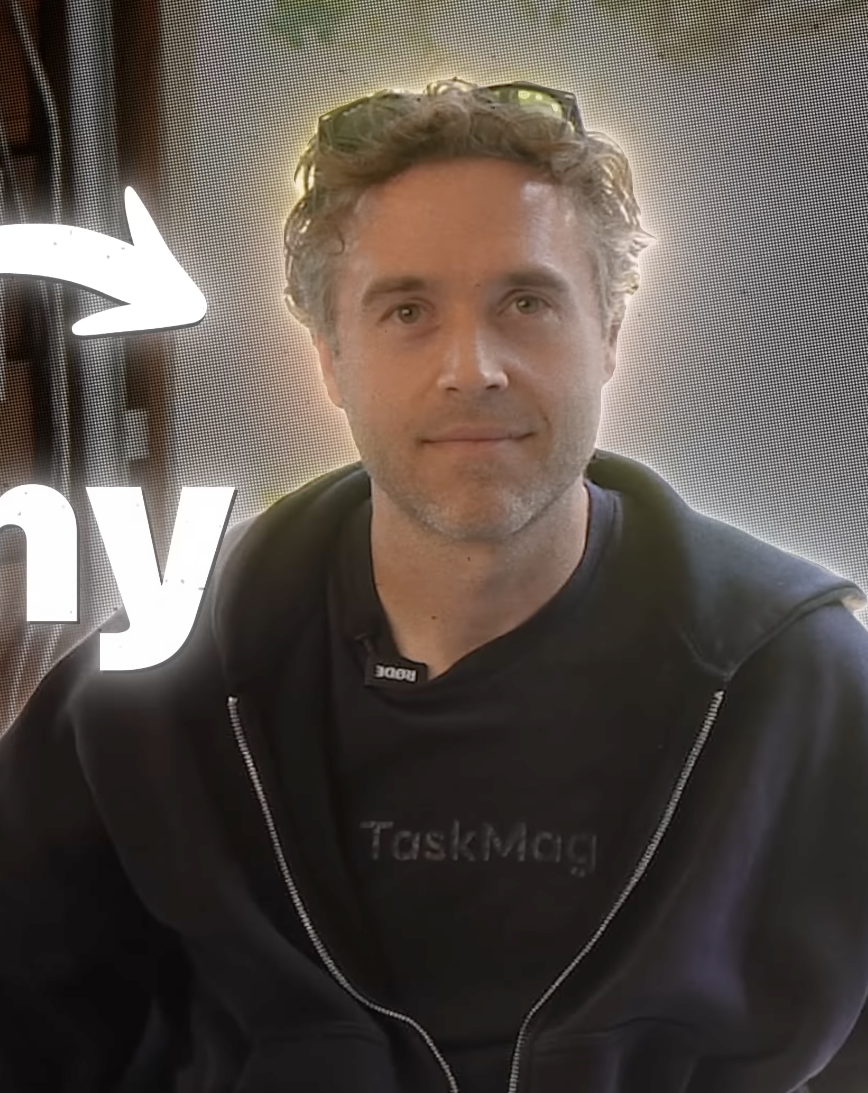
WHAT CAN WE LEARN FROM A SAAS MILLIONAIRE?
YOUTUBE SUMMARY : STARTER STORY
A chapter-based StackSlide on product strategy, ecosystem thinking, SaaS growth, exit pressure, and what AI changes about software building.
CHAPTER INDEX
THE NEW SAAS PLAYBOOK
CHAPTER 1
A DM STARTED IT ALL
THE STORY BEGINS WITH PROOF
The story starts with a direct message.
Jeremy claimed he had built and sold a SaaS business for millions.
That immediately raised the real question: was this luck, timing, or a repeatable system that still works in the AI era?
WHY THIS STORY MATTERS
NOT JUST SUCCESS THEATER
This was not interesting because of the house, the car, or the sale alone.
It mattered because Jeremy was pointing to a deeper shift: software may no longer be built as one isolated product.
It can now be built as an ecosystem.
THE BIG QUESTION
IS SAAS STILL ALIVE?
With AI tools rising fast, many people say SaaS is dead.
Jeremy’s case argues the opposite.
SaaS is not dead.
But the old way of building one product and forcing all growth through it may be getting weaker while ecosystem-driven products get stronger.
THE BUSINESS BEHIND IT
TASKMAGIC IN ONE LINE
Taskmagic was built to automate browser-based human actions.
It solved a gap left by tools like Zapier, which were often limited by APIs.
Instead of waiting for formal integrations, Taskmagic let users automate messy behavior directly in the browser.
REAL TRACTION
THIS WAS NOT A TINY SIDE PROJECT
The business reportedly scaled to more than 60,000 users and around 8,000 paying customers.
Some months went above $400,000 in revenue and the company reached about $3 million annually.
This gives real weight to the strategy behind it.
ONE FOUNDER, TINY TEAM
LEVERAGE OVER HEADCOUNT
A striking part of the story is team size.
Jeremy describes building and scaling the company with only one employee, his CTO.
That matters because it shows how modern software, no-code, and focused execution can multiply output without building a large org.
FROM NON-TECHNICAL TO SAAS
YOU DO NOT NEED THE PERFECT START
Jeremy did not begin as a traditional technical founder.
He started by hacking together an early product using no-code tools.
That first version was imperfect, but it was enough to validate demand, make money, and fund the next version.
VERSION 1 WAS IMPERFECT
BUT IT WAS USEFUL ENOUGH
The first product was described as a slow no-code app builder.
That could have killed momentum if perfection had been the goal.
Instead, it served a better role: proof of demand.
Once monetized, it created the room to hire and rebuild properly.
MONETIZATION CREATES OPTIONS
REVENUE IS STRATEGIC OXYGEN
Early revenue changes everything.
It turns ideas into options.
Once the first version made money, Jeremy could hire help, rebuild the product, and improve speed and quality.
A weak first version can still be powerful if it gets paid validation early.
A STRATEGIC PIVOT
LISTEN TO WHAT USERS REPEAT
After getting the first version to seven figures, the team stepped back and asked a bigger question.
What did customers keep asking for?
The answer was automation.
That repeated demand led them toward the larger opportunity instead of staying stuck in the first model.
THEY FOLLOWED THE PULL
CUSTOMER LANGUAGE IS MARKET DIRECTION
The important move was not inventing a random adjacent idea.
It was following the strongest signal from existing users.
Customers kept asking how to automate tasks.
That pull shaped the future business and helped turn a few hundred thousand into millions over time.
THE EXIT WAS TIMED
SELLING AT A PEAK IS A STRATEGY TOO
After strong growth and recognition, including landing on the Inc. 5000 list, Jeremy and his team saw that they might be near a meaningful peak.
Instead of assuming endless upside, they considered a sale while the story, numbers, and momentum were attractive.
THE CORE IDEA
CHAPTER 2
WHAT IS THE TENTPOLE STRATEGY?
ONE CORE PRODUCT WITH SUPPORTING PRODUCTS
The tentpole strategy means building one main product as the core business, then creating smaller products around it.
Those smaller products solve nearby problems, attract their own traffic, rank independently, make revenue, and feed users into the core product.
THE OLD WAY VS THE NEW WAY
FROM ONE PRODUCT TO AN ECOSYSTEM
The old model is simple: build one software product and push all marketing into it.
The tentpole model is different.
You build several focused products that support each other.
Each one becomes both a business asset and a distribution channel for the others.
TASKMAGIC WAS THE CORE
THE MAIN TENTPOLE
In Jeremy’s case, Taskmagic was the core tentpole.
It was the central automation engine.
Everything around it was designed to solve adjacent needs while naturally leading people back to Taskmagic when they needed more power, integration, or scale.
WHY THIS WORKS NOW
AI AND NO-CODE CHANGE THE ECONOMICS
This approach becomes more powerful in a world where shipping software is faster and cheaper.
When building mini-products no longer requires a huge team, products can be treated almost like content: fast to create, highly specific, and strategically connected.
SELL FUNCTIONALITY, NOT CONTENT
A CRITICAL MINDSET SHIFT
Jeremy makes a key point.
Instead of only creating free information tools or content for marketing, modern builders can create small functional software products.
Those tools do real jobs for users and can rank, convert, monetize, and upsell far better than content alone.
START WITH THE NEXT PROBLEM
THE RIGHT ADJACENCY MATTERS
Step one in the strategy is not building random add-ons.
It is identifying the next problem your current customer has after using your main product.
That next problem is where the supporting product should be built because the path between products stays natural.
SPECIFICITY WINS
NARROW PRODUCTS CAN GROW FASTER
A smaller and more specific tool can often rank and convert faster than a broad one.
Specificity sharpens search intent, value proposition, and customer fit.
That means a mini-product may attract users more efficiently than trying to make one giant all-in-one solution.
MINI PRODUCTS ARE NOT A DISTRACTION
THEY ARE PART OF THE SAME MACHINE
The supporting products are not meant to become unrelated side hustles.
That would scatter focus.
The point is to build an ecosystem where every product strengthens the same customer journey and deepens the same market position.
THE FIRST SATELLITE PRODUCT
MAIL LEAD
One supporting product they built was Mail Lead, a simple outbound email tool.
It addressed a clear need among their audience: business owners, agencies, freelancers, and sales-focused users who needed ways to do outreach before they needed deeper automation.
WHY MAIL LEAD MADE SENSE
IT MATCHED THE CUSTOMER JOURNEY
This product fit because Taskmagic users already cared about getting leads and driving action.
Outbound email was a direct next-step use case.
That made Mail Lead feel native to the ecosystem, not forced.
Good adjacency is what makes cross-product motion work.
SPECIFIC TOOLS GET SEO LIFT
ONE PRODUCT CAN OWN ONE INTENT
Mail Lead could target a narrow search intent better than a broad automation brand page.
That is part of the advantage.
Each focused product can rank around a specific problem, then introduce users to the wider product family once trust is earned.
A NATURAL UPGRADE PATH
UPSELL WORKS WHEN THE NEXT STEP IS OBVIOUS
The strategy becomes powerful when the smaller product naturally reaches a ceiling.
Users start with the simple tool.
Then they hit a limit, need integration, automation, or more complexity.
At that moment, the main product becomes the logical next purchase.
EMBEDDED HAND-OFFS MATTER
MOVE USERS ACROSS PRODUCTS SEAMLESSLY
Jeremy described connecting products through direct pathways.
A user doing email outreach could click into automation and land in Taskmagic.
That matters.
Cross-sell works best when it feels like feature expansion, not a separate sales pitch.
PRICING WAS PART OF THE MODEL
LOWER FRICTION AT THE ENTRY POINT
An important insight was that some customers did not want a recurring subscription immediately.
Using lifetime deals and usage-based pricing helped get adoption early.
This reduced resistance and let the ecosystem bankroll itself while increasing the chance of future upsells.
THEN THEY STACKED MORE
ADD THE NEXT PRODUCT IN THE CHAIN
After Mail Lead came another supporting tool: a lead discovery product.
The logic stayed consistent.
If users need to send outreach, they first need leads.
That means one tool creates the input and another tool acts on it, while the core product handles automation.
AN ECOSYSTEM COMPOUNDS
EACH PRODUCT FEEDS ANOTHER
This is where the model becomes powerful.
Leads feed email.
Email feeds automation.
Automation deepens product usage.
Each product has standalone value, but together they create a flywheel where acquisition, monetization, and retention reinforce each other.
PRODUCT AS DISTRIBUTION
CHAPTER 3
PRODUCTS CAN BE MARKETING
NOT JUST REVENUE ASSETS
One of the deepest ideas in this transcript is that products themselves can become a marketing layer.
Each mini-product is not only a revenue stream.
It is also a discoverability engine, a search entry point, and a trust-building surface for the wider ecosystem.
THIS CHANGES HOW BUILDERS THINK
FROM APP TO PORTFOLIO
Many founders think in terms of one app, one homepage, one funnel.
The tentpole model pushes a different view.
Think like a portfolio builder.
Create multiple precise assets that each capture demand and route users deeper into your broader business.
THE POWER OF SEARCH INTENT
OWN THE EXACT NEED
Broad brands are harder to rank and harder to explain.
Focused tools can win because they map tightly to one job.
The clearer the job, the clearer the search, the page, the hook, the conversion, and the next-step offer back into the tentpole.
AI MAKES THIS FASTER
SHIPPING NO LONGER COSTS THE SAME
What used to require larger teams and longer timelines can now be done much faster.
AI lowers the cost of prototyping, coding, writing, and launching.
That makes ecosystem building more practical for solo founders and lean teams than it was before.
THE NEW RISK
EVERYONE CAN BUILD FASTER NOW
AI does not only lower your cost.
It lowers everyone’s cost.
That means a single generic product becomes easier to copy and harder to defend.
An interconnected ecosystem with shared customer flow can become more defensible than one isolated tool.
SAAS IS EVOLVING, NOT DYING
THE WINNING SHAPE IS CHANGING
The transcript suggests a more accurate view than ‘SaaS is dead.’
Software still matters.
But the shape of winning software may shift from one large monolith toward smaller connected products built around a single market and a shared customer journey.
ONE IDEA STILL MATTERS
EVERY ECOSYSTEM STARTS SOMEWHERE
Even with the tentpole model, the process still begins with one working idea.
The difference is what happens next.
Instead of exhausting all growth inside one product, the founder expands outward into neighboring tools that increase distribution and monetization.
DO NOT BUILD RANDOMLY
EXPANSION NEEDS DISCIPLINE
A big danger is using AI speed to launch too many disconnected products.
That creates noise, not leverage.
The stronger interpretation of the strategy is disciplined adjacency: one audience, one ecosystem, several products, and a clear movement between them.
THE STRATEGIC LENS
ASK ONE HARD QUESTION
For every new product idea, ask:
Does this solve the next problem for the same customer and route them naturally back into the core business?
If the answer is yes, it may strengthen the tent.
If not, it may only split your attention.
THE EXIT REALITY
CHAPTER 4
THE SALE LOOKED GLAMOROUS
BUT THE INSIDE WAS DIFFERENT
From the outside, a seven-figure exit looks clean and aspirational.
Inside the process, it was stressful, uncertain, and emotionally heavy.
That contrast matters because public founder stories often show the outcome while hiding the cost of getting there.
HE WANTED OUT BEFORE 38
A PERSONAL DEADLINE SHAPED THE MOVE
Jeremy had a personal goal to exit before turning 38.
He also had family pressure and real financial obligations.
Those factors mattered.
The sale was not only a strategic event.
It was also tied to life stage, risk tolerance, and responsibility at home.
THE PROCESS WAS HEAVY
INTEREST DOES NOT EQUAL EASE
The business was listed and received strong interest, including more than one hundred messages.
But buyer attention does not remove the emotional weight.
The process still involved uncertainty, endurance, negotiation pressure, and the fear of things falling apart.
DEBT BEHIND THE EXIT
SUCCESS STORIES OFTEN HIDE THIS PART
One of the strongest moments in the transcript is the financial strain during the sale process.
Jeremy described personal debt and pressure mounting while waiting for the deal to close.
That exposes the messy truth behind many polished founder outcomes.
FOUNDERS CARRY PRIVATE FEAR
PUBLIC CONFIDENCE CAN BE MISLEADING
The fear was not abstract.
It was tied to family, mortgage, bills, and the possibility of having to explain failure at home.
That level of pressure often stays invisible online, but it shapes founder decisions more than public narratives usually admit.
EMOTIONAL ANCHORS MATTER
CLARITY IS NOT ALWAYS TACTICAL
Jeremy said one of the only things that brought calm was being with his daughter.
That detail matters.
In hard seasons, the stabilizing force is not always another tactic.
Sometimes it is the personal anchor that keeps someone psychologically steady enough to continue.
THE WIN DOES NOT ERASE THE WEIGHT
RELIEF COMES WITH A NEW QUESTION
After the sale, the financial result was life-changing.
But the transcript also hints at the strange emptiness after a major exit.
Once the pressure lifts, a founder often faces a new question:
what is my life and routine now that the mission changed?
WHAT FOUNDERS HIDE
CHAPTER 5
TOXIC POSITIVITY ONLINE
A REAL WARNING
Jeremy’s closing advice is sharp.
He says many people online present endless positivity, constant wins, and polished gratitude.
But they often hide the bad stretch, the doubt, the debt, the fatigue, and the moments where everything feels fragile.
WHY THIS MATTERS
FALSE SIGNALS DISTORT JUDGMENT
When founders only see polished stories, they misread reality.
They assume struggle means they are failing while others are winning cleanly.
That distortion creates shame and bad decisions.
Honest operating realities are more useful than success theater.
FOCUS ON PROBLEMS
NOT ON IMAGE MANAGEMENT
His advice was not to become negative.
It was to stay grounded in actual problems.
Problem focus leads to better product choices, clearer communication, and more resilient judgment.
Image focus often leads to pretending, drifting, and delayed correction.
SHARE THE HARD PARTS
AUTHENTICITY CAN BE STRATEGIC
There is also a brand lesson here.
Sharing bad days, failed attempts, and real constraints can create stronger trust than acting invincible.
People do not only connect with outcomes.
They connect with honest process and believable struggle.
THIS APPLIES BEYOND SAAS
A BROADER FOUNDER PRINCIPLE
The lesson is larger than software.
In any business, ecosystem thinking, honest operating narratives, and solving adjacent customer problems can beat the shallow approach of building one offer and wrapping it in artificial hype.
PRACTICAL LESSONS
CHAPTER 6
LESSON 1: START WITH DEMAND
DO NOT BEGIN WITH FANTASY
Jeremy’s path reinforces a core rule.
Start with a problem that already hurts enough for people to pay.
The first product does not need to be beautiful.
It needs to be useful enough to reveal demand and finance the next level of execution.
LESSON 2: FOLLOW CUSTOMER PULL
THE NEXT OFFER IS ALREADY IN THE SIGNALS
The best adjacent product is often hidden inside repeated user requests.
Listen to what your customers ask before and after they use the main offer.
Those repeated frictions can map the next product far better than brainstorming in isolation.
LESSON 3: BUILD SMALL BUT SHARP
SPECIFICITY BEATS VAGUE AMBITION
Small products can outperform broad ones when they solve one clear job.
Sharper use cases make search intent cleaner, messaging tighter, and conversion easier.
In the tentpole model, precision is not a limitation.
It is a growth advantage.
LESSON 4: DESIGN THE UPGRADE PATH
CROSS-SELL SHOULD FEEL INEVITABLE
Do not just build multiple tools.
Design their sequence.
What does the user need first?
What do they need next?
Where do they hit limits?
A strong ecosystem is built around logical movement, not random collections of products.
LESSON 5: LET PRICING REDUCE FRICTION
ADOPTION FIRST, EXPANSION LATER
Different entry points may require different pricing logic.
For some users, lifetime deals or usage-based pricing create enough trust to start.
Once value is proven, subscription or deeper product adoption becomes far easier to justify.
LESSON 6: USE AI FOR SPEED
BUT KEEP STRATEGY HUMAN
AI can help ship faster, test faster, and build more with less.
But speed alone is not strategy.
What matters is where you point that speed: toward the same audience, the same ecosystem, and the same compounding customer journey.
LESSON 7: BUILD DEFENSIBILITY THROUGH FLOW
NOT JUST THROUGH FEATURES
A single feature can be copied.
A product flow across several connected tools is harder to replace.
Defensibility can come from the movement between products, the data they create, the trust they build, and the convenience of staying inside one ecosystem.
LESSON 8: REVENUE BUYS TIME
CASH GIVES YOU STRATEGIC ROOM
One reason the story matters is that early monetization funded learning and rebuilding.
Revenue reduces dependence on theory.
It creates oxygen for iteration, hiring, patience, and optionality.
Founders should respect money as strategic leverage, not vanity.
LESSON 9: THE FOUNDER STORY MATTERS
TRUTH BUILDS STRONGER TRUST
People are tired of polished founder mythology.
A more durable brand comes from sharing what is real: the risk, the pressure, the missteps, and the logic behind decisions.
That kind of honesty can attract the right audience and deepen credibility.
LESSON 10: BUILD THE TENT, NOT JUST THE POLE
THE FINAL TAKEAWAY
The biggest lesson is this:
Do not think only about one product.
Think about the market you want to own, the sequence of needs inside it, and the cluster of tools that can serve that sequence.
The future may belong to connected product ecosystems.
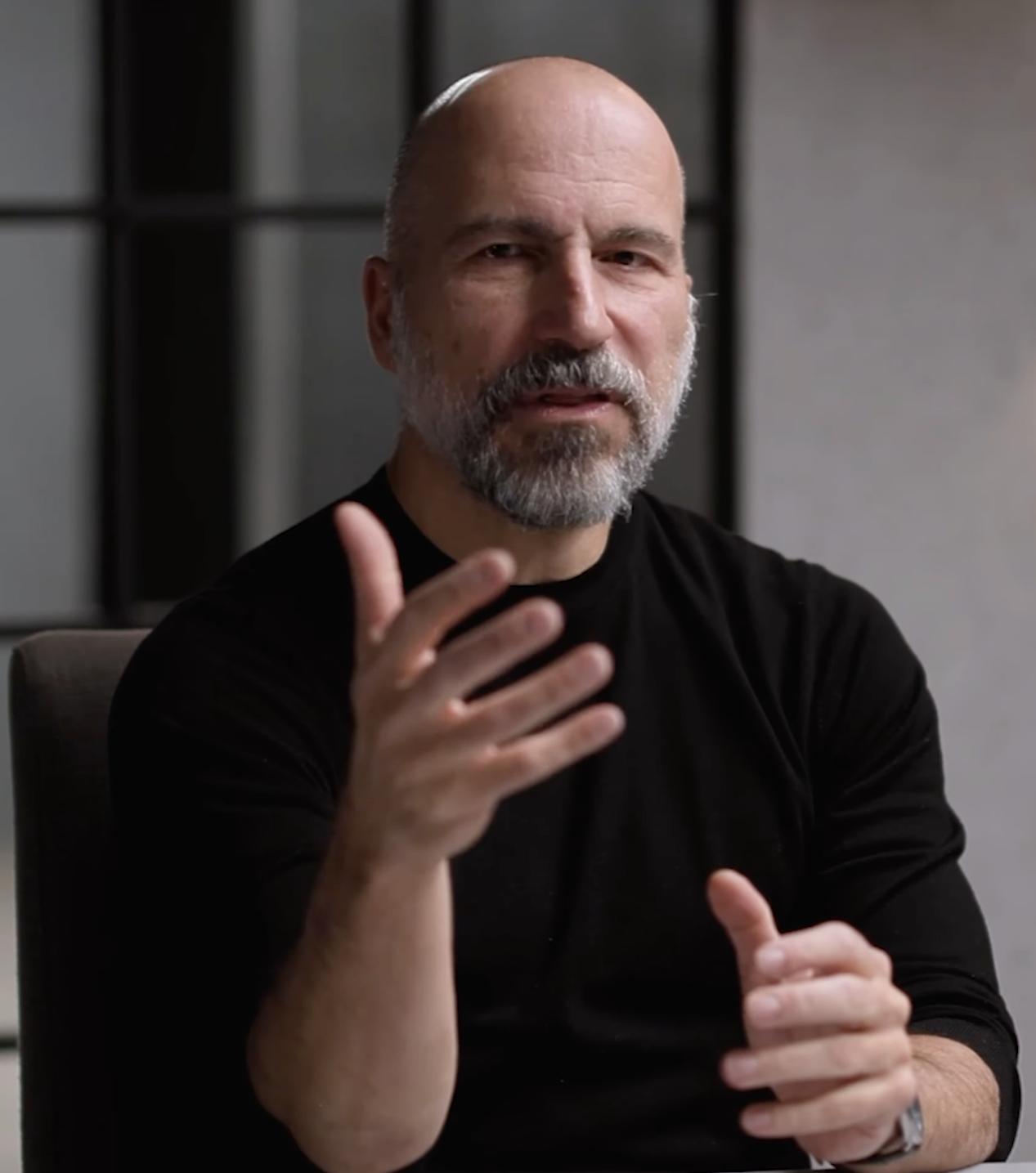
WHAT WE CAN LEARN FROM DARA KHOSROWSHAHI (UBER CEO)
YOUTUBE SUMMARY
A deep StackSlide based on Dara Khosrowshahi’s long-form interview about rebuilding, leadership, company culture, relentless execution, AI disruption, autonomous vehicles, and what founders, operators, and professionals can learn from it.
CHAPTER INDEX
FROM LOSS TO DRIVE
CHAPTER 1
BORN FROM INSTABILITY
THE EARLY IMPRINT
Dara’s life was shaped by political upheaval.
His family lost safety, status, and everything they had built in Iran.
That experience did not just create fear.
It created a permanent drive to rebuild and never take stability for granted.
WHEN THE FLOOR CAN DISAPPEAR
WHY URGENCY STAYS
He described a feeling that never leaves:
The rug can be pulled from under you.
That mindset can create anxiety.
But in business it also creates vigilance, ambition, and a refusal to become complacent when things look safe on the surface.
HIS FATHER’S IMPACT
MEANING BEYOND MONEY
Watching his father lose not just wealth but also his sense of value left a deep mark.
The lesson is massive:
Work is not only about income.
It is tied to dignity, worth, contribution, and identity.
That matters in every discussion about AI and unemployment.
WANTED TO MAKE FAMILY PROUD
CHAPTER 2
AMBITION BEGAN AS DUTY
BEFORE TITLES AND STRATEGY
He did not begin with a master plan to become CEO.
His early motivation was simpler:
Make his family proud.
That matters because many careers are built first on duty, responsibility, and hunger long before they are shaped by a polished career narrative.
IMPACT MATTERS MORE OVER TIME
MONEY FIRST THEN MEANING
After losing everything, making money mattered.
That was real.
But as safety improved, what mattered more was building something important.
This is a useful founder lesson:
Money can motivate the start.
Impact often sustains the long game.
LEARN FROM THE FATHER YOU SAW
POWER WITH RESPECT
One memory stayed with him:
Visiting his father’s factory and seeing workers respect him.
Not fear.
Respect.
That shaped a core idea:
Real leadership is not just scale or authority.
It is building something big while treating people with dignity.
ENGINEERING AS A CEO MINDSET
CHAPTER 3
WHY ENGINEERING MATTERS
THE COMPANY AS A SYSTEM
He loved engineering because equations map to reality.
That same logic shaped his view of business:
A company is an organism and a machine.
The CEO’s job is to engineer goals, structures, incentives, teams, and systems that make the machine produce the intended result.
PICK THE RIGHT GOALS
NOT JUST SOLVE HARD PROBLEMS
Problem solving is not enough.
You also have to choose the right problem.
That is a strong operator lesson:
A well-run team can still lose if it is optimizing the wrong goal.
Execution excellence cannot save a company from strategic misalignment.
GREAT CEOS THINK LIKE BUILDERS
OPERATIONAL DESIGN
His framing is sharp:
The CEO is not just a spokesperson or capital allocator.
The CEO is designing a living system.
That means structure, pacing, accountability, information flow, and talent design all become part of the product of leadership itself.
BET ON PEOPLE
CHAPTER 4
GREAT COMPANIES START WITH GREAT PEOPLE
A DURABLE RULE
One lesson he learned early:
Always bet on people.
Companies rise and fall.
Markets change.
But great people remain unusually valuable over long periods.
This matters for founders, investors, and hiring managers making long-term decisions.
WHAT MAKES SOMEONE WORTH BETTING ON
CHARACTER SIGNALS
He pointed to traits like success, honor, loyalty, and follow-through.
Not charisma alone.
Not hype alone.
A great person says what they will do and then does it.
That consistency compounds trust over time and becomes a strategic asset in business.
RELATIONSHIPS OVER TRANSACTIONS
THE LONG GAME
The idea is not just to find talent once.
It is to stay with good people through their careers.
That is how strong networks and enduring businesses are built.
You do not just collect deals.
You build long arcs of trust with exceptional people.
SPOTTING OPPORTUNITY IN TRANSITIONS
CHAPTER 5
FIND THE LEADERS IN THE SHIFT
WHO IS ALREADY WINNING
When big transitions happen, exact outcomes are unclear.
So instead of predicting every detail, identify who is already emerging as the leader in the shift.
That is how he and his team approached online commerce categories like travel, ticketing, and personals.
OVERPAYING FOR GREATNESS
PRICE VS FUTURE REALITY
He said they often overpaid for great companies based on what the market thought at the time.
But those prices looked cheap later because the future was not linear.
Strong transitions often create exponential outcomes that ordinary valuation logic fails to fully price.
HUMANS THINK LINEARLY
BUT TECHNOLOGY COMPOUNDS
People project the future in straight lines because everyday life feels linear.
But new technologies can create hockey-stick outcomes.
The opportunity often lives in the gap between what people assume will happen and how fast a superior technology actually scales.
TURNAROUNDS REQUIRE FORCE
CHAPTER 6
A BROKEN ENGINE IS AN EMERGENCY
EXPEDIA’S WARNING SIGN
At Expedia he saw something dangerous:
The technology engine was broken.
Old codebase.
Weak reinvestment.
Coasting leadership.
His lesson was decisive:
When you see the bell ring, act.
Do not wait for more proof while momentum turns against you.
TECHNOLOGY DECAY BECOMES EXPONENTIAL
THE DOWNSIDE CURVE
He explained that just as growth can become exponential, decline can too.
A bad technology trajectory may not look catastrophic in year one.
But if left untouched it can turn into a long-term disaster.
Leaders must act before the full damage becomes visible.
SOMETIMES YOU REPLACE THE TEAM
CULTURE VIA PEOPLE
He was blunt:
Sometimes the shortcut to changing culture is changing people.
Values posters are not enough.
If the company is coasting, you may need hungry people with the right operating instincts before culture can actually reset in real life.
TRANSPARENCY AS SELF-DEFENSE
CHAPTER 7
TELL THE TRUTH FIRST
SO TRUTH COMES BACK
His view is powerful:
As a leader, if you hide reality from your team, they will hide reality from you.
Transparency is not just ethics.
It is information strategy.
You tell the truth because it is the only way to increase the odds of receiving truth in return.
BAD DECISIONS OFTEN START WITH BAD DATA
THE REAL PROBLEM
He said many CEO failures are not from low intelligence.
They come from getting the wrong information.
This is crucial:
A leader must design channels that surface uncomfortable truth quickly.
Otherwise polished summaries slowly separate leadership from reality.
GO TO THE SOURCE
CUT THROUGH LAYERS
He learned to bypass filtered reporting and hear directly from the source.
The farther information travels up a hierarchy, the more its sharp edges get rounded off.
That is why direct channels with people deep in the system can be so valuable for CEOs.
CULTURE OF HARD WORK
CHAPTER 8
HARD WORK IS A SKILL
NOT JUST A PERSONALITY TRAIT
One of his strongest ideas:
Working hard is a skill.
It includes discipline, focus, repetition, emotional endurance, and the ability to keep going after losses.
He sees it as one of the most important advantages a person can build over time.
RELENTLESSNESS COMPOUNDS
TIME ACCELERATION
His logic is simple:
If you can take two shots while others take one, you compress time.
You get more data.
You learn faster.
You increase your odds of success.
Relentless execution is not just effort.
It is a compounding system for learning and winning.
BE HONEST ABOUT THE STANDARD
NO COASTING
He believes a company should be clear:
If you come here, you will work hard.
You will be stretched.
You will be held accountable.
That honesty lets the right people opt in.
It also reduces the damage caused by hidden expectations and cultural mismatch.
FLEXIBILITY IS NOT LAZINESS
DIFFERENT FROM LOW STANDARDS
He makes an important distinction:
You can work very hard and still have flexibility.
Dinner with family.
Emails at night.
Early morning check-ins.
The issue is not rigid office theater.
The issue is whether the person and the company are truly committed to output.
RISK, LOSS, AND LEARNING
CHAPTER 9
SAY THE LOSS OUT LOUD
THEN MOVE
He admired leaders who can say:
They won.
We lost.
Next.
That matters.
Do not deny the loss.
Do not drown in it.
Study it enough to learn.
Then move.
A company or person that cannot metabolize failure gets stuck in fear and self-protection.
TOO DEFENSIVE IS DANGEROUS
SUCCESS CAN WEAKEN YOU
As companies become successful they often become risk-averse.
They have more to protect.
He argues the opposite should happen.
A stronger company should be able to take smarter risks because it has more resources to absorb mistakes while pushing for bigger upside.
SET THE EXAMPLE ON RISK
THE LEADER DEFINES RANGE
He pushes teams to take smart risks through language, example, and personal decisions.
People do not learn courage from slogans.
They learn it when leaders take visible risks, survive misses, and show that intelligent experimentation is expected rather than punished.
VALUES THAT ACTUALLY MEAN SOMETHING
CHAPTER 10
GENERIC VALUES ARE FORGETTABLE
PASSION IS NOT ENOUGH
He criticized generic value lists that sound nice but describe every company on earth.
If your values could fit any brand, they do not really guide behavior.
Strong values should reflect how your company is different and how people are expected to act under pressure.
DO THE RIGHT THING. PERIOD.
JUDGMENT MATTERS
His favorite value was simple:
Do the right thing. Period.
No long paragraph.
No corporate poetry.
The power is in the burden it places on the employee:
Use judgment.
That pushes responsibility downward instead of hiding behind process or technical excuse.
GO GET IT
AN ATTITUDE NOT A PHRASE
One value he highlighted was 'go get it.'
It fits Uber’s product and its operating posture.
It signals movement, aggression, initiative, and winning intent.
Good values are memorable because they capture actual behavior in language the company can live with daily.
AI IS ALREADY INSIDE UBER
CHAPTER 11
UBER WAS BUILT ON APPLIED AI
BEFORE THE HYPE WAVE
He explained that Uber already runs on AI:
pricing, routing, matching, batching, and orchestration across tens of millions of daily trips.
This matters because it shows AI transformation often begins long before the public narrative catches up to it.
COMFORT WITH IMPERFECTION
96% RIGHT STILL MATTERS
Uber learned to live with AI systems that work most of the time but still create edge-case failures.
That is a mature lesson:
AI adoption is not about waiting for perfection.
It is about building organizations that can operate with probabilistic systems responsibly.
APPLIED AI WILL RESHAPE EVERY TEAM
NOT JUST AI LABS
He does not frame Uber as a frontier research lab.
He frames it as a company moving hard on applied AI.
That distinction matters for builders:
You do not need to invent foundation models to gain advantage.
You need to apply models deeply inside real workflows.
THE BIG JOB QUESTION
CHAPTER 12
AI CAN REPLACE MUCH HUMAN WORK
A SERIOUS WARNING
He said the capability may exist within about 10 years for many intellectual jobs and longer for physical jobs.
He did not give false comfort.
The point was clear:
The scale of disruption may be enormous and society may not be ready for the retraining challenge.
THE SPEED IS THE PROBLEM
NOT JUST THE TECHNOLOGY
Society has adjusted to past technological shifts.
But his concern is timing.
If the capability arrives too fast, the social systems around retraining, identity, income, and meaning may not adapt quickly enough.
That is where the real shock could happen.
JOBS ARE ALSO ABOUT WORTH
BEYOND SALARY
He connected work to value and self-worth.
That is why job loss is not only an economic issue.
It is psychological, social, and existential.
Any serious AI strategy that ignores human meaning will misread the scale of the coming societal challenge.
CODING IS CHANGING FAST
CHAPTER 13
MOST ENGINEERS ALREADY USE AI
BUT INTENSITY MATTERS
He shared that most of Uber’s coders already use AI tools.
But the biggest gains came from a smaller group of power users.
That is a useful signal:
Adoption alone is not the advantage.
Depth of usage and workflow redesign are where real productivity jumps begin.
FROM WRITING CODE TO ORCHESTRATING AGENTS
THE ROLE SHIFT
He sees coding moving from manual construction toward orchestration.
The engineer still matters.
But the job increasingly becomes directing systems, reviewing outputs, shaping architecture, and managing agent-based production rather than typing every piece by hand.
PRODUCTIVITY GAINS CHANGE HIRING LOGIC
MORE BUILDERS OR MORE AGENTS
His view is pragmatic:
If engineers become more productive, maybe you hire more of them to move faster.
Later, maybe you add fewer humans and more agents and GPUs.
That is how AI shifts strategy:
Not only what teams do but what management decides to buy.
AUTONOMY AND THE FUTURE OF UBER
CHAPTER 14
AUTONOMOUS VEHICLES WILL LIKELY WIN
ON SAFETY AND COST
He was direct:
Autonomous systems are becoming safer than human drivers in key contexts.
That creates a massive social upside through fewer deaths and cheaper transport.
But it also means large numbers of driving-related jobs may eventually disappear.
NOT TOMORROW BUT NOT FAR AWAY
PHYSICAL WORLD SLOWS IT
He does not expect full replacement overnight.
Regulation, hardware, manufacturing, sensors, and real-world deployment take time.
Still, the direction is clear:
Over 15 to 20 years, a growing share of trips could be fulfilled by non-human systems.
WHAT DO THE DRIVERS DO?
THE UNANSWERED QUESTION
When asked what millions of displaced drivers will do, he did not pretend to have a clean answer.
That honesty matters.
He pointed to new forms of platform work and AI-related tasks.
But the balance between new opportunity and automation remains uncertain.
ADVICE FOR PEOPLE IN THE AI ERA
CHAPTER 15
WORK HARD FIRST
A TIMELESS EDGE
His default advice to young people stayed the same:
Work hard.
Not because it solves everything.
But because it remains one of the few durable edges that compounds across industries, roles, and changing technology cycles.
A strong work ethic travels well across uncertainty.
DO NOT OVER-PLAN YOUR CAREER
LEAVE ROOM FOR SIGNAL
He warned against overly rigid career plans.
Why?
Because they reduce curiosity.
People start filtering reality for evidence that supports their existing plan instead of staying open to life-changing signals coming from the real world around them.
LET THE WORLD CHANGE YOU FIRST
STAY OPEN
Before trying to change the world, let the world change you.
That is one of the strongest lines in the interview.
It argues for curiosity over ego, signal over rigid identity, and responsiveness over self-constructed certainty in rapidly shifting environments.
FINAL LESSONS
CHAPTER 16
WHAT FOUNDERS CAN LEARN
PRACTICAL TAKEAWAYS
Tell the truth early.
Act fast when the engine is broken.
Bet on exceptional people.
Build direct information channels.
Treat hard work as culture.
Use values that actually guide behavior.
Take smart risks.
Operate with urgency before the market forces urgency on you.
WHAT PROFESSIONALS CAN LEARN
PERSONAL TAKEAWAYS
Do not depend only on job titles for security.
Build resilience.
Learn to work hard.
Stay useful.
Stay curious.
Adapt faster.
Treat AI as a force you must understand, not a topic you postpone.
And remember that meaning and contribution matter as much as income.
THE DEEPER TENSION
PROGRESS AND CONSEQUENCE
The interview sits inside one central tension:
Technology can improve life and still destabilize millions.
That means serious leaders must do two things at once:
Build the future aggressively and speak honestly about the cost of getting there.

SAAS IS MINTING MILLIONAIRES AGAIN
YOUTUBE SUMMARY : GREG ISENBERG
FIND A SUB-NICHE INSIDE A BIG MARKET
STEP 1
START SMALL INSIDE A BIG MARKET
WHY THIS MATTERS
Start with a large market like finance, healthcare, or marketing. Then narrow down into a specific sub-niche where competition is smaller and users have clearer pain points.
MAP THE FULL WORKFLOW
STEP 2
UNDERSTAND THE WORK END TO END
WHY THIS MATTERS
Study how the niche works from start to finish. Document every step people go through to complete their work.
IDENTIFY WHERE MONEY CHANGES HANDS
STEP 3
FIND THE REVENUE MOMENTS
WHY THIS MATTERS
Look for the exact moments where payment happens. These are usually the highest-value places for software to insert itself.
SPOT REPETITIVE MECHANICAL TASKS
STEP 4
REPETITION IS AUTOMATION OPPORTUNITY
WHY THIS MATTERS
Find tasks that happen repeatedly every day. Repetitive actions are the easiest targets for automation.
QUANTIFY THE COST OF THE WORKFLOW
STEP 5
PUT A NUMBER ON THE PAIN
WHY THIS MATTERS
Calculate how much time or money the workflow consumes. Once you quantify the cost, the value of your SaaS becomes much easier to sell.
CREATE SCROLL-STOPPING CONTENT
STEP 6
BUILD ATTENTION BEFORE THE PRODUCT WINS
WHY THIS MATTERS
Build media around the niche. Share insights, tips, and workflow pain points to attract an audience that already cares about the problem.
STUDY CONTENT ENGAGEMENT
STEP 7
ENGAGEMENT REVEALS DEMAND
WHY THIS MATTERS
Analyze posts that get saves, replies, and direct messages. These signals show where real interest exists.
DOUBLE DOWN ON ORGANIC WINNERS
STEP 8
REPEAT WHAT ALREADY WORKS
WHY THIS MATTERS
When a piece of content performs well organically, create more content around that same angle, pain point, or format.
RUN PAID ADS ON PROVEN CONTENT
STEP 9
PROMOTE WHAT HAS ALREADY PROVEN ITSELF
WHY THIS MATTERS
Turn successful organic posts into ads. If they work organically in the niche, there is a strong chance they can work as paid campaigns too.
CAPTURE EMAILS FROM DAY ONE
STEP 10
OWN THE AUDIENCE RELATIONSHIP
WHY THIS MATTERS
Build an email list early. Social platforms can change anytime, but email gives you a direct channel to your audience.
PERFORM THE WORKFLOW MANUALLY
STEP 11
DO THE WORK BEFORE YOU AUTOMATE IT
WHY THIS MATTERS
Start by doing the service manually. This gives you a practical understanding of the actual problem and outcome.
DOCUMENT EVERY STEP PRECISELY
STEP 12
PRECISION CREATES SYSTEMS
WHY THIS MATTERS
Write down each part of the process in detail so it can later be standardized, delegated, or automated.
SEPARATE JUDGMENT FROM MECHANICAL TASKS
STEP 13
KNOW WHAT HUMANS SHOULD KEEP
WHY THIS MATTERS
Figure out which tasks require human judgment and which are purely repeatable mechanical actions.
CONVERT MECHANICAL TASKS INTO AGENT WORKFLOWS
STEP 14
TURN REPETITION INTO AUTOMATION
WHY THIS MATTERS
Mechanical tasks are ideal candidates for AI agents and structured workflow automation.
DESIGN AI AGENTS TO COMPLETE TASKS
STEP 15
BUILD AGENTS AROUND SPECIFIC OUTCOMES
WHY THIS MATTERS
Each AI agent should be responsible for clear tasks inside the workflow.
CONNECT AGENTS TO REAL TOOLS
STEP 16
AGENTS NEED ACCESS TO SYSTEMS
WHY THIS MATTERS
Agents become useful when they connect to email, CRM, payments, Slack, and other real tools.
ADD ORCHESTRATION AND VERIFICATION
STEP 17
COORDINATION IS THE NEW INTERFACE
WHY THIS MATTERS
Future software will coordinate multiple agents, manage retries, and verify outputs before delivering results.
STORE USER PREFERENCES AND MEMORY
STEP 18
MEMORY BECOMES YOUR MOAT
WHY THIS MATTERS
Track user behavior and preferences so the product becomes smarter over time.
LAUNCH NARROW WITH HIGH-TOUCH ONBOARDING
STEP 19
GO DEEP BEFORE YOU GO BROAD
WHY THIS MATTERS
Serve a small group extremely well first and learn quickly.
PUBLISH MEASURABLE PROOF
STEP 20
PROOF SELLS BETTER THAN CLAIMS
WHY THIS MATTERS
Show measurable results such as hours saved or revenue increased.
SHIFT FROM PER-SEAT PRICING
STEP 21
TRADITIONAL SAAS PRICING IS WEAKENING
WHY THIS MATTERS
Charging per user seat is becoming less attractive in the AI era.
ADOPT PER-TASK PRICING
STEP 22
CHARGE FOR WORK DONE
WHY THIS MATTERS
Customers increasingly prefer paying for tasks completed.
MOVE TOWARD OUTCOME PRICING
STEP 23
PRICE BASED ON VALUE DELIVERED
WHY THIS MATTERS
The best pricing aligns with results delivered to the customer.
EXPAND INTO ADJACENT WORKFLOWS
STEP 24
GROW SIDEWAYS IN THE WORKFLOW
WHY THIS MATTERS
After solving one workflow, expand into nearby ones.
ORCHESTRATE MULTIPLE AGENTS
STEP 25
BUILD AN AGENT ECOSYSTEM
WHY THIS MATTERS
Multiple agents should collaborate across the workflow lifecycle.
BUILD SWITCHING COSTS
STEP 26
DATA AND MEMORY CREATE LOCK-IN
WHY THIS MATTERS
The more data your product stores, the harder it is to replace.
TURN POWER USERS INTO CASE STUDIES
STEP 27
SUCCESS STORIES DRIVE GROWTH
WHY THIS MATTERS
Real user stories build trust and attract more customers.
HIRE OPERATORS FROM THE NICHE
STEP 28
DOMAIN EXPERTS ACCELERATE PROGRESS
WHY THIS MATTERS
Industry insiders understand problems better than outsiders.
REINVEST PROFITS INTO GROWTH
STEP 29
REINVEST IN PRODUCT AND DISTRIBUTION
WHY THIS MATTERS
Use profits to improve features and expand reach.
BECOME THE DEFAULT EXECUTION LAYER
STEP 30
OWN THE WORKFLOW OF THE NICHE
WHY THIS MATTERS
The goal is to become the software layer that runs the core workflow for that niche.

THE NEXT 5 YEARS, AI DOES THE JOB, HUMANS GIVE DIRECTION
BY HARIO SETO
CHAPTER INDEX
THE CORE SHIFT
CHAPTER 1
AI MOVES INTO EXECUTION
OPERATOR MODE
AI will increasingly run the job end to end: research, draft, build, deploy, report, revise. It doesn’t get tired, it scales instantly, and it improves via iteration.
When execution is a repeatable chain, AI becomes the default worker that keeps shipping outcomes, not just suggestions.
HUMANS MOVE INTO DIRECTION
MASTERMIND MODE
Humans become the mastermind that gives direction. Not “more ideas,” but better decisions: what matters, what to ignore or prioritize, what risks.
When outputs are infinite, the scarce skill is choosing the right target, defining “good,” & steering the system as reality changes.
WHY WORK BECOMES COMPOSABLE
CHAPTER 2
JOBS ARE CHAINS
COMPOSABLE WORK
Most jobs are chains, not a single skill: research > plan > draft > build > distribute > measure > iterate.
AI is strongest on chained work because it can execute each step fast and consistently, then loop back with new inputs. The more modular the work, the easier it is to automate.
EXECUTION BECOMES CHEAP
ABUNDANCE ERA
Writing, coding, design, ad iterations, replies, reporting, QA, summarization.
The marginal cost of “one more version” collapses.
Output becomes abundant.
The bottleneck shifts away from production speed to selection quality: who knows what to make, what to ship, and what to stop.
AI EDGE : ORCHESTRATION
CHAPTER 3
DEFAULT INTERFACE: ORCHESTRATION
DOER SYSTEMS
The winners won’t be single tools.
They’ll be doers that coordinate tools, data, and actions. AI agents will plan tasks, call APIs, operate apps, trigger workflows, recover from errors, & continue.
The interface: “Goal + constraints” > autonomous execution > reporting > iteration.
AI LAYER: OPERATOR
WHAT AI DOES
Runs tasks end to end. Produces outputs in volume. Monitors metrics. Executes revisions. Maintains consistency.
It’s built for repeatability. Operator AI is not just generating text. It is managing steps, state, tools, and retries until the deliverable matches the brief and constraints.
HUMAN EDGE : MASTERMIND
CHAPTER 4
SPOT THE VALUABLE PROBLEM
LEVERAGE FIRST
While many fail when they solve a visible problem, not a valuable one.
Human value rises in identifying leverage, where effort creates disproportionate returns. In an abundance world, production is not the advantage.
Choosing the right problem, market, pain, timing > the real competitive edge.
ASK THE RIGHT QUESTION
FRAME THE SEARCH
AI answers questions.
Humans decide which question worth asking. The question defines the search space, constraints, what “good” means.
Bad questions produce busywork at scale.
Good questions produce clarity: what matters, what proof, what trade-offs, & what outcome.
CHOOSE THE RIGHT HYPOTHESIS
MAKE THE BET
A hypothesis is : “If we do X for Y, we expect Z because…”
AI generate many of these.
Humans choose the one aligned with reality, constraints, risk tolerance, and brand.
The mastermind picks the best bet, defines the test, sets the success metric, & decides whether to double down or pivot.
WHAT STAYS HUMAN
CHAPTER 5
GOAL SELECTION
PICK THE GAME
AI optimizes inside a goal.
Humans choose which goal matters.
This is strategy:
what game you are playing, what you will not do, and what “winning” looks like.
Human sets direction :
Goals, priorities, constraints, success metrics, and timeline.
TASTE AND JUDGMENT
FILTER THE OUTPUT
When execution is abundant, taste becomes the filter.
The mastermind decides what is right for this audience, this moment, & this positioning. It includes: tone, trust, cultural signals, long-term brand memory, & the difference between “works now” & “works sus
TRADE-OFFS UNDER UNCERTAINTY
OWN THE CONSEQUENCES
Real work is constraint navigation: time, budget, brand risk, legal risk, team capacity, politics, and timing.
AI can propose options.
but dont own consequences.
The mastermind chooses the trade-off, accepts risk, & makes the call with incomplete information.
TRUST AND ACCOUNTABILITY
HUMAN SIGN-OFF
People don’t blame the tool. They blame the owner.
Humans approve, validate, sign & carry responsibility.
That’s why direction stays human: ethics, safety, legality & reputational impact.
Human defines guardrails, verification steps & escalation rules before delegating execution to AI.
ETHICS
DRAW THE LINE
AI can execute anything asked to do.
Humans decide what should never be done.
Ethics is not optimization.
It is boundary-setting: what is acceptable, what is harmful, what crosses trust, law, or long-term damage.
The mastermind defines moral limits before speed and scale amplify mistakes.
MULTI-LAYER KNOWLEDGE
INTEGRATE, NOT ONLY GENERATE
Real direction requires combining multiple layers: domain expertise, context, human behavior, timing, culture, constraints, etc.
AI knows fragments.
Humans integrate them into one coherent outcome.
Human connects signals across those layers, decides how shape a single, intentional outcome.
THE WINNING LOOP
CHAPTER 6
THE LOOP
I THINK THIS IS THE LOOP WHERE HUMAN & AI WILL INTERACT
Spot leverage (problem/opportunity)
Ask the right question
Choose the hypothesis
Set goals and constraints
Ask AI to executes
Ask AI reports
Ask AI iterates
Updates direction.
The loop speed is the advantage.
Who runs this loop best will out-ship larger teams.
WHAT'S NEXT
CHAPTER 7
HOW LONG THIS WILL LAST
TIME HORIZON
At least the next 5 years.
Not because AI will stop improving.
But because direction compounds slower than execution.
Execution scales instantly.
Direction requires experience, context, judgment, and accountability.
Those do not compress easily.
WHY EXECUTION MOVES FAST
ACCELERATION MODE
AI improves on speed, cost & autonomy every cycle.
Execution becomes faster, cheaper, and more automated.
Orchestration becomes normal.
Output becomes infinite.
The ability to “do” stops being rare.
It becomes baseline.
WHY DIRECTION MOVES SLOW
HUMAN LAG, HUMAN EDGE
Direction requires experience, context, and consequence.
It depends on taste, ethics, responsibility, and long-term thinking.
These do not compress into compute.
This asymmetry keeps the mastermind role human.
THE REAL BOTTLENECK
UPSTREAM PROBLEMS
For the next 5 years, the hardest work stays upstream :
Choosing the right problem.
Asking the right question.
Making the right hypothesis.
Defining what “good” actually means.
AI can accelerate answers.
It cannot decide meaning.
THE STRUCTURAL SHIFT
NOT A TREND
This is not a temporary advantage.
It is a structural reallocation of value.
Doers are automated.
Operators are AI.
Direction belongs to humans.
WHO WINS
SKILL SELECTION
Those who train execution will be replaced.
Those who train direction will compound and win
The next 5 years reward:
THE MASTERMIND, not makers.
Decision-makers, not producers
System runners, not task doers.
FINAL WORDS
THE GATE IS OPEN, THIS IS JUST THE BEGINNING
This door is open now.
It won't last forever.
But for at least the next 5 years,
human leverage lives in direction.
Train yourself, your kids that skill.