
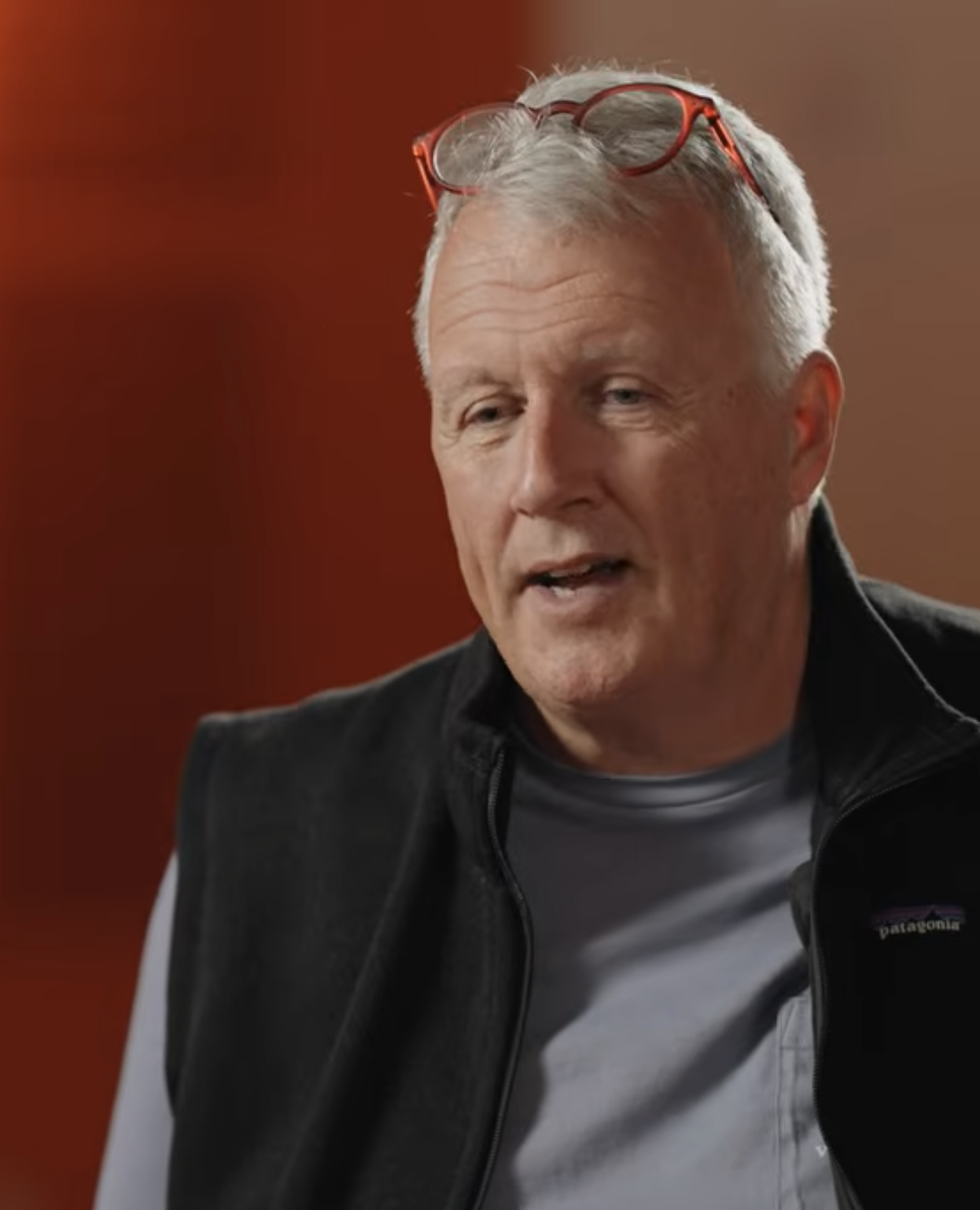
PAUL GRAHAM ON STARTUPS, AMBITION, AND GREAT FOUNDE…
YOUTUBE SUMMARY : YCOMBINATOR
CHAPTER INDEX
WHAT STILL MAKES A GREAT STARTUP?
PAUL GRAHAM'S FOUNDER PLAYBOOK FOR THE AI ERA
Technology changes quickly. Founder fundamentals change slowly.
Paul Graham's central message: ambitious ideas matter, but the company is built through determination, fast execution, resourcefulness, and the ability to keep moving through uncertainty.
THE CORE LESSON
NEW TECHNOLOGY. FAMILIAR FOUNDER PROBLEMS.
Microprocessors, the internet, and AI changed what startups can build. They did not remove the basic work of building one.
Founders still need to:
1. Choose a meaningful problem
2. Build with limited resources
3. Ship quickly
4. Learn from users
5. Survive repeated obstacles
THE FUNDAMENTALS SURVIVE
CHAPTER 1
“MOST OF STARTING A STARTUP IS ALWAYS THE SAME.”
__PAUL GRAHAM
Tools improve. Markets move. Costs shift. The founder's essential job remains: turn an uncertain idea into something people genuinely want.
AI accelerates production, but it does not automatically create judgment, courage, customer understanding, or persistence.
TODAY'S STARTUPS AIM HIGHER
FROM INTERNET PRODUCTS TO PHYSICAL AND MEDICAL BREAKTHROUGHS
Graham sees more founders pursuing serious, technically difficult problems: cancer treatments, personalized medical research, rockets, and intercontinental cargo.
The shift is not that ordinary software stopped mattering. It is that startup methods now reach problems once reserved for governments and large institutions.
WAIT FOR THE MODEL TO BREAK
HOW FRIGHTENINGLY AMBITIOUS IDEAS BECOME POSSIBLE
A giant incumbent is rarely defeated by copying it and attacking head-on. A better opening appears when technology changes the user's desired outcome.
Graham's example: people did not truly want a page of search results. They wanted information. AI changed how that outcome could be delivered.
THE STRATEGIC PATTERN
DO NOT COPY THE PRODUCT. REINTERPRET THE JOB.
1. Identify what users are actually trying to achieve.
2. Watch for a technological discontinuity.
3. Rebuild the experience around the desired outcome.
4. Let the incumbent's old business model become its constraint.
Large opportunities emerge when the old interface is no longer necessary.
AMBITION THAT SURVIVES REALITY
CHAPTER 2
AMBITION IS ENDURANCE FUEL
A BEAUTIFUL IDEA CANNOT CARRY THE COMPANY ALONE
Startups are grueling. The obstacles are too persistent for excitement, aesthetics, or status to sustain a founder.
Ambition supplies the long-term force: the need to make something important exist. It keeps the founder working after the novelty disappears and the difficult operational reality begins.
“WHAT ACTUALLY MOTIVATES FOUNDERS DAY-TO-DAY? THE FEAR OF FAILURE.”
__PAUL GRAHAM
The distant possibility of wealth is abstract. The immediate problem is concrete: the server is down, a customer may leave, or the product is breaking.
Strong founders respond to the danger in front of them. Years of solving urgent problems can eventually produce an extraordinary outcome.
THE MODEL TRAIN PRINCIPLE
PROTECT WHAT YOU ARE BUILDING TODAY
Graham compares a startup to a model train about to fall from a table. The founder acts because the thing they built must not break.
Daily operating loop:
1. Notice the immediate threat
2. Take responsibility
3. Fix it quickly
4. Return tomorrow
Great companies accumulate through thousands of rescues.
AMBITION MAY BE HIDDEN
OBEDIENCE CAN SUPPRESS IT WITHOUT REMOVING IT
Some founders do not appear ambitious because they were trained to seek permission, follow instructions, or avoid standing out.
The ambition already exists. The transformation happens when they permit themselves to choose the goal, reject the expected path, and act with ownership.
FORMIDABLE FOUNDERS
CHAPTER 3
“SOMEONE WHO GETS WHAT THEY WANT.”
__PAUL GRAHAM
This is Graham's simplest test of a formidable person. They repeatedly find a way forward across different situations.
It is not aggression or charisma. It is agency plus effectiveness: understanding the objective, adapting to resistance, and producing the intended result.
WHY INVESTORS SEEK FORMIDABLE PEOPLE
ALIGNED INTERESTS TURN FOUNDER AGENCY INTO INVESTOR UPSIDE
An investor owns part of the company. When a capable founder gets the outcome they want, aligned investors share in it.
Ideas may change. Markets may move. The founder's ability to learn, persuade, recruit, build, and recover remains useful across every version of the company.
“WITH STARTUPS, THERE'S NO EASY MAJOR.”
__PAUL GRAHAM
A startup is a poor credential strategy. Admission may create prestige, but the market does not award a degree for participation.
If the company works, it can become your life's work. If it fails, the badge alone has limited value. The only durable signal is what you actually built, learned, and achieved.
THE FOUNDER TEST
MEASURE BEHAVIOR, NOT SELF-DESCRIPTION
Ask four questions:
1. Do they take ownership without waiting?
2. Do they keep moving when the original plan fails?
3. Can they persuade users, recruits, and investors?
4. Do they consistently turn intention into evidence?
Formidability becomes visible through a pattern of outcomes.
START SMALL. REACH THE NEXT PROOF.
CHAPTER 4
CAPITAL FOLLOWS PROGRESS
USE THE RESOURCES YOU HAVE TO UNLOCK THE NEXT RESOURCES
Even capital-intensive companies can begin cheaply if they reduce the first objective. A rocket startup may start with a design, simulation, expert validation, technical paper, or booked launch.
The first goal is not the complete product. It is credible proof that justifies the next round of investment.
THE MILESTONE LADDER
MATCH EACH PROOF TO THE CAPITAL CURRENTLY AVAILABLE
1. Define the final ambitious outcome.
2. Find the smallest credible technical proof.
3. Build or validate it with current resources.
4. Use that evidence to raise the next amount.
5. Repeat with a harder milestone.
Capital efficiency means sequencing uncertainty, evidence, and funding.
“YOU JUST DO WHAT YOU CAN ON THE MONEY YOU GOT.”
__PAUL GRAHAM
Limited capital should change the milestone, not automatically kill the ambition.
The practical question is: What can we prove now? A convincing prototype, simulation, customer commitment, or technical result can convert a bold vision into a fundable next step.
CREDIBILITY CHANGES THE STARTING LINE
EXPERTISE CAN SUBSTITUTE FOR COMPLETED INFRASTRUCTURE
A recognized expert may raise money from a white paper and a committed launch because prior work reduces perceived execution risk. A new founder needs stronger evidence.
Credibility is accumulated proof. If you do not have reputation, manufacture trust through prototypes, customer commitments, test results, and fast delivery.
AI'S JAGGED FRONTIER
CHAPTER 5
AI DEVELOPED IN REVERSE
HUMAN BREADTH ARRIVED BEFORE DEPENDABLE PRECISION
Earlier researchers imagined AI progressing from a perfect fly, to a mouse, to a cat, and eventually to a human. Each stage would be narrow but reliable.
Instead, early generative AI arrived with broad, human-like language ability while remaining inconsistent and frequently wrong.
BROAD FIRST. RELIABLE LATER.
A NEW MODEL FOR UNDERSTANDING AI PROGRESS
The development path became:
1. Produce plausible human-like output
2. Expand capability across many domains
3. Improve reasoning and reliability
4. Reduce errors and uneven performance
This explains why AI can solve a difficult technical problem and still fail at a simple factual task.
THE FINISH LINE HAS WIDTH
AGI IS EMERGING UNEVENLY ACROSS CAPABILITIES
Graham describes AGI as a blurred finish line rather than one precise threshold. Some capabilities appear far beyond it. Others remain unreliable or incomplete.
The practical implication: evaluate AI task by task. A model's brilliance in one domain does not guarantee competence in another.
“IT TURNS OUT TO BE A SMEAR, AND WE'RE ON IT.”
__PAUL GRAHAM
We may already be inside the transition people once imagined as a single historic moment.
For founders, the opportunity lies in the unevenness: find valuable tasks where AI has crossed the capability threshold, then design safeguards for the areas where it has not.
SHIPPING STILL WINS
CHAPTER 6
THE BEST PREDICTOR REMAINS PACE
POWERFUL TOOLS HAVE NOT REMOVED EXECUTION VARIANCE
Graham still sees shipping speed as a strong predictor of startup success. AI can generate code, content, designs, and analyses faster, yet many teams still ship too slowly.
The constraint is not only production. Teams must decide what to build, commit to it, release it, observe reality, and adjust.
“YOU HAVE TO THINK OF THESE IDEAS FIRST.”
__PAUL GRAHAM
AI compresses the cost of execution. It does not automatically choose the right problem, identify the sharpest insight, or decide which feedback matters.
As building becomes easier, judgment becomes more valuable. The founder's advantage shifts toward better questions, stronger taste, and faster learning loops.
THE MODERN SHIPPING LOOP
TURN AI SPEED INTO MARKET LEARNING
1. Identify one important user problem.
2. Define the smallest useful release.
3. Use AI to compress production time.
4. Ship to real users.
5. Measure behavior and collect feedback.
6. Decide the next improvement.
The advantage comes from completing this loop repeatedly.
AI CREATES A NEW COST CENTER
COMPUTE JOINS SALARIES AS A MAJOR STARTUP EXPENSE
Software startups once spent primarily on people and laptops. AI companies can now face enormous inference and GPU bills.
Founders must understand the economics of every AI-powered action: usage, model choice, latency, quality, margins, and the likely decline of unit costs as technology improves.
BUILD AROUND OTHER BUILDERS
CHAPTER 7
STARTUPS ARE LONELY
COMMUNITY RESTORES COLLEAGUES WITHOUT REMOVING OWNERSHIP
A founder gains autonomy and upside, but loses the built-in colleagues of a normal workplace. A strong startup community provides peers who understand the pressure without taking control of the company.
Founders can exchange solutions, compare progress, and normalize the emotional difficulty of the work.
THE COMMUNITY COMPOUNDING EFFECT
KNOWLEDGE, CUSTOMERS, AND TRUST CIRCULATE INSIDE THE NETWORK
A high-value founder network creates three advantages:
1. Shared knowledge: someone has solved your problem
2. Early customers: peers decide quickly and test new products
3. Trust transfer: membership earns attention
Each new company can become a user, teacher, connector, or proof point for another.
YC WAS AN ACCIDENT THAT WORKED
A SUMMER EXPERIMENT BECAME A REPEATABLE INSTITUTION
YC began as an early-stage angel firm using small checks and standardized paperwork. The batch model emerged from a summer experiment for students.
The format worked because founders became real founders, investors learned through repetition, and every batch created a dense environment for mutual acceleration.
TRILLION-DOLLAR FOUNDERS
CHAPTER 8
“THE FOUNDERS OF IT ARE FORMIDABLE.”
__PAUL GRAHAM
Asked where the next trillion-dollar company will come from, Graham points first to the people, not a predetermined sector.
The idea must be promising, but startup ideas are mutable. Formidable founders can discover a stronger direction, recruit the required talent, and keep adapting until the company works.
THE FOUNDER OPERATING SYSTEM
EIGHT PRINCIPLES TO CARRY INTO ANY STARTUP
1. Pursue a problem worthy of years.
2. Find the shift that makes it possible now.
3. Protect the company through daily crises.
4. Become someone who gets results.
5. Turn limited capital into the next proof.
6. Use AI where it is dependable.
7. Ship and learn quickly.
8. Build inside a strong network.
AMBITION SETS THE DESTINATION
EXECUTION DETERMINES WHETHER YOU ARRIVE
The lasting startup formula is simple:
Choose an important outcome. Start with the resources you have. Reach the next credible milestone. Ship faster than your uncertainty grows. Keep learning. Keep adapting. Keep the model train on the table long enough for the ambitious idea to become real.