
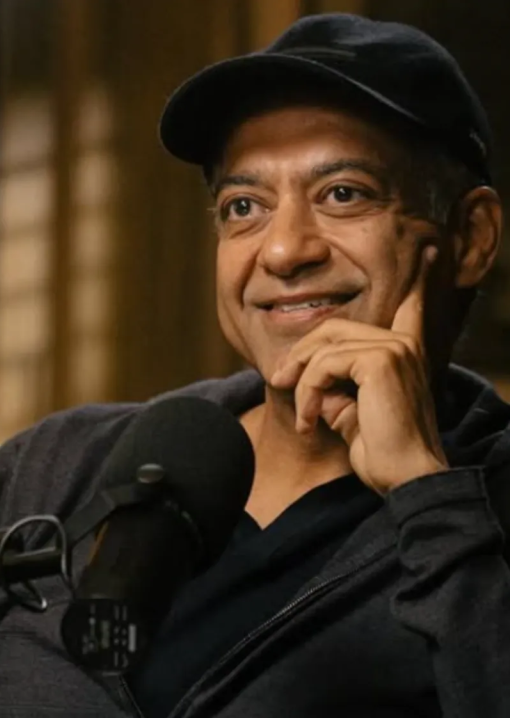
NAVAL RAVIKANT: READ, DECIDE, AND LIVE BETTER
YOUTUBE SUMMARY : THE KNOWLEDGE PROJECT PODCAST
CHAPTER INDEX
READ. THINK. BUILD. LIVE.
THE PHILOSOPHY OF NAVAL RAVIKANT
A LIFE BEYOND ONE JOB TITLE
INVESTOR, FOUNDER, READER, AND PHILOSOPHER
Naval built AngelList, invested in hundreds of startups, advised founders, explored cryptocurrency, and kept creating side projects.
His real concern was broader: How can a person work freely, think clearly, stay happy, and live without being trapped by schedules, roles, or identities?
READING AS A WAY OF LIFE
CHAPTER 1
READING WAS HIS FIRST LOVE
THE LIBRARY BECAME HIS WORLD
Raised by a single mother in New York, Naval spent his afternoons in the library until it closed.
He read whatever he could find: comics, Reader's Digest, mysteries, fantasy, science fiction, science, mathematics, and philosophy. Curiosity built the ladder naturally.
LET CURIOSITY CHOOSE THE BOOK
INTEREST CREATES THE HABIT
Forcing children or adults to read the “right” books can make reading feel like duty. Naval's path began with mental junk food and gradually moved toward deeper ideas.
The first objective is to love reading. Once the habit exists, taste improves through exposure.
BOOKS ARE INVESTMENTS
ONE IDEA CAN CHANGE A LIFE
A useful book may cost only a few dollars and still alter how you think, work, or live. Naval bought books even when he had little money.
He accepts that many will remain unfinished. The value of one exceptional insight can repay the entire shelf.
REREAD WHAT CHANGES YOU
DEPTH MATTERS MORE THAN VOLUME
The goal is not to finish every popular title. Find the books that speak directly to you, then return to them.
A great book becomes part of your thinking through repeated exposure. Forgetting and rediscovering it can mean you are ready to absorb it at a deeper level.
READ BOOKS LIKE BLOGS
JUMP, SKIM, STOP, AND RETURN
A book does not need to be read from beginning to end.
1. Start anywhere.
2. Skim until something matters.
3. Read that section deeply.
4. Stop without guilt.
This removes the rule that traps many people inside books they no longer want to read.
BUILD THE DAILY READING LOOP
CONSISTENCY CREATES COMPOUNDING
Naval reads whenever boredom appears: before sleep, during travel, after exercise, or in the morning. He makes books easy to reach across his devices.
Like exercise, the best reading practice is the one you enjoy enough to repeat. Format matters less than returning to ideas every day.
“THE IMPORTANT THING IS TO READ EVERY DAY.”
__NAVAL RAVIKANT
HABITS AND THE MIND
CHAPTER 2
HABITS ARE INVISIBLE PROGRAMS
THEY AUTOMATE EVERYDAY LIFE
Habits let the brain handle familiar tasks while preserving attention for new problems. They shape movement, food, reading, judgment, mood, and even happiness.
The danger is unconscious accumulation. A useful childhood response can quietly become an unhealthy adult pattern.
IDENTITY MAKES HABITS STICKY
“THIS IS WHO I AM” BECOMES A PRISON
We bundle repeated reactions into an identity: “This is just how I am.” That makes old conditioning harder to inspect.
Ask of every persistent pattern:
1. Where did it come from?
2. Does it still serve me?
3. Does it improve my health, happiness, or work?
HABITS CAN BE BROKEN
STRONG MOTIVATION MAKES CHANGE POSSIBLE
Naval rejects the claim that every habit must be replaced. Some can be fully unlearned, although the process requires effort.
Lasting change often begins when the reason becomes strong enough: better health, clearer thinking, deeper sleep, stronger relationships, or freedom from dependence.
STUDY THE HABIT AS A SYSTEM
ALCOHOL REVEALED THE REAL TRIGGERS
Naval traced drinking to two forces: availability and desire. Morning exercise exposed the physical cost. He also saw that he drank to tolerate social settings he did not enjoy.
The solution addressed the system: protect the morning, choose better company, change the setting, and remove the underlying need.
MAKE HEALTH THE FIRST PRIORITY
TIME FOLLOWS WHAT MATTERS MOST
“I don't have time” usually means “it is not a priority.” Naval placed physical health first, followed by mental health, spiritual health, family well-being, and then work.
A clear order removes daily negotiation. The morning workout happens before the rest of the world is allowed into the day.
“THE MIND SHOULD BE A SERVANT AND A TOOL, NOT A MASTER.”
__NAVAL RAVIKANT
THE MONKEY MIND NEVER STOPS
THOUGHT BECOMES UNCONTROLLED NOISE
The mind replays yesterday, judges the present, and rehearses imaginary futures. That ability helps with planning and survival. Running it continuously creates anxiety and disconnects us from reality.
The aim is not to destroy thought. It is to activate thinking deliberately when a real problem requires it.
RUN YOUR MIND IN DEBUG MODE
OBSERVE BEFORE AUTOMATICALLY REACTING
Catch the mind while it wanders. Ask: Do I need to solve this now? Is this thought useful, or is it ego rehearsing a fantasy?
Awareness creates distance between you and the reaction. With practice, attention returns to the conversation, task, sensation, or person directly in front of you.
HAPPINESS AND PRESENCE
CHAPTER 3
HAPPINESS IS THE DEFAULT STATE
IT APPEARS WHEN NOTHING FEELS MISSING
Happiness is not constant excitement. It is the quiet state that remains when the mind stops insisting that life must be different.
When nothing seems missing, thought stops rushing into the future or retreating into the past. For a moment, there is internal silence, contentment, and presence.
DESIRE CREATES MENTAL NOISE
EVERY DEMAND PULLS ATTENTION AWAY
Wanting external circumstances to complete us keeps the mind in motion. Positive and negative judgments also depend on each other: attractive implies unattractive; success implies failure.
Fewer demands on reality create more room to accept what already exists.
PRESENCE CANNOT BE POSSESSED
ATTACHMENT RESTARTS THE STRUGGLE
The moment you think, “I am happy, and I must keep this,” the mind starts trying to preserve a temporary state. Presence disappears.
Happiness grows through less resistance, less fixation on past and future, and fuller contact with the reality of this moment.
“LIFE IS A SINGLE-PLAYER GAME.”
__NAVAL RAVIKANT
USE AN INTERNAL SCORECARD
EXTERNAL APPLAUSE CANNOT SETTLE THE MIND
Money, appearance, status, and social approval are multiplayer games. Inner peace is measured privately.
You experience life from inside one mind. Your interpretations, memories, fears, and satisfaction are yours. The essential comparison is with your own values and previous choices.
JEALOUSY DEMANDS THE FULL SWAP
YOU CANNOT SELECT ONLY THE ATTRACTIVE PARTS
When you envy someone, imagine exchanging everything:
• Body and money
• Family and relationships
• Desires and fears
• Habits and self-image
• Happiness and private pain
If you would not accept the complete 24/7 exchange, jealousy loses its logic.
INNER WORK IS INDIVIDUAL
THE DEEPEST CHANGES HAPPEN PRIVATELY
Groups can offer support, language, and techniques. The actual work of observing thought, dissolving envy, calming anger, and changing reactions still happens inside one person.
Social approval can easily become another distraction from the inner result you claim to seek.
VALUES AND CHARACTER
CHAPTER 4
CHOOSE WHAT YOU WILL NOT COMPROMISE
VALUES ARE LONG-TERM OPERATING RULES
Foundational values are deliberately chosen ways of living. They help decide which people, projects, and environments belong in your life.
Naval's examples include honesty, long-term thinking, peer relationships, freedom, and distance from chronic anger.
MAKE THOUGHT AND SPEECH CONGRUENT
HONESTY REDUCES MENTAL FRAGMENTATION
When you repeatedly say something different from what you think, the mind must track multiple stories. That creates future planning, past regret, and distance from the present.
Honesty means being able to speak plainly without performing cruelty or using truth as a weapon.
NEVER BUILD ON SHORT-TERM DEALING
COMPOUNDING NEEDS DURABLE RELATIONSHIPS
The largest benefits in money, knowledge, health, love, and reputation arrive through compounding. Short-term exploitation destroys the time horizon required for those gains.
Work with people you can trust for years. Build things whose value strengthens as time passes.
PRAISE SPECIFICALLY. CRITICIZE GENERALLY.
PROTECT TRUTH WITHOUT ATTACKING IDENTITY
When praising, name the person and the behavior worth copying. When criticizing, address the general approach or class of behavior.
This keeps the lesson clear while reducing unnecessary conflict with ego. Radical honesty works best when combined with restraint and precision.
FREEDOM CHANGES WITH MATURITY
FROM FREEDOM TO, TOWARD FREEDOM FROM
Early freedom meant doing anything at any time. Later, Naval began valuing internal freedom:
• Freedom from automatic reaction
• Freedom from anger
• Freedom from needless sadness
• Freedom from obligation created without intention
The deeper freedom is self-command.
REVIEW LIFE ONE DECADE AT A TIME
FIND THE REPEATING EMOTIONAL MISTAKE
Ask what advice your present self would give your younger self. Then review each year: What were you doing? How were you feeling? What pattern repeated?
Naval found that he would still make many of the same decisions, while carrying less anger and emotional friction through them.
PAUSE BEFORE EMOTION BECOMES ACTION
TIME RESTORES A CLEARER STATE
When an email triggers anger, wait 24 hours before responding. The facts may remain, while the hormones and emotional momentum fade.
The pause is not avoidance. It prevents a temporary mental state from making a durable decision.
BELIEFS, SOCIETY, AND EDUCATION
CHAPTER 5
START WITH THE MICRO
WORK ON WHAT CAN BE TESTED DIRECTLY
Naval grew skeptical of broad theories that cannot make falsifiable predictions. He prefers microeconomics, game theory, and local action.
Before trying to redesign society, improve yourself. Then help your family, neighbor, team, or customer. Concrete feedback produces clearer learning.
LABELS LOCK THE MIND
PACKAGED IDENTITIES CARRY PACKAGED BELIEFS
Political and social labels pressure people to defend positions they have never examined. If all your beliefs fit neatly inside one ideology, they may have been assembled by someone else.
Hold ideas individually. Stay willing to revise them when reality supplies better evidence.
BE SKEPTICAL OF TECHNOLOGICAL SALVATION
FUTURE PROMISES CAN STEAL THE PRESENT
Naval viewed singularity narratives as speculative: general AI, immortality, and human perfection remain far beyond current understanding.
Such visions can inspire research. They become harmful when hope for future rescue causes people to postpone living the one life already available.
ONLY THIS MOMENT EXISTS
THE PAST IS MEMORY; THE FUTURE IS PREDICTION
No one can return to the past, and reliable prediction is sharply limited. Experience occurs only at this point in space and time.
The moment is unique and immediately disappearing. Attention is therefore one of life's scarcest resources: spend it where life is actually happening.
EDUCATION BUILT FOR CURIOSITY
CHAPTER 6
LEARNING IS ABUNDANT. DESIRE IS SCARCE.
THE INTERNET CHANGED THE CONSTRAINT
Lectures, books, courses, communities, and experts are widely accessible. A motivated learner can study almost anything.
The old system was built when information and teachers were scarce. The modern challenge is developing curiosity, choosing what matters, and sustaining the desire to learn.
MASTER THE BASICS BEFORE ADVANCING
MISSING ONE RUNG BREAKS THE LADDER
Subjects such as mathematics are cumulative. Miss one foundational concept and later lessons become memorized procedures without understanding.
Learn the basics repeatedly and from multiple explanations. Pursue advanced material where genuine interest and strong foundations meet.
TEACH WHAT LIFE ACTUALLY REQUIRES
PRACTICAL KNOWLEDGE DESERVES A PLACE
Education often overlooks nutrition, cooking, health, relationships, happiness, meditation, and building technology.
A useful system would help each learner develop essential life skills while following individual aptitude and curiosity instead of forcing everyone through one pace and sequence.
PERSONALIZE THE LEARNING EDGE
CONNECT EVERY STUDENT TO THE RIGHT TEACHER
Naval imagined inexpensive, durable tablets that identify a learner's language, level, and interests, then provide instruction at the right difficulty.
Technology can connect teachers and students globally. The system should keep each learner challenged, curious, and moving toward knowledge with practical value.
SCIENCE IS THE STUDY OF TRUTH
MATHEMATICS IS NATURE'S LANGUAGE
Science matters because its predictions can be tested and its discoveries become technology. For Naval, studying nature produces the awe others may find in religion.
He stays close to fundamentals. A simple, deeply understood principle is more useful than advanced terminology that cannot be derived or explained.
READ OUTSIDE THE HERD
AVERAGE INPUTS PRODUCE AVERAGE THINKING
Reading only bestsellers and socially approved ideas narrows thought. Explore original sources, opposing arguments, old books, difficult ideas, and material you privately enjoy.
Independent outcomes require independent inputs. Read to understand, not to signal membership in the crowd.
DISTILL INSTEAD OF COLLECTING
NOTES ARE USEFUL ONLY WHEN THEY SHARPEN THOUGHT
Naval rarely takes traditional notes. He highlights selectively and often distills an insight into a short post. Compression forces clarity and exposes weak reasoning to criticism.
The purpose is not to build a perfect archive. It is to let the idea change how you see and act.
DECISIONS, SYSTEMS, AND TRUST
CHAPTER 7
JUDGMENT PRODUCES NONLINEAR RETURNS
SMALL IMPROVEMENTS SCALE THROUGH LEVERAGE
A person who is right slightly more often can create dramatically more value when decisions control capital, technology, or large teams.
Good judgment compounds because one clear choice can influence thousands of downstream actions. Decision quality is therefore a core economic skill.
USE PRINCIPLES, NOT PREDICTIONS
BUILD FROM REUSABLE MENTAL MODELS
The brain predicts from memory, but specific past events rarely repeat exactly. Mental models travel better across situations.
Naval draws from evolution, game theory, complexity science, Charlie Munger, Nassim Taleb, and Benjamin Franklin to reason under uncertainty.
ELIMINATE WHAT WILL NOT WORK
OPERATE HONESTLY INSIDE UNCERTAINTY
Prediction is limited. Instead of pretending to know the winner, remove choices with obvious failure conditions.
Ask:
1. Can I trust the people?
2. What can destroy the outcome?
3. Is there a margin of safety?
4. Is the upside much larger than the downside?
BUILD SYSTEMS THAT SURVIVE BAD CALLS
DESIGN THE ENVIRONMENT AROUND PROBABILITY
A strong system does not require perfect prediction. Naval prefers seeing many opportunities, making several asymmetric bets, and increasing commitment when evidence reveals the winners.
Arrange work, health, and relationships so one imperfect decision cannot destroy the whole structure.
“NO ONE CAN BEAT YOU AT BEING YOU.”
__NAVAL RAVIKANT
FIND THE WORK THAT NEEDS YOU
SPECIFIC KNOWLEDGE IS PERSONAL
Your combination of knowledge, capability, temperament, and desire is difficult to copy. Stop building a life from another person's checklist.
Find the people, problem, business, art, or project that benefits most from what is unusually natural to you.
JUDGE INTEGRITY BY OTHER RELATIONSHIPS
WATCH HOW PEOPLE TREAT THOSE THEY DO NOT NEED
Someone who exploits another partner while promising loyalty to you has revealed the operating system they may later use against you.
High-integrity people protect fairness because unethical behavior would damage their own self-respect. Their compass remains active even when misconduct is profitable.
HARD CHOICES CREATE AN EASIER LIFE
SHORT-TERM SACRIFICE PROTECTS THE FUTURE
Integrity, exercise, saving, honest conversations, and healthy food can cost more today. They reduce larger costs later.
Easy choices defer the price. Hard choices pay it early. Character is long-term self-interest expressed through short-term discipline.
“THE SMARTEST PEOPLE CAN EXPLAIN THINGS TO A CHILD.”
__NAVAL RAVIKANT
CLARITY REVEALS UNDERSTANDING
COMPLEX LANGUAGE CAN HIDE WEAK FOUNDATIONS
Real knowledge is built from the ground up. A clear thinker can connect the basics through an unbroken chain of reasoning.
Precise vocabulary is useful. Unnecessary jargon often signals performance. If you cannot explain the idea simply, return to the foundations until you can.
DESIRE DISTORTS REALITY
TRUTH GETS CLEARER WHEN EGO GETS SMALLER
We often ignore evidence because we want a relationship, business, or decision to succeed. Suffering arrives when the hidden reality can no longer be avoided.
Reduce attachment to the preferred outcome. Acknowledge bad news openly. Public honesty makes private self-deception harder.
FOUNDERS AND LONG-TERM EXECUTION
CHAPTER 8
IDEAS ARE COMMON. JUDGMENT IS RARE.
EXECUTION CREATES THE DIFFERENCE
Most ideas have already been considered. The rare combination is choosing well, understanding the field, maintaining an unusually high standard, attracting resources, solving problems, and staying committed.
Vision matters when it is converted into sustained execution.
FOUR SIGNALS OF A STRONG FOUNDER
LOOK FOR DEPTH AND ENDURANCE
1. Deep knowledge of the space
2. A contrarian insight grounded in reality
3. Genuine passion for the work
4. The ability to execute and solve problems
Luck and timing still matter. These qualities cannot guarantee success, but their absence makes failure easier to predict.
BUILD FOR A TEN-YEAR COMMITMENT
THE JOURNEY MUST BE WORTH LIVING
A meaningful outcome may take a decade. Choose work you understand deeply and enjoy enough to continue before the rewards arrive.
Irrational optimism provides endurance. Knowledge, execution, and passion direct it. Because the outcome is uncertain, the process itself must remain worthwhile.
GIVE GREAT PEOPLE ENOUGH TIME
CAPABILITY COMPOUNDS ON ITS OWN SCHEDULE
Naval observed that highly capable, intelligent, and dedicated people usually achieved strong outcomes eventually. The timing rarely matched anyone's expectation.
Evaluate character and trajectory across a long horizon. Patience allows talent, reputation, relationships, and judgment to compound.
RATIONAL BUDDHISM AND MEANING
CHAPTER 9
TEST EVERY BELIEF FOR YOURSELF
KEEP WHAT SURVIVES EVIDENCE AND EXPERIENCE
Rational Buddhism combines Buddhism's inner practices with science and evolution. Naval accepts what he can verify through experience, reasoning, or falsifiable evidence.
Try the practice. Observe the effect. Stay skeptical. Keep what helps you become more present and humane. Discard unsupported claims.
ADD TWO-FACTOR AUTHENTICATION TO YOUR CALENDAR
PROTECT FUTURE YOU FROM PRESENT ENTHUSIASM
Present you makes commitments for an imaginary future self with unlimited energy. When the date arrives, that person is still tired, hungry, and human.
Write the commitment down. Revisit it after 48 hours. Ask whether you would do it now. If the answer is not a clear yes, decline.
THE FUNDAMENTAL EXTERNAL DELUSION
“I WILL BE HAPPY WHEN…”
A new possession, milestone, status, or relationship may improve circumstances without producing permanent peace. Often we are addicted to desiring the thing more than having it.
Act in the world. Build and create. Stop asking the external result to provide the lasting inner state it cannot guarantee.
THREE ANSWERS TO LIFE'S PURPOSE
PERSONAL, EXISTENTIAL, AND SCIENTIFIC
1. Meaning is personal; discover your own.
2. Life has no built-in purpose; create one.
3. Living systems may serve a physical process by creating local order while accelerating universal entropy.
The scientific answer may describe a process. It does not tell you how to live today.
“THE IMPORTANT PART IS NOT THE ANSWER. IT'S THE QUESTION.”
__NAVAL RAVIKANT
CREATE THE MEANING YOU CAN LIVE
THE QUESTION MAY TAKE DECADES
No borrowed answer from a philosopher, teacher, or founder can replace personal inquiry. Sit with the question until an answer becomes fundamental to how you choose and act.
Meaning may be creation, service, love, family, discovery, play, or self-actualization. Its force comes from being lived.
A PRACTICAL PHILOSOPHY FOR TODAY
TURN THE IDEAS INTO ACTION
Read what pulls you.
Inspect the habits that run you.
Protect your health and attention.
Choose values that compound.
Build systems that survive uncertainty.
Work with people you trust.
Commit to something worth a decade.
Create your own meaning—and live it now.