
CHAPTER INDEX
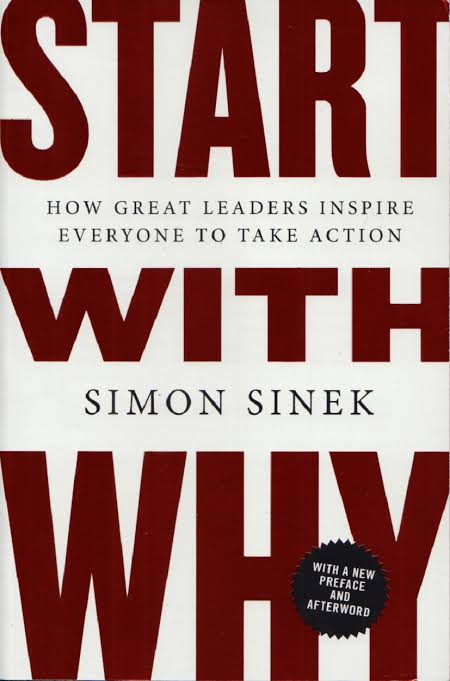
START WITH WHY
PURPOSE BEFORE ACTION
Some leaders have authority. Others inspire people to follow willingly.
The difference is a clear WHY: the purpose, cause, or belief behind everything they do.
When people understand and share that belief, ordinary work can become a movement.
TWO WAYS TO INFLUENCE
MANIPULATION OR INSPIRATION
Every organization influences behavior in one of two ways:
1. Manipulation uses price, fear, pressure, or rewards.
2. Inspiration connects people to a belief.
Manipulation can produce a quick response. Inspiration creates trust, loyalty, and voluntary commitment.
THE CENTRAL IDEA
BEGIN FROM THE INSIDE
Most organizations explain WHAT they offer and HOW they are different. Inspiring organizations communicate in the opposite direction.
They begin with WHY, express it through HOW, and prove it through WHAT.
Purpose becomes the foundation of communication, decisions, culture, and leadership.
ASSUME YOU KNOW
CHAPTER 1
ASSUMPTIONS SHAPE DECISIONS
THE MISSING CONTEXT
Our minds quickly turn incomplete facts into convincing stories. A few familiar details can make a false conclusion feel obvious.
The danger is rarely a lack of intelligence. It is beginning from an assumption that was never questioned, then building every decision upon it.
DATA CANNOT FIX THE WRONG QUESTION
EVIDENCE NEEDS DIRECTION
Charts, research, and customer data create confidence. Their value still depends on the assumptions behind them.
If the original question misunderstands the real cause, accurate analysis can produce a precise answer that leads in the wrong direction.
Challenge the starting point before trusting the conclusion.
DESIGN THE RESULT FROM THE START
INTENTION BEFORE CORRECTION
American carmakers corrected poorly fitted doors with rubber mallets. Japanese engineers designed the doors to fit correctly from the beginning.
This reveals two approaches:
1. Repair unwanted outcomes.
2. Design the intention into the system.
Purpose should shape the system before problems appear.
SUCCESS CAN MISLEAD YOU
KNOW WHY IT WORKED
Failure is not the only source of false assumptions. Success can be equally deceptive.
A product may succeed because of timing, luck, or an unrecognized belief. If you cannot explain why it worked, you cannot reliably repeat it.
Use evidence and instinct together, grounded in a clear purpose.
CARROTS AND STICKS
CHAPTER 2
THE FIRST THREE MANIPULATIONS
SHORT-TERM TRIGGERS
1. Price trains customers to wait for discounts.
2. Promotions create temporary spikes that disappear with the incentive.
3. Fear drives action by threatening loss or danger.
Each can change behavior quickly, but repeated dependence weakens margins, trust, and genuine commitment.
THREE MORE MANIPULATIONS
PRESSURE DISGUISED AS VALUE
4. Aspiration sells a desired transformation without creating lasting discipline.
5. Peer pressure makes popularity feel like proof.
6. Novelty adds features or excitement without deeper meaning.
These tactics attract attention, but attention alone does not create belief.
REPEAT BUSINESS IS NOT LOYALTY
CONVENIENCE VERSUS COMMITMENT
Customers may return because your product is cheaper, closer, or temporarily more convenient. They can leave as soon as another option improves.
Loyalty appears when people remain even when another choice is cheaper or easier.
That relationship comes from shared belief, trust, and consistent purpose.
PLAY THE LONG GAME
BUILD VOLUNTARY COMMITMENT
Carrots and sticks can generate a purchase, click, vote, or moment of compliance. They cannot create people who defend your mission, recommend you voluntarily, or stay through difficult periods.
Lasting organizations give people something meaningful to believe in—and reinforce it every day.
THE GOLDEN CIRCLE
CHAPTER 3
WHY, HOW, WHAT
THREE CONNECTED LAYERS
WHY: The purpose, cause, or belief behind your existence.
HOW: The values, principles, and methods that bring the belief to life.
WHAT: The products, services, actions, and results people can see.
Every organization has a WHAT. Fewer clearly understand and articulate their WHY.
INSIDE-OUT COMMUNICATION
THE ORDER CHANGES THE MEANING
Outside-in communication begins with a product, adds a differentiator, and occasionally mentions purpose.
Inside-out communication begins with belief, explains how that belief shapes the work, and presents the product as proof.
The same offer feels different because the second message creates meaning.
APPLE SELLS A BELIEF
THE GOLDEN CIRCLE IN ACTION
Apple begins with the belief that established conventions should be challenged. Design, simplicity, and usability are methods for expressing that belief. Computers and phones are its tangible outputs.
Customers are attracted to the identity and possibility represented by the products, beyond their specifications.
"PEOPLE DON’T BUY WHAT YOU DO. THEY BUY WHY YOU DO IT."
__ SIMON SINEK
THIS IS BIOLOGY
CHAPTER 4
HOW THE BRAIN RESPONDS
LOGIC AND EMOTION
The neocortex manages language, logic, facts, and analysis.
The limbic system influences emotion, trust, loyalty, behavior, and decision-making. It does not communicate easily through language.
This is why people often know that a choice feels right before they can clearly explain it.
DECISIONS BEGIN WITH FEELING
LOGIC OFTEN ARRIVES LATER
People commonly use features, comparisons, and evidence to explain decisions that already feel right.
Facts help someone understand an offer. Purpose helps them identify with it.
A message built only around rational advantages can inform or impress people without creating the emotional connection required for loyalty.
THE BIOLOGICAL GOLDEN CIRCLE
PURPOSE BECOMES PROOF
WHY speaks to emotion, identity, trust, and belonging.
HOW translates the belief into values and behavior.
WHAT gives the rational mind visible evidence through products, services, and results.
When all three align, people can feel the purpose and verify it through consistent action.
STORIES CARRY BELIEF
FACTS INFORM; MEANING MOVES
Purpose is felt before it is calculated. That is why stories can inspire action more effectively than lists of features.
A strong story makes the belief concrete. It helps customers, employees, and communities recognize themselves in the mission.
The emotional connection gives the facts a reason to matter.
CLARITY, DISCIPLINE, CONSISTENCY
CHAPTER 5
CLARITY OF WHY
MAKE THE BELIEF REPEATABLE
Your WHY must be simple enough for employees, customers, and partners to understand and repeat.
It should express a belief or contribution, rather than a financial target or corporate slogan.
If people interpret the purpose in completely different ways, it is not yet clear enough to guide them.
DISCIPLINE OF HOW
PROTECT THE PURPOSE
HOW represents the principles and methods used to express the WHY.
Discipline means following those principles when an easier or more profitable shortcut appears. Values must shape hiring, design, partnerships, service, and difficult decisions.
Practiced values protect purpose from gradual erosion.
CONSISTENCY OF WHAT
TURN BELIEF INTO EVIDENCE
Every product, message, service experience, and leadership decision becomes evidence of what the organization truly believes.
Consistency creates credibility because people know what to expect.
When visible actions repeatedly match the stated purpose, authenticity is experienced rather than advertised.
THE TRUST FORMULA
ALIGNMENT OVER TIME
Clarity + discipline + consistency = trust.
Trust cannot be purchased through advertising or demanded through authority. It grows when the organization clearly states its belief, follows principles that support it, and consistently delivers actions that prove it.
Alignment is the foundation of authenticity.
THE EMERGENCE OF TRUST
CHAPTER 6
LOYALTY IS EMOTIONAL
BEYOND CONVENIENT REPETITION
Repeat behavior may be produced by habit, price, availability, or convenience. Loyalty is a deeper decision to remain connected because the relationship means something.
Loyal customers accept inconvenience and sometimes higher costs because they trust the organization’s identity, values, and intentions.
HIRE PEOPLE WHO SHARE THE BELIEF
SKILLS AND CULTURAL ALIGNMENT
Technical skills can often be developed. Shared belief is much harder to manufacture.
People who identify with the WHY require less manipulation and micromanagement. They understand the intention behind the work and can make aligned decisions independently.
They experience the job as participation in a cause.
TRUST CREATES AUTONOMY
THE RITZ-CARLTON EXAMPLE
Ritz-Carlton empowers employees to spend significant resources resolving a guest problem without waiting for approval.
That freedom works because the organization hires, trains, and trusts people to protect its service purpose.
A clear WHY gives employees a decision framework, allowing judgment to replace rigid scripts.
TRUST LIVES IN SMALL MOMENTS
SAFETY PRODUCES COMMITMENT
Trust grows when leaders listen, accept responsibility, keep difficult promises, and behave according to stated values.
When people feel safe, they speak honestly, take initiative, and experiment. When trust is absent, they protect themselves and merely comply.
Trust must be earned repeatedly through integrity.
HOW A TIPPING POINT TIPS
CHAPTER 7
HOW IDEAS SPREAD
THE DIFFUSION CURVE
Innovations typically move through five groups:
1. Innovators: 2.5%
2. Early adopters: 13.5%
3. Early majority: 34%
4. Late majority: 34%
5. Laggards: 16%
The majority rarely moves first. New ideas begin with people willing to believe before widespread proof exists.
BEGIN WITH EARLY BELIEVERS
THE FIRST COMMUNITY
Innovators and early adopters respond to possibility, identity, and belief. They accept uncertainty because the purpose feels aligned with their values.
A clearly communicated WHY attracts these people. They become the first users, storytellers, defenders, and evangelists who provide the movement with credibility.
CROSSING THE CHASM
FROM BELIEF TO EVIDENCE
The early majority usually needs more confidence, proof, and social safety than early adopters.
The organization crosses this gap when early believers demonstrate the idea, share their experience, and reduce uncertainty for others.
Belief creates momentum. Momentum produces trust. Trust opens the majority.
GO DEEP BEFORE GOING WIDE
FOCUS CREATES MOMENTUM
Trying to appeal to everyone can weaken the belief that makes an idea distinctive.
Start with the smaller group that strongly identifies with the purpose. Serve them deeply and let their participation make the story visible.
A movement grows from committed believers, one person at a time.
START WITH WHY, BUT KNOW HOW
CHAPTER 8
VISIONARIES AND IMPLEMENTERS
TWO ESSENTIAL ROLES
WHY-types imagine a future that does not yet exist. They provide belief, direction, and energy.
HOW-types create the systems, processes, and repeatable methods needed to make that future real.
Vision without implementation remains an idea. Execution without purpose can become efficient but empty.
PURPOSE NEEDS AN ENGINE
BALANCE THE PARTNERSHIP
The WHY-type determines where the organization should go. The HOW-type builds the engine that can take it there.
Both must respect the other’s contribution. Too much vision creates chaos and unfinished ideas. Too much process creates bureaucracy without meaning.
Together, belief becomes scalable action.
SOUTHWEST ALIGNS EVERY CHOICE
PURPOSE TRANSLATED INTO OPERATIONS
Southwest Airlines wanted air travel to be accessible and enjoyable for ordinary people.
Its HOW included one aircraft model, point-to-point routes, fast boarding, simplified service, and people hired for humor and service.
Operational choices made the purpose economically and culturally possible.
THE FOUNDER–OPERATOR PARTNERSHIP
VISION BECOMES REALITY
Many enduring organizations were built by complementary partners:
• Steve Jobs and Steve Wozniak
• Walt Disney and Roy Disney
• Herb Kelleher and Rollin King
One side protected the vision. The other translated it into systems and output. Neither role was sufficient alone.
KNOW WHY. KNOW HOW. THEN WHAT.
CHAPTER 9
WHAT IS VISIBLE PROOF
PURPOSE MUST BECOME TANGIBLE
WHY gives direction. HOW provides the method. WHAT demonstrates the promise in the real world.
Products, services, culture, and customer experiences reveal whether the organization is living its purpose.
An inspiring vision has limited value until people can experience it through consistent execution.
GROWTH CREATES DRIFT
PURPOSE BURIED BY COMPLEXITY
As organizations grow, departments, management layers, targets, and procedures multiply. The founding belief can become buried beneath operational activity.
People continue working hard, but meetings center on metrics rather than meaning.
The organization produces more while understanding itself less.
USE WHY AS A DECISION FILTER
PROTECT ALIGNMENT
Test every important product, hire, policy, partnership, and campaign:
• Does this reflect our purpose?
• Does it match our values?
• Does it feel like us?
An attractive opportunity that contradicts the WHY can weaken trust more than its short-term revenue is worth.
DISNEY AND THE RETURN TO MAGIC
RECOVERING ALIGNMENT
Disney’s purpose centered on creating happiness through magical experiences. Its films, parks, and products expressed that belief.
After Walt Disney’s death, some outputs became disconnected from the original purpose. Later leaders restored momentum by evaluating decisions through the company’s founding idea.
THREE QUESTIONS FOR ALIGNMENT
A PRACTICAL DECISION SEQUENCE
1. WHY are we doing this?
What purpose or belief does it advance?
2. HOW will we do it?
Which values and principles must guide us?
3. WHAT will we deliver?
What visible action or result will prove the belief?
If the three answers do not connect, pause and realign.
COMMUNICATION IS LISTENING
CHAPTER 10
LISTEN BEFORE YOU BROADCAST
CONNECTION BEGINS INWARD
Publishing values, sending emails, and delivering speeches does not guarantee understanding.
Listening reveals how people interpret the purpose, where frustration exists, and where behavior has drifted from belief.
People are more willing to follow leaders who first make them feel heard.
COMMUNICATE WITH EMPATHY
MAKE PURPOSE RELEVANT
Empathy means understanding what people feel and need before explaining what they should do.
Purpose-driven communication answers three concerns:
1. Why does this matter?
2. How are concerns being addressed?
3. What will we do together?
Clarity increases when people feel included.
BEHAVIOR IS THE LOUDEST MESSAGE
ACTIONS REVEAL THE REAL VALUES
A leader who praises trust but micromanages communicates fear. A company that celebrates innovation but punishes every mistake communicates control.
People compare words with behavior. Decisions, rewards, reactions, and moments of silence reveal what leadership genuinely values.
Alignment makes communication credible.
SILENCE CAN BUILD TRUST
CREATE ROOM FOR TRUTH
Listening without rushing to answer communicates respect and belonging. It gives people space to express concerns that polished reports may hide.
When leaders model attentive listening, teams share information earlier, customers offer better feedback, and problems become visible before they grow into division.
WHEN WHY GOES FUZZY
CHAPTER 11
SUCCESS CAN THREATEN PURPOSE
SCALE CREATES TEMPTATION
Success produces momentum, resources, and opportunity. It also creates pressure to prioritize scale, metrics, efficiency, and profit over the belief that created the success.
The organization may still know WHAT it does and HOW to operate, while gradually losing clarity about WHY it exists.
WALMART’S PURPOSE DRIFT
FROM SERVICE TO SCALE
Sam Walton built Walmart around serving ordinary people and smaller communities with affordable goods.
As the company expanded after his death, its reputation increasingly centered on aggressive growth, cost pressure, and profit. The operating model remained powerful, but the original spirit became harder to recognize.
SYMPTOMS OF A FUZZY WHY
RECOGNIZE THE DRIFT
When purpose fades:
• Trust begins to erode.
• Culture becomes fragmented.
• Employee commitment weakens.
• Customers feel less connected.
• The brand becomes interchangeable.
• The company works harder for less meaning.
Strong numbers can temporarily hide these warning signs.
FIVE WAYS TO REALIGN
RETURN TO THE FOUNDATION
1. Communicate the WHY repeatedly.
2. Audit products, policies, and partnerships.
3. Empower purpose-based decisions.
4. Hire and reward people who share the belief.
5. Remove complexity that obscures the purpose.
Realignment means returning to the original intention with greater discipline.
SPLIT HAPPENS
CHAPTER 12
THE SPLIT BETWEEN WHY AND WHAT
GROWTH CREATES DISTANCE
In a small organization, the founder’s story and purpose are present in daily work. As teams and departments expand, output can become separated from origin.
People know their assignments and targets but no longer understand the mission behind them.
The organization becomes productive without remaining connected.
CULTURE MUST BE MAINTAINED
BELIEF EXPRESSED THROUGH BEHAVIOR
Culture weakens when onboarding teaches rules without purpose, managers become administrative bottlenecks, and rewards recognize results without values.
Scaling itself does not destroy culture. Neglect does.
Purpose must appear in hiring, meetings, stories, recognition, promotion, and difficult trade-offs.
THE CHIEF BELIEF OFFICER
THE LEADER’S ROLE AT SCALE
As the organization grows, the CEO’s central responsibility is to guard the WHY.
This requires modeling the purpose, protecting culture, selecting aligned partners, and rejecting lucrative opportunities that violate the belief.
Every aligned choice closes the gap between purpose and execution.
FOUR TOOLS THAT PRESERVE CONNECTION
OPERATIONALIZE THE BELIEF
1. Purpose checkpoints: regularly test alignment.
2. Story sharing: circulate examples of people living the mission.
3. Values-based hiring: evaluate belief alongside skill.
4. Empowered teams: let people use the WHY to make decisions.
Culture is strengthened by what leaders repeat and reward.
THE ORIGINS OF A WHY
CHAPTER 13
PURPOSE IS FOUND IN THE PAST
DISCOVER THE RECURRING THREAD
An authentic WHY is rarely produced through a branding exercise. It is revealed through the history of a person or organization.
Look for formative experiences, repeated choices, defended values, meaningful relationships, and moments of greatest energy.
The patterns reveal the belief that was already present.
SIMON SINEK’S DISCOVERY
PURPOSE THROUGH PERSONAL CRISIS
Sinek found his WHY during a period when his work had lost meaning. Reflection and conversations helped him recognize a recurring contribution: inspiring people to pursue what inspires them.
Once articulated, that purpose became a filter for his work, communication, relationships, and future decisions.
QUESTIONS FOR INDIVIDUALS
FIND YOUR RECURRING PATTERNS
• When did you feel most alive?
• Which stories do you repeatedly tell?
• What values do you defend strongly?
• Who are you naturally drawn to—and why?
• When did your work feel most meaningful?
Look for the contribution and impact connecting the answers.
QUESTIONS FOR ORGANIZATIONS
RETURN TO THE FOUNDING TRUTH
• Why was the organization originally created?
• Who did it first intend to serve?
• What problem mattered deeply?
• What did the founders refuse to compromise?
• When do the best employees thrive?
• What lasting impact should the organization create?
"YOUR WHY IS NOT SOMETHING YOU INVENT. IT’S SOMETHING YOU DISCOVER."
__ SIMON SINEK
THE NEW COMPETITION
CHAPTER 14
COMPETE AGAINST YOURSELF
PROGRESS OVER IMITATION
Organizations become reactive when they define success by competitors. They copy features, chase market moves, and slowly surrender their own identity.
A purpose-led organization measures whether it is becoming a better expression of its beliefs.
Its primary competition is yesterday’s version of itself.
LEADERSHIP IS AN INFINITE GAME
STAY WORTHY OF CONTINUATION
Purpose-led leadership is bigger than winning a single quarter or defeating a rival.
The objective is to remain capable, trusted, and aligned enough to continue advancing the cause.
Success means improving without abandoning the values that make the organization worth following.
WHAT LEADERSHIP REALLY MEANS
INFLUENCE EARNED THROUGH BELIEF
Leadership does not begin with a title. It emerges when people trust a person’s purpose, consistency, and actions enough to follow voluntarily.
True leaders create space for others to believe and contribute. They build organizations where customers belong, employees find meaning, and success becomes significance.
LEAD WITH PURPOSE
CONCLUSION
THE COMPLETE FRAMEWORK
FROM BELIEF TO MOVEMENT
1. Clarify WHY you exist.
2. Define HOW your values guide action.
3. Deliver WHAT proves the belief.
4. Inspire instead of manipulating.
5. Build trust through alignment.
6. Begin with early believers.
7. Protect the purpose as you scale.
8. Keep improving against your own standard.
TURN WHY INTO ACTION
YOUR NEXT STEPS
1. Review your defining stories and values.
2. Write your WHY in one clear sentence.
3. Define the principles that express it.
4. Audit your products, behavior, and culture.
5. Correct anything that contradicts the purpose.
6. Communicate it repeatedly.
7. Recheck alignment as you grow.
PURPOSE MUST BE LIVED
THE FINAL LESSON
Knowing your WHY is the beginning. Leadership appears when that belief guides real decisions every day.
Let purpose shape what you build, how you treat people, which opportunities you accept, and which compromises you refuse.
When WHY, HOW, and WHAT stay aligned, people do more than follow. They believe.