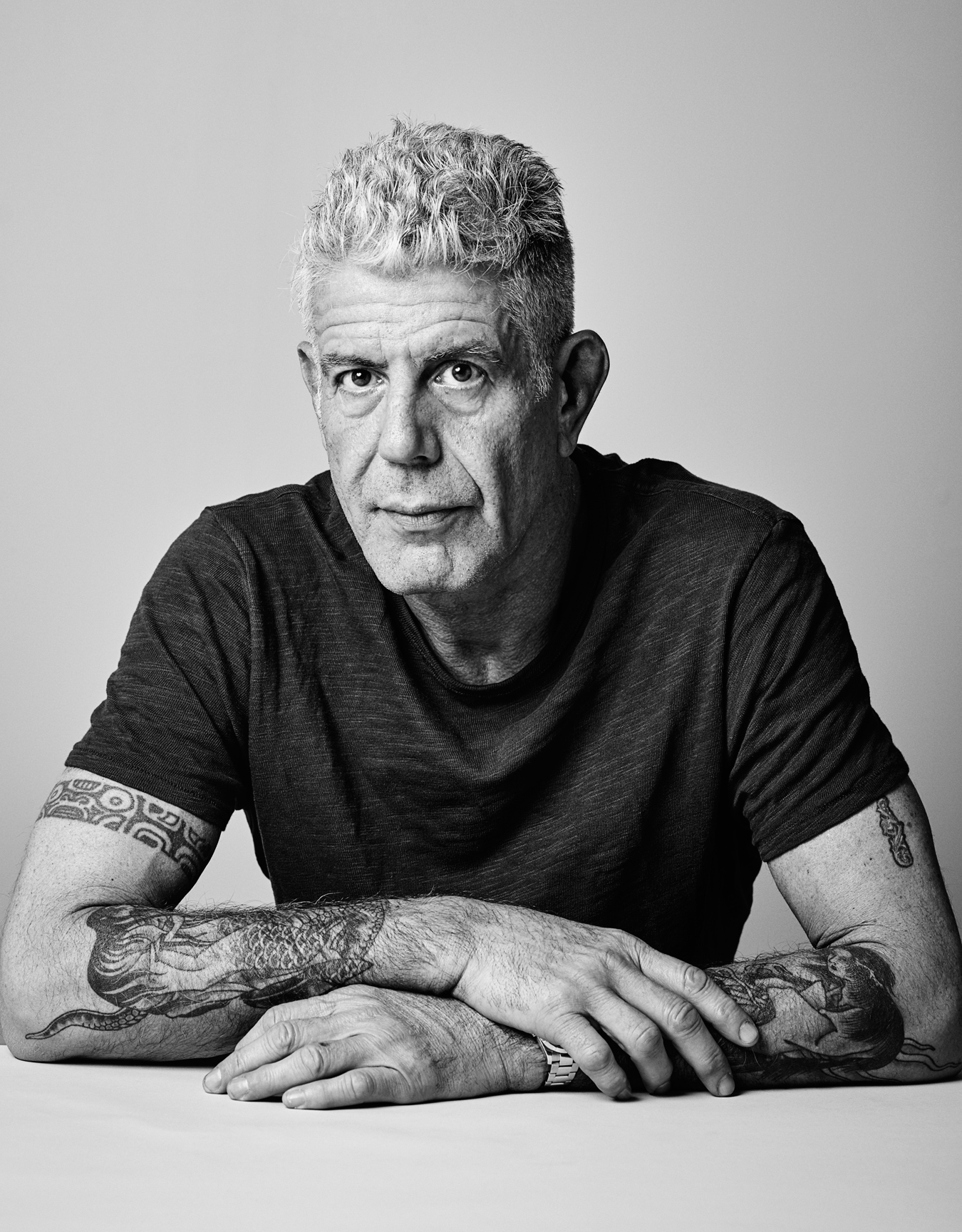
ANTHONY BOURDAIN: STAY CURIOUS, KEEP CREATING
YOUTUBE SUMMARY
CHAPTER INDEX
STAY CURIOUS, KEEP CREATING
ANTHONY BOURDAIN'S WAY OF LIVING
Bourdain was a chef, writer, traveler, and storyteller.
But underneath all those identities was something simpler:
He liked making things.
And he built his life around protecting the freedom to keep making them.
THE 5 IDEAS
A PHILOSOPHY FOR CREATIVE LIFE
1. Never let yesterday control tomorrow.
2. Protect your creative freedom.
3. Love the process of making.
4. Stay curious about people and the world.
5. Keep becoming a beginner.
CREATE WITHOUT REPEATING
CHAPTER 1
ALWAYS HAVE A PROJECT
A CREATOR NEEDS SOMETHING TO MAKE
Bourdain believed he was happiest when working on something.
A television episode.
A story.
A plate of food.
The form mattered less than the act of creating.
For him, making things was not merely work.
It was how he engaged with life.
“I LIKE MAKING THINGS. I’M A GUY WHO SHOULD HAVE A PROJECT.”
__ ANTHONY BOURDAIN
DON'T COPY LAST WEEK
SUCCESS CAN BECOME A CREATIVE TRAP
Television often works by one rule:
Do what worked last week.
Bourdain wanted the opposite.
Even when something succeeded, he didn't automatically want to repeat it.
The question was always:
What can we do differently this time?
SUCCESS CREATES FEAR
PEOPLE BECOME AFRAID TO LOSE WHAT WORKS
Once people become successful, experimentation becomes harder.
They have something to protect.
Their position.
Their audience.
Their reputation.
Their income.
So the safe decision becomes repeating what already worked.
“I’M NOT INTERESTED IN DOING THE SAME THING EVEN IF IT WORKED.”
__ ANTHONY BOURDAIN
FEAR MAKES WORK PREDICTABLE
NOBODY WANTS TO PROPOSE THE FAILED EXPERIMENT
Organizations often say they want something new.
But new ideas carry risk.
If the experiment fails, someone may be blamed.
So people slowly choose predictable ideas instead.
Creativity disappears through thousands of safe decisions.
BE WILLING TO WALK AWAY
FREEDOM CREATES NEGOTIATING POWER
Bourdain realized something powerful:
Not desperately needing television gave him freedom inside television.
If losing the opportunity is unimaginable, you become easy to control.
When you can accept walking away, your creative position becomes much stronger.
ASK A BETTER QUESTION
HOW CAN WE OUTDO OURSELVES?
Bourdain didn't ask:
How do we reproduce the last successful episode?
He asked:
How can we make this show differently?
How can the camera team, editors, sound designers, and producers push themselves further?
“HOW CAN WE DO SOMETHING STRANGE AND WONDERFUL?”
__ ANTHONY BOURDAIN
STRANGE AND WONDERFUL
PUSH BEYOND THE EXPECTED
His goal was not simply to make something acceptable.
He wanted something strange.
Something wonderful.
Something unexpected.
Creativity begins when the goal moves beyond repeating proven formulas.
PROTECT YOUR FREEDOM
CHAPTER 2
THINK ABOUT TOMORROW MORNING
A SIMPLE DECISION FILTER
Bourdain had a practical rule for his work:
Would I feel bad tomorrow about what I did today?
He had experienced enough mornings filled with regret.
So he became careful about accepting compromises that would make him dislike his own decisions.
QUALITY OF LIFE
FREEDOM WAS PERSONAL
Bourdain didn't present his choices as heroic principles.
He described them as a quality-of-life issue.
He wanted to wake up feeling good about his work.
Creative independence wasn't about appearing noble.
It was about being able to live with himself.
“I DON’T WANT TO WAKE UP TOMORROW AND FEEL BAD ABOUT WHAT I DID TODAY.”
__ ANTHONY BOURDAIN
FOLLOW WHAT YOU CARE ABOUT
ATTENTION BECOMES STRONGER WHEN IT IS GENUINE
Bourdain had the unusual privilege of focusing on people and places that genuinely interested him.
That mattered.
When curiosity is real, the audience can feel it.
The storyteller stops performing interest and starts discovering something.
MAKE FOR THE PROCESS
CHAPTER 3
YOU DON'T NEED TO KEEP IT
CREATION CAN BE TEMPORARY
Bourdain said he didn't necessarily need to have the thing afterward.
The meal disappears.
The episode ends.
The moment passes.
What mattered was creating it well.
The satisfaction lived inside the process.
THE PRIVATE MOMENT
KNOW WHEN YOU DID SOMETHING WELL
As a chef, Bourdain loved the brief moment when a finished plate sat in the kitchen window.
Before anyone touched it, he could look at it and know:
I did this particular thing well.
A tiny private satisfaction.
That was enough.
LOVE THE NUTS AND BOLTS
CRAFT LIVES INSIDE THE DETAILS
He carried the same mindset into television.
Pre-production.
Editing.
Sound.
Camera work.
Story construction.
He enjoyed assembling the individual pieces with other people until everything produced one small golden moment.
DON'T CHASE PERMANENCE
GOOD WORK CAN STILL DISAPPEAR
Cooking taught Bourdain to appreciate something temporary.
A great plate exists for only a moment.
That lesson transferred into writing and television:
Something doesn't need to last forever to be worth making beautifully.
FOOD TELLS THE REAL STORY
CHAPTER 4
FOOD IS NEVER JUST FOOD
EVERY PLATE HAS A HISTORY
For Bourdain, food revealed the reality of a place.
Who gets to eat?
Who doesn't?
What ingredients are available?
What must be preserved?
The food on a plate can be the final result of a long economic, political, and historical story.
“WHAT DO YOU LIKE TO EAT? WHAT MAKES YOU HAPPY?”
__ ANTHONY BOURDAIN
READ THE PLATE
CUISINE CONTAINS EVIDENCE
Preservation, pickling, scarcity, abundance, and available ingredients can reveal what a society has experienced.
Food can carry traces of:
War.
Poverty.
Migration.
Trade.
Climate.
Prosperity.
The plate becomes evidence.
ASK SIMPLE QUESTIONS
CURIOSITY LOWERS DEFENSES
Bourdain discovered that simple questions could reveal extraordinary things.
What do you like to eat?
What makes you happy?
Instead of arriving as someone demanding answers, he arrived curious.
People often responded by opening up.
NOTICE THE ELEPHANT
REALITY EVENTUALLY ENTERS THE STORY
Sometimes the story around food becomes impossible to separate from politics.
Why are certain fish unavailable?
Why can't fishermen travel farther?
Why does someone carry injuries from an old conflict?
You don't have to tell people what to think.
But you cannot pretend facts aren't there.
TRAVEL CHANGES THE MAP
CHAPTER 5
THEY ARE MOSTLY LIKE US
TRAVEL DESTROYS EASY STEREOTYPES
After eating with people across the world, including in countries described as enemies, Bourdain reached a simple conclusion:
People are different.
But they are also overwhelmingly similar.
Sitting together around a table makes that difficult to ignore.
THE TABLE CHANGES EVERYTHING
SHARED HUMANITY BECOMES VISIBLE
Politics creates categories.
Borders create separation.
Narratives create enemies.
Then people sit around a table.
They eat.
Talk.
Laugh.
Talk about family.
Talk about work.
Suddenly the categories become less convincing.
THE WORLD IS CONNECTED
SEPARATION IS OFTEN AN ILLUSION
Travel also showed Bourdain how interconnected economies had become.
Money, goods, food, labor, and people move across borders constantly.
The world may appear divided on maps.
In everyday life, its systems are deeply connected.
STAY A BEGINNER
CHAPTER 6
START SOMETHING YOU'RE BAD AT
BOURDAIN BEGAN JIU-JITSU AT 58
At 58, Bourdain started learning jiu-jitsu.
He was surrounded by younger, fitter, and more experienced people.
He got beaten repeatedly.
And he loved it.
Why?
Because being bad at something gave him somewhere new to go.
BECOME THE LOWEST AGAIN
BEGINNER STATUS CAN BE LIBERATING
Learning jiu-jitsu recreated a feeling Bourdain remembered from entering a professional kitchen at 17.
Knowing nothing.
Being the least experienced person there.
Having no reputation to protect.
Only learning remained.
GET A LITTLE LESS AWFUL
PROGRESS DOESN'T NEED TO BE DRAMATIC
Bourdain enjoyed the tiny satisfactions of improvement.
Not becoming great overnight.
Just becoming a little less awful every day.
Then returning tomorrow and trying again.
That makes progress a never-ending journey instead of a destination.
“IT’S A NEVER-ENDING JOURNEY.”
__ ANTHONY BOURDAIN
VISIT UNUSED PARTS OF YOUR BRAIN
NOVELTY KEEPS LIFE EXPANDING
Learning something completely unfamiliar activated parts of Bourdain's mind he felt he hadn't visited before.
That's one reason beginners stay curious.
The unfamiliar forces attention.
You stop operating automatically and start noticing again.
THE BOURDAIN LOOP
A SYSTEM FOR STAYING ALIVE CREATIVELY
1. Find something you genuinely care about.
2. Make something from it.
3. Learn the craft deeply.
4. Finish it well.
5. Don't cling to it.
6. Find the next unfamiliar thing.
7. Become a beginner again.
DON'T LIVE BACKWARD
PAST SUCCESS IS INFORMATION, NOT INSTRUCTION
Many people look backward to decide what to do next.
What worked?
What did people like?
What is safest?
Bourdain kept looking forward.
What haven't I seen?
What haven't I tried?
What haven't I learned?
That's where curiosity lives.
MAKE SOMETHING
THE LESSON
Don't spend your life protecting yesterday's version of yourself.
Make something.
Care about the process.
Meet people outside your world.
Ask simple questions.
Try things you're bad at.
Get a little better.
Then go make something else.