
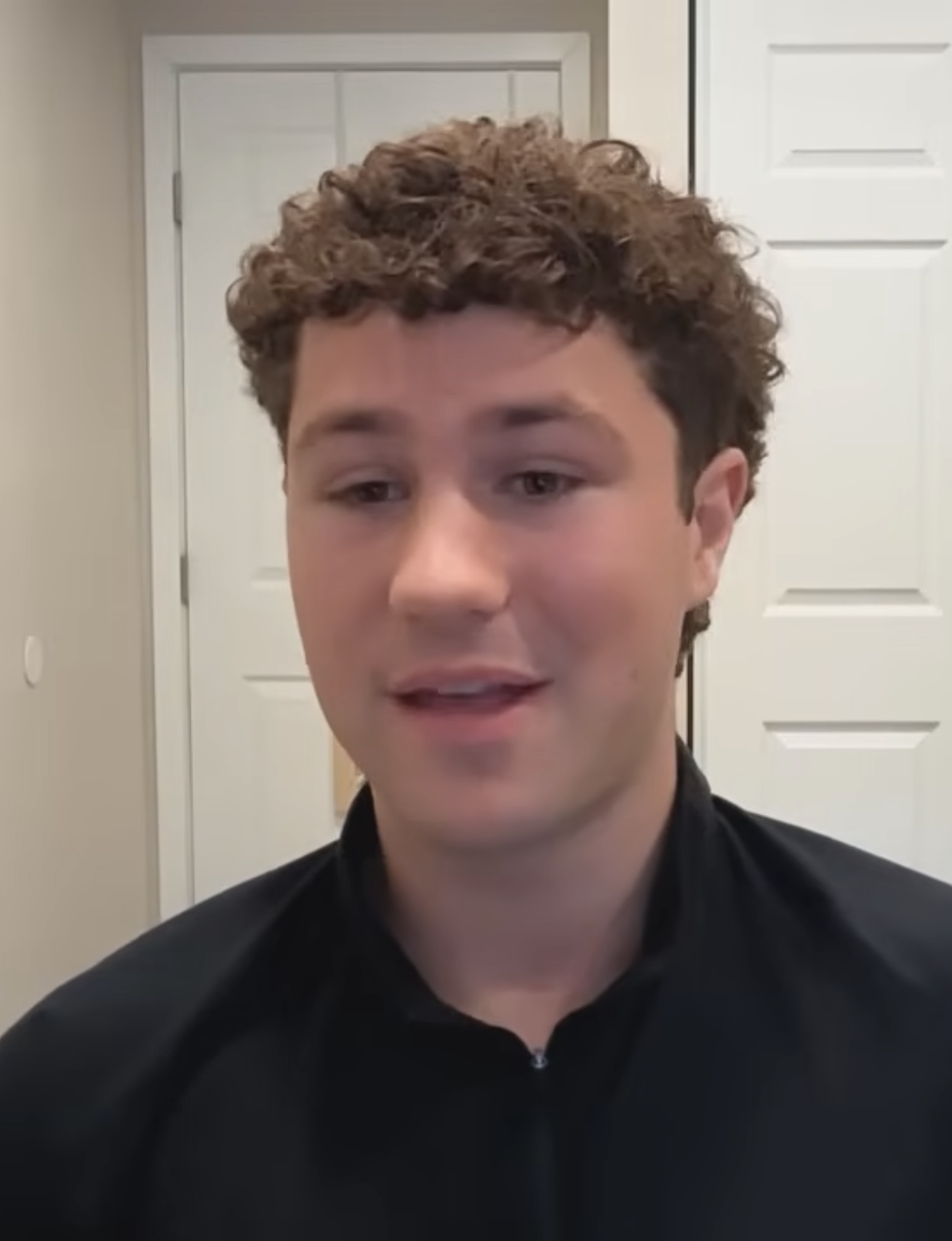
HOW HIS FIRST APP REACHED $25K/MONTH
YOUTUBE SUMMARY : STARTER STORY
CHAPTER INDEX
FROM ZERO TO $25K/MONTH
THE RESULT
Kian was 21, still in college, and had never shipped a product before.
Within about 5 months, his first project reached:
1. 100,000+ users
2. ~$25K revenue in 4 weeks
3. 1,400 new subscribers in 3 months
4. A growing web + mobile business
THE BUSINESS IS SURPRISINGLY SIMPLE
TINY PROBLEM, REAL VALUE
Tone Adapt does one narrow job:
Help guitarists sound like their favorite songs.
Users enter their guitar, amp and gear, choose a song, and the app recommends the settings needed to recreate that tone.
The value proposition can be understood in seconds.
THE CORE PLAYBOOK
CHAPTER 1
THE FORMULA
WHAT ACTUALLY HAPPENED
The business followed a simple sequence:
1. Start with a hobby
2. Notice your own problem
3. Confirm others have it
4. Build V1 fast
5. Charge immediately
6. Post every day
7. Find winning content
8. Repeat the winner aggressively
START WITH SOMETHING YOU ALREADY KNOW
BECOME YOUR OWN CUSTOMER
Kian had been playing guitar almost every day for more than a year.
That mattered.
He already understood:
• The language
• The equipment
• The frustrations
• What guitarists wanted
He did not need to invent a customer persona. He was the customer.
LOOK FOR SMALL FRICTION
NOT GIANT IDEAS
The opportunity was not "reinvent learning guitar."
It was much smaller:
"How do I make my guitar sound like this song?"
Good niche products often begin with:
• Slow processes
• Inaccurate answers
• Repetitive work
• Missing convenience
• Something you repeatedly wish existed
THE IDEA
CHAPTER 2
HE WAS ALREADY USING CHATGPT
THE EXISTING WORKAROUND
Before Tone Adapt existed, Kian was asking ChatGPT how to reproduce guitar tones.
It worked imperfectly.
That revealed an opportunity:
People were already trying to solve the problem.
The behavior existed.
The dedicated product did not.
DON'T SEARCH FOR IDEAS
SEARCH FOR BROKEN WORKFLOWS
A useful question is not:
"What app should I build?"
Ask:
"What annoying thing do I repeatedly do inside a hobby, job or industry I already understand?"
Your current workaround may be the product opportunity.
CONFIRM OTHER PEOPLE FEEL IT
LIGHTWEIGHT VALIDATION
Kian talked with other guitarists through Reddit, Instagram and comment sections.
They had the same problem.
He did not run months of formal research.
The signal was simple:
"I have this problem, and people like me have it too."
SMALL PROBLEMS CAN SERVE BIG MARKETS
RICHES IN NICHES
A problem does not need to affect everyone.
A tiny problem shared by thousands of people can become a meaningful business.
You need:
Small problem
×
Enough people
×
Enough pain
×
Willingness to pay
BUILDING V1
CHAPTER 3
BUILD THE SIMPLEST USEFUL VERSION
ONE WEEK
Kian built his first version during Thanksgiving break.
It took about one week.
It was also the first complete product he had ever built.
The goal was not technical perfection.
The goal was to make the core outcome work.
AI COLLAPSED THE BUILDING COST
VIBE CODING
Kian said every line of the original project was generated through AI-assisted coding.
His stack included:
• Supabase
• Vercel
• Stripe
• Mailgun
• OpenAI API
• Tavily API
AI made building dramatically faster, even for a first-time founder.
WEB FIRST
VALIDATE BEFORE EXPANDING
His advice:
Ship V1 on the web first.
Why?
1. Faster to build
2. Faster to change
3. Easier to test demand
4. You can charge immediately
5. Customer feedback guides the next version
The mobile app came after the web product proved itself.
DON'T POLISH BEFORE PROOF
REVENUE BEFORE DECORATION
His launch philosophy was simple:
Do not spend days choosing logos, polishing screens or adding unnecessary features.
Build the useful core.
Publish it.
Charge money.
Real users will tell you what deserves improvement.
THE PRODUCT
CHAPTER 4
INPUT YOUR OWN GEAR
PERSONALIZED OUTPUT
Tone Adapt asks users what equipment they actually own.
Users can select:
• Guitar
• Amplifier
• Built-in effects
• Pedals
Its database includes more than 1,500 guitars and 2,000 amps, covering a large range of possible setups.
SEARCH ANY SONG
THE JOB TO BE DONE
The user chooses a song they want to sound like.
The app researches the original tone and provides information such as:
1. Guitar
2. Pickups
3. Amplifier
4. Estimated amp settings
5. Effects
6. Pedals
THE MAGIC IS ADAPTATION
NOT INFORMATION
The strongest feature is not showing what equipment the artist used.
It translates that sound into settings for the user's existing equipment.
That turns information into an actionable answer:
"Given what I own, tell me exactly what to do."
MONETIZATION
CHAPTER 5
CHARGE FOR THE RESULT
SUBSCRIPTION MODEL
Tone Adapt monetized through subscriptions.
The interview mentioned pricing around:
• $10 per week
• ~$60 per year
The customer is paying for speed and convenience:
Instead of researching equipment and experimenting manually, the app gives an answer in under 30 seconds.
THE REVENUE PROOF
WEB + MOBILE
During the interview, Kian showed approximately:
• $11.5K web revenue over 4 weeks
• $14K mobile revenue over 4 weeks
• 397 active mobile subscribers
• $45K web revenue over 3 months
• 1,400 new subscribers over 3 months
DISTRIBUTION
CHAPTER 6
BUILDING WASN'T THE BREAKTHROUGH
ATTENTION WAS
A useful app does not automatically get customers.
Kian's major advantage was distribution.
Before building Tone Adapt, he had already created UGC for brands.
That taught him how social content attracts attention.
He combined product building with content creation.
THE FIRST VIDEO WENT VIRAL
BUT THAT WAS NOT THE STRATEGY
His first Tone Adapt video went viral overnight.
The important lesson was what happened next.
He did not depend on one viral hit.
He treated the winning video as evidence that a content format worked and started repeating the process.
POST 3 TIMES A DAY
VOLUME CREATES LEARNING
His marketing system was aggressive:
1. Post about 3 times per day
2. Repost across multiple platforms
3. Use Instagram
4. Use TikTok
5. Use YouTube
6. Use Facebook
More attempts created more chances to discover formats that converted.
SHOW YOUR FACE
FOUNDER-LED TRUST
Kian put his face behind the brand immediately.
Users could watch him:
• Build the product
• Improve features
• Add gear
• Respond to feedback
• Grow the business
The product became a journey people could follow rather than an anonymous utility.
YES, THE FIRST VIDEO FELT EMBARRASSING
PUBLISH ANYWAY
Kian said his first video felt embarrassing and some friends made fun of it.
After publishing it, that fear quickly disappeared.
The lesson:
The psychological barrier to posting is often strongest before the first post, not after it.
THE CONTENT SYSTEM
CHAPTER 7
SHOW THE PRODUCT WORKING
DEMONSTRATE, DON'T EXPLAIN
One of Kian's recommendations was to show the product solving the problem in real time.
For Tone Adapt, that is naturally visual:
Song → gear → recommended settings → desired guitar tone.
A strong product demo compresses the value proposition into seconds.
POST BEFORE YOU KNOW WHAT WORKS
CONTENT IS EXPERIMENTATION
Do not wait until you understand the perfect content strategy.
Posting creates the data.
Each post teaches you:
• Which hook stops attention
• Which demo gets clicks
• Which format converts
• Which message fails
You discover the strategy by publishing.
FIND ONE WINNER
THEN TURN IT INTO A TEMPLATE
Once one piece of content converts, it becomes a template.
Instead of constantly inventing new concepts:
Keep the structure.
Change the song.
Change the hook.
Change the example.
Change the opening.
Repeat the proven mechanism with small variations.
REMAKE THE WINNER 50 TIMES
SCALE WHAT WORKS
Kian's playbook becomes aggressive after discovering a winner:
1. Remake the format repeatedly
2. Create small variations
3. Hire UGC creators
4. Produce dozens of versions
5. Put ad spend behind winners
6. Continue until performance fades
RIDE THE FORMAT UNTIL IT DIES
DON'T ABANDON SUCCESS TOO EARLY
Founders often get bored with a message before the market does.
His approach:
Winner → repeat → amplify → distribute → advertise → repeat again.
When performance eventually declines, search for the next winner and run the system again.
WHY THIS MATTERS NOW
CHAPTER 8
AI MAKES BUILDING CHEAP
SO BUILDING BECOMES LESS RARE
AI coding tools are reducing the skill, time and cost required to create software.
That means more people can build apps.
As creation becomes easier, simply having a functioning product becomes less differentiated.
The scarce resource shifts toward attention.
THE FUTURE IS A SEA OF APPS
DISTRIBUTION BECOMES THE MOAT
If everyone can build software quickly, customers will face thousands of similar products.
The winner may not be the person who can code best.
The winner may be the founder who can repeatedly:
Build → explain → demonstrate → distribute → earn trust.
CONTENT IS A FOUNDER SKILL
NOT A MARKETING DEPARTMENT
Kian's final advice was to start posting on social media even before having a product.
Why?
Creating content teaches:
• Communication
• Hooks
• Storytelling
• Distribution
• Audience understanding
• Trust building
Those skills compound before your next product exists.
THE $25K/MONTH PLAYBOOK
CHAPTER 9
STEP 1 — PICK YOUR WORLD
START CLOSE TO YOURSELF
Pick something you already understand deeply.
Examples:
• Guitar
• Running
• Photography
• Cooking
• Accounting
• Real estate
• Design
• Gaming
Do not begin with technology.
Begin with a world where you understand the user's daily reality.
STEP 2 — FIND ONE ANNOYANCE
LOOK AT REPEATED FRICTION
Write down things that regularly make you say:
"This takes too long."
"Why isn't there a tool for this?"
"I always have to search for this."
"The existing answer is inaccurate."
"I keep doing this manually."
One repeated annoyance can be enough.
STEP 3 — FIND PEOPLE LIKE YOU
VALIDATE THE PAIN
Search communities where similar people already gather.
Read:
• Reddit threads
• Comments
• Forums
• Facebook groups
• Discord communities
• YouTube comments
You are looking for repeated evidence that the same problem appears naturally.
STEP 4 — BUILD THE CORE OUTCOME
IGNORE EVERYTHING ELSE
Build only enough functionality to produce the promised result.
For Tone Adapt:
Input gear + choose song → receive settings.
That is the core.
Authentication, branding, dashboards and extra features matter only after the central job works.
STEP 5 — PUT A PRICE ON IT
TEST WILLINGNESS TO PAY
Do not validate only with compliments.
Ask the market for money.
A payment answers a much stronger question:
Not:
"Do people think this is cool?"
But:
"Is this problem important enough that someone will pay to solve it?"
STEP 6 — POST EVERY DAY
CREATE DISTRIBUTION
Turn marketing into a daily operating system.
Publish the problem.
Publish the demo.
Publish the result.
Publish customer reactions.
Publish improvements.
Publish the founder journey.
Attention should grow alongside the product, not after the product is finished.
STEP 7 — SCALE SIGNALS
LET DATA CHOOSE
When a post clearly generates more views, clicks, signups or purchases:
Do not merely celebrate it.
Study it.
Identify:
1. Hook
2. Format
3. Demo
4. Story
5. CTA
Then build variations around the winning structure.
THE BIG LESSON
SIMPLE CAN BECOME SUBSTANTIAL
Tone Adapt did not need to become the ultimate guitar platform.
It solved one specific problem extremely clearly.
That is the bigger opportunity AI creates:
Thousands of narrow problems that were previously too small or expensive to build software for can now become viable products.
BUILD SMALL. DISTRIBUTE BIG.
FINAL TAKEAWAY
You do not need a revolutionary idea.
You need:
A problem you understand.
A customer you understand.
A simple useful solution.
A fast way to ship.
A willingness to charge.
And relentless distribution.
The product can start tiny.
The audience does not have to.