
CHAPTER INDEX
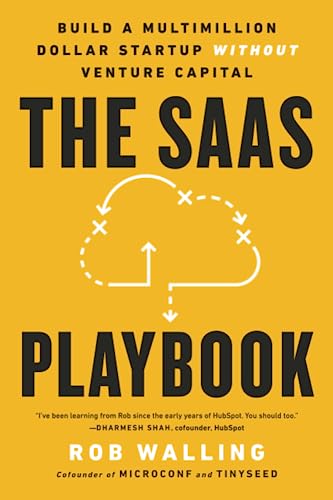
THE SAAS PLAYBOOK
BUILD A MULTI-MILLION-DOLLAR SAAS WITHOUT VC
Rob Walling’s core idea: you do not need venture capital to build a serious software company.
The goal is not fundraising.
The goal is a profitable, durable SaaS that customers pay for, founders control, and a team can grow.
WHO IS ROB WALLING?
OPERATOR, INVESTOR, TEACHER
Rob Walling has built multiple software companies, bootstrapped Drip, founded MicroConf and TinySeed, and invested in 125+ startups.
His advice comes from operating companies and watching thousands of founders make the same decisions repeatedly.
WHO THIS PLAYBOOK IS FOR
INDEPENDENT SAAS FOUNDERS
Best for:
• Technical founders learning business
• Non-technical founders learning SaaS
• Side-project founders trying to scale
• Bootstrappers replacing income
• Founders deciding whether to raise a small round
WHO IT IS NOT FOR
NOT A UNICORN-AT-ALL-COSTS PLAYBOOK
This is not designed for founders whose only goal is a billion-dollar VC outcome.
It is also not for people looking for easy motivation.
The book focuses on execution, trade-offs, customer value, metrics, and long-term founder sustainability.
THE CORE PREMISE
BUILD THE BUSINESS, NOT THE SLIDE DECK
Funding is a tool, not a goal.
A real startup creates value for customers and turns that value into durable revenue.
Investor approval is optional.
Customer demand is not.
WHY BOOTSTRAPPING MATTERS
HIGHER CONTROL, DIFFERENT ODDS
Bootstrapping may take longer, but it can give founders more control over ownership, pace, hiring, product direction, and exits.
The trade-off: you must learn to survive on customer revenue instead of using investor money to cover mistakes.
FOUNDATIONS
CHOOSE YOUR OPERATING MODEL
THE FUNDING SPECTRUM
THERE IS MORE THAN BOOTSTRAP VS VC
Four common paths:
1. Bootstrapped — grow from revenue
2. Self-funded — use profits from another business
3. Mostly bootstrapped — raise a small founder-friendly round
4. Venture-funded — raise repeatedly for a very large outcome
BOOTSTRAPPED
CUSTOMER REVENUE FUNDS GROWTH
You start with limited resources and grow as customers pay you.
Advantages:
• High control
• Less dilution
• Strong discipline
Disadvantages:
• Slower hiring
• Smaller margin for mistakes
• Founder time becomes a major constraint
SELF-FUNDED
USE ONE BUSINESS TO FINANCE ANOTHER
A profitable product can fund the next one.
Walling used profits from earlier products to invest roughly $150K–$200K into Drip before it became profitable.
This gives you more speed without immediately giving up equity.
MOSTLY BOOTSTRAPPED
SMALL CAPITAL WITHOUT THE VC TREADMILL
Some founders raise a modest amount from angels, friends, family, or bootstrapper-friendly funds.
The goal is not to raise every 18 months.
The goal is to buy time or capability while still operating like a capital-efficient business.
VENTURE-FUNDED
OPTIMIZED FOR VERY LARGE OUTCOMES
Venture capital works when the company can plausibly grow into a massive outcome.
It usually means repeated fundraising, dilution, aggressive growth targets, and pressure toward acquisition or IPO.
It is powerful, but it changes the game you are playing.
WHAT ACTUALLY MATTERS
REAL PRODUCT. REAL CUSTOMERS. REAL MONEY.
Walling uses “bootstrapped” broadly.
What matters is the operating philosophy:
Build something useful.
Find customers.
Charge them.
Retain them.
Grow from value created.
The source of the first dollars matters less than the discipline.
THE STAIRSTEP METHOD
BUILD SKILL BEFORE COMPLEXITY
STAIRSTEP OVERVIEW
THREE LEVELS OF ENTREPRENEURSHIP
The Stairstep Method reduces risk by increasing complexity gradually.
Step 1: simple product
Step 2: repeat and grow
Step 3: standalone SaaS
Each step builds cash, confidence, marketing skill, and customer knowledge for the next.
STEP 1: SIMPLE PRODUCT
ONE PRODUCT, ONE CHANNEL
Start with something simpler than full SaaS.
Examples:
• WordPress plugin
• Shopify add-on
• Niche utility
• Small digital tool
Goal: learn customer research, basic marketing, support, pricing, and product iteration while generating revenue.
STEP 2: REPEAT WHAT WORKS
BUILD INCOME AND OWNERSHIP OF TIME
Use the lessons from Step 1 to launch or grow additional products.
Improve the channels that already work.
Walling suggests reaching roughly $5K–$30K/month across products before taking on the full complexity of standalone SaaS.
STEP 3: STANDALONE SAAS
NOW TAKE ON THE HARDER GAME
Standalone SaaS adds more moving parts:
• Ongoing product development
• Retention
• Support
• Billing
• Pricing
• Multiple channels
• Team management
• Metrics
The stairs exist so you face these with more skill and resources.
CAN YOU SKIP THE STAIRS?
YES, BUT RISK RISES
Many founders go directly into SaaS and succeed.
The warning is about difficulty, not permission.
If you skip the earlier stages, you must learn product, sales, marketing, pricing, support, and metrics at the same time.
WHY SAAS IS ATTRACTIVE
THE BUSINESS MODEL COMPOUNDS
SaaS has several structural advantages:
• Recurring revenue
• High gross margins
• Predictable MRR
• Expansion revenue
• Strong retention potential
• Premium acquisition values
The model gets stronger when customers stay and grow.
MARKET
THE FOUNDATION OF EVERYTHING
MARKET SELECTION FIRST
A GREAT PRODUCT CANNOT SAVE A WEAK MARKET
Walling’s strongest market lesson:
A mediocre product in a strong market can become successful.
A great product in a weak market can still fail.
Start where customers already feel pain and already spend money solving it.
WHAT IS PRODUCT-MARKET FIT?
A MARKET THAT TRULY WANTS THE PRODUCT
PMF means a meaningful group of customers wants your product and is willing to pay for it.
The strongest signal is not praise.
It is behavior:
• They stay
• They use it
• They upgrade
• They refer others
• They would be upset if it disappeared
PMF IS CONTINUOUS
YOU KEEP EARNING IT
Product-market fit is not a permanent badge.
Customers change.
Competitors improve.
Technology shifts.
Your job is to keep refining who the product is for, what problem matters most, and why your solution is worth paying for.
HOW TO TEST PMF
LOOK AT RETENTION BEFORE EXCITEMENT
Useful PMF signals:
• Retention is improving
• Churn is falling
• Customers describe the product as essential
• Referrals increase
• Usage becomes habitual
• Growth happens without constant persuasion
High trial volume alone does not prove PMF.
FEATURE REQUEST RULE
DO NOT BUILD EVERY REQUEST
Before building a feature, ask:
1. What problem are they actually trying to solve?
2. What percentage of customers would use this?
3. Does it fit the product vision?
Every feature creates future maintenance and opportunity cost.
USAGE THRESHOLD
ESTIMATE HOW BROADLY A FEATURE MATTERS
A rough rule:
If fewer than 5–10% of customers would use it, question whether it belongs in the core product.
If 20%+ would benefit, it deserves serious consideration.
Do not let one loud customer define your roadmap.
INTEGRATE BEFORE YOU REBUILD
USE THE ECOSYSTEM
Many requests can be solved faster through integrations.
Benefits:
• Faster shipping
• Less code to maintain
• More customer value
• New partnerships
• Higher switching costs
A good API integration can replace weeks of native development.
COMPETITION CAN BE GOOD
A CROWDED MARKET PROVES DEMAND
A competitive market is often attractive because customers already understand the problem and already pay for solutions.
Your task is not to invent demand.
Your task is to find an underserved angle, segment, buying experience, or product weakness.
COMPETE ON PRICE
USEFUL AS AN ENTRY WEDGE
If large incumbents became expensive, a simpler product can enter at a lower price.
This works best when you can deliver most of the value at much lower cost.
Price can win early adopters, but it should not be your only long-term advantage.
COMPETE ON SALES MODEL
REMOVE BUYING FRICTION
Some incumbents require demos, setup fees, sales calls, and contracts.
A new entrant can win by offering:
• Public pricing
• Self-service signup
• Free trial
• Faster onboarding
• No mandatory sales call
How customers buy can be a major differentiator.
COMPETE ON PRODUCT
MODERN UX CAN BEAT LEGACY SOFTWARE
Large companies often carry old code and complicated interfaces.
A newer product can win with:
• Faster workflows
• Cleaner UX
• Better onboarding
• Simpler setup
This advantage fades over time, so use it to gain traction while building deeper moats.
USE JUDO AGAINST INCUMBENTS
TURN THEIR SIZE INTO YOUR ADVANTAGE
Large competitors are often slower, more complex, and harder to change.
Help frustrated customers leave them.
Make migration easy.
Target their weakest customer segment.
Speak clearly about the pain they create.
Do not try to outspend them.
HOW MUCH TO WATCH COMPETITORS
STAY INFORMED, NOT OBSESSED
Watch two things:
1. Major announcements: funding, acquisitions, major launches, positioning changes
2. Deals you are losing: learn exactly why prospects choose them
Ignore daily noise. Competitor obsession destroys focus without improving customer value.
MOATS
BUILD ADVANTAGES THAT COMPOUND
WHAT IS A REAL MOAT?
SOMETHING HARD TO COPY AND STRONGER OVER TIME
A moat protects your business from competitors.
A useful moat should become more valuable as the company grows.
Walling highlights four:
1. Integrations
2. Brand
3. Owned traffic
4. Switching costs
MOAT 1: INTEGRATIONS
EVERY CONNECTION INCREASES STICKINESS
Integrations make the product more embedded in customer workflows.
The more systems connected, the harder switching becomes.
Large integration ecosystems can become extremely difficult for new competitors to reproduce.
MOAT 2: BRAND
YOUR REPUTATION IN THE MARKET
Brand is not the logo.
Brand is what customers and prospects say about you when you are not there.
A strong brand creates recognition, trust, category authority, and preference before the buyer compares every feature.
MOAT 3: OWNED TRAFFIC
CONTROL A SOURCE OF DEMAND
High-intent SEO, a strong audience, content library, newsletter, or community can become a durable source of leads.
The benefit compounds over time.
But do not depend entirely on one algorithm. Search and social platforms can change overnight.
MOAT 4: SWITCHING COSTS
MAKE THE PRODUCT DEEPLY EMBEDDED
High switching costs appear when leaving requires time, risk, developer work, retraining, data migration, or organizational approval.
Examples:
• APIs
• Complex workflows
• Team collaboration
• Large data stores
Useful products become harder to replace.
THE FALSE MOAT: FEATURES
FEATURES ARE TEMPORARY
A unique feature can differentiate you for months.
Then competitors copy it.
Features are valuable, but they rarely create long-term protection by themselves.
A real moat compounds and becomes harder to reproduce over time.
AVOID TRANSLATION TOO EARLY
LOCALIZATION MULTIPLIES OPERATIONS
Translation sounds simple but creates new work:
• Marketing
• Support
• Documentation
• Community
• Product QA
Do it when real customer demand justifies it, not because global expansion sounds impressive.
AVOID WHITE LABELING
PROTECT FOCUS AND BRAND
White-label requests often come from people who want your product to power their business.
But you may inherit custom requirements, support, and brand invisibility.
Walling suggests only considering it when the upfront economics are substantial.
AVOID NEW VERTICALS TOO EARLY
DO NOT CONFUSE EXPANSION WITH GROWTH
When growth slows, founders often target adjacent customer types.
This can multiply product complexity before the original niche is strong.
First ask:
Have we actually saturated our best segment, or are we avoiding the harder work of fixing PMF and acquisition?
PRICING
THE BIGGEST UNDERUSED LEVER
UNDERPRICING IS COMMON
USUALLY DRIVEN BY PSYCHOLOGY
Founders often price too low because of:
• Fear of rejection
• Low confidence
• Cheap competitors
• Underestimating customer value
The result: more customers are required to reach the same revenue, and many paid acquisition channels stop working economically.
A USEFUL PRICING SIGNAL
SOME COMPLAINTS ARE HEALTHY
If nobody ever says the product feels expensive, you may be underpriced.
Pricing should create some resistance.
The goal is not to maximize complaints.
The goal is to charge in proportion to the value delivered and the cost of serving the customer.
PRICE BY CUSTOMER SEGMENT
DIFFERENT BUYERS SUPPORT DIFFERENT ECONOMICS
Rough market logic:
• Consumer: low price, no-touch
• SMB: higher price, light support
• Mid-market: demos may make sense
• High-touch: $1K+/month can support sales
• Enterprise: annual contracts must support procurement and service
SEGMENT BEFORE BUILDING TIERS
START WITH VALUE DIFFERENCES
Ask how customers differ in:
• Company size
• Usage
• Risk
• Workflow complexity
• Support needs
• Value received
Good tiers reflect real customer differences, not arbitrary feature bundles.
EXPANSION REVENUE
CUSTOMERS PAY MORE AS THEY GAIN VALUE
Expansion revenue means existing customers increase spending over time.
That can happen through:
• More usage
• More seats
• Higher limits
• Premium features
• Larger plans
It is one of the strongest SaaS growth mechanisms.
VALUE METRIC
TIE PRICE TO CUSTOMER SUCCESS
A value metric is the unit that determines what customers pay.
Good examples:
• Subscribers
• Seats
• Storage
• Transactions
• Usage hours
The ideal metric rises as the customer receives more value, making upgrades feel natural.
WHEN SEAT PRICING WORKS
SEATS NEED DISTINCT USER VALUE
Seat-based pricing makes sense when adding users increases the product’s value and different users need their own access.
If everyone sees exactly the same thing, customers may simply share one login.
Choose the metric that best reflects value, not convention.
FEATURE GATING
CHARGE MORE FOR PREMIUM CAPABILITY
Feature gating gives larger plans access to advanced functionality.
Example:
A premium analytics integration may appeal mainly to larger customers.
This can work well, but value metrics usually create more natural expansion because customer growth itself drives upgrades.
COMBINE MODELS LATER
KEEP EARLY PRICING SIMPLE
Mature SaaS products often combine usage, seats, and feature tiers.
Early founders should resist excessive complexity.
Start with one understandable pricing model.
Add sophistication only after customer behavior shows where the value truly differs.
ENTERPRISE PRICING
CHARGE FOR ENTERPRISE COMPLEXITY
Enterprise customers may require:
• Security reviews
• Procurement
• Custom contracts
• Dedicated support
• Integrations
• Account management
If enterprise pricing is only 2–3× standard pricing, the account can become unprofitable.
ENTERPRISE RULE OF THUMB
OFTEN 10–20× THE STANDARD PLAN
Walling suggests enterprise pricing may need to be roughly 10–20× your standard plan.
Why?
The buyer is not only paying for software.
They are paying for sales effort, compliance, support, implementation, and organizational complexity.
WHEN FREEMIUM WORKS
FREE MUST CREATE STRATEGIC VALUE
Freemium works best when:
1. The product is easy to understand
2. Users get value quickly
3. Support cost is low
4. Free users create distribution
5. Serving them is cheap
Free users should help growth, not merely increase signup counts.
WHEN FREEMIUM FAILS
FREE USERS CAN BECOME A COST CENTER
Freemium is risky when:
• Setup is complex
• Support is expensive
• Free users rarely upgrade
• There is little viral exposure
• Cash is constrained
Venture-backed companies can subsidize free users longer than most bootstrappers can.
CREDIT CARD UPFRONT
HIGHER FRICTION, BETTER INTENT
Requiring a card before a trial usually reduces signup volume but increases intent.
Benefits:
• Fewer tire-kickers
• Cleaner conversion data
• Lower support waste
Removing the card may create many more trials, but most extra trials may never pay.
WHEN TO REMOVE THE CARD
ONLY WHEN THE FUNNEL CAN HANDLE IT
Removing the card can work when:
• You know your metrics deeply
• Support can absorb more trials
• You need employees without company cards to try the product
• You measure trial-to-paid and churn after the change
Do not judge the experiment on signup volume alone.
RAISE PRICES REGULARLY
REVISIT EVERY 6–12 MONTHS
Products improve. Markets change. Customer value grows.
Revisit pricing every 6–12 months.
Possible moves:
• Raise prices
• Reduce included usage
• Hide the cheapest plan
• Add a premium tier
• Target a higher-value segment
ROB'S RULE OF 10
DO NOT CREATE PAIN FOR TINY UPSIDE
If increasing prices for existing customers will not grow MRR by at least about 10%, Walling says the support burden, churn risk, and brand damage may not be worth it.
If the impact is small, grandfathering existing customers can be simpler.
ASPIRATIONAL PRICING
BUILD TOWARD THE PRICE
If customers say the product is too expensive, one option is not to discount.
Instead ask:
“What would make this price feel obvious?”
Then improve the product until the value justifies the number.
Pricing can become a product-development target.
MARKETING
DISTRIBUTION IS A FOUNDER SKILL
PRODUCTS DO NOT SELL THEMSELVES
MARKETING IS NON-NEGOTIABLE
A good product does not automatically create growth.
Founders need to learn:
• Who the buyer is
• Where they look for solutions
• What message creates action
• Which channels can acquire customers profitably
• Which channels can scale
THREE FUNNEL TYPES
MATCH THE FUNNEL TO THE ECONOMICS
Walling describes three common approaches:
1. High-touch — sales-assisted
2. Low-touch — self-service
3. Dual funnel — both at once
The right funnel depends on price, complexity, buyer behavior, and sales effort.
HIGH-TOUCH FUNNEL
HUMAN INTERACTION CLOSES LARGER DEALS
Best when products are expensive or complex.
Typical journey:
Lead → qualification → demo → sales conversation → close → onboarding → customer success
High prices justify the time spent by sales and success teams.
LOW-TOUCH FUNNEL
SELF-SERVICE WINS THROUGH VOLUME
Best when the product is easy to understand and the market is broad.
Typical journey:
Search/ad/content → site → trial → onboarding → payment
Conversion may be lower, but acquisition cost and sales effort can be much lower.
DUAL FUNNEL
SERVE SMB AND ENTERPRISE TOGETHER
A dual funnel serves two segments:
• Low-touch: smaller customers, high volume
• High-touch: larger customers, lower volume
The self-service funnel builds awareness and market presence.
The high-touch funnel captures larger contracts.
DIAGNOSE BOTTOM-UP
FIX RETENTION BEFORE TRAFFIC
Use this order:
1. High churn → PMF or retention issue
2. Trial but no purchase → onboarding/value issue
3. Traffic but no trial → messaging/positioning issue
4. Not enough traffic → acquisition issue
More traffic does not fix a broken funnel.
CHANNEL 1: SEARCH
FIND WHERE BUYERS ALREADY LOOK
Search is broader than Google.
Customers may search inside:
• YouTube
• Shopify
• WordPress
• App stores
• Chrome Store
• Software marketplaces
• Industry directories
Go where the problem is already being searched.
CHANNEL 2: PAID ADS
FAST TRAFFIC WHEN ECONOMICS SUPPORT IT
Paid acquisition can generate traffic quickly through Google, LinkedIn, Meta, YouTube, marketplaces, and directories.
But the channel only works if CAC can be recovered fast enough.
Higher ACV usually supports more expensive acquisition.
CHANNEL 3: COLD OUTREACH
BEST WITH STRONG TARGETING SIGNALS
Cold email, phone, LinkedIn, and DMs work best when you can identify prospects likely to need the product now.
Signals can include:
• Competitor usage
• Hiring
• Growth
• Contract timing
• Technology changes
Relevance beats volume.
CHANNEL 4: INTEGRATION MARKETING
BUILD WITH COMPLEMENTARY PRODUCTS
Find tools customers use before, after, or alongside yours.
Build a minimum viable integration first.
If both sides agree to promote it, expand the partnership.
Integrations can create leads for years while strengthening switching costs.
CHANNEL 5: CONTENT
TEACH THE MARKET
Content includes:
• Blog posts
• Ebooks
• Podcasts
• Video
• Courses
• Webinars
• Social posts
Content can create trust, links, referrals, and awareness even when it does not rank immediately in search.
OTHER CHANNELS
USE BASED ON FIT
Additional options:
• Affiliates
• Events
• Free tools
• Product Hunt
• AppSumo
• Guest posts
• Podcast tours
• YouTube appearances
• Other people's audiences
Each has different speed, cost, and scalability.
THE 3-FACTOR CHANNEL TEST
SPEED × COST × SCALABILITY
Evaluate each channel on:
1. Speed — how quickly can it work?
2. Cost — how much money does it require?
3. Scalability — can we increase volume without matching increases in effort?
Early founders often need one fast and one slow channel.
FAST VS SLOW CHANNELS
RUN BOTH AT THE SAME TIME
Fast channels:
• Cold outreach
• Partnerships
• Paid traffic
Slow channels:
• SEO
• Content
• Brand
Fast channels create learning and revenue now.
Slow channels build durable acquisition over time.
USE ICE SCORING
PRIORITIZE EXPERIMENTS
Score each experiment on:
• Impact — potential upside
• Confidence — likelihood it works
• Ease — difficulty of execution
Then start with the highest-scoring options.
This turns marketing into a disciplined testing system.
KEEP A MARKETING CHANGE LOG
KNOW WHAT CAUSED THE NUMBERS TO MOVE
Record every meaningful marketing change:
• Copy
• Pricing
• Landing pages
• Campaigns
• Targeting
• Offers
• Funnel changes
When conversion moves later, the log helps you trace the cause instead of guessing.
MEASURE ATTRIBUTION
KNOW WHERE CUSTOMERS REALLY COME FROM
Use:
• UTMs
• Referral cookies
• Signup surveys
• CRM data
• Customer interviews
Do not automatically label unknown traffic as word of mouth.
If you do not know the source, you cannot scale the source.
DO NOT SPREAD TOO THIN
DEPTH BEATS CHANNEL COLLECTING
Many successful SaaS companies reach 7–8 figures by becoming excellent at only one or two acquisition channels.
Learn one channel deeply.
Build repeatability.
Then diversify.
Trying ten channels weakly often produces no real advantage.
THE TRUTH ABOUT WORD OF MOUTH
REAL, BUT OFTEN OVERSTATED
Word of mouth matters, but founders often overestimate it because unattributed traffic gets labeled as referrals.
At Drip, strong word of mouth still represented only part of new customer growth.
Most acquisition came from identifiable channels.
SALES IS EDUCATION
HELP THE PROSPECT SOLVE THE PROBLEM
A good SaaS sales conversation is not about pressure.
Act like an expert helping the buyer understand the problem and evaluate whether your software fits.
The goal is a good decision, not a forced yes.
QUALIFY BEFORE THE DEMO
PROTECT SALES TIME
Before a live demo, ask:
• Budget
• Company size
• Timeline
• Use case
• Current solution
• Decision process
Do not spend high-value sales time on prospects who cannot buy or do not fit.
A DEMO IS NOT A PRODUCT TOUR
SHOW PROOF AROUND THE PROSPECT'S PAIN
Do not show every feature.
Instead:
1. Ask what problem they need solved
2. Understand how they solve it today
3. Show only the features that prove your solution
4. Confirm the next decision step
Relevance closes better than completeness.
TEAM
TURN FOUNDER EFFORT INTO AN ORGANIZATION
PEEL OFF THE HATS
FOUNDERS CANNOT KEEP EVERY ROLE
Early founders handle support, code, marketing, sales, onboarding, and operations.
Growth requires systematically transferring responsibility.
The founder should gradually move toward work that requires founder-level judgment.
DELEGATE ROLES, NOT TASKS
GIVE OWNERSHIP, NOT ERRANDS
Bad delegation:
“Please do this task.”
Better delegation:
“You own customer support.”
Role ownership lets people build judgment, improve systems, and remove recurring decisions from the founder.
HOW TO CHOOSE THE NEXT HIRE
FIND THE HIGHEST-LEVERAGE BOTTLENECK
Track your time for 1–2 weeks.
Then ask:
• What am I bad at?
• What do I dislike?
• What can stop?
• What can someone already own?
• Which missing role would unlock growth?
Hire around the constraint.
TYPICAL EARLY ROLES
SUPPORT OFTEN COMES FIRST
Common functions:
• Support
• Customer success
• Engineering
• Marketing
• Sales
• Operations
Support is often an early hire because it is repetitive, time-consuming, and usually lower leverage than founder-level growth work.
COMBINE ROLES CAREFULLY
EARLY TEAMS NEED GENERALISTS
Some roles can be combined when neither requires full-time capacity.
Examples:
• Support + customer success
• Sales + customer success
• Marketing + sales
Separate them later as volume and specialization increase.
DO NOT INVENT JOB TITLES
USE TITLES CANDIDATES UNDERSTAND
Creative titles can make hiring harder because candidates do not search for them and salary benchmarks disappear.
Use standard SaaS titles whenever possible.
Clear titles improve recruiting, expectations, and career paths.
THE TECHNICAL FOUNDER TRAP
CODE IS NOT THE ANSWER TO EVERY PROBLEM
Technical founders often respond to every issue by building:
Revenue stalls → features
Churn rises → features
Sales weaken → features
Many of these problems are really marketing, sales, onboarding, pricing, or PMF issues.
MAKER SCHEDULE VS MANAGER SCHEDULE
GROWTH CHANGES HOW FOUNDERS WORK
Developers need long blocks of deep focus.
Company leaders face calls, recruiting, sales, reviews, and decisions.
Trying to maintain a full maker schedule while running a growing company can create constant context switching and weak execution in both roles.
NON-TECHNICAL FOUNDER RISK
DEVELOPER QUALITY IS HARDER TO JUDGE
Most bootstrapped SaaS companies have technical founders.
Without one, you may need to hire developers before you can properly evaluate their work.
If possible, your first key technical partner should be someone trusted, aligned, and accountable to the outcome.
BUILD A TEAM, NOT A FAMILY
PERFORMANCE NEEDS PROFESSIONAL BOUNDARIES
Companies are teams.
Teams can:
• Set standards
• Give hard feedback
• Change roles
• Remove underperformance
Calling employees “family” can blur the boundary between care and accountability.
HIRE SLOWLY, FIRE QUICKLY
DO NOT PROTECT CHRONIC UNDERPERFORMANCE
A weak performer creates hidden costs:
• More management time
• Lower standards
• Frustration for strong employees
• Slower execution
Founders usually regret waiting too long, not acting too early.
SUPERVISOR VS LEADER
MANAGEMENT CONTAINS TWO JOBS
Supervisor work:
• Reviews
• Vacation
• Compensation
• HR process
Leadership work:
• Direction
• Mentorship
• Technical guidance
• Priorities
One person can do both, but the skills are different.
3 LEVELS OF THINKERS
TASK → PROJECT → OWNER
Task-level thinkers execute the current work.
Project-level thinkers coordinate weeks or months of priorities.
Owner-level thinkers improve systems, anticipate problems, and make strategic decisions.
Scaling requires more project and owner-level thinking.
WHEN TO ADD MANAGERS
MANAGEMENT FOLLOWS TEAM SIZE
Walling’s rough guideline:
• 2–3 people in a function: add a lead
• 4–5 people: management becomes useful
Promote internally when it fits, but remember: great individual contributors are not automatically great managers.
HOW BOOTSTRAPPERS ATTRACT TALENT
COMPETE ON MEANING, NOT ONLY SALARY
Your advantages may include:
• Remote work
• Small team
• Founder access
• Fast learning
• Visible impact
• Less politics
• Interesting problems
Write job descriptions like sales pages explaining why the role matters.
EQUITY, OPTIONS, PROFIT SHARE
MATCH INCENTIVES TO COMPANY STRATEGY
Equity fits companies aiming for a future exit.
Stock options are common and easier to standardize.
Profit sharing fits durable, profitable companies that may not sell soon.
Choose incentives based on the outcome you actually want.
DO YOU NEED A CO-FOUNDER?
NO, BUT THE RIGHT ONE CAN ADD LEVERAGE
Ask:
1. Are your skills complementary?
2. Have you worked together before?
3. Does this person materially increase the odds of success?
4. Is equity vested?
Do not add a co-founder mainly for emotional comfort.
DATE BEFORE YOU MARRY
TEST COLLABORATION BEFORE SPLITTING EQUITY
Co-founder relationships are long and intense.
Work on a smaller project first.
Observe decision making, conflict, speed, reliability, and values.
Then structure vesting so equity is earned over time, usually across four years.
METRICS
USE DATA AS THE COMPANY’S COPILOT
THE 80/20 OF METRICS
TRACK FEWER, BETTER NUMBERS
Too many dashboards create noise.
Walling focuses on the small set of metrics that explain most SaaS performance.
Start with:
• MRR
• Growth rate
• 3 Low metrics
• 3 High metrics
Then segment the numbers to find the real story.
NORTH STAR 1: MRR
HOW FAR THE COMPANY HAS TRAVELED
Monthly Recurring Revenue tells you the size of the recurring revenue base.
Track it weekly or monthly.
MRR is a lagging indicator: it reports the result of product, acquisition, pricing, expansion, and churn decisions already made.
NORTH STAR 2: MRR GROWTH
HOW FAST THE COMPANY IS MOVING
Growth rate tells you the speed of the business.
Two companies with the same MRR can have very different futures if one grows 2% monthly and the other grows 15%.
MRR plus growth gives a basic picture of distance and velocity.
THE 3 LOW METRICS
PUSH THESE DOWN
Minimize:
1. CAC — customer acquisition cost
2. Sales effort — time and touches to close
3. Churn — recurring revenue lost
These determine how expensive growth is and how much revenue leaks out of the system.
CAC
WHAT IT REALLY COSTS TO ACQUIRE A CUSTOMER
CAC should include:
• Advertising
• Sales salaries
• Marketing tools
• Contractors
• Founder time
CAC = total acquisition cost ÷ new customers.
Bootstrappers usually need a much shorter payback period than VC-backed companies.
CAC PAYBACK
HOW QUICKLY ACQUISITION MONEY RETURNS
If you spend $1,000 to acquire a customer paying $250/month gross revenue, the payback is roughly four months before gross-margin adjustments.
Shorter payback means cash can be recycled into growth faster.
SALES EFFORT
HOW HARD IS EACH DEAL TO CLOSE?
Track:
• Days from first contact to close
• Number of calls
• Number of decision makers
• Salesperson time
Reduce effort through better qualification, education before demos, simpler onboarding, and self-service where possible.
CHURN
THE SAAS ACHILLES HEEL
Gross revenue churn measures recurring revenue lost from cancellations.
High churn destroys compounding because every month you must replace lost revenue before you can grow.
A product can look healthy at the top of the funnel while churn silently creates a ceiling.
CHURN BENCHMARKS
INTERPRET THE NUMBER BY MARKET
Walling gives rough monthly churn ranges for bootstrapped B2B SaaS:
• 10%+ catastrophic
• 8–10% poor
• 6–7% mediocre
• 4–5% acceptable
• 2–3% good
Higher-priced annual contracts should generally churn much less.
THE PLATEAU FORMULA
CHURN PREDICTS YOUR CEILING
Approximation:
Maximum MRR ≈ New MRR added each month ÷ Monthly churn rate
Example:
$5K new MRR ÷ 10% churn ≈ $50K plateau
$5K ÷ 2% churn ≈ $250K plateau
Small churn improvements create huge differences.
THE 3 HIGH METRICS
PUSH THESE UP
Maximize:
1. ACV — annual contract value
2. Expansion revenue
3. Referrals
Together with the 3 Low metrics, these describe the economics of acquisition, retention, growth, and future scale.
ACV
FOCUS ON NEAR-TERM CUSTOMER VALUE
ACV is roughly what a customer pays over one year.
Walling prefers it to LTV for many bootstrappers because cash timing matters.
Increase ACV by:
• Raising prices
• Targeting larger companies
• Annual contracts
• Enterprise tiers
EXPANSION REVENUE
GROW WITHOUT FINDING ANOTHER CUSTOMER
Expansion comes from upgrades, usage growth, seats, or tier increases.
When existing customers spend more over time, growth becomes easier because you are building on relationships already acquired.
REFERRALS
CUSTOMER SUCCESS LOWERS CAC
Track what percentage of new customers come from existing customers.
Referred prospects often convert faster because trust is transferred.
You can ask happy customers for referrals 60–90 days after activation through a simple automated email.
VIRALITY
USAGE ITSELF CREATES EXPOSURE
Virality means every user creates some chance of another user discovering the product.
Strong loops:
• Invitations
• Shared docs
• Scheduling links
• E-signatures
Weak loops:
• Watermarks
• “Powered by” labels
Virality is easiest to design early.
SEGMENT CHURN
AVERAGES HIDE EXPENSIVE PROBLEMS
Break churn down by:
• Pricing tier
• Customer size
• Marketing channel
• Signup cohort
• Use case
A low-value plan can churn heavily while a larger plan expands.
Aggregate churn can hide both.
CHURN BY CHANNEL
NOT EVERY ACQUISITION SOURCE IS EQUAL
A channel may produce cheap signups that churn quickly.
Another may create fewer customers who stay for years.
Compare acquisition source with downstream retention before scaling spend.
Cheap CAC is meaningless if the customers disappear.
CHURN BY COHORT
TIMING REVEALS THE CAUSE
Early churn often points to onboarding problems: users never reached value.
Late churn often points to deeper PMF gaps: the product no longer meets ongoing needs.
The same churn percentage can require completely different fixes.
MINIMUM PATH TO AWESOME
FIND THE FIRST REAL VALUE MOMENT
The MPA is the smallest path that gets a new user to say, “Now I understand why this matters.”
Map the steps.
Track completion.
Remove unnecessary friction.
Activation metrics often predict trial-to-paid conversion before the trial ends.
VANITY METRICS
NUMBERS WITHOUT DOWNSTREAM VALUE
Examples:
• Website visitors
• Email subscribers
• Free trials
• Social followers
These only matter if they improve paid conversion, retention, or revenue.
A large top-of-funnel number can hide a weak business.
NET NEGATIVE CHURN
THE MOST POWERFUL COMPOUNDING DYNAMIC
Net negative churn happens when expansion revenue exceeds gross churn.
Your existing customer base grows in revenue even if you acquire zero new customers that month.
Achieve it through low churn plus strong expansion tied to customer value.
MINDSET
THE FOUNDER IS PART OF THE SYSTEM
FOUNDER PSYCHOLOGY MATTERS
THE INTERNAL GAME AFFECTS THE EXTERNAL RESULT
Walling argues that much of founder performance comes from managing your own psychology.
Bad patterns create procrastination, panic, burnout, and poor decisions.
Mindset is not motivational decoration.
It changes execution quality.
THREE INPUTS TO SUCCESS
HARD WORK, SKILL, LUCK
Outcomes depend on:
1. Hard work
2. Skill
3. Luck
Luck cannot be controlled.
But better skills, more attempts, stronger networks, and faster action create more opportunities for favorable luck to appear.
BIAS TOWARD ACTION
MOVEMENT CREATES INFORMATION
Strong founders tend to act when uncertain.
They ship.
Talk to customers.
Run experiments.
Decide.
Learn.
Adjust.
Analysis is useful only when it changes the next action.
FOUNDER GUT
EXPERIENCE COMPRESSED INTO INTUITION
Founder gut develops through repeated decisions and exposure to strong operators.
Accelerate it through:
• Mentors
• Masterminds
• Communities
• Books
• Podcasts
• Studying other founders’ mistakes
Borrow experience where possible.
RISK VS CERTAINTY
DELEGATE KNOWN WORK
Certainties are tasks with known solutions:
• Payroll
• Routine development
• Reports
• Standard support
Risks have unknown answers:
• PMF
• Positioning
• Growth
• Strategy
Delegate certainties. Keep founder attention on risks.
EFFICIENCY VS EFFECTIVENESS
FAST IS NOT THE SAME AS IMPORTANT
Efficiency asks:
“How quickly can I do this?”
Effectiveness asks:
“Should I do this at all?”
A founder can finish ten low-value tasks and still avoid the one decision that actually changes the company.
SPEED BUMPS VS ROADBLOCKS
MOST PROBLEMS ARE SURVIVABLE
A lost deal, failed campaign, competitor funding round, or bad month can feel existential.
Usually it is a speed bump.
Ask:
What is Plan B?
Plan C?
Plan D?
Optionality reduces panic and improves decisions.
FUNDING DECISION
MONEY CAN SAVE YEARS
Funding can accelerate:
• Senior hiring
• Compliance
• Marketing
• Product development
• Founder runway
But it only creates value if you know how to deploy it.
More money before PMF can simply produce bigger mistakes faster.
RAISE AFTER MEANINGFUL PMF
CAPITAL SHOULD ACCELERATE, NOT SEARCH BLINDLY
Walling recommends caution about raising before meaningful PMF.
Before PMF:
• Valuation is lower
• Burn can increase
• Mistakes get larger
• Strategy is still unclear
After PMF, capital can speed up a path already showing evidence.
PROTECT THE CAP TABLE
BAD EQUITY DECISIONS LAST FOR YEARS
Avoid:
• Huge stakes for agencies
• Oversized adviser grants
• Selling too much too early
• Unvested founder equity
If a co-founder leaves after six months with a huge permanent stake, the remaining team may carry that mistake for a decade.
FOUNDER VESTING
MAKE EQUITY MATCH CONTRIBUTION OVER TIME
A common structure is four-year vesting with a one-year cliff.
If someone leaves early, unvested equity returns to the company.
This protects the business and remaining founders.
Use qualified legal advice for the actual structure.
MASTERMINDS
PEERS IMPROVE JUDGMENT AND ACCOUNTABILITY
A mastermind is a small group of founders who meet regularly.
Benefits:
1. Advice from relevant peers
2. Blind-spot detection
3. Accountability
4. Emotional support
The best groups contain founders facing similar stages and problems.
CHOOSE MENTORS CAREFULLY
FOLLOW A PATH YOU RESPECT
Ask:
• Have they achieved what I want?
• Could they do it again?
• Do they treat people well?
• Do I respect their life outside work?
• Am I willing to make similar trade-offs?
Success alone does not make someone a useful model.
BURNOUT WARNING SIGNS
SUCCESS CAN STILL FEEL TERRIBLE
Warning signs can include:
• Listlessness
• Lack of motivation
• Constant frustration
• Poor presence at home
• Staring at work without acting
• Deep long-term exhaustion
Burnout can appear even while revenue is growing.
THE THREE-CIRCLE FRAMEWORK
GOOD AT IT DOES NOT MEAN YOU SHOULD KEEP DOING IT
Three circles:
1. Work you enjoy
2. Work you are good at
3. Work the company needs
The danger zone is work in circles 2 and 3 but outside 1.
You can perform well while slowly draining yourself.
FOUNDER RETREATS
CREATE SPACE TO THINK CLEARLY
A founder retreat means deliberate solo reflection without work, podcasts, movies, or constant input.
Bring a notebook.
Let the mind settle.
The purpose is not productivity.
It is clarity about strategy, life, stress, and what you are avoiding.
REFERENCE FRAMEWORKS
THE PLAYBOOK AT A GLANCE
FRAMEWORK 1: STAIRSTEP
INCREASE COMPLEXITY GRADUALLY
Step 1: simple product + one channel
Step 2: repeat what works and build income
Step 3: standalone SaaS
Use the stairs to build customer skill, marketing skill, cash, and confidence before taking on more complexity.
FRAMEWORK 2: 3 HIGH / 3 LOW
CONTROL SAAS ECONOMICS
Push DOWN:
• CAC
• Sales effort
• Churn
Push UP:
• ACV
• Expansion revenue
• Referrals
Together with MRR and growth rate, these give a compact view of business health.
FRAMEWORK 3: CHANNEL SELECTION
SPEED × COST × SCALABILITY
Choose marketing channels based on:
• Speed — time to results
• Cost — cash required
• Scalability — ability to increase volume
Then use ICE scoring to rank specific experiments inside those channels.
FRAMEWORK 4: RISK VS CERTAINTY
WHERE FOUNDERS SHOULD SPEND TIME
Known problem + known solution = certainty → delegate.
Unknown problem + unclear solution = risk → founder attention.
As the company grows, progressively remove yourself from certainty so you can focus on the unknowns that shape the future.
FRAMEWORK 5: EFFECTIVENESS
DO THE WORK THAT MATTERS
Efficiency is doing tasks quickly.
Effectiveness is choosing the right tasks.
A founder working four focused hours on the main constraint can create more value than one spending ten hours clearing a long to-do list.
THE 6 SAAS CHEAT CODES
STRUCTURAL ADVANTAGES THAT COMPOUND
1. Recurring revenue
2. Expansion revenue
3. Dual funnels
4. Virality
5. Net negative churn
6. Durable moats
The strongest SaaS businesses deliberately design several of these into the model.
THE 4 MOATS
PROTECTION THAT STRENGTHENS OVER TIME
1. Integrations
2. Brand
3. Owned traffic
4. High switching costs
Do not mistake temporary feature differentiation for a moat.
Real moats become harder to reproduce as your business grows.
PRICING FRAMEWORK
A CONDENSED OPERATING RULE
Remember:
• Revisit pricing every 6–12 months
• Price enterprise for real complexity
• Use value metrics where possible
• Build expansion revenue
• Do not grandfather forever by default
• Treat uncertain changes as experiments
CHURN FRAMEWORK
FIND THE CAUSE, NOT ONLY THE PERCENTAGE
Early stage:
Understand why customers leave.
Growth stage:
Track churn rate and plateau math.
Always segment by:
• Tier
• Channel
• Cohort
• Customer type
Then fix the cause: onboarding, PMF, pricing, or product fit.
THE ROADMAP
FROM $0 TO A DURABLE SAAS COMPANY
PHASE 1: FIND PMF
$0 → $10K MRR
Primary goal: prove people want the product.
Do:
• Founder-led sales
• Customer calls
• Manual onboarding
• Rapid product iteration
• Qualitative churn analysis
Do not scale traffic aggressively until retention starts to make sense.
PHASE 2: ESCAPE VELOCITY
$10K → $50K MRR
Now make acquisition and onboarding repeatable.
Focus on:
• Trial-to-paid conversion
• Lower churn
• First key hires
• One proven growth channel
• One long-term channel
• Pricing improvements
• Plateau calculation
PHASE 3: SCALING
$50K → $250K MRR
Build systems around the company.
Focus on:
• Stronger team structure
• Project and owner-level thinkers
• Better pricing
• Expansion revenue
• Integrations
• Brand
• Content
• More deliberate competitive moats
PHASE 4: OPERATING AT SCALE
$250K+ MRR
At scale, optimize the machine:
• Professional leadership
• Multiple working channels
• Strong retention
• Net negative churn
• Brand authority
• High switching costs
• Durable process
Then choose whether to keep compounding or sell.
WHAT FOUNDERS GET WRONG
THE RECURRING FAILURE PATTERNS
Most common mistakes:
1. Underpricing
2. Ignoring marketing
3. Building instead of selling
4. Hiring too slowly
5. Obsessing over competition
6. Chasing new verticals
7. Adding complexity
8. Neglecting founder psychology
WHAT STRONG FOUNDERS DO
THE RECURRING SUCCESS PATTERNS
They:
• Find PMF before scaling
• Raise prices deliberately
• Master 1–2 channels
• Track the right metrics
• Segment churn
• Delegate roles
• Build moats
• Join strong communities
• Protect energy
• Keep acting
FOUNDER WEEKLY REVIEW
SEVEN QUESTIONS TO ASK
Every week ask:
1. Is PMF getting stronger?
2. Is MRR growing?
3. What is churn telling us?
4. Which channel works?
5. Are we priced correctly?
6. What can I delegate?
7. What unresolved risk deserves my attention?
THE FINAL PRINCIPLE
BUILD A COMPANY CUSTOMERS KEEP PAYING FOR
The playbook is simple to describe:
Choose a strong market.
Build real value.
Price it properly.
Learn distribution.
Retain customers.
Measure the engine.
Hire around bottlenecks.
Protect your psychology.
Then compound for years.