
HOW TO USE FLOW STATE TO DO THE IMPOSSIBLE
YOUTUBE SUMMARY : BIG THINK
CHAPTER INDEX
THE IMPOSSIBLE IS OFTEN A MOVING TARGET
PEAK PERFORMANCE STARTS WITH BIOLOGY
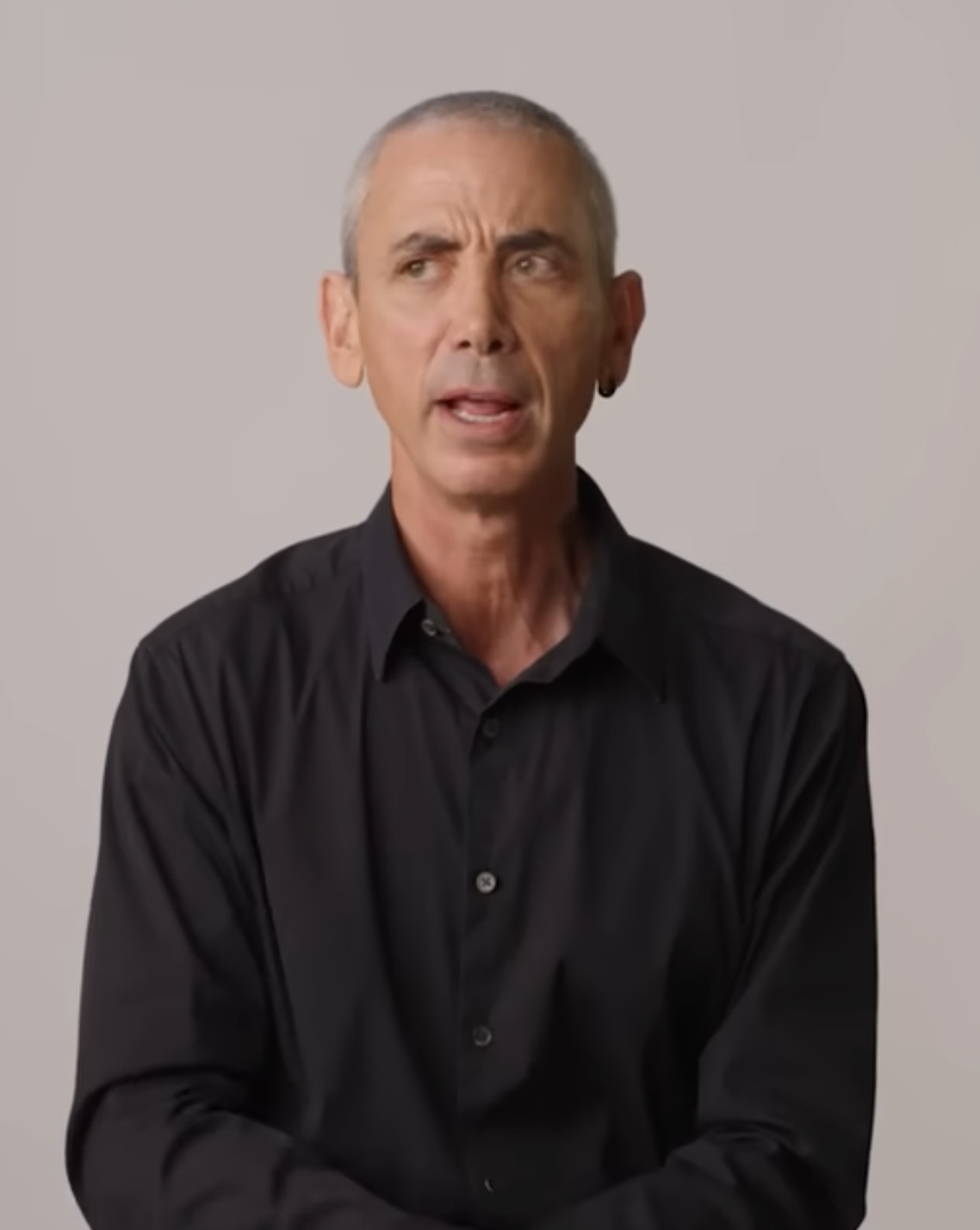
Steven Kotler's core idea:
Humans are built for peak performance.
The goal is to get our biology, brain, and nervous system working for us rather than against us.
THE IMPOSSIBLE
WHY POSSIBILITY BEGINS IN THE MIND
WE ARE CAPABLE OF MORE THAN WE THINK
LIMITS ARE PARTLY PSYCHOLOGICAL
When we see someone achieve something previously considered impossible, our own thinking changes.
We stop asking:
"Can it be done?"
And start asking:
"How could I do it?"
THE MENTAL SEQUENCE
IMPOSSIBLE SLOWLY BECOMES ACTIONABLE
1. Someone proves it is possible.
2. You imagine yourself doing it.
3. You ask how it could be done.
4. You think about training.
5. The impossible becomes a problem that can be solved.
THE BANNISTER EFFECT
BELIEF CHANGES PERFORMANCE
ROGER BANNISTER
BREAKING THE FOUR-MINUTE MILE
For years, running one mile in under four minutes was considered almost impossible.
Then Roger Bannister ran it in 3 minutes 59.4 seconds on May 6, 1954.
A psychological barrier suddenly disappeared.
WHAT HAPPENED NEXT?
THE BODY DID NOT SUDDENLY EVOLVE
Soon after Bannister broke the barrier, other runners followed.
A month later, another runner beat his record.
Within several years, even teenagers had run sub-four-minute miles.
Human physiology had not suddenly changed.
THE BARRIER WAS ALSO MENTAL
POSSIBLE CHANGES BEHAVIOR
Before Bannister:
"It cannot be done."
After Bannister:
"It has been done."
That small psychological shift changes imagination, training, confidence, strategy, and willingness to attempt the goal.
BELIEF CREATES A NEW QUESTION
FROM POSSIBILITY TO EXECUTION
Once your brain accepts that something is possible, the question changes.
Not:
"Is this possible?"
But:
"What would it look like if I did it?"
That question begins turning an abstract dream into an executable plan.
MENTAL REHEARSAL
PRE-WIRE THE PERFORMANCE
THE BRAIN THINKS IN PATTERNS
IMAGINE BEFORE EXECUTING
Kotler argues that mentally rehearsing a future action can help pre-wire patterns before actual performance.
You imagine the movement, sequence, environment, challenge, and response before doing it.
PSYCHOLOGY MEETS PHYSIOLOGY
MIND AND BODY ARE TIGHTLY CONNECTED
The Bannister Effect points to a larger principle:
Psychology and physiology are deeply connected.
What you believe affects what you attempt.
What you repeatedly imagine can affect how you prepare and perform.
PATTERN MATCHING
FAMILIARITY CAN SUPPORT PERFORMANCE
Kotler suggests that when reality begins matching patterns previously rehearsed in the mind, the brain may reward that recognition.
That familiarity can increase confidence, motivation, and potentially help push performance toward flow.
FLOW STATE
THE ENGINE OF PEAK PERFORMANCE
WHAT IS FLOW?
OPTIMIZED CONSCIOUSNESS
Flow is an optimized state of consciousness in which we tend to feel our best and perform our best.
Attention becomes deeply absorbed in the task, and action begins to feel unusually smooth and automatic.
WHERE THE NAME COMES FROM
PERFORMANCE FEELS EFFORTLESS
Psychologist Mihaly Csikszentmihalyi studied people describing moments when they felt and performed at their best.
Again and again, people described actions flowing effortlessly and seamlessly from one moment to the next.
THE 4 SIGNS OF FLOW
HOW TO RECOGNIZE THE STATE
1. Complete concentration.
2. Action and awareness merge.
3. Self-consciousness decreases.
4. Time feels distorted.
You become so absorbed that five hours can feel like five minutes.
THE INNER CRITIC GETS QUIET
LESS SELF, MORE EXECUTION
During deep flow, attention moves away from self-evaluation.
You stop constantly asking:
"Am I doing this correctly?"
"How do I look?"
"What will people think?"
More mental energy becomes available for the task itself.
FLOW FEELS LIKE CONTROL
DOING WHAT NORMALLY FEELS DIFFICULT
Peak performance does not necessarily feel like "peak performance."
Internally, it can feel like extraordinary control.
An athlete may suddenly feel that the game has slowed down and difficult actions have become easier.
EXAMPLE: THE BASKETBALL ZONE
PERCEPTION CHANGES
A basketball player in the zone may describe the hoop as suddenly looking enormous.
The hoop has not changed.
The athlete's perception, attention, confidence, timing, and execution have changed.
FLOW AMPLIFIES PERFORMANCE
WHAT CHANGES INSIDE THE STATE
PERFORMANCE GOES UP TOGETHER
MENTAL AND PHYSICAL GAINS
Kotler argues that flow can amplify multiple dimensions of performance at once:
1. Motivation
2. Productivity
3. Learning
4. Creativity
5. Strength
6. Stamina and endurance
PRODUCTIVITY AND MOTIVATION
MORE OUTPUT FROM DEEP FOCUS
Kotler cites research suggesting that productivity and motivation can rise dramatically during flow.
The practical lesson is simpler:
Deep uninterrupted concentration can create substantially different output from fragmented attention.
LEARNING ACCELERATES
FLOW AND SKILL ACQUISITION
Kotler cites research reporting learning improvements of roughly 240% to 500% during flow conditions.
The exact number matters less than the principle:
Attention, motivation, feedback, and memory become tightly connected.
CREATIVITY EXPANDS
MORE CONNECTIONS BECOME AVAILABLE
Kotler also cites large increases in creativity during flow.
When self-consciousness decreases and attention becomes absorbed, people can connect ideas faster, explore unusual possibilities, and react more fluidly.
WHY FLOW EXISTS
EVOLUTION BUILT THE SYSTEM
SCARCITY CREATES PRESSURE
EVOLUTION REWARDS USEFUL RESPONSES
Kotler connects flow to evolution.
When resources become scarce, organisms must respond.
Survival depends on finding better ways to act under pressure, uncertainty, danger, and competition.
THREE RESPONSES TO SCARCITY
FIGHT, FLEE, OR INNOVATE
When resources disappear, we can:
1. Fight over what remains.
2. Flee danger or avoid becoming a resource ourselves.
3. Cooperate, create, innovate, and discover new resources.
FLOW SUPPORTS ALL THREE
A SURVIVAL AMPLIFIER
Flow amplifies many abilities needed under pressure:
Focus.
Speed.
Strength.
Learning.
Creativity.
Cooperation.
Problem solving.
That may explain why evolution preserved the state.
FLOW IS NOT RESERVED FOR GENIUSES
THE SYSTEM EXISTS IN ALL OF US
Kotler's major conclusion after decades studying peak performance:
Flow is universal.
It is not a superpower given only to elite athletes, artists, founders, or scientists.
The biological machinery already exists inside us.
THE IMPOSSIBLE FORMULA
HOW POSSIBILITY EXPANDS
STEP 1 — SEE PROOF
FIND EVIDENCE THAT IT CAN BE DONE
Impossible goals become easier to approach when your brain has evidence that they are achievable.
Find examples.
Study people who already crossed the barrier.
Proof changes the mental frame from fantasy to possibility.
STEP 2 — IMAGINE YOURSELF DOING IT
CREATE THE INTERNAL PICTURE
Do not stop at admiring someone else's achievement.
Ask:
"What would this look like if I did it?"
Make the imagined performance specific enough that your brain can begin working with it.
STEP 3 — TURN IT INTO TRAINING
MOVE FROM DREAM TO PROCESS
Ask increasingly practical questions:
What skills are required?
What needs to improve?
How would I train?
What would I practice every day?
The impossible becomes smaller once it becomes a training problem.
STEP 4 — CREATE CONDITIONS FOR FLOW
PROTECT DEEP EXECUTION
Flow requires deep engagement.
Reduce unnecessary distraction.
Choose a meaningful challenge.
Know the task.
Get immediate feedback.
Push your abilities near their current limits.
STEP 5 — REPEAT
EXPAND YOUR DEFINITION OF POSSIBLE
One breakthrough changes what you believe is possible.
That belief changes the next goal.
The process repeats:
See possibility → imagine → train → enter deep focus → perform → raise the standard.
THE BIG IDEA
PEAK PERFORMANCE IS TRAINABLE
YOUR BIOLOGY ALREADY HAS THE MACHINERY
THE SYSTEM IS BUILT IN
The lesson is not that flow makes everything possible.
It is that humans possess biological systems capable of dramatically amplifying performance when the right conditions are present.
IMPOSSIBLE OFTEN STARTS AS A BELIEF
CHANGE THE FRAME, THEN CHANGE THE PROCESS
First, something looks impossible.
Then someone proves it can be done.
Belief shifts.
Questions change.
Training changes.
Performance changes.
Eventually, yesterday's impossible becomes today's standard.
FLOW, IN ONE SENTENCE
STEVEN KOTLER'S CENTRAL LESSON
Flow is a built-in human state that amplifies attention, learning, creativity, motivation, and performance—and can help expand the boundary between what we currently believe is possible and what we can actually do.