WHAT I LEARNED FROM THE TOP 0.01%
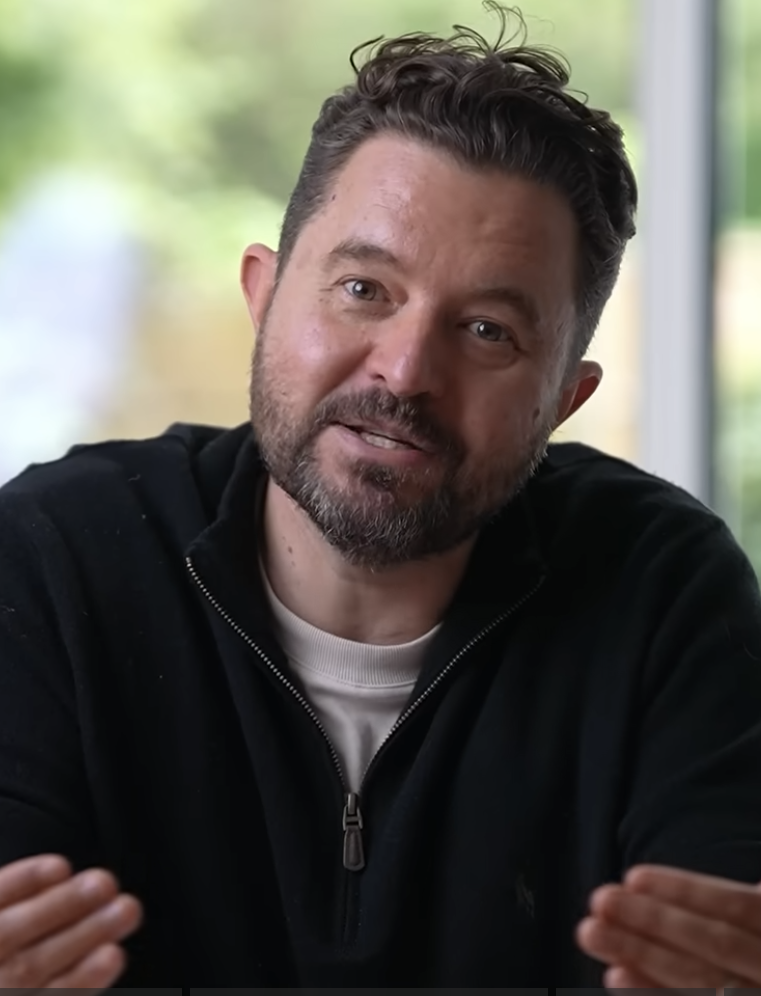
YOUTUBE SUMMARY : DANIEL PRIENTSLEY
CHAPTER INDEX
THE TOP 0.01% THINK DIFFERENTLY
8 PATTERNS BEHIND EXTREME OUTCOMES
The core lesson: extraordinary success is not only about working harder.
It is about improving your odds, creating leverage, designing the future, mobilizing exceptional people, scaling value, positioning yourself well, and knowing when to exit.
1. CONTROL THE ODDS OF LUCK
LUCK IS NOT AN ON/OFF SWITCH
LUCK IS A DIMMER SWITCH
YOU CANNOT SCHEDULE LUCK
You cannot control when a lucky break arrives.
You can control how often you place yourself where lucky breaks are more likely to happen.
The goal is not to predict luck. The goal is to improve the odds.
INCREASE YOUR LUCK SURFACE AREA
DO MORE THINGS THAT CREATE OPPORTUNITY
1. Pitch more people.
2. Spend time with ambitious people.
3. Study emerging trends.
4. Put your work in public.
5. Start more experiments.
Each action creates another chance for an unexpected opportunity.
RICHARD BRANSON'S PATTERN
MANY ATTEMPTS CREATE MORE CHANCES
Richard Branson often describes his success as a series of lucky breaks.
But he also launched hundreds of companies and signed hundreds of artists.
Most did not become huge. A few became extraordinary. Volume increased the odds.
THE QUESTION TO ASK
ARE YOU GIVING LUCK ENOUGH CHANCES?
Are you starting enough?
Are you pitching enough?
Are you publishing enough?
Are you meeting enough people?
You cannot force the breakthrough. You can create far more opportunities for one to happen.
2. CREATE YOUR OWN CURRENCIES
VALUE CAN EXIST BEYOND CASH
CURRENCY IS MORE THAN MONEY
BUILD ASSETS YOU CAN TRADE
Most people think in only two currencies: time and money.
The top 0.01% often create new currencies: reputation, brand, audience, equity, access, relationships, distribution, and influence.
These assets can be exchanged for opportunities.
EXAMPLES OF ALTERNATIVE CURRENCY
WHAT CAN BECOME LEVERAGE?
A. Reputation → board roles or advisory equity.
B. Email list → distribution power.
C. Social following → influence and access.
D. Company shares → acquisitions or hiring incentives.
E. Brand → trust that opens doors.
COMPANY SHARES BECOME CURRENCY
FINANCIALIZE THE VALUE YOU CREATE
If investors buy 10% of a company for $10M, the company is valued at $100M.
Those shares now have an implied value.
The company may use equity to recruit talent, reward partners, or even acquire another business.
BUILD A CURRENCY BEFORE YOU NEED IT
CREATE LEVERAGE EARLY
A startup can create valuable currency before it is huge.
A strong advisory board, distribution commitment, early investors, brand credibility, and audience can make the company more valuable.
Build assets that can later be exchanged for growth.
3. REVERSE ENGINEER THE FUTURE
BUILD BACKWARD FROM A VIVID DESTINATION
MOST PEOPLE START FROM THE PAST
TOMORROW BECOMES AN EXTENSION OF TODAY
Forward engineering asks:
What have I done until now, and what should I do next?
Reverse engineering asks:
What must exist three years from now, and what needs to happen before that future can become real?
DESIGN THE 3-YEAR PICTURE
MAKE THE FUTURE SPECIFIC
Define the future in detail:
• Team size
• Revenue
• Profit
• Products
• Intellectual property
• Investors
• Cap table
• Market position
A vague ambition is hard to build. A vivid future can be decomposed.
WORK BACKWARD TO TODAY
TURN VISION INTO MILESTONES
If the 3-year future is true, what must be true in:
2 years?
1 year?
6 months?
3 months?
1 month?
1 week?
The future becomes a sequence of requirements rather than a distant dream.
USE THE VISION TO RECRUIT RESOURCES
SHOW PEOPLE WHERE THEY FIT
If the future requires $10M, tell investors what their capital unlocks.
If it requires a world-class CEO, show that person the destination, the plan, and the role they could play.
The vision becomes a recruiting tool.
BECOME AN EXPERT STORYTELLER
MAKE THE FUTURE EASY TO SEE
The top founders repeatedly explain:
This is what we are building.
This is what it will look like.
These are the steps.
This is the role you can play.
Clarity makes alignment easier. People can decide whether they want to join.
4. ENROLL EXCEPTIONAL PEOPLE
YOUR JOB IS TO ORGANIZE TALENT
DO NOT BECOME THE BOTTLENECK
BIG VISIONS REQUIRE COORDINATION
A large outcome may require hundreds of people, capital, leadership, and specialist execution.
If the founder spends all day doing the work personally, there is less time to recruit and align the people who can multiply the outcome.
THE FOUNDER AS ORGANIZING FORCE
GET THINGS DONE THROUGH PEOPLE
The billionaire mindset described in the video is not: do everything yourself.
It is: become the organizing force.
Tell the story, create alignment, recruit resources, and make sure exceptional people are moving toward the same destination.
GOOD AND GREAT ARE NOT LINEAR
EXCEPTIONAL TALENT CHANGES OUTCOMES
One billionaire in the transcript would examine huge numbers of candidates to find the person who was slightly better than the best.
His belief: the difference between good and great can be exponential.
Talent selection becomes a core strategic job.
4 TYPES OF PEOPLE TO FIND
BUILD YOUR HIGH-LEVERAGE NETWORK
1. Distribution
2. Leaders
3. Practitioners
4. Capital
The top 0.01% keep looking for people who can unlock markets, lead teams, execute at an exceptional level, or finance growth.
1. DISTRIBUTION
WHO ALREADY HAS ACCESS TO THE MARKET?
Look for people who already control attention or access:
• Large audiences
• Email lists
• High-traffic websites
• Retail networks
• Customer communities
Distribution can turn a good product into a fast-moving opportunity.
2. LEADERS
WHO CAN OWN AN ENTIRE FUNCTION?
Look for executives who can lead teams and projects:
• Sales leader
• Technology leader
• Product leader
• CFO
• General manager
A strong leader removes an entire category of execution from the founder.
3. PRACTITIONERS
WHO CAN EXECUTE AT AN ELITE LEVEL?
These are standout individual performers:
• Exceptional engineer
• Exceptional salesperson
• Exceptional artist
• Exceptional operator
They do the actual work at a level most people cannot easily match.
4. POOLS OF CAPITAL
WHO CAN FINANCE THE NEXT STAGE?
Know the people who control or connect to money:
• Angel investors
• Venture funds
• Strategic buyers
• Acquirers
Understand their criteria, stage, appetite, and what kind of opportunity they are looking for.
A BUSINESS IS A COLLECTION OF PEOPLE
ALIGNMENT CREATES THE COMPANY
The transcript argues that a great business is fundamentally a collection of exceptional people who get excited about the same thing.
Technology can increase leverage, but people still create the alignment, decisions, energy, and coordinated action behind the company.
5. CREATE AN ENEMY
KNOW WHAT YOU STAND AGAINST
USE BOTH CARROT AND STICK
PEOPLE MOVE TOWARD AND AWAY
Millionaires may focus on goals, visions, dashboards, and rewards.
The video argues that billionaires also define an enemy: something the team wants to defeat, replace, outperform, or change.
The enemy creates emotional energy and urgency.
EXAMPLES OF A SHARED ENEMY
COMPETITION CAN SHARPEN IDENTITY
Richard Branson positioned British Airways as an enemy.
Steve Jobs famously framed IBM as the force Apple was fighting.
A small coffee chain can make Starbucks the benchmark to beat.
An enemy gives the team a clear contrast target.
DEFINE WHAT YOU ARE FIGHTING
MAKE THE MISSION EMOTIONALLY CLEAR
Ask two questions:
1. What are we building toward?
2. What are we determined to beat or replace?
A team can become more energized when the mission includes something concrete that it refuses to accept.
6. CREATE VALUE AT SCALE
THE ECONOMY REWARDS MULTIPLIED VALUE
BEING VALUABLE IS NOT ENOUGH
SCALE CHANGES THE ECONOMICS
A nurse or teacher can create enormous value, but often one person at a time.
The top 0.01% search for ways to make one valuable idea, system, product, or capability useful to thousands or millions of people.
4 ENGINES OF SCALE
TURN ONE UNIT OF VALUE INTO MANY
1. Intellectual property
2. Distribution
3. People
4. Software
Each engine allows value to move beyond the founder's personal time.
The question becomes: how can this work without me repeating it manually every time?
1. INTELLECTUAL PROPERTY
CAPTURE VALUE IN A REUSABLE FORMAT
IP can include:
• Patents
• Brands
• Books
• Music rights
• Video content
• Systems
• Franchise manuals
The value is captured once, then distributed, licensed, reused, or sold many times.
2. DISTRIBUTION
OWN THE PATH TO THE CUSTOMER
Distribution creates scale through access.
Examples include subscribers, followers, email lists, retail chains, websites, and other channels that repeatedly connect value to large groups of people.
3. PEOPLE
TRAIN OTHERS TO DELIVER THE SYSTEM
A trained network of people can reproduce a valuable service at scale.
Instead of one founder delivering the outcome, many people can operate the same model across locations, markets, or customer segments.
4. SOFTWARE
ENCODE VALUE INTO A MACHINE
Software can make an outcome available anywhere the internet reaches.
When code reliably performs a valuable job, the same system can serve enormous numbers of users without requiring the creator to repeat the work manually.
SIMPLE SCALES
COMPLEXITY HITS WALLS
The transcript's scaling principle is simple:
Simplify. Simplify. Simplify.
If every customer, location, or project requires a completely different process, scale becomes difficult.
Create a repeatable way of producing value.
7. HIGH-VALUE POSITIONING
MAKE YOUR VALUE VISIBLE
BE KNOWN AS A KEY PERSON
PERCEPTION AFFECTS ACCESS
Highly successful people often make sure the right people know who they are and why they matter.
They do not rely only on hidden competence.
They deliberately create a frame that communicates authority, relevance, and value.
HOW THEY BUILD POSITIONING
CREATE VISIBLE PROOF
Common positioning assets mentioned in the video:
• Industry recognition
• Awards
• Books
• Talks
• Speeches
• Strategic roles
• Strong reputation
These signals help people understand your value before a deep relationship exists.
QUIET WEALTH IS THE EXCEPTION
IMPORTANT ROOMS KNOW WHO MATTERS
The transcript notes that some wealthy people stay extremely private.
But among many high-performing entrepreneurs and investors, important rooms usually know when a high-value person is present.
Positioning is treated as a strategic asset.
8. BUILD WITH AN EXIT IN MIND
COMPLETE THE CYCLE AND REDEPLOY
EXTREME WEALTH OFTEN INCLUDES AN EXIT
VALUE BECOMES LIQUIDITY
Many extremely wealthy entrepreneurs eventually sell something they built:
• A company
• Part of their shares
• A property
• A digital asset
• A stake in a venture
The exit converts accumulated value into liquidity.
AN EXIT GIVES TWO THINGS
MONEY AND TIME
Selling can return more than cash.
It can also return your time.
Now the entrepreneur has capital, experience from completing a full cycle, and the freedom to decide what to build next.
EXITS CREATE LEARNING ROUNDS
FINISH, REFLECT, IMPROVE, REPEAT
After an exit, you can ask:
What would I do earlier?
What would I do faster?
Where could I have gone bigger?
What mistakes should I avoid?
The next company can be built using the lessons from the entire previous cycle.
DO NOT HOLD FOREVER BY DEFAULT
OLD BUSINESSES REFLECT OLD THINKING
The transcript warns that some founders hold businesses too long.
A company created years ago may reflect the best thinking you had years ago.
An exit can clear the deck, consolidate lessons, release capital, and create space for a stronger next move.
SMALL EXITS CAN COMPOUND
EACH CYCLE CAN INCREASE CAPABILITY
A modest exit can still be strategically valuable.
You regain money, time, and lessons.
That can fund a bigger second attempt, which can create a larger third attempt.
The compounding comes from completing cycles, not only from holding one asset forever.
THE 8 PRINCIPLES
A PLAYBOOK FROM THE TOP 0.01%
1. Improve the odds of luck.
2. Create your own currencies.
3. Reverse engineer the future.
4. Enroll exceptional people.
5. Create an enemy.
6. Create value at scale.
7. Build high-value positioning.
8. Build, exit, learn, and go again.