
CHAPTER INDEX
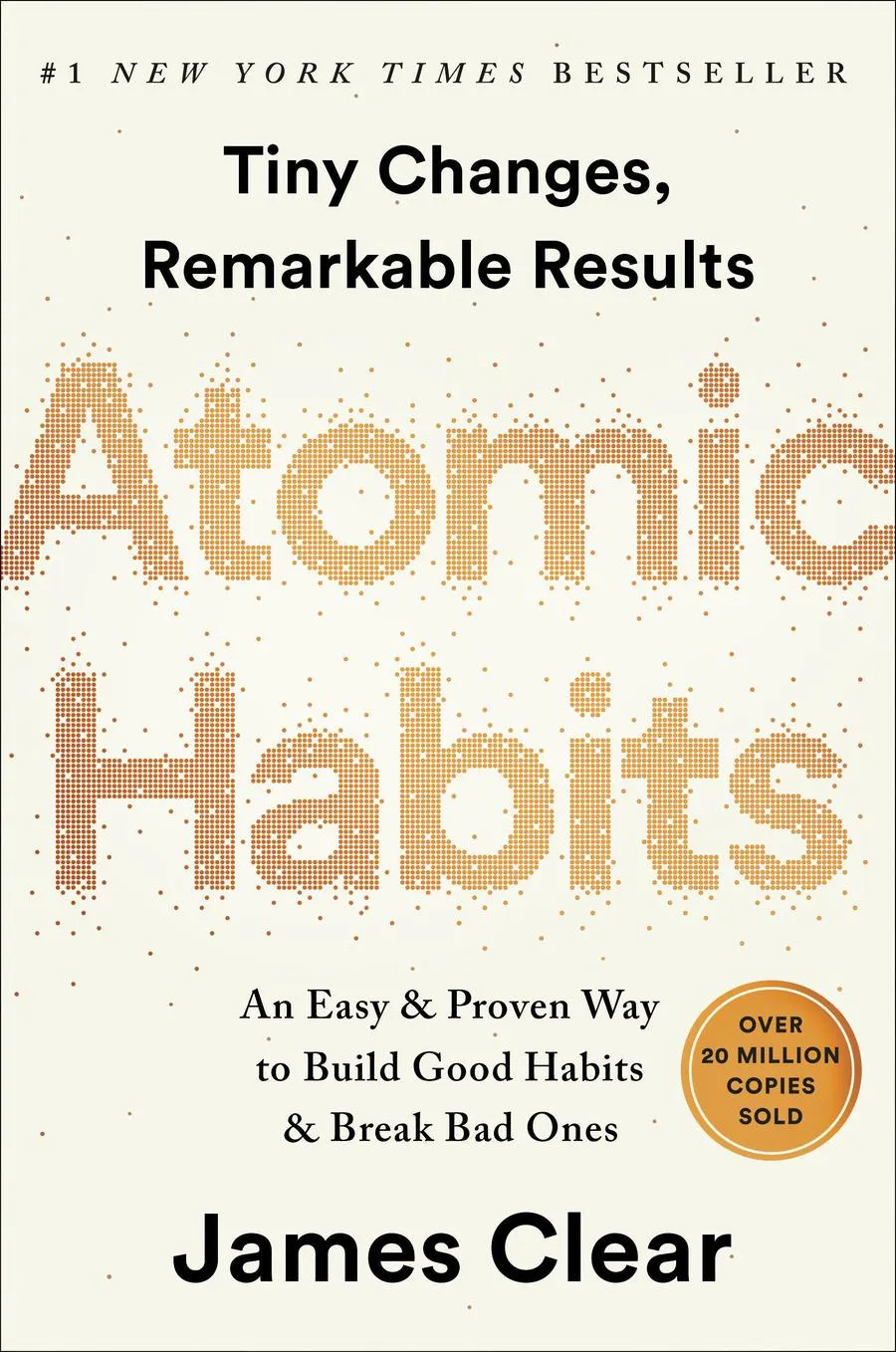
ATOMIC HABITS
SMALL ACTIONS. LASTING IDENTITY.
A practical guide to building better habits through small, repeatable actions.
The goal is not dramatic change overnight. The goal is to create systems that make progress easier, more consistent, and part of who you are becoming.
WHY TINY HABITS MATTER
CHAPTER 1
SMALL HABITS COMPOUND
TINY ACTIONS CREATE LARGE OUTCOMES
Habits work like compound interest.
A 1% improvement may feel invisible today, but repeated consistently it changes your direction. Small choices are never isolated. They accumulate into skills, confidence, health, knowledge, and identity.
THE ICE CUBE EFFECT
PROGRESS IS OFTEN DELAYED
An ice cube does not melt at 25°F, 26°F, or 31°F. At 32°F, change becomes visible.
The final degree did not create the result alone. Every earlier degree mattered. Your effort may be working before the result appears.
THE PLATEAU OF POTENTIAL
DO NOT QUIT DURING INVISIBLE PROGRESS
Most people stop because effort and results do not arrive at the same time.
This gap is the plateau of latent potential. Progress is building below the surface. Consistency keeps you moving until the breakthrough becomes visible.
SYSTEMS BEAT GOALS
GOALS DIRECT. SYSTEMS DELIVER.
Goals define the outcome. Systems define what you repeatedly do.
Many people share the same goals. Their results differ because their systems differ. Build a daily process that keeps working after motivation fades.
EVERY ACTION IS A VOTE
HABITS SHAPE IDENTITY
Every repeated action is evidence of who you are becoming.
Reading is a vote for being a reader. Training is a vote for being an athlete. Writing is a vote for being a writer. Identity grows from repeated proof.
THE HABIT LOOP
CHAPTER 2
HOW EVERY HABIT WORKS
CUE → CRAVING → RESPONSE → REWARD
A cue gets your attention.
A craving creates desire. A response is the behavior. A reward teaches your brain whether the behavior is worth repeating.
Change the loop and you can change the habit.
THE FOUR LAWS
A PRACTICAL BEHAVIOR FRAMEWORK
To build a good habit:
1. Make it obvious.
2. Make it attractive.
3. Make it easy.
4. Make it satisfying.
These four laws turn behavior change into a system you can design.
REVERSE THE LAWS
HOW TO BREAK A BAD HABIT
To weaken a bad habit:
1. Make it invisible.
2. Make it unattractive.
3. Make it difficult.
4. Make it unsatisfying.
Do not fight the habit only at the moment of action. Redesign the conditions around it.
AWARENESS COMES FIRST
YOU CANNOT CHANGE WHAT YOU CANNOT SEE
Many habits run automatically.
Create a habit scorecard. Write down your daily behaviors and label each as helpful, harmful, or neutral. The goal is not shame. The goal is to make invisible patterns visible.
USE A CLEAR PLAN
TURN INTENTION INTO ACTION
Use this formula:
I will [behavior] at [time] in [location].
Example: I will write for 15 minutes at 8:00 p.m. at my desk.
Specific plans reduce uncertainty and make action easier.
DESIGN BETTER CUES
CHAPTER 3
STACK NEW HABITS
ATTACH THEM TO EXISTING ROUTINES
Use this formula:
After [current habit], I will [new habit].
After I pour coffee, I will read one page. After I brush my teeth, I will write one sentence.
Stable routines become reliable triggers.
DESIGN THE ENVIRONMENT
LET YOUR SPACE GUIDE BEHAVIOR
Visible cues create action.
Keep water on your desk. Place a book on your pillow. Put workout clothes near the door. Make healthy food easy to see.
Good environment design reduces the need to remember or resist.
ONE SPACE, ONE PURPOSE
CONTEXT TRAINS THE BRAIN
Your brain connects places with behaviors.
Use one chair for reading, one desk for focused work, and your bed for sleep. Even in a small room, create clear zones. A defined space makes the desired behavior easier to repeat.
REMOVE TEMPTATION EARLY
SELF-CONTROL STARTS BEFORE THE URGE
Disciplined people often avoid temptation instead of constantly resisting it.
Move your phone to another room. Keep junk food out of the house. Log out of distracting apps. Remove the cue before it creates a craving.
USE FRICTION
MAKE BAD HABITS HARDER
A small obstacle can interrupt automatic behavior.
Unplug the television. Hide the remote. Delete the app. Use website blockers. Leave your wallet behind when avoiding impulse purchases.
Extra steps create time to choose.
MAKE HABITS ATTRACTIVE
CHAPTER 4
ANTICIPATION DRIVES ACTION
WE ACT FOR EXPECTED REWARDS
Dopamine rises when we anticipate a reward.
We do not only crave the behavior. We crave what it promises: relief, connection, pride, energy, or enjoyment.
Make the expected experience emotionally appealing.
USE TEMPTATION BUNDLING
PAIR NEED WITH WANT
Combine something you need to do with something you enjoy.
Listen to your favorite podcast only while exercising. Drink your favorite coffee after journaling. Watch a show while folding laundry.
The reward pulls the habit forward.
JOIN THE RIGHT TRIBE
BELONGING SHAPES BEHAVIOR
We imitate the close, the many, and the powerful.
Join a group where your desired habit is normal. Writers make writing feel normal. Runners make training feel normal. The right culture makes change easier to sustain.
REFRAME THE MEANING
CHANGE HOW THE HABIT FEELS
Language changes desire.
Instead of “I have to work out,” say, “I get to build strength.” Instead of “I must save,” say, “I am buying future freedom.”
A new interpretation can create a new craving.
MAKE HABITS EASY
CHAPTER 5
FOLLOW LEAST EFFORT
PEOPLE REPEAT WHAT IS CONVENIENT
Human behavior naturally follows the path of least resistance.
Make good habits simple to start. Prepare healthy food, open the document, charge the laptop, or place shoes by the door.
Better setup beats greater effort.
PRIME THE ENVIRONMENT
PREPARE BEFORE ACTION IS REQUIRED
Set up the next behavior in advance.
Prepare breakfast ingredients at night. Open tomorrow’s work file. Fill the water bottle. Lay out training clothes.
Remove decisions from the moment when energy is low.
USE THE TWO-MINUTE RULE
SHRINK THE STARTING POINT
When starting a habit, make it take less than two minutes.
Read one page. Write one sentence. Put on running shoes. Meditate for one minute.
The first objective is not intensity. It is becoming someone who starts.
BUILD GATEWAY HABITS
SMALL STARTS CREATE MOMENTUM
A gateway habit is an easy action that leads naturally to the larger behavior.
Putting on workout clothes can lead to exercise. Opening a notebook can lead to writing.
Master the entrance before expanding the routine.
AUTOMATE GOOD DECISIONS
MAKE PROGRESS INEVITABLE
Use systems that act before motivation is needed.
Automate savings. Schedule workouts. Use recurring reminders. Pre-order healthy groceries. Block distracting sites during focus time.
Automation turns intention into default behavior.
USE COMMITMENT DEVICES
LOCK IN BETTER FUTURE BEHAVIOR
A commitment device is a decision made now that limits bad choices later.
Book a paid class. Give an accountability partner a penalty rule. Remove distracting apps. Create conditions where the better action becomes easier to follow.
MAKE HABITS SATISFYING
CHAPTER 6
REWARD THE RIGHT ACTION
WHAT FEELS GOOD GETS REPEATED
Good habits often have delayed rewards. Bad habits often feel rewarding immediately.
Add a small immediate benefit to the good habit: mark progress, celebrate completion, or enjoy a healthy ritual afterward.
TRACK THE HABIT
VISIBLE PROGRESS CREATES MOMENTUM
A check mark gives immediate evidence that you followed through.
Use a calendar, journal, or app. A growing streak becomes satisfying and protects consistency.
Track the behavior, not only the final outcome.
NEVER MISS TWICE
RECOVER QUICKLY
Missing once is an accident. Missing twice can become a new pattern.
After a missed workout, return tomorrow. After an unhealthy meal, make the next one better.
Consistency is not perfection. It is fast recovery.
USE ACCOUNTABILITY
MAKE THE HABIT VISIBLE TO OTHERS
Accountability adds social consequences.
Choose someone you respect. Define the habit, schedule, and consequence for skipping it. The goal is not punishment. The goal is to make commitment real and visible.
BUILD FOR THE LONG TERM
CHAPTER 7
USE THE GOLDILOCKS RULE
STAY NEAR THE EDGE OF ABILITY
Motivation is highest when a challenge is not too easy and not too hard.
Choose difficulty slightly above your current skill. Enough challenge keeps you engaged. Too much creates frustration. Too little creates boredom.
BUILD AROUND YOUR STRENGTHS
CHOOSE HABITS THAT FIT YOU
Genes and personality do not determine destiny, but they influence opportunity.
Design habits around your energy, temperament, and natural strengths. The right fit reduces friction and makes consistency more sustainable.
REVIEW THE SYSTEM
IMPROVE THE PROCESS REGULARLY
Each week, ask:
What worked? What slipped? What created friction? What should change?
Habits need maintenance. Reflection keeps the system aligned with your life, goals, and environment.
PROTECT AGAINST BOREDOM
PROFESSIONALS KEEP SHOWING UP
The greatest threat to mastery is often boredom.
Successful people continue after the habit stops feeling exciting. Keep the routine stable while adding small challenges, new methods, or better measurement.
IDENTITY MAKES RESULTS LAST
BECOME THE PERSON BEHIND THE HABIT
Lasting change happens when the habit becomes part of your identity.
Do not only aim to read. Become a reader. Do not only aim to exercise. Become someone who trains.
Identity gives the system meaning. The system gives identity proof.
YOUR ATOMIC HABIT PLAN
START WITH ONE BEHAVIOR
1. Choose the person you want to become.
2. Pick one tiny action that proves it.
3. Attach it to a clear cue.
4. Make it easy and satisfying.
5. Track it and never miss twice.
START SMALL. KEEP GOING.
ONE HABIT. ONE VOTE. ONE DAY.
You do not need to rebuild your entire life today.
Choose one small habit that supports the identity you want. Make the first step obvious, easy, and repeatable.
Then show up again tomorrow.