
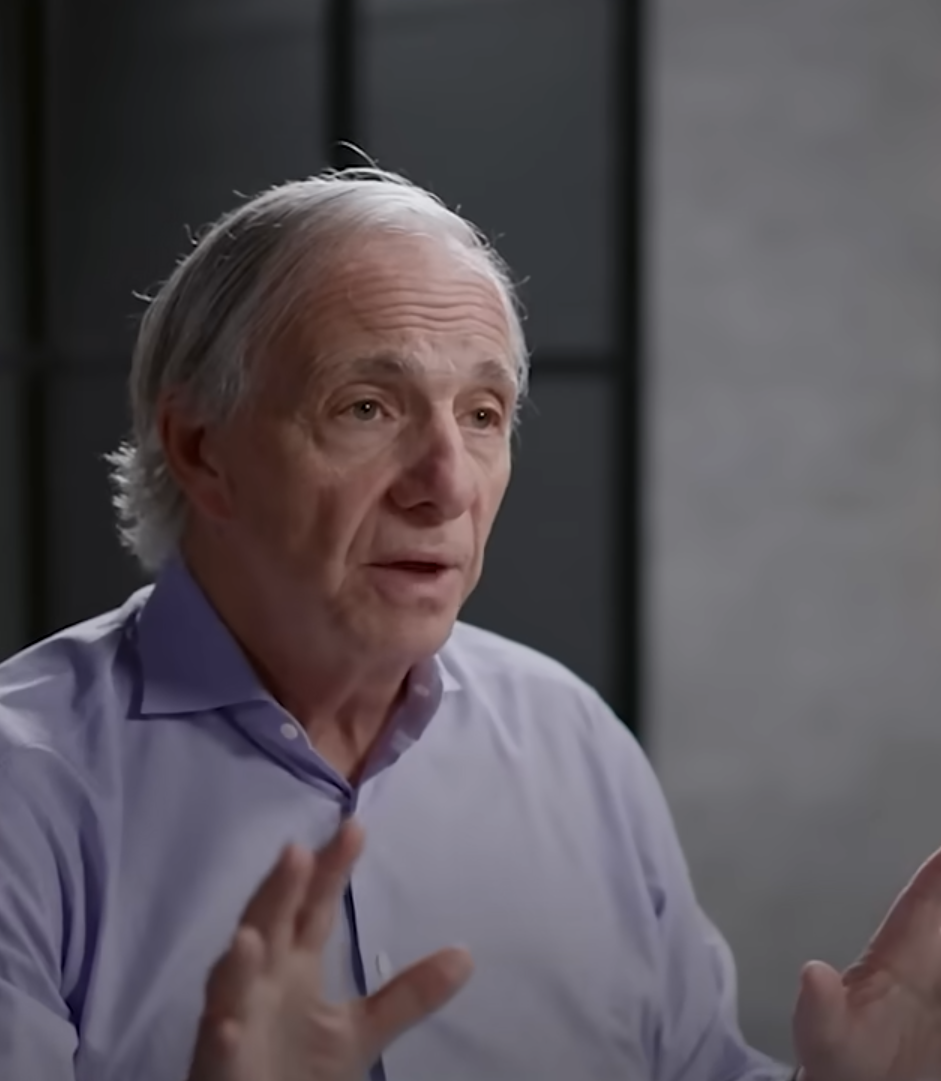
RAY DALIO: THE AI BUBBLE AND THE NEXT ECONOMIC SHIFT
YOUTUBE SUMMARY : THE DIARY OF CEO
CHAPTER INDEX
THE NEXT ECONOMIC SHIFT
RAY DALIO ON AI, BUBBLES, DEBT, AND ADAPTATION
AI may transform the world while its market price becomes dangerously inflated.
Ray Dalio explains how bubbles form, what makes them burst, how economic cycles spread through society, and what individuals and founders can do to become more resilient.
THE AI BUBBLE
WHY REVOLUTIONARY TECHNOLOGY CAN STILL BECOME OVERPRICED
A GREAT TECHNOLOGY CAN STILL BE A BAD INVESTMENT
INNOVATION AND VALUATION ARE DIFFERENT QUESTIONS
AI can create revolutionary change and still produce an investment bubble.
The technology may succeed for decades, while investors who pay extreme prices lose money. The key question is not only whether AI will matter, but whether expected profits can justify today’s valuation.
HOW EXCITEMENT BECOMES A BUBBLE
BELIEF ATTRACTS CAPITAL, LEVERAGE, AND HIGHER PRICES
A breakthrough creates excitement. Prices rise. More investors join because they fear missing out.
Some borrow money to buy more. Rising prices create more collateral, which enables more borrowing. The cycle reinforces itself until asset prices move far beyond realistic business performance.
WEALTH IS NOT THE SAME AS MONEY
PAPER VALUE CANNOT PAY REAL BILLS
A founder may raise a small amount at a huge valuation and appear extremely wealthy. But that wealth exists mainly as shares.
To spend it, pay taxes, or service debt, shares must be sold for cash. When many people need cash at once, selling pressure can quickly expose how fragile the valuation was.
WHAT USUALLY PRICKS THE BUBBLE
THE TURNING POINT IS OFTEN A NEED FOR CASH
Bubbles often weaken when interest rates rise, credit tightens, taxes create selling needs, or investors find safer returns elsewhere.
At the same time, companies issue more stock to capture demand. More supply meets weaker demand. Once prices fall, fear and forced selling can accelerate the decline.
CLASSIC WARNING SIGNS
LOOK FOR BEHAVIOR, NOT A PRECISE PREDICTION
Dalio describes bubbles as a matter of degree.
Warning signs include extreme valuations, easy fundraising, heavy stock issuance, inexperienced investors chasing returns, leveraged products, borrowed money, and the belief that price no longer matters because the technology will change everything.
WHEN THE BUBBLE BURSTS
HOW A MARKET DECLINE REACHES THE REAL ECONOMY
LEVERAGE WORKS IN REVERSE
THE ENGINE THAT LIFTED PRICES CAN DEEPEN THE FALL
During the rise, higher asset values create collateral and support more debt. During the fall, the same mechanism reverses.
Assets lose value, lenders demand repayment, and investors must sell. More selling pushes prices lower, creating further losses and another round of forced selling.
FALLING WEALTH REDUCES SPENDING
ONE PERSON’S SPENDING IS ANOTHER PERSON’S INCOME
When investors lose money, they become cautious. They cancel purchases, reduce subscriptions, stop visiting restaurants, and delay investments.
That lower spending becomes lower income for businesses and workers. A financial-market decline can therefore spread into the wider economy.
COMPANIES SHIFT FROM GROWTH TO SURVIVAL
LAYOFFS RISE WHEN CASH BECOMES SCARCE
After a bubble bursts, companies stop optimizing for expansion and start protecting runway.
They reduce teams, cancel projects, and preserve cash. Unemployment can rise from two forces at once: the economic downturn and the longer-term replacement of tasks by AI, automation, and robotics.
DO NOT TRY TO TIME IT PERFECTLY
EVEN SOPHISTICATED INVESTORS STRUGGLE WITH THE PEAK
Knowing that a bubble exists does not reveal the exact date it will burst.
A strong strategy does not depend on predicting one moment correctly. It reduces exposure to any single outcome, avoids excessive leverage, preserves flexibility, and prepares for both continued growth and a sharp reversal.
THE BIG CYCLE
DEBT, INEQUALITY, POLITICS, AND WORLD ORDER
THREE FORCES CONVERGE
MONEY, DOMESTIC CONFLICT, AND GEOPOLITICS
Dalio’s big-cycle framework connects three pressures:
1. Excessive debt and weak government finances.
2. Large wealth gaps and internal political conflict.
3. Competition between major powers.
When these intensify together, the system becomes harder to stabilize.
DEBT EVENTUALLY REDUCES CHOICE
MORE PROMISES COMPETE FOR LIMITED MONEY
Governments borrow to fund spending and commitments. Over time, debt service consumes more resources.
Leaders then face painful choices: raise taxes, cut benefits, borrow more, restructure debt, or create money. Each option creates economic and political consequences, especially when trust is already low.
INEQUALITY TURNS DOWNTURNS POLITICAL
ECONOMIC PAIN INCREASES CONFLICT
Large wealth and opportunity gaps may remain manageable during prosperity. A downturn changes the mood.
People fight over who should absorb the losses, who should pay more tax, and who deserves support. Compromise becomes harder, political extremes gain strength, and policy becomes less predictable.
POWER SHIFTS BETWEEN COUNTRIES
ECONOMIC STRENGTH SHAPES THE GLOBAL ORDER
Countries gain influence through productivity, education, trade, capital, technology, military capacity, and internal stability.
When a dominant power becomes indebted, divided, or less competitive, its ability to enforce the existing order weakens. Other powers and regional systems then gain space.
CYCLES EXIST INSIDE LARGER CYCLES
RECESSIONS REPEAT WHILE TECHNOLOGY KEEPS ADVANCING
Dalio separates the long institutional cycle from shorter business cycles.
Credit expands, growth rises, capacity tightens, inflation increases, policy becomes restrictive, and recession follows. Meanwhile, technology continues improving because society does not fully unlearn accumulated knowledge.
BUILD PERSONAL RESILIENCE
PROTECT YOUR FUTURE WITHOUT FREEZING YOUR PROGRESS
START WITH RUNWAY
KNOW HOW LONG YOU CAN SURVIVE WITHOUT NEW INCOME
Before chasing returns, calculate how many months or years you can live if income stops.
This number creates clarity. It shapes how much risk you can take, whether you can survive a downturn, and how much freedom you have to change jobs, start a company, or wait for a better opportunity.
CASH FEELS SAFE BUT LOSES PURCHASING POWER
SAFETY MUST INCLUDE INFLATION
Cash and short-term deposits reduce price volatility, but inflation slowly reduces what that money can buy.
Interest may offset part of the loss, while taxes can reduce the real return further. Cash is useful for liquidity and runway, but relying on it alone can weaken long-term purchasing power.
DIVERSIFY ACROSS DIFFERENT DRIVERS
DO NOT LET ONE OUTCOME CONTROL YOUR FUTURE
Different assets respond to different economic conditions. Stocks, bonds, property, cash, gold, and other assets do not move for exactly the same reasons.
A balanced portfolio aims to preserve return potential while reducing the damage caused by any single market, policy, or economic shock.
AVOID CONCENTRATED DEBT
LEVERAGE REMOVES YOUR ABILITY TO WAIT
Debt can amplify gains while prices rise. It can also force you to sell at the worst possible time.
The practical danger is not only losing value. It is losing control over when you must act. Lower leverage and adequate liquidity protect decision-making when markets become unstable.
YOUR MOST IMPORTANT ASSET
HOW TO REMAIN VALUABLE AS AI CHANGES WORK
WHEN CAPITAL IS LIMITED, INVEST IN YOURSELF
YOUR EARNING ABILITY BECOMES THE FOUNDATION
For someone with few financial assets, the most important asset is the ability to earn.
That means building a skill people will pay for, improving how clearly you create value, and finding a market where the same capability is valued more highly.
THE SAME SKILL HAS DIFFERENT MARKET VALUE
CONTEXT CAN MULTIPLY INCOME
A skill is not paid equally in every industry, role, or customer segment.
Driving, writing, designing, coding, teaching, or selling may command very different prices depending on who needs it, how urgent the problem is, and how much economic value the skill helps create.
SMALL IMPROVEMENTS CAN EARN LARGE PREMIUMS
THE TOP OF A CATEGORY CAPTURES DISPROPORTIONATE VALUE
In many markets, the best performers earn many times more than the average.
A relatively small improvement in quality, trust, reliability, specialization, or positioning can create a large increase in demand. Do not only work more. Improve the dimension buyers value most.
AI REPLACES MORE THAN PHYSICAL LABOR
AUTOMATION IS MOVING UPWARD INTO REASONING
Machines first reduced the need for human physical effort. AI is now automating parts of analysis, communication, coding, planning, and decision support.
People in knowledge work must learn to use these systems, supervise them, and contribute judgment or value that the tools cannot reliably provide alone.
THE ADVANTAGE GOES TO HUMAN–AI OPERATORS
USE AI TO INCREASE USEFULNESS
Dalio expects the strongest position to belong to people who combine exceptional human capability with effective AI use.
The goal is not simply to know about AI. It is to use it to learn faster, produce better work, solve larger problems, and become more useful in a changing market.
ADAPTABILITY IS THE CAREER STRATEGY
PREPARE FOR CHANGE YOU CANNOT PREDICT
DO NOT BET YOUR LIFE ON ONE JOB TITLE
SPECIFIC ROLES CAN CHANGE FASTER THAN EXPECTED
A career plan built around one permanent occupation is fragile. Coding itself once looked like a durable answer, then coding agents rapidly improved.
Build portable abilities: learning, problem-solving, communication, judgment, experimentation, relationship-building, and the ability to use new tools.
KNOW YOUR NATURE
CHOOSE A PATH THAT FITS HOW YOU OPERATE
People differ in appetite for risk, need for certainty, creativity, structure, social interaction, and conceptual thinking.
Understanding your nature helps you choose environments where you can perform well. The right path is a match between who you are, what the market needs, and how the market is changing.
EXPERIMENT, LEARN, AND REPOSITION
ADAPTABILITY IS A REPEATABLE PROCESS
You do not need perfect foresight. You need a system for learning.
Run small experiments. Observe what creates value. Use feedback to improve. Move toward markets where your strengths are rewarded. Keep updating your position as technology, customers, and opportunities change.
COMBINE PASSION WITH ECONOMICS
MEANING MATTERS, AND SO DOES SUSTAINABILITY
Dalio’s principle is to make work and passion the same thing without forgetting the money.
A fulfilling path still needs enough income and security to reduce panic. The objective is not maximum wealth at any cost. It is a life that supports health, happiness, purpose, and resilience.
BUILD WITHOUT BORDERS
A FOUNDER’S STRATEGY FOR AN UNSTABLE WORLD
GO WHERE THE INGREDIENTS EXIST
TALENT, CAPITAL, ENERGY, AND TRUST CLUSTER GEOGRAPHICALLY
Founders should look for places with strong education, productive people, capital, civility, and technological momentum.
A country may face broad structural problems while still containing high-performing pockets. Build relationships across several ecosystems instead of depending entirely on one location.
A SMART RABBIT HAS THREE HOLES
CREATE OPTIONS BEFORE YOU NEED THEM
Dalio cites the idea that a smart rabbit has three holes.
For a founder, this means avoiding a single point of failure. Diversify customers, markets, banking relationships, suppliers, talent sources, and operating locations where practical. Optionality becomes a strategic asset.
PRODUCTIVITY IS THE CORE
SOCIETIES AND COMPANIES SURVIVE BY CREATING MORE VALUE
Debt restructuring, taxation, and transfers may redistribute pressure, but long-term strength comes from productivity.
Education, health, basic stability, entrepreneurship, efficient institutions, and civil cooperation help people become contributors. Systems weaken when they consume resources without improving productive capacity.
ENTREPRENEURSHIP MUST CONVERT CAPITAL INTO OUTPUT
EFFICIENT EXECUTION MATTERS MORE THAN PROMISES
Dalio argues that entrepreneurial systems often allocate resources more productively because responsibility and results are clearer.
The founder’s job is to turn capital, talent, and technology into useful output—while building an organization resilient enough to survive changing markets and policies.
THE PRACTICAL PLAYBOOK
WHAT TO DO NOW
1. MEASURE YOUR EXPOSURE
KNOW WHAT COULD FORCE YOU TO SELL OR STOP
List your debt, monthly obligations, concentrated investments, major customers, and critical dependencies.
Identify the events that could create an urgent need for cash. The first goal is not prediction. It is understanding where a market decline or income shock would remove your choices.
2. STRENGTHEN YOUR RUNWAY
CREATE TIME TO MAKE BETTER DECISIONS
Build enough liquidity to cover essential obligations. Reduce unnecessary fixed costs and avoid debt that depends on permanently rising asset prices.
For a company, raise capital when terms are strong, but deploy it with discipline. Runway is valuable only when it produces learning, resilience, and progress.
3. DIVERSIFY INTELLIGENTLY
SPREAD RISK ACROSS ASSETS, INCOME, AND OPPORTUNITY
Diversification is broader than an investment portfolio.
Develop multiple customers, skills, revenue streams, markets, and trusted relationships. The objective is not random variety. Each component should respond differently when conditions change.
4. BECOME AI-NATIVE
TURN NEW TOOLS INTO MEASURABLE OUTPUT
Use AI every day to research, analyze, communicate, design, code, and execute faster.
Track the result: time saved, quality improved, revenue created, or cost removed. AI knowledge becomes economically valuable when it changes what you can deliver.
5. KEEP ADAPTING
THE FUTURE REWARDS LEARNING SPEED
No forecast removes uncertainty. The durable advantage is the ability to recognize change, learn quickly, and reposition before pressure becomes a crisis.
Build a life and company with runway, diversified risk, productive skills, AI leverage, and multiple paths forward.