
HOW TO CONVERT CUSTOMERS WITH COLD EMAILS
YOUTUBE SUMMARY : YCOMBINATOR
CHAPTER INDEX
COLD EMAILS THAT CONVERT
FROM FIRST CONTACT TO CUSTOMER
Cold email works when it feels relevant, personal, and easy to act on.
The objective is not to close the sale immediately. Move the recipient to the next step: reply, introduction, demo, call, or trial.
This playbook shows how to build the funnel, write stronger emails, and improve results.
START WARM WHEN POSSIBLE
THE HIGHEST-CONVERTING OUTREACH
The best cold-email hack is avoiding cold outreach entirely.
Ask friends, former colleagues, alumni, investors, customers, or mutual contacts for an introduction. A warm intro can convert two to three times better because trust already exists before the first message arrives.
TURN OVER EVERY STONE
SEARCH YOUR NETWORK FIRST
Before contacting someone cold, search LinkedIn, alumni groups, former workplaces, communities, and mutual connections.
Look for anyone who can introduce you or provide context. Even when an introduction is impossible, this research can reveal useful details for a more relevant message.
BUILD THE FUNNEL
CHAPTER 1
WORK BACKWARD FROM ONE CUSTOMER
START WITH THE FINAL OUTCOME
Define the goal, then calculate the activity required at every earlier step.
Example:
1 customer needs 10 demos.
10 demos need 40 replies.
40 replies need 400 opens.
400 opens may need 800 emails.
Your real numbers will differ, but the method stays the same.
THE FIRST EMAIL HAS ONE JOB
ADVANCE TO THE NEXT STEP
A cold email does not need to complete the sale.
Its job is to create the next action in the funnel: get a reply, secure an introduction, book a demo, collect feedback, or start a trial.
Measure success by whether the recipient moves forward, not whether they buy immediately.
VOLUME MATTERS
A HANDFUL OF EMAILS IS NOT A SYSTEM
Meaningful results may require dozens of targeted emails each day.
Low volume creates slow learning and unreliable conclusions. Consistent volume gives you enough data to see patterns, test messages, and improve conversion rates.
Quality must remain high while volume increases.
START MANUALLY
LEARN BEFORE AUTOMATING
Write the first emails yourself and personalize them one by one.
Manual outreach teaches you which audiences respond, which problems matter, which words create interest, and which calls to action work.
Automation should scale a proven process, not hide an unproven one.
TRACK EVERY STAGE
FIND THE WEAKEST CONVERSION POINT
Measure sent, opened, replied, booked, attended, and converted.
A weak open rate usually points to poor targeting, sender identity, or subject lines. A weak reply rate points to the message. A weak demo conversion points to the offer, qualification, or sales process.
Fix the biggest leak first.
WIN THE OPEN
CHAPTER 2
TARGETING IS THE BIGGEST LEVER
FIND PEOPLE WHO ALREADY NEED IT
Better targeting improves both opens and replies.
One hundred relevant emails can outperform one thousand generic emails. Define the customer, situation, pain, timing, and reason your offer matters now.
The closer the recipient is to the problem, the less persuasion the email needs.
QUALIFY BEFORE YOU WRITE
RESEARCH SAVES WASTED OUTREACH
Confirm that the recipient can realistically use what you sell.
Study the company, role, product, workflow, recent activity, and likely pain. A perfectly written email sent to the wrong person still fails.
Strong qualification makes personalization easier and conversion more likely.
SEND AS A PERSON
USE YOUR REAL NAME
The inbox usually shows only the sender, subject line, and first sentence.
Use your personal name rather than a company-style sender. Early-stage buyers are often betting on the founder's attention, judgment, and commitment.
Human identity creates more trust than a faceless outreach account.
KEEP SUBJECTS SIMPLE
SHORT, RELEVANT, AND NATURAL
Use subject lines that sound like something a real person would send.
Examples:
Quick question
Can I get your advice?
Help a fellow founder
Hello from [company]
Avoid heavy sales language. The subject should earn curiosity without creating suspicion.
CHOOSE THE RIGHT CHANNEL
EMAIL USUALLY LEADS
Email is often stronger than LinkedIn for professional outreach, but the best channel depends on the audience.
Some people ignore LinkedIn because it feels crowded. Others rarely receive messages there and notice them.
Use text messaging only with permission because unsolicited texts can feel invasive.
WRITE FOR REPLIES
CHAPTER 3
1. SET ONE SPECIFIC GOAL
ONE EMAIL, ONE ACTION
Choose one desired action: reply, book, click, introduce, review, or try.
Multiple requests create friction and uncertainty. Every sentence should support the same outcome.
Delete anything that does not help the recipient understand the value or take the next step.
2. SOUND HUMAN
WRITE HOW YOU SPEAK
Use natural language, warmth, and real emotion.
Phrases such as “I’d love to,” “I’d appreciate it,” and “this would mean a lot” can feel personal when they are sincere.
Read the email aloud. Any sentence that sounds awkward in conversation should be rewritten.
3. PERSONALIZE WITH PROOF
SPECIFIC BEATS GENERIC
Using the recipient’s name is only the beginning.
Mention a product feature, launch, article, customer, role, shared experience, or detail that proves real research.
“Love what you are doing” feels automated. A precise observation shows effort and gives the recipient a reason to keep reading.
FIND UNCOMMON COMMONALITIES
CREATE A GENUINE CONNECTION
Look for specific experiences you share: the same school, community, former employer, niche interest, market, customer problem, or career path.
Common ground works when it is meaningful and not obvious.
The goal is not manipulation. It is showing why this person was intentionally selected.
4. KEEP IT SHORT
MAKE REPLYING EASY ON MOBILE
A wall of text creates delay.
The recipient should understand the message quickly and reply without heavy thinking. Use short paragraphs, direct language, and enough context to make the action clear.
If the message requires careful rereading, it is probably too long.
5. ESTABLISH CREDIBILITY
REDUCE THE PERCEIVED RISK
Use credible signals that matter to the recipient: relevant experience, known customers, shared connections, useful data, strong results, or respected institutions.
Keep proof concise. The purpose is to answer one question: why should this person trust you enough to take the next step?
6. MAKE IT ABOUT THE READER
LEAD WITH THEIR PROBLEM AND BENEFIT
Rewrite “I,” “we,” and “our” into “you” and “your” wherever possible.
Explain the recipient’s problem, the cost of leaving it unsolved, and the useful outcome you can create.
Use the same words customers use to describe the problem. Familiar language makes the value easier to recognize.
7. END WITH A CLEAR CTA
STATE THE NEXT STEP ALONE
Finish with one concrete request in its own paragraph.
Examples:
Interested in trying it?
Could you introduce me to the right person?
Would Tuesday or Wednesday work for a 15-minute call?
The recipient should know exactly what to do and be able to do it quickly.
FOLLOW UP WITHOUT SPAMMING
CHAPTER 4
ONE EMAIL IS OFTEN NOT ENOUGH
PERSISTENCE CREATES MORE CHANCES
People miss emails because they are busy, travelling, distracted, or not ready.
Follow up manually two, three, or four times when appropriate. Leave a few days between messages and add a useful angle, new proof, clearer benefit, or simpler call to action.
Do not send the same message repeatedly.
BE CREATIVE, NOT ANNOYING
EARN ATTENTION WITH RELEVANCE
A follow-up can use a fresh subject, useful resource, short video, relevant insight, or thoughtful gesture.
Persistence works when each message adds value or reduces effort. Pressure, guilt, or demands damage trust.
Nobody owes you a response. Know when to pause and revisit later.
LEARN FROM BAD EMAILS
WRONG TARGETING CANNOT BE RESCUED
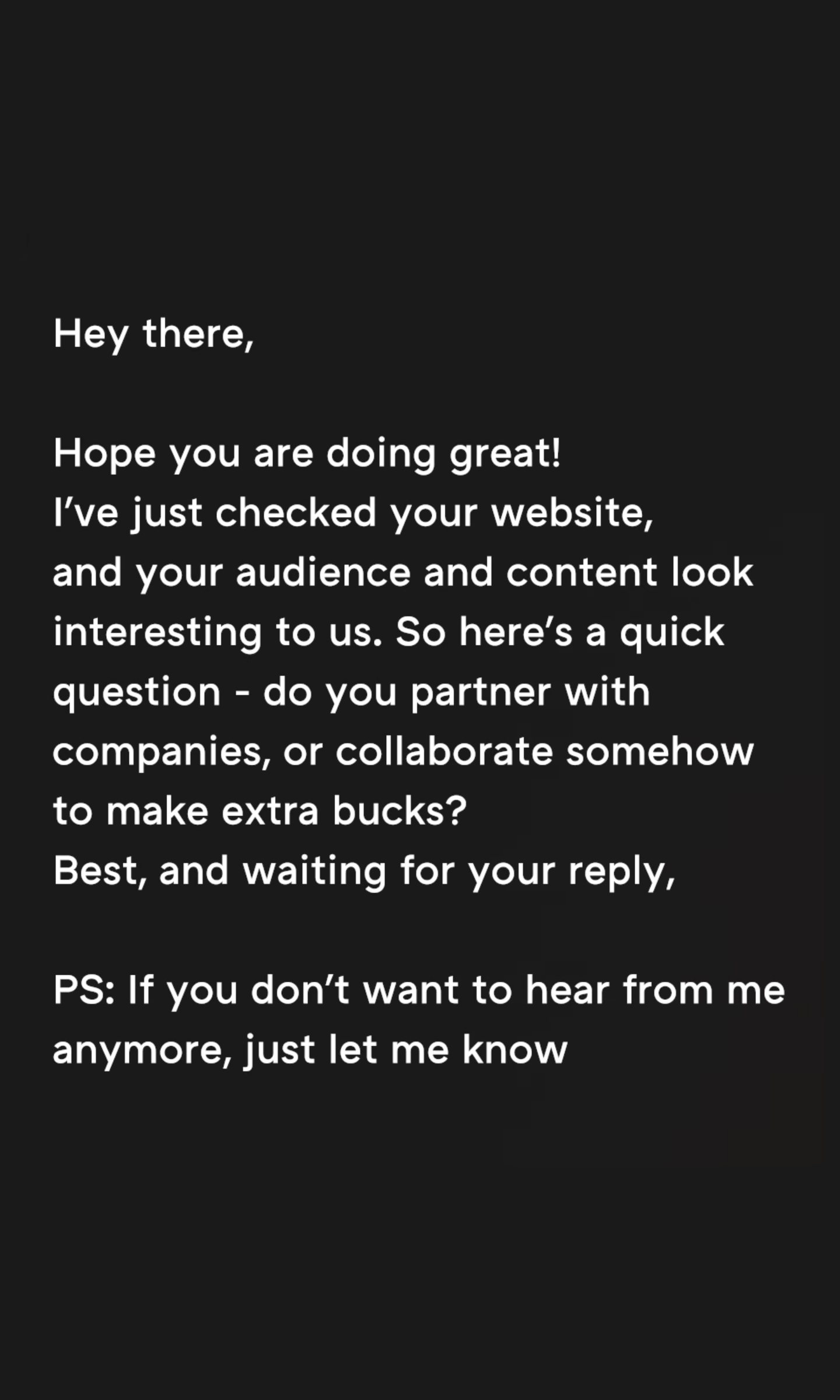
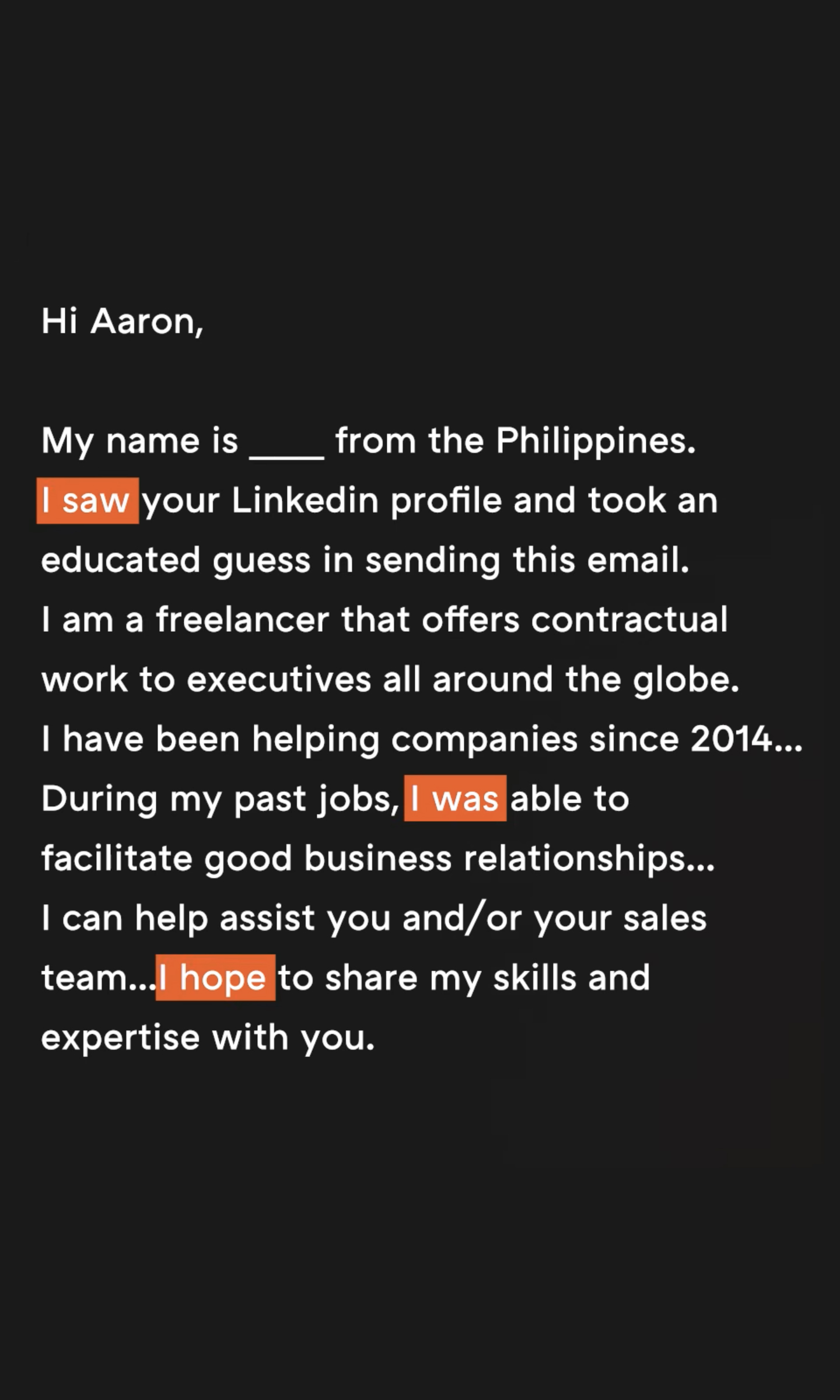
Common failures include:
• Selling to someone who cannot use the product
• Generic greetings and fake personalization
• Unclear or vague requests
• Messages focused entirely on the sender
• No name, credibility, or specific next step
Fix targeting before polishing copy.
LEARN FROM GOOD EMAILS
MAKE THE OFFER EASY TO ACCEPT
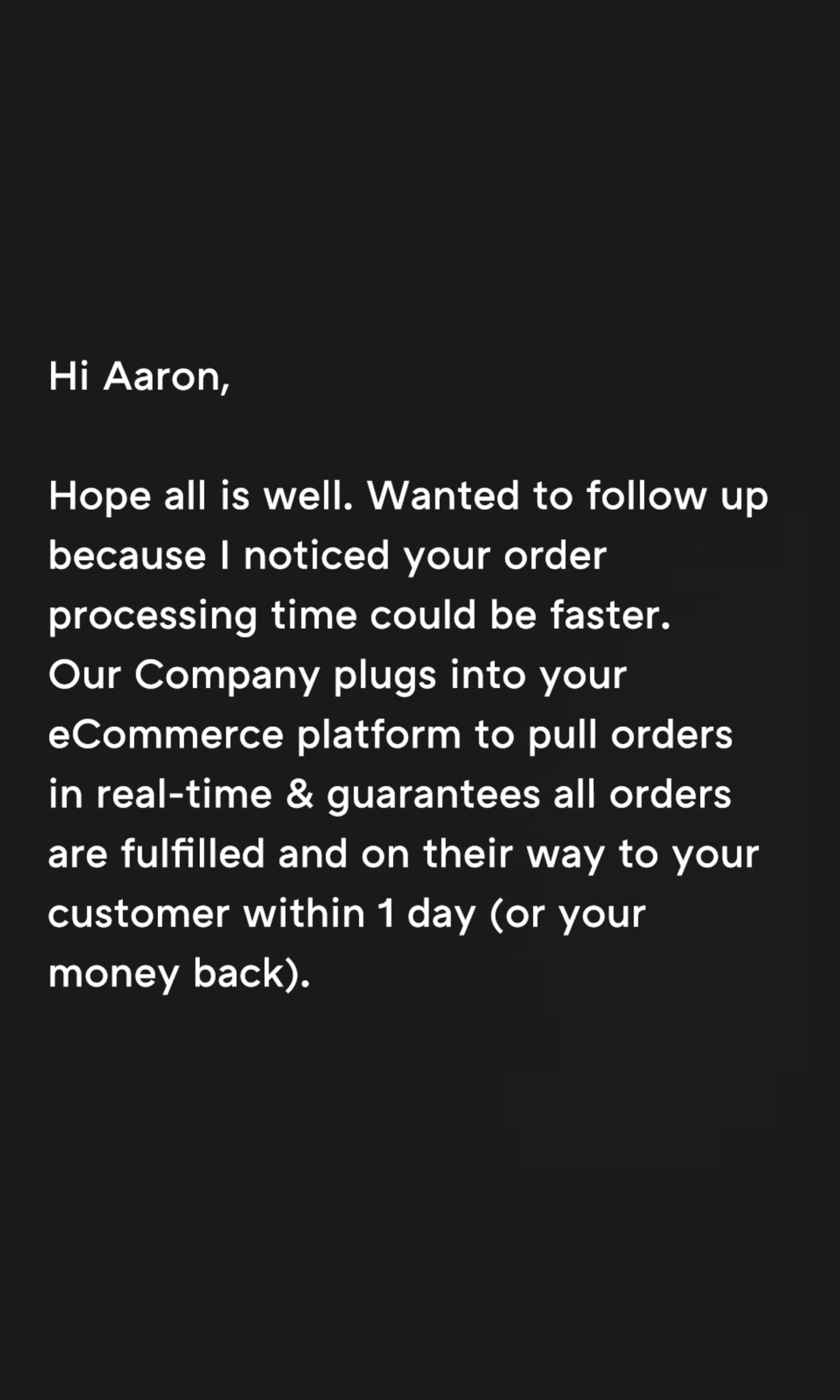
Strong emails combine relevance, credibility, a clear benefit, and a simple action.
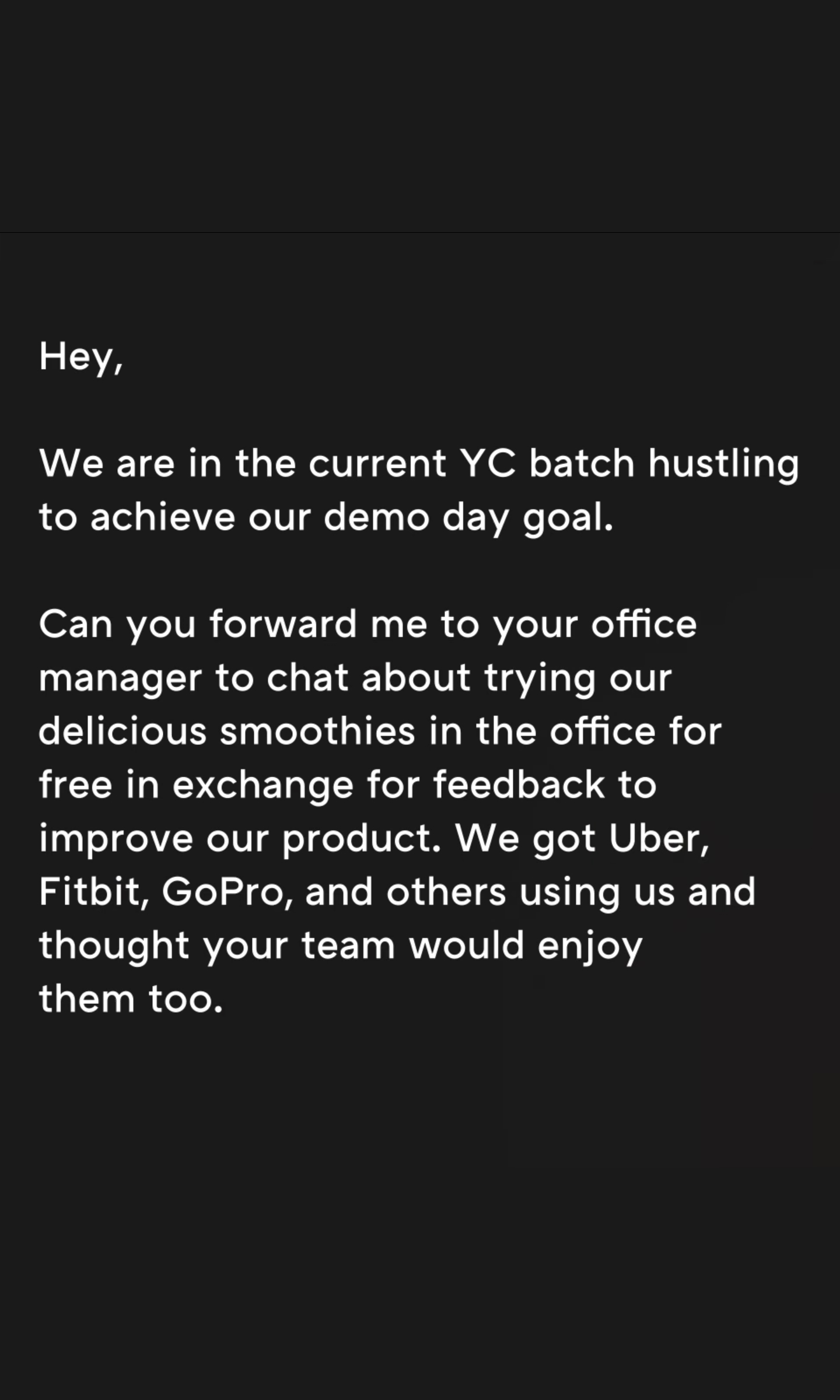
A request for help works better when shared context is real. A product invitation works better when it feels exclusive. A sales offer works better when the immediate benefit is obvious, such as a free team experience.
SELL THE IMMEDIATE BENEFIT
LEAD WITH WHAT THE RECIPIENT GETS
“Help us reach our goal” asks the recipient to care about you.
“Let us host a free smoothie party for your team” gives them a reason to respond now.
Frame the first step around a clear, low-risk benefit. The sales conversation can happen after interest and trust are established.
FOUNDER OUTBOUND SYSTEM
CHAPTER 5
THE FOUNDER SHOULD SEND
PERSONAL ATTENTION IS AN ADVANTAGE
Early customers are more likely to respond when the founder reaches out directly.
Founder-led email signals commitment, access, and accountability. It also creates faster learning because feedback reaches the decision-maker without layers.
Your small size can become a service advantage.
BLOCK TIME EVERY DAY
TREAT OUTBOUND AS CORE WORK
When cold email is an important growth channel, reserve focused time for research, writing, follow-up, and measurement.
Do not treat it as leftover work. Consistent founder attention produces better targeting, stronger messages, and faster learning.
The work compounds when insights are documented.
SCALE ONLY WHAT WORKS
SYSTEMIZE AFTER REPEATABLE RESULTS
Once the audience, message, offer, and call to action convert consistently, build templates, tools, automation, and team processes around them.
Keep the parts that require judgment and personalization human.
Scale should preserve relevance, not turn a strong message into mass spam.
THE COLD EMAIL CHECKLIST
BEFORE YOU PRESS SEND
Ask:
Is this the right person?
Is the message clearly for them?
Is there one goal?
Does it sound human?
Is it short?
Is the credibility relevant?
Is the benefit about the reader?
Is the next step obvious?
If any answer is no, revise before sending.
PERSONALIZE. MEASURE. IMPROVE.
THE EXECUTION PRINCIPLE
Cold email converts through disciplined iteration.
Target people with a real need. Write like a thoughtful human. Make the benefit clear. Ask for one simple next step. Follow up respectfully. Track every stage and improve the weakest point.
Do the work manually, then scale what repeatedly works.