
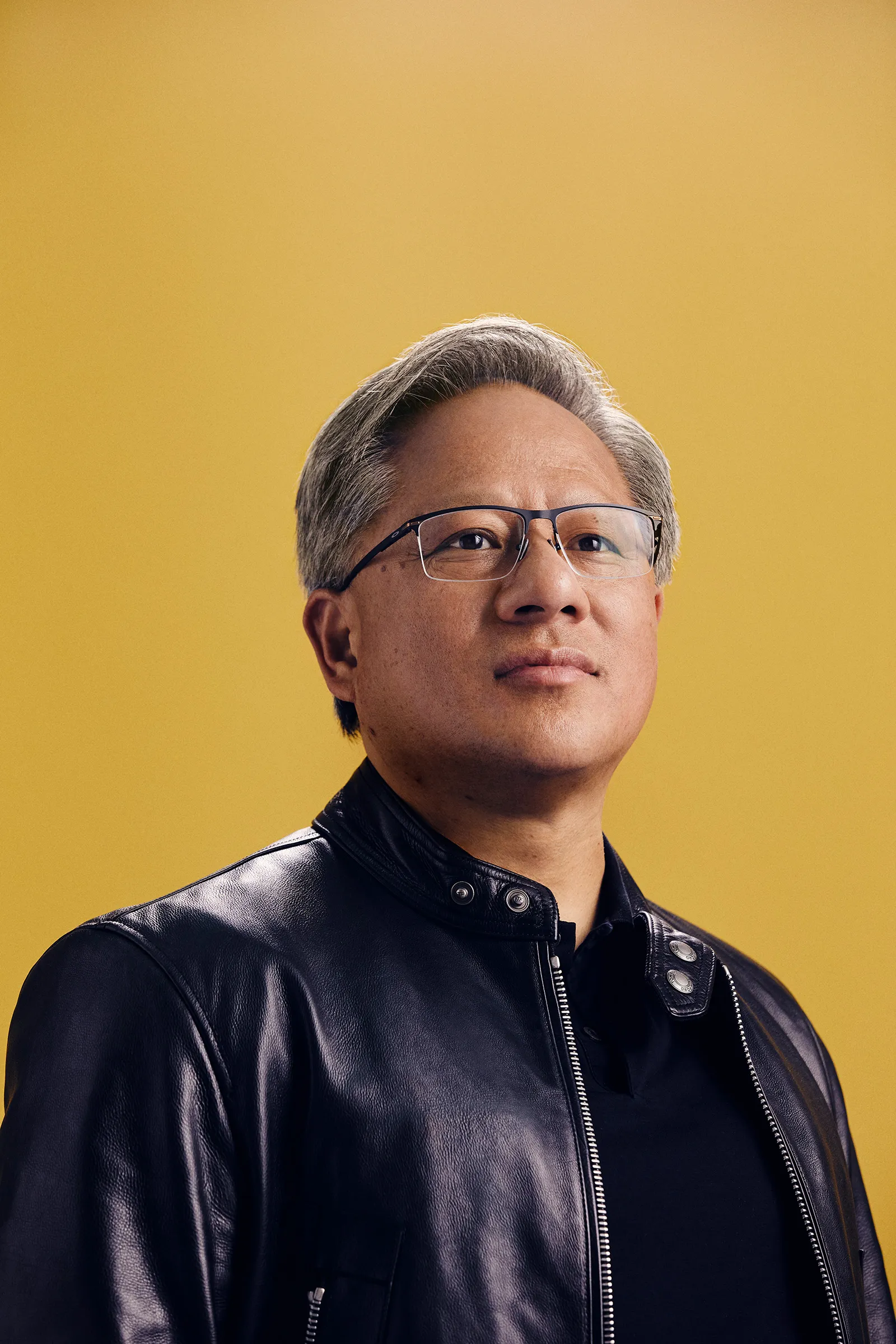
WHAT WE CAN LEARN FROM JENSEN HUANG
BY HARIO SETO
CHAPTER INDEX
WHAT WE CAN LEARN FROM JENSEN HUANG
A COMPLETE STUDY OF RESILIENCE, STRATEGY, LEADERSHIP, AND LONG-TERM CONVICTION
Jensen Huang is not only a successful CEO.
He is a builder of systems, platforms, and future markets.
This StackSlide combines his origin story, near-death moments, philosophy of suffering, management style, culture, strategy, and practical lessons for builders.
WHY JENSEN HUANG MATTERS
WHY STUDY HIM NOW
NVIDIA became one of the most important companies in the AI era.
But its rise was not sudden.
It was built through decades of hard choices, long silence, painful setbacks, and disciplined conviction.
That is why Jensen Huang is worth studying carefully.
THE CORE THESIS
WHAT HIS LIFE TEACHES
Jensen Huang’s edge : intelligence., endurance, clarity under pressure, first-principles thinking and the ability to build for a future the market cannot yet see.
His story is a study in long-term compounding through pain, focus, and systems.
ORIGIN STORY
CHAPTER 1
HIS BACKSTORY IS PART OF THE STRATEGY
THE BUILDER WAS FORMED BEFORE NVIDIA
Jensen Huang’s story did not begin in a boardroom.
It began with migration, instability, discipline, work, and adaptation.
That matters because the way he built NVIDIA reflects the psychological architecture he developed long before the company existed.
BORN IN TAIWAN
A BEGINNING FAR FROM SILICON VALLEY
Jensen Huang was born in Tainan City, Taiwan, in 1963.
His life started far from the world he would later influence.
This matters because his path was not one of comfort, smooth access, or inherited corporate power.
It began with uncertainty and movement.
EARLY RELOCATION TO THAILAND
INSTABILITY SHAPED THE ENVIRONMENT
When he was young, his family relocated to Thailand.
The region was under the shadow of the Vietnam War.
His father was seeking stability, but the wider environment remained unstable.
That early exposure to uncertainty would later matter deeply.
SENT TO AMERICA YOUNG
A HARD FAMILY DECISION
As the regional situation worsened, Huang’s father made a defining decision:
send his sons to America.
Jensen arrived in the United States as a child, without the comfort of a fully secure, familiar environment.
Adaptation was not optional.
It was survival.
PREPARATION BEFORE ARRIVAL
HIS MOTHER’S DISCIPLINE
His mother reportedly taught the children daily English vocabulary before they left.
That detail matters.
It shows a pattern that would echo later:
prepare before the challenge fully arrives.
Do the hard work early so the future shock becomes survivable.
ADAPTATION BECAME NORMAL
NOT COMFORT, BUT ADJUSTMENT
From early on, Huang had to adapt to new language, new systems, and new expectations.
This likely built a deep internal message:
things may be hard, but they can be figured out.
That mindset later became essential during NVIDIA’s hardest periods.
SCARCITY BUILT TOUGHNESS
NO EASY SAFETY NET
The immigrant experience often builds an unusually practical relationship with reality.
You learn to act, adjust, and keep moving.
Huang’s later resilience at NVIDIA makes more sense when viewed against a childhood shaped by scarcity, relocation, and uncertainty.
THE DENNY’S YEARS
DISHWASHER, BUSBOY, CLEANER
As a teenager in Oregon, Huang worked at Denny’s.
He washed dishes, bused tables, and cleaned toilets.
He does not speak about this with shame.
He treats it as formative.
It shaped his humility, work ethic, and relationship to pressure.
NO TASK IS BENEATH ME
A LATER LEADERSHIP PRINCIPLE BEGAN HERE
The Denny’s period became more than a job.
It became a principle.
Later, Huang would say that no task is beneath him.
That belief is easier to understand when you see how early he learned that real work, not status, is what keeps systems moving.
STRESS AS PERFORMANCE TRAINING
CLARITY UNDER RUSH PRESSURE
Huang has said that under intense restaurant rushes, his heart rate dropped rather than rose.
He entered a state of focus.
That is a profound trait.
Many people break under pressure.
He learned to function well inside it.
ENGINEERING GAVE HIM STRUCTURE
THE TECHNICAL FOUNDATION
He earned a bachelor’s degree in electrical engineering from Oregon State, then a master’s from Stanford.
This mattered because it gave him a way to reason from fundamentals, not just stories.
His later strategic bets were grounded in technical logic.
HE MET HIS FUTURE WIFE IN THE LAB
LIFE AND WORK INTERTWINED EARLY
At Oregon State, Lori, who later became his wife, was his lab partner.
That detail is small, but humanizing.
It reminds us that great builders are not abstract machines.
Their personal and professional lives often compound together over time.
NVIDIA BEGAN IN A BOOTH
DENNY’S RETURNS AS ORIGIN POINT
In 1993, Huang co-founded NVIDIA with Chris Malachowsky and Curtis Priem.
The famous setting was a Denny’s booth.
That contrast is powerful:
a young man who once cleaned tables in a restaurant later used one as the birthplace of a world-changing company.
SMALL START, LARGE VISION
THE COMPANY DID NOT LOOK INEVITABLE
The beginning was modest.
The future was not guaranteed.
This matters because people often rewrite success stories to feel obvious in hindsight.
NVIDIA’s rise only looks inevitable after decades of survival, iteration, and relentless strategic positioning.
THE PHILOSOPHY OF SUFFERING
CHAPTER 2
HIS MOST PROVOCATIVE BELIEF
SUFFERING BUILDS PEOPLE
One of Jensen Huang’s most controversial ideas is that he wishes suffering on people he cares about.
Not because he enjoys pain.
But because he believes real character is built through difficulty, not comfort, convenience, or easy validation.
GREATNESS IS NOT JUST INTELLIGENCE
CHARACTER MATTERS MORE THAN MANY THINK
Huang argues that greatness does not come only from being smart.
It comes from character.
And character is often formed in struggle, disappointment, repeated setbacks, and responsibility under pressure.
That belief shapes how he thinks about leadership and success.
PAIN IS A TEACHER
WHAT COMFORT CANNOT PROVIDE
His worldview is that suffering teaches lessons classrooms often cannot.
It teaches endurance, humility, patience, self-control, and the ability to continue without applause.
Those traits become extremely valuable in long-cycle company building.
LOW EXPECTATIONS, HIGH STANDARDS
A DURABLE MINDSET
Huang has said that people with very high expectations can have low resilience.
If the path is expected to be smooth, hardship feels abnormal.
His mental model is stronger:
expect the road to be hard, but hold yourself to very high standards.
RESILIENCE IS NOT A SOFT TRAIT
IT IS A BUSINESS WEAPON
In difficult markets, resilience becomes strategic.
It helps leaders endure silence, recover from mistakes, and continue investing through low-validation periods.
Many people underestimate how much company success depends on the leader’s psychological durability.
ENDURANCE IS ONE OF HIS SUPERPOWERS
LONG PAIN TOLERANCE
Huang has described his ability to endure pain, work on something for a very long time, and handle setbacks as one of his superpowers.
That matters because many major advantages arrive only after years of weak external reward.
THE CORE MESSAGE
CHOOSE YOUR HARD
Ambitious work will involve suffering anyway.
The useful question is not how to avoid pain completely.
It is whether you are willing to endure the right kind of pain for something meaningful enough to justify it.
THREE NEAR-DEATH MOMENTS
CHAPTER 3
NVIDIA WAS ALMOST LOST MORE THAN ONCE
THE RISE WAS NOT SMOOTH
A major lesson from Jensen Huang’s story is that NVIDIA came close to failure multiple times.
The company did not become great through a clean upward path.
It survived crisis, bad bets, internal mistakes, and years when the market misunderstood what it was building.
NEAR-DEATH 1
THE SEGA DISASTER
NVIDIA’s early products used the wrong rendering approach for where the market was going.
Game developers did not want them.
The company was bleeding badly.
This was not a small product miss.
It was a serious threat to survival.
TRUTH BEFORE EGO
HUANG ADMITTED THE MISTAKE
Instead of pretending everything was fine, Huang reportedly told Sega the truth.
The company had made a mistake.
That honesty mattered.
It helped secure support and time.
A great lesson:
truth often shortens the path back to strength.
ONE MONTH OF PAYROLL LEFT
THE EDGE WAS REAL
Before recovery came, NVIDIA was dangerously close to running out of money.
The margin was thin.
This detail matters because it shows how near success and collapse can sit beside each other.
Many legendary companies once looked one month away from ending.
RECOVERY THROUGH REBUILD
RETOOL, REFOCUS, RELAUNCH
The company retooled and produced the RIVA 128, which became a major hit.
The broader lesson is clear:
when a core assumption breaks, recovery may require a full rebuild, not cosmetic adjustment.
That takes humility and speed.
NEAR-DEATH 2
THE NV30 DISASTER
Later, NVIDIA suffered another major crisis with the NV30.
Huang would later call it an architectural disaster.
The deeper problem was not only the product.
It was that internal groups had stopped communicating well enough.
SILOS CAN BREAK GREAT COMPANIES
INTERNAL DRIFT BECOMES EXTERNAL FAILURE
The NV30 period teaches that companies do not only lose through external competition.
They can also lose when software, architecture, and design teams drift apart.
A broken internal information system eventually shows up as a broken external product.
NEAR-DEATH 3
THE CUDA SILENCE
CUDA later became one of NVIDIA’s greatest strategic assets.
But at launch, the market response was nearly silence.
Nobody wanted it.
Nobody asked for it.
Nobody fully understood it.
That silence lasted far longer than many founders could endure.
SILENCE CAN BE MISREAD
EARLY VS WRONG
One of Huang’s deepest lessons is the ability to tell the difference between being wrong and being early.
Silence from the market can mean failure.
But it can also mean the world has not caught up yet.
That distinction can decide the future of the company.
THE WORLD CAUGHT UP LATER
A DECADE OF PATIENCE
Years later, CUDA became foundational to AI development across the world.
That outcome was not luck.
It was the result of sustained conviction through a long period when the market offered almost no emotional reward for continuing.
THE REAL LESSON OF THE CRISES
RECOVERY BEATS PERFECTION
Jensen Huang’s story is not proof that great founders never make mistakes.
It is proof that great founders can survive mistakes, admit them, learn faster, and keep building long enough for the next right decision to matter more.
THE PARANOIA MINDSET
CHAPTER 4
30 DAYS FROM GOING OUT OF BUSINESS
A MENTAL OPERATING SYSTEM
For years, an unofficial NVIDIA motto was:
we are 30 days from going out of business.
That phrase captures a productive paranoia.
It keeps the company alert, humble, and execution-focused even when the outside world sees success and security.
SUCCESS DOES NOT REMOVE DANGER
COMPLACENCY IS THE REAL ENEMY
Huang’s mindset suggests that success can create its own threat.
When teams relax, stop questioning assumptions, or begin acting entitled, danger quietly grows.
Productive paranoia protects against that by keeping urgency alive.
HE STILL FEELS THE EDGE
SCALE DOES NOT ERASE VIGILANCE
Even after massive success, Huang has said he still feels like the company is close to bankruptcy every day.
This is not literal accounting.
It is a strategic posture.
It prevents the emotional softness that often follows extraordinary wins.
A USEFUL RECOVERY QUESTION
HAVE GRAVITY OR PHYSICS CHANGED
When NVIDIA’s stock collapsed badly, Huang reportedly asked his team:
have gravity or physics changed?
The point was simple.
If the fundamental truth of the technology had not changed, then the company should keep building rather than panic from price movement alone.
SEPARATE FUNDAMENTALS FROM EMOTION
A STRATEGIC DISCIPLINE
This recovery lens is powerful.
Markets can swing wildly.
Narratives can collapse quickly.
But if the underlying reality is still intact, the right move may be continued disciplined execution rather than reactive chaos.
BETTING ON MARKETS THAT DO NOT EXIST YET
CHAPTER 5
HE BUILT BEFORE THE MARKET ASKED
NOT REACTIVE, BUT ANTICIPATORY
One of the most important things to understand about Jensen Huang is that NVIDIA did not pivot to AI after it became fashionable.
The company had been building the necessary infrastructure and capabilities for years before the broader world cared.
PARALLEL COMPUTING WAS THE THESIS
REASON FROM THE NATURE OF THE PROBLEM
The core logic was that many hard computational problems are parallel by nature.
If so, hardware optimized for many simultaneous small calculations would matter enormously over time.
This was a first-principles bet, not a popularity bet.
CUDA WAS AN EARLY INFRASTRUCTURE BET
THE MARKET WAS NOT READY
When CUDA launched, the market response was mostly silence.
That is important.
NVIDIA invested in infrastructure before there was clear commercial demand.
This is one of the clearest signs of long-horizon strategic conviction.
SILENCE IS THE PRICE OF LEAD TIME
EARLY BUILDERS PAY THIS COST
If you invest ahead of demand, you may face years of weak validation.
That silence is emotionally expensive.
Huang’s story shows that real lead time often requires enduring a long period where almost nobody understands why you are building.
ALEXNET WAS A SIGNAL
THE WORLD SAW A PAPER HE SAW A TURNING POINT
When AlexNet used NVIDIA gaming cards to win big in computer vision, Huang recognized the significance quickly.
He did not treat it as one impressive academic result.
He saw it as evidence that a long-built capability was about to become central.
SEE THE IMPLICATION, NOT ONLY THE EVENT
A STRATEGIST READS SIGNALS FORWARD
Many people celebrate breakthroughs after they happen.
Stronger strategists ask what the breakthrough implies next.
Huang looked at AlexNet and thought about future workloads, future hardware needs, and future infrastructure, not just one winning headline.
INVEST AHEAD OF DEMAND
THE CLEAREST FOUNDER LESSON
If your first-principles view of the future is strong enough, move before the crowd is convinced.
That is how asymmetric outcomes happen.
By the time demand is universally visible, the biggest advantage may already belong to whoever prepared in the dark.
STRATEGIC RETREAT AND SACRIFICE
CHAPTER 6
STRATEGY IS ALSO WHAT YOU GIVE UP
FOCUS BY REFUSAL
Jensen Huang’s strategy was not just about choosing what to pursue.
It was also about choosing what not to pursue.
That is a crucial point.
Without sacrifice, strategy becomes vague ambition spread across too many attractive directions.
HE WALKED AWAY FROM MOBILE
A PAINFUL BUT CLARIFYING MOVE
At a time when many competitors were chasing the smartphone market, Huang stepped back from mobile chips.
That looked risky.
But it freed energy for data centers, robotics, autonomous systems, and the deeper infrastructure bets that later mattered more.
RETREAT IS NOT ALWAYS WEAKNESS
SOMETIMES IT IS STRATEGIC STRENGTH
Many founders think retreat means failure.
Huang’s example shows that retreat can be strategic.
Leaving a giant but less differentiated market can create the focus needed to build advantage in a much more important future market.
COMMODITY OR FRONTIER
A USEFUL STRATEGIC FILTER
One of Huang’s strongest implied filters is this:
is the market moving toward commodity, or toward frontier?
Commodity compresses advantage.
Frontier rewards originality, patience, technical depth, and the ability to define what comes next.
STRATEGY IS SACRIFICE
A LINE WORTH REMEMBERING
Every serious strategy closes other doors.
That is not a side effect.
It is the essence.
If you are unwilling to give up attractive alternatives, you are probably not truly committed to the path that matters most.
EVERY YES HAS A COST
GUARD FOCUS AGGRESSIVELY
A company weakens when it says yes too often.
Time, engineering attention, capital, brand meaning, and leadership energy all get diluted.
Huang’s path reminds builders that protecting focus is one of the highest-value disciplines in company building.
A LEADERSHIP STYLE LIKE NO OTHER
CHAPTER 7
HE RUNS SCALE WITH STARTUP LOGIC
SPEED OVER BUREAUCRACY
Jensen Huang leads one of the world’s largest companies with practices that often feel more like a startup than a corporate giant.
His leadership style is built around speed, context sharing, directness, and the removal of unnecessary layers.
NO REGULAR ONE-ON-ONES
CONTEXT SHOULD BE SHARED, NOT HOARDED
Huang reportedly avoids regular one-on-one meetings by default unless someone specifically needs one.
The reasoning is important:
if feedback or direction matters, more people should hear it together so alignment happens faster and silos form less easily.
AROUND 60 DIRECT REPORTS
AN INVERTED PYRAMID
Most large-company CEOs have far fewer direct reports.
Huang reportedly has around 60.
His logic is that senior people need the least hand-holding.
More direct reports flatten the organization and reduce the drag of extra layers.
INFORMATION FLUIDITY BEATS HIERARCHY
FASTER UNDERSTANDING, FASTER ACTION
This may be one of his greatest operating lessons.
In fast-moving industries, the company with the fastest clean information flow often wins.
Too much hierarchy distorts signals, slows decisions, and weakens execution quality.
MISSION IS THE BOSS
NOT POLITICS, NOT EGO
Huang has described NVIDIA as operating more like a neural network where the mission is the boss.
That idea matters.
When the mission is central, status games shrink and the real question becomes:
what best serves the work and the future of the company?
HE ASKS FOR WEEKLY TOP FIVE PRIORITIES
REALITY OVER RHETORIC
A famous Huang practice is asking employees to email the five most important things they are working on.
This creates a direct read on what people are actually doing, not just what managers claim the strategy is supposed to be.
STRATEGY IS WHAT EMPLOYEES DO
A SHARP OPERATING TRUTH
One of Huang’s best lines is that strategy is not what he says.
It is what employees do.
That is powerful because it forces leaders to judge execution by actual priorities, not speeches, memos, or beautiful planning decks.
NO TASK IS BENEATH ME
LEADERSHIP THROUGH SERVICE
Huang has said you cannot show him a task beneath him.
That attitude comes from real life experience and becomes culture when repeated enough.
It signals that contribution matters more than title and that leadership exists to help work move forward.
TRANSPARENT REASONING
SHOW HOW TO THINK, NOT JUST WHAT TO DO
A major leadership multiplier is that Huang explains his reasoning process.
He does not simply issue conclusions.
That empowers others to think better independently, which is much more scalable than creating an organization that always waits for answers.
CEO AS SERVANT
CREATE CONDITIONS FOR OTHERS
Huang has framed the CEO role as service, not command-and-control.
The job is to create the conditions where others can do the best work of their lives.
That is a very different model from ego-centered leadership.
DEMANDING FROM BELIEF, NOT EGO
PUSH BECAUSE PEOPLE CAN GROW
He is known as demanding, even perfectionistic.
But the deeper principle is that the pressure comes from belief in what people can become.
High standards work best when people sense the demand is in service of greatness, not domination.
THE CULTURE HE BUILT
CHAPTER 8
CULTURE IS NOT A POSTER
IT IS REPEATED OPERATING BEHAVIOR
NVIDIA’s culture is not best understood through slogans.
It is better understood through repeated behavior:
intellectual honesty, direct feedback, transparency, anti-commodity ambition, and urgency.
That is what culture becomes when leadership lives it daily.
INTELLECTUAL HONESTY
TELL THE TRUTH EARLY
One of the clearest culture pillars is honesty about what is working and what is not.
The Sega crisis made this real.
Without intellectual honesty, teams cling to failing ideas too long and lose the chance to recover while time still exists.
PUBLIC FEEDBACK
ONE LESSON SHOULD BENEFIT MANY
A core idea in Huang’s culture is that feedback should often be visible so others can learn too.
This speeds collective learning, reduces hidden information, and makes improvement less private, less political, and more structurally useful across the company.
RADICAL TRANSPARENCY
SHARE STRATEGY BROADLY
Huang reportedly believes there are few reasons for important strategic information to stay trapped among a tiny number of people.
When context is shared broadly, daily decisions across the company have a better chance of aligning with real direction.
ANTI-COMMODITY MISSION
DO WHAT HAS NOT BEEN DONE
Huang actively tries to steer NVIDIA toward frontier work rather than commodity competition.
This matters not only for business positioning.
It also attracts exceptional people, who often want to build new worlds, not merely optimize crowded, ordinary categories.
HIGH PERFORMANCE CULTURE
RIGOR IS PART OF THE DEAL
A company trying to move at the speed of AI cannot carry chronic slowness, drift, or low commitment lightly.
Huang’s model suggests that cultural fit is not only attitude.
It is willingness to contribute seriously to a demanding mission.
PARANOIA AS PROTECTION
URGENCY WITHOUT LAZINESS
The sense that the company is always near risk becomes part of the culture.
Not to produce fear theater, but to protect against complacency.
Success can become dangerous when teams quietly stop behaving like survival still matters.
HOW JENSEN THINKS ABOUT STRATEGY
CHAPTER 9
STRATEGY IS NOT A DOCUMENT
IT IS A LIVING PATTERN OF ACTION
For Huang, strategy is not what sounds good in a keynote.
It is what people actually prioritize and execute.
This forces a more honest view of company alignment because it measures reality through behavior instead of language.
FIRST-PRINCIPLES THINKING
STRIP THE PROBLEM TO FUNDAMENTALS
Huang repeatedly reasons from fundamentals.
He asks what is true at the deepest level, what the technology requires, and what those truths imply about the future.
That is how he saw opportunities others dismissed as too early or too strange.
DO NOT REASON ONLY BY ANALOGY
TRENDS CAN MISLEAD
A weaker strategist copies what worked elsewhere.
A stronger strategist asks what is fundamentally demanded by the problem itself.
This distinction matters because future-defining opportunities often look unlike what has already been commercially validated.
CHANGE YOUR MIND WHEN REALITY CHANGES
FLEXIBILITY BEATS EGO
Huang has said that if something is the wrong decision, then change your mind.
That sounds simple, but many leaders are too attached to appearing consistent.
Real strategic strength includes the humility to update when evidence changes.
PLATFORM THINKING
FROM PRODUCT TO ECOSYSTEM
Huang did not stop at building a strong chip.
He pushed toward CUDA, developer ecosystems, software layers, and infrastructure.
That platform thinking turned one technical strength into a much broader and more defensible strategic position.
MARKET CREATION, NOT JUST MARKET ENTRY
BUILD WHERE THE MARKET IS STILL EMPTY
A rare Huang quality is willingness to invest in markets that do not truly exist yet.
Not just emerging markets, but markets with little revenue, weak demand, and low validation.
That is where outsized future leverage often begins.
THE BIGGER AMBITION
PICKS AND SHOVELS FOR FUTURE INDUSTRIES
Huang’s framing suggests NVIDIA wants to provide the foundational infrastructure for what many industries will eventually become.
That is a larger and more durable ambition than simply selling components into someone else’s already-defined category.
BUILD PLATFORMS, NOT JUST PRODUCTS
CHAPTER 10
A PRODUCT SOLVES ONE NEED
A PLATFORM SHAPES MANY OUTCOMES
Products can win customers.
Platforms can shape entire ecosystems.
Jensen Huang’s long-term strategic brilliance was not only in making good hardware.
It was in making NVIDIA into a foundation others would build on and depend on.
CUDA CHANGED THE RELATIONSHIP
FROM CUSTOMER TO BUILDER
CUDA mattered because it made NVIDIA relevant not only to buyers of chips, but to developers, researchers, and system builders.
That shift was huge.
It turned a hardware company into a much deeper platform company.
PLATFORMS CREATE ECOSYSTEMS
AND ECOSYSTEMS CREATE MOATS
When developers, tools, frameworks, habits, and workflows grow around your platform, replacement becomes much harder.
That is the strategic difference between a strong product and a system others are already deeply invested in using.
THE REAL MOAT IS THE STACK
LAYERS OF LEVERAGE
Huang’s lesson is bigger than CUDA alone.
The durable moat often sits in the whole stack:
hardware, software, tools, infrastructure, developer familiarity, and operating workflows.
Single components are easier to copy than layered systems.
DEVELOPER ADOPTION IS STRATEGIC
BUILDERS AMPLIFY THE PLATFORM
Developers are not merely users.
They are strategic multipliers.
When they learn your tools and build on your stack, they extend your reach, increase switching costs, and turn technical advantage into ecosystem advantage.
THINK BEYOND THE VISIBLE PRODUCT
OWN MORE OF THE WORKFLOW
Founders often stop at the visible product.
Huang’s example suggests you should ask what adjacent layers create stickiness:
software, integration, libraries, developer mindshare, infrastructure, and recurring operational dependence.
THE 10 CORE LESSONS
CHAPTER 11
LESSON 1 RESILIENCE IS BUILT, NOT INHERITED
ADVERSITY FORMS DURABILITY
No classroom can fully teach resilience.
It is built through hardship, repeated adaptation, and staying present under pressure.
If you want to build something lasting, develop not just knowledge, but the capacity to keep going when the path turns ugly.
LESSON 2 LOW EXPECTATIONS, HIGH STANDARDS
LESS FRAGILITY, MORE STRENGTH
Expect the journey to be hard.
Do not expect smooth sailing.
At the same time, keep your standards high.
This combination reduces entitlement, increases resilience, and keeps your effort and judgment disciplined even when results are delayed.
LESSON 3 HONESTY IS A SURVIVAL SKILL
TRUTH CREATES RECOVERY
When NVIDIA’s early strategy broke, Huang told the truth.
That honesty helped save the company.
Intellectual honesty is not merely moral virtue.
It is operational speed.
It shortens denial and opens the path toward better decisions sooner.
LESSON 4 THINK FROM FIRST PRINCIPLES
SEE BENEATH TRENDS
Do not only ask what is popular.
Ask what is fundamentally true.
What does the physics of the problem require.
This is how Huang saw the importance of parallel computing long before the market fully rewarded it.
LESSON 5 STRATEGY IS SACRIFICE
REFUSAL DEFINES FOCUS
What you choose not to do defines you as much as what you choose to do.
Huang’s retreat from mobile is a strong example.
Without strategic sacrifice, ambition becomes scattered and the company loses the depth needed to win.
LESSON 6 BUILD PLATFORMS, NOT ONLY PRODUCTS
CREATE ECOSYSTEMS
Products can be copied.
Platforms can become foundations others depend on.
If your work becomes the environment where others build, your advantage expands beyond one offering into a broader and harder-to-displace ecosystem.
LESSON 7 INFORMATION FLUIDITY BEATS HIERARCHY
SPEED COMES FROM CLEAN FLOW
Silos kill execution.
When information moves clearly across the company, decisions improve and speed rises.
The company that understands reality faster often beats the company with the prettier org chart or more elaborate management rituals.
LESSON 8 LEAD IN SERVICE, NOT IN COMMAND
MAKE OTHERS MORE CAPABLE
The CEO’s job is not to become the center of dependence.
It is to increase the capability of others.
Show your reasoning.
Remove obstacles.
Stay willing to do the work.
That kind of leadership compounds across the whole organization.
LESSON 9 INVEST AHEAD OF DEMAND
SILENCE MAY MEAN LEAD TIME
The best opportunities often attract silence before they attract applause.
Huang invested through years of indifference.
Silence does not always mean failure.
Sometimes it means you are building years before the market is ready to reward you.
LESSON 10 FIND YOUR LIFE’S WORK
DEPTH TAKES DECADES
Huang does not talk about NVIDIA like a temporary job.
He treats it like a craft refined across decades.
That level of commitment produces depth and compounding that cannot be replicated by intelligence, money, or short-term hustle alone.
HOW TO APPLY THIS
CHAPTER 12
IF YOU ARE AN EARLY FOUNDER
USE THE HARD SEASON WELL
Do not assume near-death moments mean the mission is invalid.
They may be the forge.
Ask whether the fundamentals still hold.
If they do, keep building.
If they do not, change direction fast and honestly. The key is clear diagnosis.
IF YOU ARE BUILDING A TEAM
SHARE CONTEXT BROADLY
Reduce unnecessary information bottlenecks.
Keep the organization flatter for longer.
Let capable people hear the reasoning and act from understanding.
Every extra layer is a tax on speed, clarity, and execution quality.
IF YOU ARE MAKING A STRATEGIC BET
REASON FROM FUNDAMENTALS, NOT MOOD
Ask what is fundamentally true about the future you are betting on.
What capability will matter if that future arrives.
Then decide whether you are willing to invest before applause appears. That is where asymmetry often lives.
IF YOU ARE DEALING WITH FAILURE
TELL THE TRUTH IMMEDIATELY
Do not waste precious time protecting the image of being right.
State the mistake.
Get help if needed.
Preserve trust.
Move fast.
The instinct to hide failure is natural, but it usually compounds cost and slows recovery.
IF YOU ARE CHOOSING WHAT TO BUILD
COMMODITY OR FRONTIER
Ask whether the thing you are building is moving toward commodity or frontier.
Commodity may offer easier comfort.
Frontier offers deeper leverage and stronger talent attraction.
Choose the category that gives your best people a reason to care.
IF YOU WANT LONG-TERM SUCCESS
CHOOSE YOUR CRAFT INTENTIONALLY
Find work you are willing to refine for a very long time.
Not just an opportunity you can exploit briefly, but a real craft you can dedicate your life to improving.
That is where deep compounding begins.
FINAL LESSONS
CHAPTER 13
WHY JENSEN HUANG IS DIFFERENT
NOT MERELY INTELLIGENCE
Jensen Huang is remarkable not only because he is smart.
He is remarkable because he stayed with the work long enough, hard enough, and deeply enough for long-term compounding to become overwhelming.
His endurance gave his strategy time to mature.
THE DEEPER LESSON
ENDURANCE BEHIND THE STRATEGY
Many people can copy surface strategy.
Fewer can copy the endurance behind it.
The harder-to-copy advantage is the willingness to suffer usefully, think clearly under pressure, stay honest, and keep building through years of weak external validation.
ONE-LINE SUMMARY
FUTURE ARRIVES LATE PREPARATION MUST ARRIVE EARLY
This may be the clearest summary of Jensen Huang’s path.
The future often takes longer to arrive than people expect.
But the preparation required to benefit from it must begin much earlier than most people are willing to start.
FINAL REMINDER
BUILD WHAT THE FUTURE WILL NEED
Do not ask only what is popular now.
Ask what will become necessary later.
Then build the skill, stack, system, and resilience to be there when the world catches up.
That is one of the clearest lessons we can learn from Jensen Huang.