
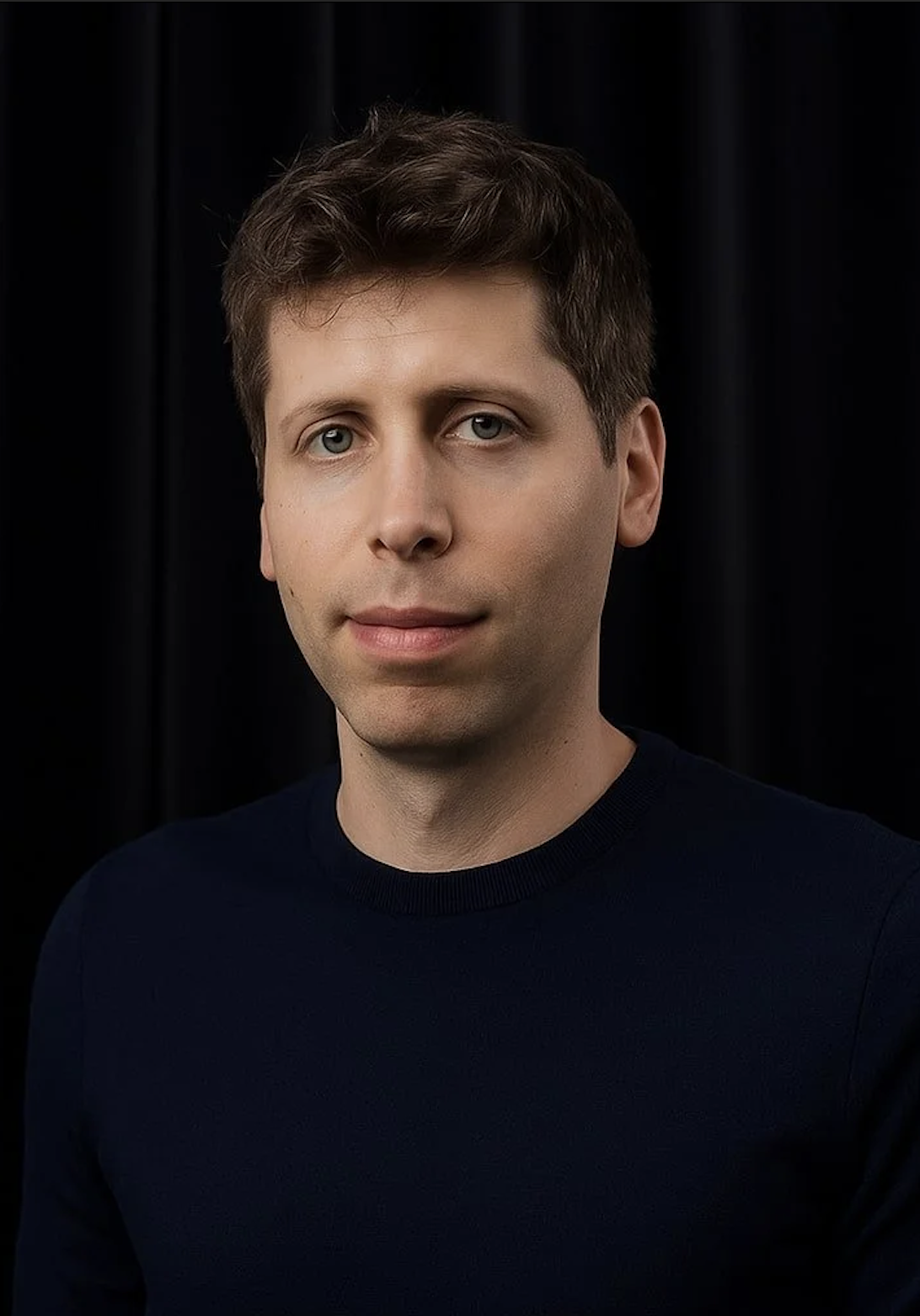
HOW SAM ALTMAN THINKS
BY HARIO SETO
A StackSlide breakdown of Sam Altman’s recurring way of thinking across startups, technology, AI and business.
CHAPTER INDEX
HOW SAM ALTMAN THINKS
STARTUP, TECH, AI, AND BUSINESS OPERATING SYSTEM
Sam Altman’s thinking is not random.
It follows a repeatable pattern:
- find a huge wave
- pick a massive problem
- move fast
- stack elite people
- let compounding do the heavy lifting.
He thinks in systems, not tasks.
In decades, not quarters.
Lets dive in
THE CORE OPERATING SYSTEM
CHAPTER 1
SYSTEMS, NOT BUSYWORK
HE SEES MOVING PARTS, NOT ISOLATED ACTIONS
He tends to think like a systems builder.
Not “what task do I do today?”
But:
what machine am I building,
what inputs improve it,
and what compounds over time?
That makes him focus on leverage,
feedback loops,
and structural advantage.
LONG TIME HORIZONS
HE MAKES DECISIONS WITH THE FUTURE IN MIND
A recurring pattern in his thinking:
make decisions that may look expensive now,
but become obvious later.
He seems comfortable sacrificing short-term comfort
for long-term position.
That is how he evaluates careers,
companies,
and technology shifts.
COMPOUNDING IS THE GAME
SMALL EDGES MATTER WHEN THEY STACK FOR YEARS
He repeatedly returns to compounding.
Skills compound.
Reputation compounds.
Capital compounds.
Network compounds.
Product quality compounds.
His mindset is not just work harder.
It is:
choose games where your work keeps paying back for years.
STARTUP LOGIC
CHAPTER 2
PICK A HUGE WAVE
HE LIKES BREAKOUT MARKETS, NOT SMALL TRENDS
He prefers to build on top of a major wave.
A real platform shift.
A real technology inflection.
A market that can become much bigger than most people expect.
He does not just ask,
“Is this useful?”
He asks,
“Is this where the world is going?”
AIM FOR EXTREME UPSIDE
HE FILTERS FOR IMPORTANT, HIGH-SCALE PROBLEMS
His style is not centered on modest outcomes.
He seems biased toward problems that are hard,
important,
and capable of becoming enormous.
The same effort can go into a small market
or a giant one.
He appears to prefer the giant one.
STAY CLOSE TO USERS
USER TRUTH BEATS FOUNDER FANTASY
A major startup principle in his world:
talk to users,
watch their behavior,
ship,
learn,
repeat.
He treats user proximity as strategic.
The faster you learn what users really want,
the faster the company improves,
and the harder it becomes to catch you.
SPEED IS LEARNING
FAST TEAMS DO NOT JUST MOVE FAST, THEY LEARN FAST
He seems to value speed because speed increases feedback loops.
More launches.
More mistakes.
More corrections.
More learning.
That means velocity is not cosmetic.
It is a compounding advantage.
The faster learner often becomes the stronger company.
BUSINESS LEVERAGE
CHAPTER 3
TALENT DENSITY WINS
A FEW EXCEPTIONAL PEOPLE CAN BEND OUTCOMES
He places heavy value on exceptional people.
Not big headcount.
Not average safety.
But concentrated talent.
In that worldview,
a great hire creates nonlinear upside,
while a weak hire creates drag,
confusion,
and slower execution across the whole system.
DO THE HARD PART YOURSELF FIRST
UNDERSTANDING COMES BEFORE DELEGATION
He seems to favor founders learning the function directly
before hiring others to own it.
That reflects first-principles thinking:
do not manage what you do not understand.
Build intuition yourself,
then scale it with better judgment
and clearer standards.
TECH IS LEVERAGE
SMALL TEAMS CAN CREATE OUTSIZED OUTCOMES
He appears to see technology as leverage,
not merely an industry category.
Tech lets small teams do what used to require large organizations.
That is why software,
and now AI,
can magnify judgment,
execution,
and distribution far beyond human-only limits.
OWN THE VALUE LAYER
DISTRIBUTION, TRUST, AND WORKFLOW MATTER
When technology gets cheaper and more available,
raw access stops being enough.
Advantage shifts upward.
The winners tend to own the customer relationship,
workflow integration,
trust,
brand,
and repeatable outcomes.
That is where defensibility starts to harden.
AI WORLDVIEW
CHAPTER 4
AI ABSORBS EXECUTION
HE SEES INTELLIGENCE BECOMING MORE AVAILABLE
A core AI pattern in his thinking:
intelligence gets cheaper,
more abundant,
and more usable.
If that continues,
software will not only assist humans.
It will increasingly perform chunks of work.
That changes the shape of labor,
products,
and entire industries.
HUMANS MOVE UP THE STACK
DIRECTION BECOMES SCARCER THAN EXECUTION
As AI handles more execution,
human value shifts upward.
Toward judgment.
Taste.
Goal-setting.
Tradeoffs.
Responsibility.
In that world,
winning is less about doing every task yourself,
and more about steering systems toward the right outcomes.
ABUNDANCE CHANGES STRATEGY
CHEAP INTELLIGENCE REWRITES BUSINESS MODELS
If intelligence becomes abundant,
competitive advantage changes.
It is no longer just who has the smartest model.
It becomes:
who turns intelligence into reliable outcomes,
inside trusted workflows,
for real users,
at scale,
with distribution and retention.
OPTIMISM
HE PUSHES PROGRESS, BUT WATCHES DOWNSIDE
His AI worldview appears highly optimistic, but not carefree.
The pattern is:
- push forward
- deploy
- learn
- measure risk
- keep upgrading safety as capability
grows.
That is not fear-first thinking.
It is advancement with instrumentation and control.
THE FOUNDER FILTER
CHAPTER 5
WHAT HE WOULD LIKELY ASK
THE HIDDEN CHECKLIST BEHIND THE DECISIONS
He would likely ask:
- Is this a real wave?
- Is the problem important?
- Can this become huge?
- Do users truly want it?
- Does usage improve the product?
- Is the team elite?
- Does AI strengthen this business,
or make it obsolete?
That is a sharp founder filter.
THE FULL SYNTHESIS
HOW ALL THE PIECES FIT TOGETHER
Put it all together,
and his worldview becomes clear:
- find a giant technological shift
- attach yourself to a meaningful problem
- build fast
- learn from users,
- stack exceptional people
- own the layer where value
compounds.
That is the operating system.
FINAL
THE SAM ALTMAN MODEL IN ONE SENTENCE
Sam Altman’s way of thinking is position early on a massive wave, aim at a huge problem, move fast enough to learn faster than others, build a company where talent, product, distribution and AI, all compound into long-term strategic power.