
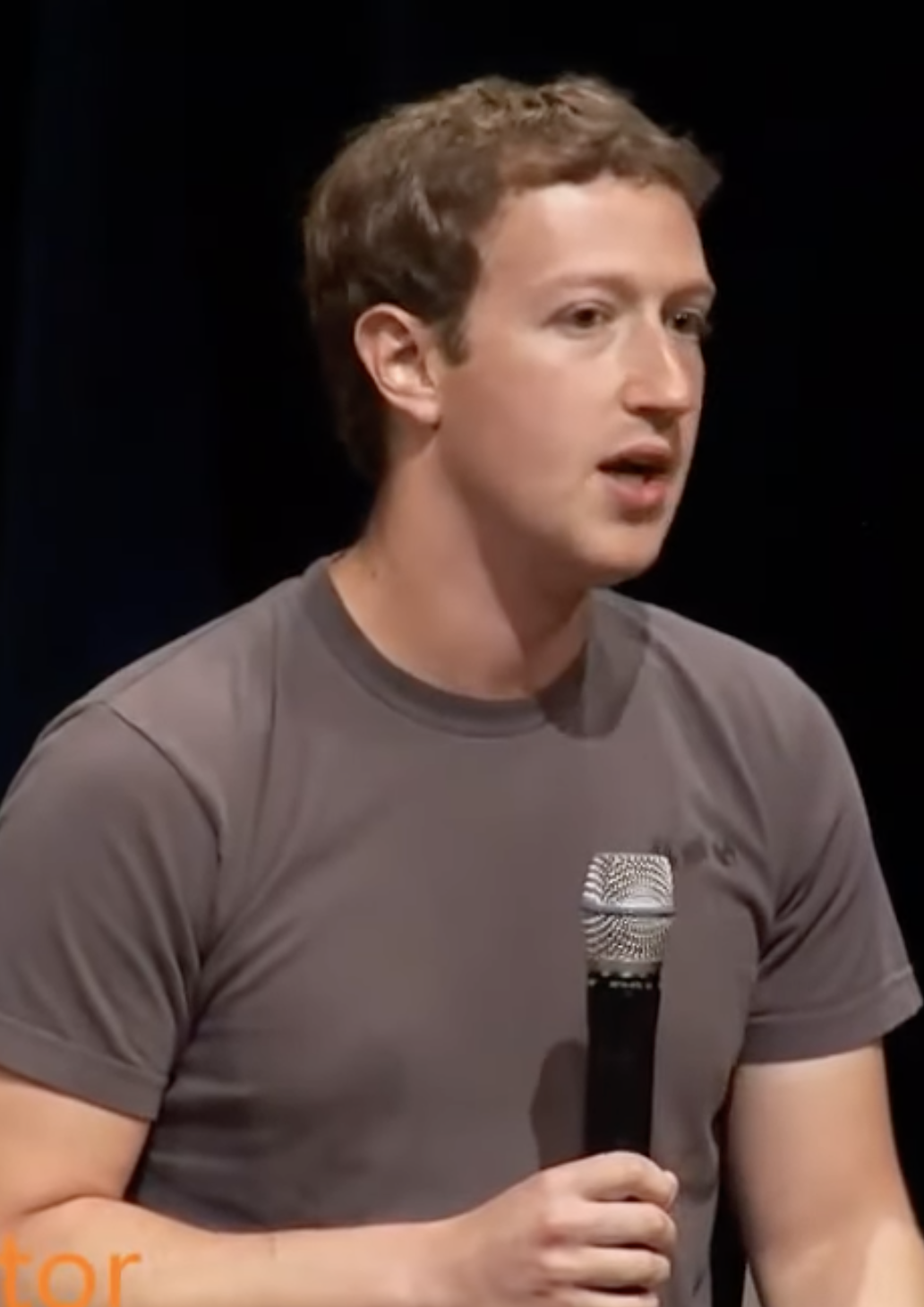
MARK ZUCKERBERG AT STARTUP SCHOOL 2012
YOUTUBE SUMMARY : YCOMBINATOR
THE RIGHT TIME MATTERS
FACEBOOK WORKED BECAUSE THE INFRASTRUCTURE WAS FINALLY READY
A product like Facebook needed one critical condition to exist at scale: trusted identity. In 2004, school email addresses gave Facebook a simple but powerful way to verify real users. That created the early culture of authenticity that helped the product grow beyond campuses.
IDENTITY WAS THE FIRST MOAT
SCHOOL EMAILS MADE FAKE ACCOUNTS HARDER
The early source of trust was not sophisticated technology. It was the fact that students had official school email addresses. That meant each user was tied to a real institution, which reduced fake accounts and gave the network a clean, credible social graph from day one.
BUILD ON A REAL BEHAVIOR SHIFT
PEOPLE WERE ALREADY SHARING MORE EVERY YEAR
Zuckerberg pointed out that the amount people share keeps increasing over time. The lesson is simple: great startups often ride a growing human behavior, not an invented one. If sharing keeps expanding, then new products will keep emerging to serve that expansion.
LOOK AHEAD, NOT JUST AT TODAY
DESIGN FOR WHERE BEHAVIOR IS GOING
His thinking was not limited to current usage. He asked what kinds of products would be needed if people shared dramatically more in the future. Strong founders do not only solve today’s use case. They anticipate the next layer of human behavior before it becomes obvious.
DETAILS SHAPE PRODUCT CULTURE
COURSES, DORMS, AND SCHOOL-SPECIFIC DATA MATTERED
Facebook was not only a profile page. It included structured campus data like dorms and classes. These details made the product feel native to college life. Even if some of them did not matter forever, they helped define quality and make the service feel real and useful early on.
YOU CANNOT 80/20 EVERYTHING
SOME THINGS MUST BE DONE EXCEPTIONALLY WELL
Zuckerberg acknowledged the 80/20 rule, but warned that some parts of a product must go much further than the minimum. If everything is optimized for speed alone, nothing sets the standard. A breakout product still needs a few areas where quality is clearly superior.
DO IRRATIONAL WORK IF IT BUILDS TRUST
THEY KEPT HANDLING COURSE DATA LONGER THAN WAS RATIONAL
Facebook continued doing messy school-specific work longer than most founders would. In pure efficiency terms, it may not have been rational. But in product terms, it helped establish a clean and dependable experience. Early trust compounds more than early convenience.
CONSTRAINT CAN BE A STRENGTH
THE FIRST SERVER COST ONLY $85 A MONTH
In the beginning, growth was limited by how many $85 servers they could afford. That forced discipline. The team focused on efficiency, ads, and careful expansion. Constraints kept them from overspending and gave them time to improve the product instead of masking problems with capital.
DO NOT SPEND MONEY YOU DO NOT HAVE
THE EARLY COMPANY STAYED GROUNDED IN REALITY
Facebook did not begin with the mindset of raising large amounts and hoping things would work later. They wanted to fund growth with what they had. That approach created operational discipline and made every decision more deliberate.
SLOW GROWTH CAN BE USEFUL
GOING SCHOOL BY SCHOOL GAVE THEM TIME TO BAKE THE PRODUCT
It took about a year to reach one million users, which felt fast then. That pace gave the team time to learn how to scale, fix problems, and improve quality. Sometimes founders chase speed so hard that they lose the chance to harden the product while it is still manageable.
USE EARLY MARKETS AS LABORATORIES
HARVARD WAS THE STARTING POINT BECAUSE HE PERSONALLY WANTED IT
Zuckerberg built Facebook first for himself. That matters. He was not guessing at a market from a distance. He felt the need directly. Starting from a sharp personal use case gave the product clarity before it expanded into something universal.
TEST YOURSELF AGAINST THE HARDEST COMPETITION
THEY LAUNCHED NEXT AT SCHOOLS THAT ALREADY HAD COMPETITORS
Instead of picking easy campuses, Facebook expanded first to places that already had school-specific social networks. The reasoning was strategic: if Facebook could win where alternatives already existed, then the product was worth building further. Hard markets reveal truth faster.
CARE MATTERS MORE THAN CREDENTIALS
THEY WERE NOT QUALIFIED ON PAPER, BUT THEY CARED MORE
Zuckerberg openly said they were just college students and not obviously qualified to build software for the world. What they had was a stronger desire to make the thing exist. In startups, obsession often beats formal qualification at the beginning.
A STARTUP SHOULD START FROM THE THING
DO NOT BEGIN WITH THE ABSTRACT GOAL OF STARTING A COMPANY
One of his strongest views was that it is hard to decide to start a company before knowing what you truly want to build. Facebook began as a thing he wanted, not as a corporate ambition. Better companies often emerge from real conviction, not startup theater.
PROTECT YOUR FLEXIBILITY
COLLEGE GAVE HIM OPTION VALUE TO EXPLORE
Zuckerberg argued that people undervalue flexibility. In college, you can try projects, change direction, and explore with low cost. Once you start a company and hire people, changing direction becomes harder. Optionality is not laziness. It is strategic freedom.
PIVOTS ARE NORMAL
FACEBOOK CHANGED REPEATEDLY AS IT GREW
He rejected the idea that pivots only happen when a company fails. Facebook changed from college-only to broader use, from website to platform, and from one behavior set to many. Growth often requires transformation. Founders should expect to evolve the product over time.
RETENTION COMES FROM HUMAN NATURE
PEOPLE COME BACK BECAUSE THEY CARE ABOUT PEOPLE
His explanation for engagement was grounded in psychology. Humans are wired to notice faces, social signals, relationships, and emotion. The reason people returned to Facebook was not a gimmick. It was that the product connected to something deeply human: curiosity about other people.
SOLVE A FUNDAMENTAL PROBLEM
DO NOT BUILD AROUND TINY PROBLEMS IF YOU WANT ENDURING IMPACT
Zuckerberg said the most interesting products operate on phenomena that are fundamental to how humans or the world work. For Facebook, that was the need to know, understand, and stay connected to other people. Strong startups usually sit on basic human drives, not shallow hacks.
START SMALL, BUT START FUNDAMENTAL
HARVARD STUDENTS WERE A NARROW MARKET WITH A UNIVERSAL NEED
The initial audience was small, but the need was not niche. College students were simply an accessible version of a broader truth: almost everyone wants to stay close to friends and family. Good startup markets can be narrow at first, as long as the behavior is widely human.
LISTEN THROUGH WORDS AND BEHAVIOR
USER INSIGHT IS QUALITATIVE AND QUANTITATIVE
He emphasized that listening to users means both hearing what they say and observing what they do. One clear example was profile photos. When users kept changing their single profile picture often, Facebook saw the behavioral signal that people wanted richer photo sharing.
BEHAVIOR REVEALS THE NEXT PRODUCT
REPEATED PROFILE PHOTO CHANGES POINTED TOWARD PHOTOS
Users may not always ask directly for the right feature. Their actions often tell the truth first. Facebook noticed a pattern, interpreted the demand correctly, and later built one of its most important products around it. Founders should read behavior as product language.
TECHNOLOGY EXTENDS HUMAN CAPACITY
SOCIAL NETWORKS EXTEND PEOPLE’S SOCIAL REACH
Zuckerberg described technology as something that extends a natural human ability. In his view, a social network extends real social capacity. It helps people stay connected to more relationships than they could manage alone, and makes existing relationships more durable over time.
BUILD AROUND REAL SOCIAL TRUTH
HUMAN CONNECTION IS NOT A TREND, IT IS A CONSTANT
The deeper logic behind Facebook was not novelty. It was the timeless need for people to understand, remember, and interact with one another. Products built on permanent human realities tend to outlast products built on temporary fashion.
COMPETITION IS NOT ALWAYS ZERO-SUM
MYSPACE DID SOMETHING MEANINGFULLY DIFFERENT
Zuckerberg did not frame Myspace as simply a loser in a winner-take-all battle. He believed different social products could serve different needs. Facebook focused on staying connected to people you know. Myspace was stronger at helping people meet new people and express subcultures.
COPYING COMPETITORS IS A WEAK STRATEGY
YOU DO NOT WIN BY BECOMING A WORSE VERSION OF SOMEONE ELSE
His critique of competitors was clear: if another company sees growth and responds only by copying, they are already losing strategically. A company survives by leaning deeper into the unique problem it solves, not by chasing the center of someone else’s success.
BIG COMPANIES ARE NOT ALWAYS THE BUILDERS
THE OBVIOUS WINNER IS OFTEN NOT THE ACTUAL WINNER
At first, Zuckerberg assumed a giant like Microsoft would eventually build the global version of what Facebook represented. What changed the outcome was not size. It was intensity. Startups often win because they care more, move faster, and stay focused on the thing itself.
USE CREATIVE HACKS TO MOVE FASTER
HE EVEN BUILT A STUDY TOOL INSTEAD OF STUDYING NORMALLY
During Harvard reading period, he created a site for classmates to crowdsource insights about art images for an exam. The story is funny, but the founder lesson is serious: builders often solve their own friction with tools. That habit compounds into bigger products later.
ENVIRONMENT CAN CHANGE AMBITION
CALIFORNIA MADE THE TECHNOLOGY WORLD FEEL REAL
A visit to California shifted his imagination. Seeing the offices, the companies, and the ecosystem made building something larger feel possible. Sometimes ambition does not come from motivation alone. It comes from placing yourself near people and places where bigger things are normal.
THE MOVE WAS NOT FULLY PLANNED
THEY WENT TO PALO ALTO BEFORE DECIDING TO BUILD A COMPANY
The team originally moved to California more as an exploration than a final commitment. They thought it would be interesting to be around technology companies and maybe one day find something worth building. Ironically, they were already inside that thing.
START WITH ONE TERM, THEN EARN THE NEXT
THEY TOOK TIME OFF SCHOOL IN STAGES, NOT ALL AT ONCE
They did not begin with a dramatic dropout plan. They took one term off to get the product under control, then another. This staged commitment is a valuable founder principle: do not force permanent decisions before the evidence is strong enough.
MOMENTUM CLARIFIES COMMITMENT
THEY ONLY FULLY STAYED ONCE THE SCALE WAS UNDENIABLE
Zuckerberg said they did not decisively stop planning to return until they had millions of users. That is instructive. He did not romanticize dropping out. He let traction make the decision heavier and more real before locking into it.
THE DEEPER FOUNDER LESSON
BUILD WHAT SHOULD EXIST, STAY FLEXIBLE, AND FOLLOW REAL DEMAND
This conversation reveals a consistent operating model: solve something fundamental, start with a real need, obsess over product quality, learn from user behavior, preserve flexibility, and only commit harder when the evidence is strong. That is how hobbies become companies worth decades.