
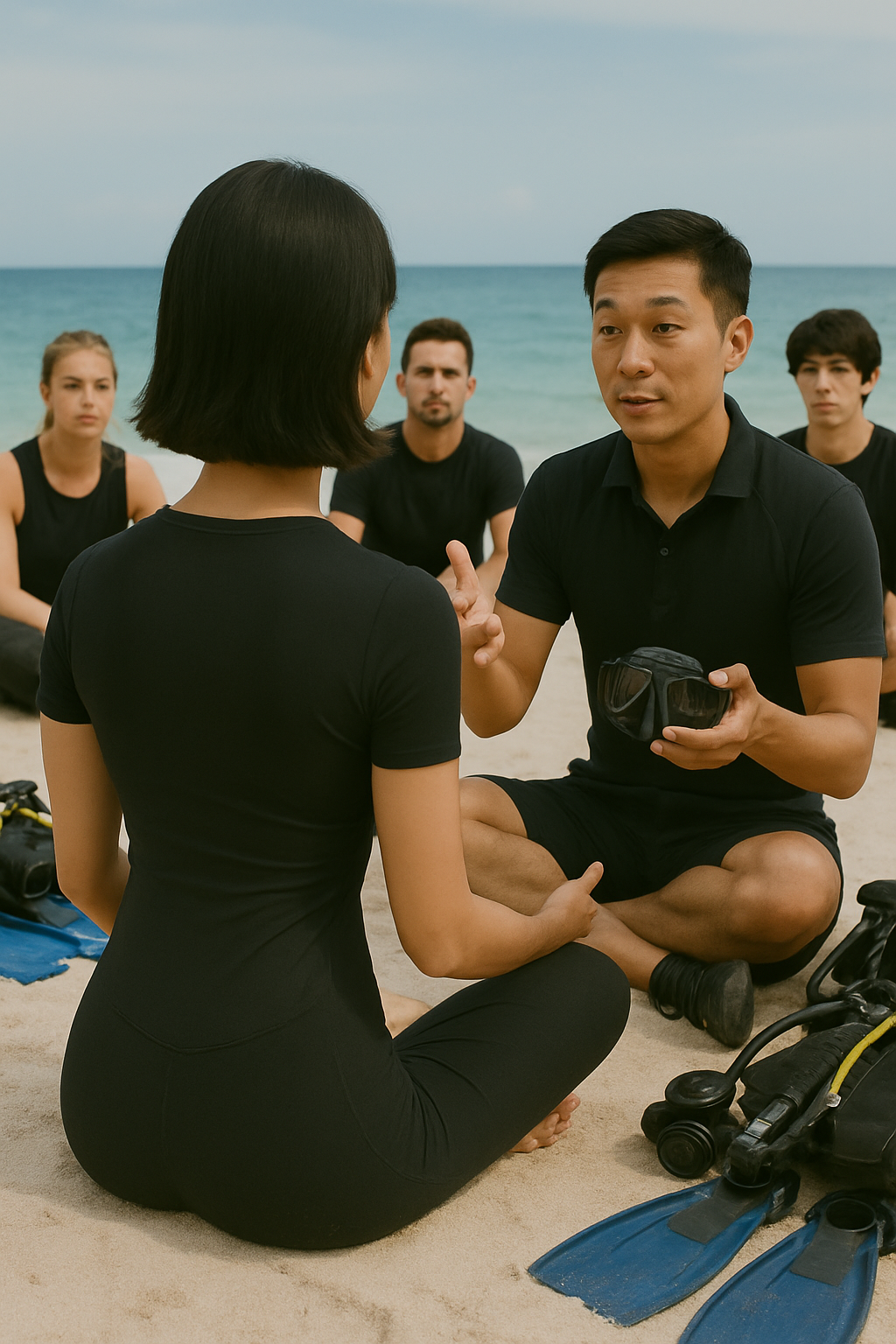
GROUP COACHING CLASSES = LEVERAGE YOUR EXPERTISE WITH MANY PEOPLE
Group coaching lets you help multiple people at once around a shared goal. You keep the depth of coaching but add community, peer support, and better leverage on your time and income.
WHAT IS GROUP COACHING
GROUP COACHING VS ONE-ON-ONE
DIFFERENT DESIGN, DIFFERENT POWER
One-on-one is deeply customized, focused on a single person. Group coaching still involves coaching, but participants learn from each other, share examples, and get normalized by seeing others struggle and progress with them.
GROUP COACHING VS CLASSES OR COURSES
NOT JUST TEACHING
A class is mainly you teaching. A course is structured content and exercises. Group coaching adds live interaction, hot seats, real cases, and accountability so participants actually apply what they learn to their own situation.
WHY GROUP COACHING IS VALUABLE
FOR YOU AND FOR THEM
You gain leverage by serving several people in the same time block. Participants gain peer perspectives, shared language, and a feeling of not being alone. This combination can make change faster and more sustainable.
WHEN GROUP COACHING WORKS BEST
PATTERNS AND SHARED GOALS
Group coaching is ideal when many people share similar goals and challenges. Examples include building a side business, improving fitness, learning a specific skill, changing careers, or growing a small company past a certain revenue level.
DESIGNING YOUR GROUP COACHING CONTAINER
START WITH ONE CLEAR PROMISE
DEFINE THE MAIN OUTCOME
Write one sentence that describes the transformation. Example: “Help nine-to-five workers launch a validated side hustle in eight weeks.” or “Help junior designers upgrade their portfolio and land interviews in six weeks.”
CHOOSE PROGRAM LENGTH
ENOUGH TIME FOR VISIBLE CHANGE
Common structures are four weeks, six weeks, eight weeks, or twelve weeks. Shorter cohorts are good for focused sprints. Longer programs are better for deeper habit change and complex projects.
DECIDE GROUP SIZE
INTIMACY VS SCALE
Small groups of four to eight people allow more individual attention and hot seats. Medium groups of ten to twenty work well with structured agendas and breakout rooms. Larger groups can function if you add assistants and clear formats.
SET SESSION FREQUENCY AND DURATION
CREATE A RELIABLE RHYTHM
Most group coaching programs meet once per week for sixty to ninety minutes. Some add a shorter Q and A or coworking session midweek. Consistent timing builds habits and helps people protect that slot in their calendar.
DECIDE YOUR LEVEL OF SUPPORT
INSIDE AND OUTSIDE THE CALLS
Define whether participants get only live calls, calls plus community chat, or also email or chat support. The more support, the higher the price and the more you must protect your time boundaries.
STRUCTURING YOUR SESSIONS
STANDARD SESSION FLOW
A REPEATABLE TEMPLATE
A simple structure is: welcome and quick wins, short teaching or framework, group exercise or breakout, live coaching or hot seats, then commitments and closing. This keeps calls engaging and action oriented.
TEACHING SEGMENT
SHORT AND FOCUSED
Spend ten to twenty minutes per session teaching a specific concept or framework. Use simple slides or a whiteboard. The goal is not to lecture but to give participants a clear mental tool for that week.
HOT SEATS AND LIVE COACHING
REAL CASES IN FRONT OF EVERYONE
Select one to three participants each session to be coached live. Let them share their current situation and block. Coach them while the group learns by observing. Rotate hot seats so everyone gets direct attention over the program.
BREAKOUT ROOMS AND PEER WORK
USE THE GROUP TO YOUR ADVANTAGE
Send participants into small groups to share homework, practice scripts, or give feedback on each other’s work. Provide clear prompts so time is not wasted. This builds community and deepens learning.
COMMITMENTS AND ACTION PLANS
END EACH SESSION WITH MOVEMENT
Close each call by asking everyone to define one to three concrete actions they will take before the next session. Invite one or two people to share out loud. This simple habit raises completion and results.
DELIVERY MODELS FOR GROUP COACHING
COHORT BASED GROUP COACHING
EVERYONE STARTS AND ENDS TOGETHER
A cohort has a clear start date and end date. Participants walk through the journey as a unit. This structure is powerful for eight week side hustle programs, three month fitness transformations, or six week job search sprints.
ROLLING OR EVERGREEN GROUPS
MEMBERS CAN JOIN ANYTIME
In a rolling model you run ongoing weekly calls and new members join as space opens. You might use a repeating curriculum where topics cycle, so participants can enter the loop and still get the full experience over time.
HYBRID COURSE PLUS GROUP COACHING
CONTENT ON DEMAND, COACHING LIVE
Participants watch pre recorded lessons on their own schedule and join weekly or biweekly coaching calls to ask questions and get personalized help. This lets you keep calls focused on application instead of repeating basic teaching.
CHALLENGE BASED GROUPS
SHORT, INTENSE SPRINTS
Examples include thirty day content challenges, twenty one day habit resets, or five day sales challenges. Participants commit to a clear daily action and calls are used to keep energy high, troubleshoot problems, and celebrate wins.
IN PERSON VS ONLINE GROUPS
CHOOSE YOUR ENVIRONMENT
Online groups are easier to scale and can be global. In person cohorts have strong energy and can involve physical practice such as surfing, public speaking, or fitness. You can also combine both in hybrid programs.
REAL WORLD GROUP COACHING NICHES
FITNESS AND BODY TRANSFORMATION GROUPS
EXAMPLE IMPLEMENTATIONS
Eight week fat loss cohorts with weekly training calls and shared progress tracking. Strength building groups for busy professionals with simple home workouts and nutrition guidelines. Hybrid of live workouts plus coaching calls.
YOGA, PILATES, AND MIND BODY GROUPS
ROUTINE AND REGULATION
Six week stress relief yoga groups focusing on breath and gentle movement. Pilates core stabilizing cohorts for people with back pain. Online morning practice groups that meet three times a week for short guided sessions.
PRODUCTIVITY AND FOCUS GROUPS
WEEKLY EXECUTION LABS
Cohorts where participants design their weekly schedules, share focus blocks, and review what worked. Deep work accountability groups that include timed coworking sessions, planning calls, and debriefs.
CAREER AND JOB SEARCH GROUPS
FROM STUCK TO HIRED
Job search cohorts that cover positioning, CV, LinkedIn, and interview practice. Career switch groups for professionals moving between industries. Each participant gets live feedback on applications and role plays.
BUSINESS AND REVENUE GROWTH GROUPS
SMALL BUSINESS AND SOLOPRENEURS
Groups focused on getting freelance income past a certain level such as first thousand or first ten thousand per month. Local business cohorts that work on offer, pricing, and recurring revenue with weekly number reviews.
CONTENT CREATOR AND PERSONAL BRAND GROUPS
CREATORS MOVING TOWARD INCOME
Four to eight week programs where creators commit to consistent posting, refine their niche, and design simple funnels to coaching or products. Live calls are used to review content, fix hooks, and improve storytelling.
MONEY HABITS AND PERSONAL FINANCE GROUPS
BEHAVIOR CHANGE WITH NUMBERS
Weekly sessions on budgeting, debt paydown, and basic investing, combined with shared tracking sheets and accountability buddies. Group conversations reduce shame and help people see patterns in their money behavior.
LANGUAGE, COMMUNICATION, AND PUBLIC SPEAKING GROUPS
PRACTICE IN A SAFE CIRCLE
Small groups practicing English conversation, business communication, or presentation skills. Calls involve structured speaking exercises, feedback rounds, and recorded practice to review progress.
CREATIVE SKILL GROUPS
DESIGN, WRITING, AND MORE
Writing cohorts where participants commit to publishing weekly essays or newsletters. Design cohorts where each week focuses on a different type of project and critiques happen live. Music or art groups working toward a showcase or portfolio.
LOGISTICS AND TOOLS FOR GROUP COACHING
VIDEO PLATFORMS AND SCHEDULING
ZOOM, MEET, AND CALENDAR TOOLS
Choose one main video platform and one scheduling tool for calls. Use recurring calendar invites so participants never have to search for links. Record sessions if promised and store replays in a shared folder or portal.
COMMUNITY AND COMMUNICATION CHANNELS
WHATSAPP, TELEGRAM, DISCORD, CIRCLE
Create one central space for announcements, questions, and sharing wins. Set expectations around response times and behavior. Consider dedicated channels for wins, questions, resources, and accountability check ins.
ONBOARDING WORKFLOW
FROM PAYMENT TO FIRST CALL
After payment, send a welcome email, group expectations, calendar invites, and a short intake form. Share how to introduce themselves in the chat group. Reducing confusion early increases program completion.
HOUSE RULES AND NORMS
CREATE PSYCHOLOGICAL SAFETY
Set ground rules about confidentiality, respect, no recording without permission, and how feedback is given. Encourage listening, curiosity, and permission before giving advice. A clear container makes people feel safer to open up.
HANDLING DIFFERENT PERSONALITIES
BALANCE VOICES IN THE ROOM
Some participants will speak a lot, others very little. Gently limit dominant voices and invite quieter ones to share. Use structured turns or written prompts when necessary so everyone gets value from the call.
MANAGING DROP OFF AND ENGAGEMENT
KEEP PEOPLE INSIDE THE PROCESS
Expect that not everyone will attend every call. Send summaries, key timestamps, and simple reminders. Reach out privately to those who vanish, not to guilt them, but to reconnect and understand what they need.
FILLING YOUR GROUP COACHING PROGRAMS
USE YOUR CONTENT AS A FUNNEL
FROM FREE VALUE TO GROUP OFFER
Share content that reflects the journey your group covers. At the end, invite followers to join a waitlist or apply for the next cohort. Talk about specific results and stories instead of only features of the program.
FREE WORKSHOPS AND WEBINARS
PREVIEW THE EXPERIENCE
Run a short free session that teaches one key concept and includes a small coaching segment. At the end, invite participants to join the full group program. People who already experienced you live convert at higher rates.
EARLY BIRD AND BETA COHORTS
START SMALL AND LEARN FAST
Launch your first cohort at a lower price in exchange for feedback and testimonials. Keep the group deliberately small. Improve the structure based on real experience before raising prices and expanding.
PARTNERSHIPS AND REFERRALS
BORROW OTHER PEOPLE’S AUDIENCES
Partner with communities, newsletters, or companies that already serve your target participants. Offer discounted or exclusive cohorts for their members. Ask alumni to refer friends and colleagues who fit the same profile.
CORPORATE GROUP COACHING
B2B COHORTS FOR TEAMS
Design group programs for employees around leadership, communication, time management, or sales skills. Companies pay for their team members to join the same cohort, often at higher per seat rates than individual buyers.
PRICING AND PROFITABILITY OF GROUP COACHING
PRICE RELATIVE TO ONE-ON-ONE
ACCESSIBLE BUT STILL PREMIUM
Group coaching is usually priced lower per person than one-on-one, but your total earnings per hour are higher. For example, if one-on-one is three hundred per session, a group of eight at one hundred per person already multiplies your income for that same time block.
SIMPLE INCOME EXAMPLE
CALCULATE YOUR NUMBERS
An eight week group at three hundred dollars per person with twelve participants equals three thousand six hundred dollars for eight calls. That is four hundred fifty dollars per call, plus any upsells to one-on-one or products later.
TIERED ACCESS INSIDE A GROUP
DIFFERENT LEVELS, DIFFERENT PRICE
Offer a standard tier with group calls and a premium tier that includes one or two one-on-one sessions during the program. This lets highly committed participants pay more for extra support without changing the group structure.
SCALING AND EVOLVING YOUR GROUP PROGRAMS
TURN GROUPS INTO EVERGREEN COURSES
REUSE YOUR BEST MATERIAL
Record teaching segments and refine them into standalone modules. New cohorts can watch these as homework so live calls can be used more for coaching. You can also sell the recordings as a lower priced product between cohorts.
TRAIN CO COACHES AND FACILITATORS
SHARE THE LOAD
As demand grows, train trusted alumni or colleagues to support calls, run breakout rooms, or lead parallel groups. Your role shifts from doing all coaching to designing the program and maintaining quality.
LICENSE YOUR GROUP FRAMEWORK
OTHERS DELIVER YOUR METHOD
Package your curriculum, session outlines, and templates so other coaches or organizations can run the program under license. They get a proven structure, you earn licensing or revenue share fees without being on every call.
GROUP COACHING INSIDE YOUR OFFER STACK
A SIMPLE VALUE LADDER
FROM FREE TO DEEP
Public content builds awareness. Free workshops collect leads. Group coaching becomes the main mid ticket offer. A subset of participants upgrade to one-on-one or long term advisory. Digital products serve those who are not ready yet.
GROUP COACHING AS A TEST LAB
DESIGN FUTURE PRODUCTS
Use questions, patterns, and struggles from your cohorts to design future courses, templates, and even software. Group conversations reveal real world needs better than almost any survey.
YOUR NEXT STEP
DESIGN ONE TEST COHORT
Pick one clear promise, one target group, and a four to eight week container. Sketch a simple weekly outline and invite a small group at a fair price. Learn from that cohort, then iterate and grow. Do not overbuild before you run the first group.
ADVANCED GROUP STRUCTURES
MICRO COHORTS BY STAGE
SAME TOPIC, DIFFERENT LEVELS
Instead of one mixed group, run separate micro cohorts for beginners, intermediate, and advanced participants. Example: beginner creators focus on consistency, advanced creators focus on team building and systems.
INNER CIRCLE MASTERMIND
HIGH TRUST, PREMIUM GROUP
Invite a small number of committed alumni into an ongoing mastermind with higher price and deeper access. They support each other on strategy and mindset while you facilitate, coach, and bring new frameworks.
ALUMNI ONLY GROUPS
KEEP MOMENTUM AFTER THE COHORT
After a main program, offer a lighter monthly group for alumni to stay connected, review numbers, and refresh habits. This keeps results alive and creates recurring revenue without rebuilding a new program each time.
INDUSTRY SPECIFIC B2B GROUPS
TARGETED CORPORATE COHORTS
Examples: leadership groups for first time managers in tech, sales cohorts for B2B SaaS teams, communication cohorts for healthcare staff. The more specific the industry, the easier it is to sell to companies that want tailored support.
EXAMPLE EIGHT WEEK PROGRAM MAP
WEEK ONE: ORIENTATION AND BASELINE
SET THE FOUNDATION
Clarify the journey, house rules, and tools. Run introductions, get everyone to define their starting point, and set first small commitments. The goal is trust and clarity, not pressure.
WEEK TWO: STRATEGY AND ROADMAP
FROM CHAOS TO PLAN
Teach a simple strategy framework and have each participant map their next thirty to sixty days. Use hot seats to refine a few roadmaps live so others can learn from real examples.
WEEK THREE: EXECUTION SYSTEMS
HABITS AND ENVIRONMENT
Introduce systems for time blocking, task management, and accountability. Use breakouts for participants to design their weekly routines and share how they will remove friction in their environment.
WEEK FOUR: SKILL DEEP DIVE
UPGRADE ONE KEY SKILL
Focus on one core skill that drives results in your niche, such as sales calls, content hooks, or difficult conversations. Do live practice, role plays, and detailed feedback.
WEEK FIVE: OVERCOMING BLOCKS
MINDSET AND PRACTICAL OBSTACLES
Naming and working through fear, procrastination, perfectionism, or common external blockers. Group coaching shines here because participants see they are not alone in their patterns.
WEEK SIX: OPTIMIZATION AND EXPERIMENTS
REFINE WHAT WORKS
Review what has worked so far, double down on it, and design small experiments to improve. Encourage participants to test new scripts, funnels, or routines before the next session.
WEEK SEVEN: SCALING AND SYSTEMS
BEYOND SHORT TERM WINS
Discuss how to turn new behaviors into long term systems. For business cohorts, talk about hiring, delegation, or automation. For personal life cohorts, talk about social support and environment design.
WEEK EIGHT: INTEGRATION AND NEXT CHAPTER
LAND THE PLANE
Reflect on starting point, celebrate wins, document lessons, and define the next ninety days. Offer alumni groups or one-on-one coaching as options without pressure, rooted in their progress.
RISK, ETHICS, AND SAFETY IN GROUPS
CONFIDENTIALITY AND TRUST
PROTECT THE ROOM
Make it clear that what is shared in the group stays in the group. Encourage participants to share learnings, not personal stories, outside. Trust is the real asset of a powerful group program.
HANDLING EMOTIONAL BREAKTHROUGHS
HOLD SPACE, KNOW YOUR LIMITS
If someone becomes very emotional, slow the pace, acknowledge their courage, and check in privately after the call. If deeper trauma surfaces, recommend therapy or specialized support instead of trying to fix it as a coach.
WORKING WITH MINORS OR SENSITIVE TOPICS
EXTRA CAUTION REQUIRED
If your niche involves teens, family issues, or health, understand local laws, consent, and professional boundaries. In many cases it is safer to target adults or partner with licensed professionals rather than handle sensitive areas alone.
CULTURAL AND LANGUAGE SENSITIVITY
GROUPS ACROSS BACKGROUNDS
Be aware of cultural norms, holidays, and language proficiency levels. Encourage clear, simple language in group discussions and be careful with humor or references that may not translate globally.
MEASURING SUCCESS OF YOUR GROUPS
OUTCOME METRICS
WHAT CHANGED IN THEIR LIFE
Track concrete results such as revenue gained, weight lost, hours of focus reclaimed, content published, or interviews secured. These numbers show whether the program actually works, beyond how it feels.
ENGAGEMENT METRICS
ARE THEY ACTUALLY SHOWING UP
Look at attendance rates, completion of homework, participation in chat, and use of replays. Declining engagement is a signal to adjust pacing, clarity, or support rather than simply blaming participants.
SATISFACTION AND REFERRAL SIGNALS
WOULD THEY RECOMMEND YOU
Use simple feedback forms with questions like what was most valuable, what was confusing, and would you recommend this program to a friend. High referral rates are proof your group offer is strong.
USING TESTIMONIALS AND CASE STUDIES
ASK FOR SPECIFIC STORIES
NOT JUST “IT WAS GREAT”
Invite alumni to share a short story describing life before and after the program, plus one concrete result. Specific stories with numbers and emotions are more powerful than generic compliments.
RESPECT PRIVACY AND CONSENT
USE TESTIMONIALS ETHICALLY
Always ask permission before using names, photos, or screenshots. Offer the option to stay anonymous or use only a first name and city. Trust is worth more than one strong quote.
TURN RESULTS INTO CASE STUDIES
DEEP DIVE EXAMPLES
Write full case studies showing starting situation, actions during the cohort, and outcomes three to six months later. These stories both market your program and clarify for you which pieces drive the most change.
ENROLLMENT AND ONBOARDING SCRIPTS
SIMPLE ENROLLMENT MESSAGE
DIRECT AND GROUNDED
Example: “I am opening a six week group for freelance designers who are stuck under two thousand per month. We meet weekly, fix positioning, pricing, and pipeline, and you get structured accountability. Reply with ‘details’ if you want the full breakdown.”
ONBOARDING WELCOME SCRIPT
SET TONE FROM DAY ONE
Example: “Welcome, you are in. Over the next eight weeks we will focus on one thing: getting you from idea to consistent execution. Your job is to show up, be honest, and do the small weekly actions. My job is to guide, challenge, and support you.”
REACTIVATING A QUIET PARTICIPANT
GENTLE, DIRECT OUTREACH
Example: “Hey, noticed you have missed the last two calls. No guilt, life happens. I just want to check in. Are you stuck, overwhelmed, or has the goal changed. We can adjust how you use the program so it still serves you.”