

POOR CHARLIE'S ALMANACK
BOOK SUMMARY BY CHARLIE MUNGER
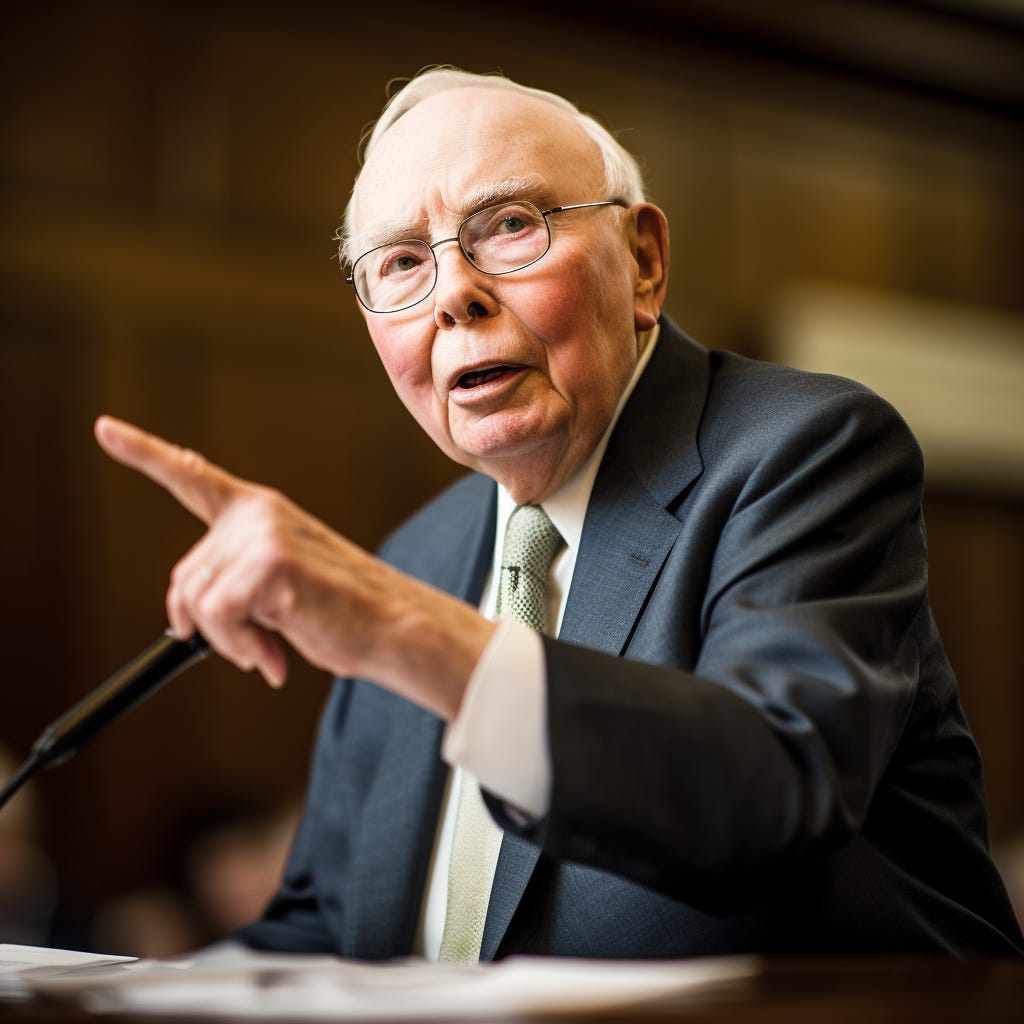
INTRODUCTION
THE ALMANACK OF WISDOM
CHARLIE MUNGER’S TIMELESS THINKING DISTILLED FOR LIFE AND INVESTING.
Peter Kaufman introduces Charlie Munger as this generation’s Benjamin Franklin, blending wit, humor, and deep multidisciplinary wisdom.
MORE THAN INVESTING
A GUIDE TO LIFE, NOT JUST MARKETS.
Munger’s talks go beyond portfolio strategy — they focus on independence, judgment, learning, and the pursuit of wisdom.
THE MENTAL MODELS EDGE
A LATTICEWORK OF IDEAS FROM EVERY DISCIPLINE.
Charlie built his decision-making system on models from math, history, psychology, and physics — simple yet powerfully effective.
OLD TALKS, EVERGREEN LESSONS
20 YEARS LATER, STILL RELEVANT TODAY.
The earliest talks in this collection remain timeless because they are grounded in human nature and universal truths.
THE HUMOR OF A SAGE
FROM CICERO TO JOHNNY CARSON.
Charlie mixes philosophers, comedians, and business icons to deliver wisdom in ways that stick and entertain.
LEARNING BY INVERSION
INVERT, ALWAYS INVERT.
Charlie borrows from Carl Jacobi, urging us to reverse assumptions and think from the opposite perspective to uncover truth.
MIDWESTERN VALUES
SIMPLE ROOTS, PROFOUND OUTCOMES.
Sobriety, reliability, curiosity, and humility shaped Charlie’s worldview and his lifelong pursuit of wisdom.
STORIES OVER STATS
THE POWER OF NARRATIVE.
Charlie avoids drowning in numbers; instead, he teaches through stories, case studies, and humor to make lessons unforgettable.
INDEPENDENCE FIRST
WEALTH SERVES FREEDOM, NOT EGO.
Charlie’s drive for wealth was not luxury but independence — the freedom to think and act on his own terms.
A LIFE OF CURIOSITY
CHARLIE’S ENCYCLOPEDIC MIND.
He weaves lessons from ancient orators, scientists, and pop culture alike — proof that curiosity fuels wisdom.
REDUNDANCY = MASTERY
REPETITION BUILDS FLUENCY.
Charlie repeats lessons often because deep understanding requires revisiting truths until they become second nature.
TALKS THAT TEACH FOREVER
11 SPEECHES, INFINITE LESSONS.
From worldly wisdom to human misjudgment, Charlie’s 11 talks form the heart of this Almanack, relevant for business and life.
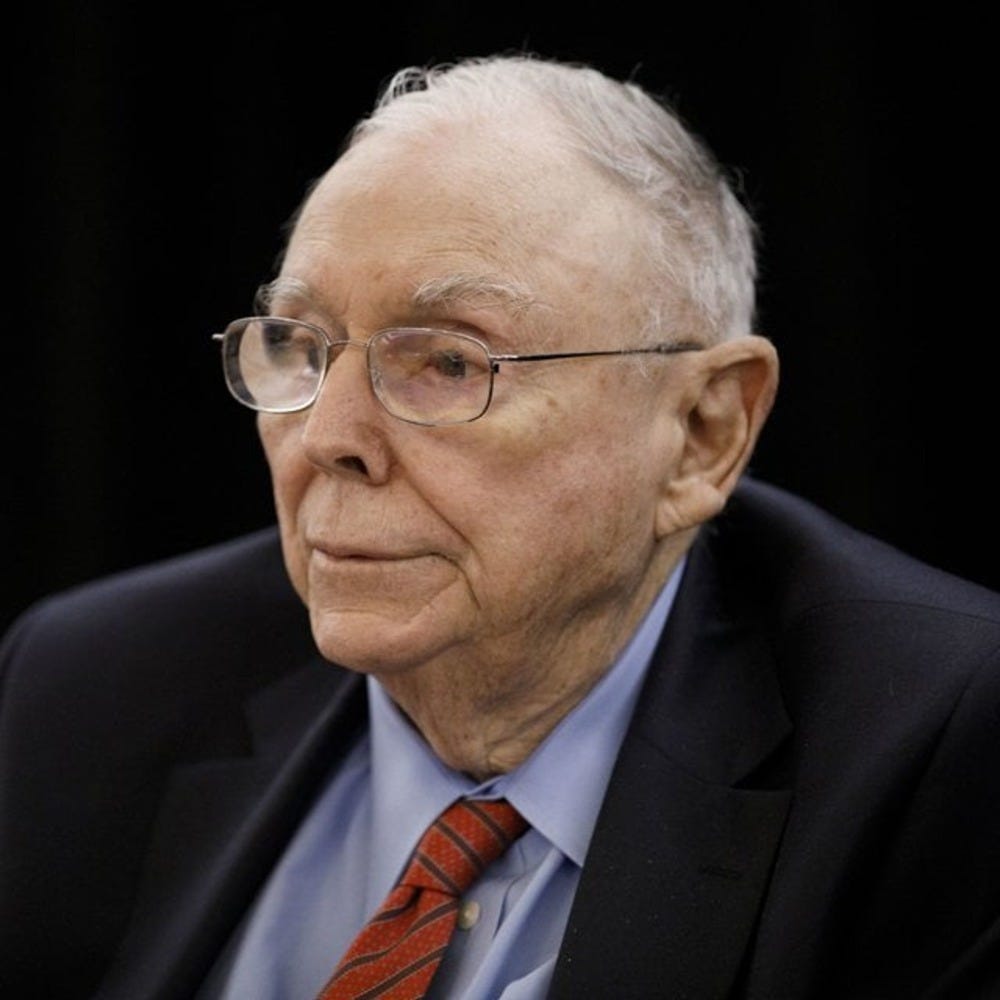
THIS IS ABOUT CHARLIE MUNGER'S 11 TALKS
CHAPTER 1
MEET BERKSHIRE’S QUIET BLADE
BUFFETT’S PUBLIC GENIUS. MUNGER’S SILENT EDGE.
Behind Berkshire’s rise stands Charlie Munger, Buffett’s friend, lawyer, adviser, and tireless devil’s advocate, compounding clarity into outsized results.
13,500× WITHOUT HYPE
$10M TO ~$135B WITH FEW NEW SHARES.
Since the 1960s, Buffett and Munger grew Berkshire’s value through disciplined opportunity selection, patience, and a near allergy to dilution.
BORN IN OMAHA, BUILT FOR WISDOM
JANUARY 1, 1924. HEARTLAND ROOTS.
Munger’s Midwestern upbringing forged restraint, reliability, and curiosity that later shaped his multidisciplinary approach to decisions.
BUFFETT & SON: EARLY FRICTION
12-HOUR SHIFTS, TWO PENNIES FOR “SOCIAL SECURITY.”
Harsh grocery shifts under Ernest Buffett taught Charlie thrift, grit, and skepticism toward systems that ignore incentives.
READING AS A SPORT
BIOGRAPHIES, BEN FRANKLIN, MEDICAL JOURNALS.
Voracious reading wired Munger for cross-domain thinking, blending ethics, science, and history into a single latticework.
SCIENCE CURIOUS, RESULTS OBSESSED
SURGERY FILMS, STATS, OUTCOMES.
Early exposure to medicine and statistics sparked Charlie’s love for evidence, feedback loops, and decisions grounded in reality.
NEGOTIATOR AT 14
HAMSTER TRADES, BETTER SPECS, BETTER COLORS.
Even as a kid, Charlie brokered advantage by spotting value others missed, a preview of his future investing temperament.
DEPRESSION LESSONS
HARD TIMES, HARD TRUTHS, SOFT HEARTS.
Family resilience and a judge-grandfather’s smart rescues taught Charlie capital stewardship, prudence, and community duty.
CHOOSE YOUR GAMES WISELY
MATH AT MICHIGAN, PHYSICS MINDSET FOREVER.
College sharpened his love for physics-style problem solving. For Munger, sound theory beats fashion, every time.
WAR SCHOOLING
ARMY AIR CORPS, CALTECH, METEOROLOGY.
Thermodynamics and weather systems trained Charlie to model uncertainty, weigh odds, and act with calm under pressure.
HARVARD WITHOUT A BA
GATE KEPT? HE WALKED THROUGH ANYWAY.
With help from Roscoe Pound, Munger entered Harvard Law, graduating magna cum laude, proving outcomes beat credentials.
PAIN, THEN PERSPECTIVE
DIVORCE AND A SON’S LEUKEMIA.
Personal tragedy deepened Charlie’s empathy and steel. He learned to endure, decide clearly, and keep moving with purpose.
REBUILT LIFE, EXPANDED FAMILY
MARRIED NANCY; EIGHT KIDS TOGETHER.
A blended, growing family anchored his drive for independence, philanthropy, and long-horizon thinking.
LAWYER WHO THOUGHT LIKE AN OWNER
FEES ARE FINE. EQUITY IS BETTER.
He swapped some client fees for stakes, learning business from the inside. Skin in the game sharpened his judgment.
REAL ESTATE FLYWHEEL
PASADENA DEALS, PROFITS ROLLED FORWARD.
Charlie reinvested gains into bigger projects, turning $100K into $1.4M by 1964, compounding skill, trust, and capital.
MUNGER, TOLLES… CULTURE FIRST
PICK CLIENTS LIKE FRIENDS. LEAVE THE LAST DOLLAR.
He co-founded a top law firm, set humane norms, and later left his capital share to a partner’s family. Principles over optics.
THE BUFFETT SPARK
A DINNER IN OMAHA. A HANDSHAKE FOR LIFE.
Charlie and Warren clicked instantly, trading letters and ideas. No contract. Just character, curiosity, and compounding trust.
FROM LAW TO LEVERAGE
“LAW IS A HOBBY. OWNERSHIP IS THE GAME.”
Buffett’s nudge helped Munger pivot from billable hours to building equity vehicles that scale while you sleep.
WHEELER MUNGER: THE SCORECARD
1962–1975, BIG WINS, BRUTAL DRAWDOWNS, NET GREATNESS.
28.3 percent gross for 11 years, two nasty bear-market hits, then a huge rebound. Lessons: temperament, survivability, patience.
HOLDCO OVER HEDGE FUND
SHUT PARTNERSHIPS. OWN COMPOUNDING MACHINES.
Charlie followed Warren in preferring permanent capital and control via holding companies over managing outside money.
BERKSHIRE’S PLAYBOOK
BUY WONDERFUL BUSINESSES. KEEP THEM.
From GEICO to Dairy Queen, Post to Coke stakes, Berkshire favored moats, managers, and time in the saddle.
FRANKLIN AS A MENTOR
MAKE FRIENDS WITH THE EMINENT DEAD.
Munger learned through lives, not lectures. Biography turns concepts into models you can recall under pressure.
WEALTH → INDEPENDENCE → IMPACT
MONEY IS A MEANS, NOT THE MISSION.
Charlie used wealth to buy freedom and fund causes, from schools to research centers, multiplying good beyond himself.
CLEAR RULES. LONG GAMES.
LATTICEWORK, INVERSION, ETHICS, ENDURANCE.
Munger’s portrait is a system: learn widely, think clearly, choose high-quality games, and let time do the heavy lifting.
TIMELESS TAKEAWAY
CHARACTER COMPOUNDS FASTER THAN CAPITAL.
Across heartbreaks and booms, Charlie’s edge stayed the same: curiosity, courage, ethics, and an owner’s mindset.
CHAPTER 2
RETURN IT WITH A FULL TANK
RESPECT BORROWED THINGS. RESPECT PEOPLE MORE.
Sun Valley lesson: even when rushed, top up the Jeep. Small acts signal character, build trust, and turn acquaintances into lifelong friends.
FAIRNESS THAT STICKS
DO RIGHT EVEN WHEN NO ONE’S WATCHING.
The owner wouldn’t have noticed the gas. Charlie still did it. Integrity is a habit, not a performance. People remember who runs on honor.
DINNER TABLE MBA
STORIES THAT STEER YOUR COMPASS.
Munger taught through morality tales and “downward spirals.” Humor plus consequence made ethics unforgettable and behavior self-policing.
CONFESS FAST, DON’T COVER
MISTAKES ARE FORGIVABLE. COVER-UPS AREN’T.
A finance officer owned a costly error and kept his job. Lesson: tell it early and straight. Trust recovers speed; deceit compounds damage.
STILL TEACHING AT 80
SAME TABLE, MORE CHAIRS, SAME COMPASS.
With grandkids in the mix, the stories continue. Repetition is deliberate. Values must be rehearsed to become reflexes under pressure.
DO IT RIGHT, FIRST TIME
STORM? GO BACK FOR THE PAPER.
A missed newspaper triggered a brutal do-over in rain and waves. The pain made the standard permanent. Excellence begins with zero excuses.
OWN THE OUTCOME
LOSE THE KEYS? DIVE TILL YOU FIND THEM.
No locksmiths, no whining. Two hours in murky water to recover car keys. Responsibility means you close the loop, however hard it is.
PRACTICE THE UNSEXY SHOT
SHORT GAME BEATS HIGHLIGHT REELS.
He drilled easy put-away volleys with a ball machine. Master boring edges others skip. In life and markets, fundamentals win tournaments.
MONK-MODE FOCUS
CHINESE-WALL YOUR ATTENTION.
Chinese-wall your attention.
Amid TV chaos and kids, he’d vanish into reading, plans, or markets. Deep focus is a superpower. Guard it and you’ll outlast the noise.
CONTRARIAN BALANCE
STAY UPRIGHT WHEN ERAS TILT.
In the radical 60s, he trained balance like aquaplaning: shift weight, avoid extremes. Skepticism kept his kids steady in wild currents.
BACK YOU LIKE A BILLIONAIRE
SIGNALS OF BELIEF SHAPE IDENTITY.
He funded crisp shirts and confidence from 3,000 miles away. Support plus standards builds a spine that resists fads and fury.
THE HANDS THAT TEACH
GENTLE GRIP, FIRM STANDARDS.
From egg-toss trophies to fishing knots, his hands modeled care and competence. Tender with people, exacting with craft. That’s culture.
BOOKS BEFORE BREAKFAST
BEN FRANKLIN BY THE WOOD STOVE.
Graph paper, biographies, genetics, markets. Curiosity ran from dawn to dusk. Learning wasn’t an event; it was the household climate.
STAGE PRESENCE, ZERO EGO
“I HAVE NOTHING TO ADD.”
At Omaha, he’d sip Coke, sample See’s, drop a zinger, then yield. Authority without performance. Precision over verbosity.
MESSAGES, NOT LECTURES
STORIES SCALE BETTER THAN SCOLDING.
He sent articles, letters, and coded anecdotes to guide decisions. Group delivery spared feelings, preserved dignity, and still landed.
MOUNT RUSHMORE MODE
CALM, IMMOVABLE, OCCASIONALLY VOLCANIC.
Kids approached requests like Dorothy before Oz. Silence, a rumble, or a ruling. Stoic presence taught restraint more than speeches did.
DURABILITY OVER FASHION
BROOKS BROTHERS, NOT RUNWAY HYPE.
Buy what lasts and fits your game. Rituals create identity. Stability in dress frees bandwidth for judgment where it matters.
TRADITION AS STRATEGY
RITUALS REDUCE DECISION FATIGUE.
Same brands, same habits, same compass. By standardizing the trivial, he saved focus for the consequential. That’s how clarity compounds.
HUMOR AS HANDLE
A JOKE MAKES A LESSON STICK.
From “played that like a plumber” to dinner-table epics, wit softened the sting while tightening the standard. Laugh, learn, remember.
CHARACTER IS CONTAGIOUS
SMALL RULES SHAPE BIG LIVES.
Gas the car. Admit the error. Finish the job. Read daily. Practice the boring edge. These micro-rules become a family operating system.
CHAPTER 3
FRANKLIN’S HEIR
SELF-TAUGHT, RELENTLESS, REALITY-BASED.
Munger mirrors Franklin: hard work, curiosity, patience. Investing is a byproduct of a rigorously organized life and clear thinking habits.
LATTICEWORK MIND
100+ MODELS, ONE PLAYBOOK.
He fuses tools from physics, biology, psychology, math, history into a latticework that reduces chaos to first principles and action.
ECOSYSTEM ANALYSIS
INSIDE THE BUSINESS AND AROUND IT.
Not just financials. He maps incentives, moats, tech shifts, regulation, labor, customers, and second-order effects to see the whole game.
BIG IDEAS, BIG DISCIPLINE
FLUENCY BEATS SPREADSHEETS.
From redundancy to compounding, tipping points to autocatalysis, Munger applies cross-field laws to explain durable advantage or decay.
PREPARATION → CLARITY
SIMPLE AT THE END, NOT THE START.
His “obvious” insights follow deep study. Simplicity emerges after wrestling complexity into a few governing variables you can trust.
TWO-TRACK THINKING
RATIONAL MATH PLUS HUMAN BIAS.
Track 1: interests, probabilities, value. Track 2: psychology of misjudgment. You need both to price reality, not stories.
INVERT, ALWAYS INVERT
CUT MISTAKES BEFORE CHASING WINS.
Start with what to avoid. Delete dumb risks and dead ends. Eliminating the losing half of the board frees focus for high-odds plays.
PHYSICS, NOT PHYSICS ENVY
AS SIMPLE AS POSSIBLE, NOT SIMPLER.
Beware one-formula answers for complex systems. Aim for robust models that hold under stress, not cute equations that crumble.
CIRCLE OF COMPETENCE
AS SIMPLE AS POSSIBLE, NOT SIMPLER.
Beware one-formula answers for complex systems. Aim for robust models that hold under stress, not cute equations that crumble.
CIRCLE OF COMPETENCE
YES. NO. TOO TOUGH.
He filters ruthlessly. Only simple, dominant, understandable franchises survive. Hype deals and tricky tech go in the “too tough” pile.
GREAT AT FAIR > FAIR AT GREAT
PRICE MATTERS, QUALITY RULES.
Prefer wonderful businesses at fair prices. Quality compounds. You avoid constant sell decisions and maximize time in the saddle.
OWNER’S METRICS
RECAST THE NUMBERS.
He rebuilds statements for reality: owner earnings, true working capital, options, pensions, float, hidden liabilities, real cash yield.
MOATS THAT WIDEN
ADVANTAGE PLUS ENDURANCE.
He rates brands, distribution, cost edges, culture, and durability versus competitive destruction. Survival across cycles is the test.
CHECKLIST THINKING
PROCESS BEATS MOOD.
Before pulling the trigger: price, volume, disclosures, capital availability, exits, opportunity cost. Checklists prevent dumb drift.
SIT-ON-YOUR-ASS INVESTING
FEW MOVES, BIG WEIGHT.
He makes large, patient bets in a tiny portfolio. Fewer trades, less noise, better taxes, more compounding. Activity isn’t progress.
TEMPERAMENT IS ALPHA
INDEPENDENCE OVER IMITATION.
Objectivity, patience, calm, and willingness to look wrong beat IQ. Mimicking the herd drags you to average. Stand alone with data.
MR. MARKET IS A PARTNER
HE OFFERS; YOU CHOOSE.
Use market quotes, don’t obey them. Value first, price second. Mood swings are opportunities when your analysis is anchored.
RISK FIRST
REPUTATION, LEVERAGE, INFLATION.
Start every decision measuring downside and margin of safety. Avoid bad people, bad terms, and irreversible loss. Play long games.
ALLOCATION IS JOB #1
OPPORTUNITY COST RULES.
Best use is the next best forgone. When odds are great, bet heavy. Don’t diversify into mediocrity. Capital is scarce. Aim it.
PATIENCE × DECISIVENESS
WAIT LONG. MOVE FAST.
Most days you prepare, not act. When the right pitch comes, swing hard. Be fearful when others are greedy, and the reverse.
CHANGE OR BE CHANGED
REALITY DOESN’T NEGOTIATE.
He updates models, amends beloved ideas, and accepts complexity. Adaptation beats stubbornness, especially across long horizons.
FOCUS BEATS FRENZY
GUARD ATTENTION, AVOID TRIVIA.
Keep goals visible, exclude noise, fix leaks early. Integrity and reputation compound or evaporate fast. Protect both daily.
FROM SCIENCE TO STRATEGY
MOATS MEET THERMODYNAMICS.
He tracks conversions of energy and cost in real supply chains, not slide decks. Advantage must pay in the physics of delivery.
SECOND-ORDER THINKING
RIPPLES BEAT SNAPSHOTS.
Model feedback loops, tipping points, spillovers. What happens after what happens next is where edge often hides.
PROCESS OVER OUTCOME
SCORE THE PLAY, NOT THE LUCK.
A good decision can lose. A bad process can win by accident. He grades preparation and reasoning because those are controllable.
READING AS A SPORT
VORACIOUS, DAILY, FOREVER.
Curiosity is the compounder behind returns. Learn widely, ask “why” relentlessly, and get a little wiser every day.
THE LALAPALOOZA EFFECT
VIRTUES THAT AMPLIFY EACH OTHER.
Preparation, discipline, patience, decisiveness combine into cascading positives. That flywheel is Munger’s real edge.
WHEN TO SELL? RARELY
BUY TO MINIMIZE FUTURE DECISIONS.
Own a few great companies so you don’t constantly reassess. Selling is hard and tax-heavy. Let quality compound for you.
SUMMARY: THE MUNGER METHOD
ELIMINATE, MODEL, VALUE, WAIT, ACT.
Cut the “too tough.” Attack with multidisciplinary models. Demand moats and owner earnings. Be patient. When it’s right, go big.
CHAPTER 4
11 TALKS THAT OUTLIVED THE STAGE
CHARLIE MUNGER’S SPEECHES WEREN’T FOR APPLAUSE — THEY WERE PLAYBOOKS.
Each talk reveals how to think better, decide better, and live wiser. Together, they form a survival manual against stupidity and self-inflicted misery.
TALK 1 : HARVARD SCHOOL (1986)
TALK 1: HARVARD SCHOOL (1986)
How to guarantee misery. Narrative Instead of chasing happiness, Munger inverted the question: addiction, envy, resentment, unreliability — master these and you ruin your life.
TALK 1 : RULE 1 : INVERSION
AVOID WHAT RUINS PEOPLE
Inversion is a thinking tool:
define the outcome you fear,
then
list the behaviors that produce it. Misery is not random.
It comes from patterns. Once you can name the patterns, you can design your days to not feed them.
TALK 1 : RULE 2 : ADDICTION
FASTEST ROAD TO RUIN.
Chemical or behavioral addictions hijack priorities. They trade long-term stability for short-term relief, then demand a larger payment every time.
The real damage is not only money or health, but the loss of self-command and the shrinking of options.
TALK 1 : RULE 3 : ENVY
COMPARE, COMPLAIN, COLLAPSE.
Envy makes you measure life by other people’s scoreboards.
It creates permanent dissatisfaction, because someone will always have more. It also blinds judgment:
"you start copying lifestyles you cannot afford or chasing status that doesn’t match your nature".
TALK 1 : RULE 4 : RESENTMENT
THE LONG-TERM TOXIN
Resentment feels like “justice,” but functions like a slow fever.
It keeps old injuries alive, steals attention from building the future, and makes you interpret neutral events as attacks.
The cost is compounded: worse decisions, weaker relationships, less energy.
TALK 1 : RULE 5 : UNRELIABILITY
FAIL AT PROMISES, FAIL AT LIFE.
If people cannot count on you, opportunities stop arriving.
Trust is an invisible asset that takes years to build and one careless habit to burn.
Being late, breaking promises, shifting blame, and avoiding hard conversations quietly push you out of serious circles.
TALK 1 : RULE 6 : NOT LEARNING FROM OTHERS
IGNORE THE FREE TUITION OF HISTORY.
Refuse to learn from books, mentors, biographies, and case studies. Insist on paying full price for every lesson through your own pain.
The result is predictable: repeated mistakes, slower growth, and an “education” you could’ve gotten cheaper.
TALK 1 : RULE 7 : GIVING UP EARLY
QUIT WHEN IT’S HARDEST.
Every meaningful path includes reverses, boredom, and doubt. If you exit at the first pressure spike, you lock in failure and train yourself to run.
Misery compounds because you never stay long enough for the curve to turn in your favor.
TALK 1 : RULE 8 : SKIPPING INVERSION
NEVER ASK “WHAT COULD KILL ME?”
Skip inversion and you walk forward blind. The safer method is to list what could ruin you first, then design to avoid it.
Refuse that lens and you’ll step into obvious traps, not because they’re complex, but because you never looked backward.
TALK 1 : RULE 9 : FROZEN OPINIONS
STAY LOYAL TO YOUTHFUL STUPIDITY.
Freeze your opinions early and defend them like a religion.
Never revise beliefs when facts change or when experience proves you wrong. Rigidity feels stable, but it makes you fragile.
Misery grows the moment learning stops and ego takes over.
TALK 1 : RULE 10 : SELF-PITY
A TRAP THAT FEELS JUSTIFIED
Self-pity is seductive because it gives emotional comfort without requiring change. But it blocks problem-solving, invites helplessness, and trains you to explain instead of act.
Munger’s view is harsh but useful: pity adds suffering without fixing the cause.
THE META-LESSON OF TALK 1
MISERY BY FORMULA, WISDOM BY INVERSION.
By cataloguing paths to ruin, Munger gave graduates a playbook for success. Avoid stupidity, and what remains — reliability, learning, objectivity — leads to a good life.
TALK 2: ELEMENTARY WORLDLY WISDOM (1994)
TALK 2: ELEMENTARY WORLDLY WISDOM (1994)
A LATTICEWORK FOR CLEAR THINKING.
Munger’s core claim:
"One discipline makes you fragile".
Build a latticework of the best big ideas across math, psychology, economics, engineering, and biology.
Then test decisions through that toolkit so reality “fits,” and judgment improves with time.
TALK 2 : MODEL 1 : THE LATTICEWORK CONCEPT
MANY MODELS, ONE MIND.
A single model turns everything into the same problem.
Stockpile a few powerful models from many fields and practice combining them.
When models connect, you see patterns faster, avoid dumb mistakes, and choose actions that match how the world works.
TALK 2 : MODEL 2 : THE MATH MODELS
PROBABILITY AND COMPOUNDING.
Learn the math that governs outcomes:
expected value,
base rates,
compounding,
simple combinatorics.
These tools turn guesswork into odds. Without them you misread risk, overpay for certainty, and miss small edges that compound for years.
TALK 2 : MODEL 3 : THE ENGINEERING MODELS
REDUNDANCY AND BREAKPOINTS.
Design like an engineer:
add redundancy,
keep safety margins,
locate the breakpoint before you bet.
Systems fail at weak links.
The same logic applies to businesses, portfolios, and careers: avoid single points of failure and plan for stress.
TALK 2 : MODEL 4 : THE BIOLOGY MODELS
DARWIN RUNS THE WORLD.
Evolution is a business textbook. Selection rewards what fits the environment, kills what doesn’t, and amplifies feedback loops.
Companies, products, and strategies compete for survival. Adaptation beats ego.
Moats erode when environments change.
TALK 2 : MODEL 5 : THE PSYCHOLOGY MODELS
BIAS IS THE ENEMY.
Most bad decisions are psychological, not technical.
Incentives distort truth,
social proof spreads error, commitment hardens mistakes,
and denial protects comfort.
Learn the standard biases and watch for combos, because stacked biases create extreme outcomes.
TALK 2 : MODEL 6 : THE ECONOMICS MODELS
MOATS, SCALE, AND INCENTIVES.
Economics explains why winners keep winning:
incentives,
opportunity cost,
scale,
network effects,
comparative advantage.
These models reveal moats, pricing power, and fragility. If you can map incentives, you can predict behavior better than slogans can.
TALK 2 : MODEL 7 : THE CHECKLIST HABIT
PILOTS DON’T WING IT — WHY SHOULD YOU?
Use your models like a pilot’s checklist.
Before acting, run key lenses: incentives,
alternatives,
probabilities,
failure modes,
second-order effects.
Checklists beat genius because they prevent “obvious” blind spots under time pressure and emotion.
TALK 2 : MODEL 8 : THE SELECTIVE BETTING MODEL
BET RARELY, BET BIG.
Most of the time, do nothing.
Wait for rare moments when odds are clearly in your favor and you understand why.
Then bet decisively.
The edge is patience plus preparedness: you can’t force great opportunities, but you can be ready to seize them.
TALK 2 : MODEL 9 : THE PUNCH-CARD RULE
20 DECISIONS FOR LIFE.
Pretend you have only 20 lifetime decisions.
You would slow down, demand strong evidence, and concentrate on what matters most.
That mindset filters noise, reduces overtrading, and lets a few high-quality choices compound into outsized results.
TALK 2 : MODEL 10 : TAX-EFFICIENT THINKING
DON’T LET FRICTION EAT COMPOUNDING.
Compounding is fragile;
friction kills it.
Frequent trading leaks returns through taxes, fees, and mistakes. Prefer durable quality and long holding periods.
The best strategy often looks boring: minimize tolls, let time do the heavy lifting.
THE META-LESSON OF TALK 2
WISDOM IS INTERDISCIPLINARY.
You don’t need encyclopedic knowledge.
You need the right few models from many disciplines, and the habit of applying them together.
With checklists, patience, and respect for incentives and bias, the latticework becomes a practical engine for judgment.
TALK 3: STANFORD LAW (1996)
TALK 3: STANFORD LAW 1996
WORLDLY WISDOM WITH SHARPER EDGES.
Munger revisited multidisciplinary thinking, but with teeth. This talk zeroed in on psychology, incentives, ideology, and law — showing how smart systems fail when human behavior is misunderstood or ignored.
TALK 3 : POINT 1 : THE PSYCHOLOGY GAP
MOST TEXTBOOKS MISS THE POINT.
Munger argued psychology is mis-taught.
Core forces like denial, envy, incentive-caused bias, and social proof are barely covered.
Without them, textbooks explain theory, not how humans actually behave under pressure.
TALK 3 : POINT 2 : DEPRIVAL SUPERREACTION SYNDROME
LOSSES HURT MORE THAN GAINS THRILL.
Humans feel loss far more intensely than gain. This drives gambling spirals, revenge decisions, sunk-cost traps, and bad investing.
When people fear losing what they had, rational judgment collapses fast.
TALK 3 : POINT 3 : THE LOLLAPALOOZA EFFECT
FORCES DON’T JUST ADD — THEY MULTIPLY.
When multiple biases act together: authority,
incentives,
social proof,
commitment.
Their impact explodes.
Munger called this a lollapalooza effect. It explains bubbles, cults, frauds, and why smart people do shocking things.
TALK 3 : POINT 4 : CAPTAIN COOK’S SAUERKRAUT
PSYCHOLOGY AT SEA.
To prevent scurvy, Cook used psychology, not orders.
He fed sauerkraut only to officers first. Sailors soon demanded it.
The lesson:
persuasion works better when desire is triggered indirectly, not forced directly.
TALK 3 : POINT 5 : CHEATING SYSTEMS
MAKE FRAUD HARD, OR SOCIETY ROTS.
If systems are easy to cheat, people will cheat. Once cheating spreads, it feels normal and moral resistance collapses.
Munger warned that allowing “slop” early creates corruption that becomes almost impossible to reverse.
TALK 3 : POINT 6 : LAW’S UNINTENDED DAMAGE
NOBLE GOALS, PERVERSE OUTCOMES.
Well-meaning laws often backfire when incentives are ignored.
Stress-based workers’ compensation created fraud networks. Intentions don’t matter; outcomes do.
Bad incentives quietly destroy systems built to help.
TALK 3 : POINT 7 : THE NAVY RULE
NO EXCUSES. JUST OUTCOMES.
In the Navy, if your ship runs aground, your career ends; no debate.
Harsh, but effective.
Removing excuses raises vigilance and responsibility.
Some systems work better when accountability is absolute, not litigated.
TALK 3 : POINT 7 : IDEOLOGY: THE BRAIN KILLER
DON’T BE THE PRISONER OF DOGMA.
Ideology distorts thinking, even in geniuses.
Munger cited how rigid beliefs warped judgment across politics and academia.
Buffett avoided ideology deliberately. Certainty feels goo; but it destroys objectivity and flexibility.
TALK 3 : POINT 8 : APPEAL TO INTERESTS, NOT MORALS
A PERSUASION SHORTCUT.
Want someone to do the right thing? Don’t lecture. Show how self-interest aligns with virtue. Fear of ruin beats appeals to conscience.
TALK 3 : POINT 9 : TEACHING BY INDIRECTION
LESSONS THAT STICK.
Moral lectures rarely work.
Appealing to self-interest does.
Munger showed how warning someone about ruin, reputation loss, or personal cost is far more persuasive than telling them what’s “right.”
TALK 3 : POINT 10 : REMEDIAL WORLDLY WISDOM
THE MISSING COURSE.
Munger argued law schools should teach a crash course on psychology, incentives, and bias before doctrine.
He called it “remedial worldly wisdom”; not advanced, just essential knowledge everyone should already have.
THE META-LESSON OF TALK 3
THINK LIKE A SYSTEM-BUILDER.
Truth lives in the connections. Psychology, law, incentives, and morality interact whether we like it or not.
Ignore those links and systems decay. Understand them, and you prevent disasters before they start.
TALK 4: USC BUSINESS 1995
TALK 4: USC BUSINESS (1995)
PRACTICAL THOUGHT ABOUT PRACTICAL THOUGHT.
Using Coca-Cola, Munger showed how real business advantage isn’t one trick. It’s many models working together: product habit, flavor stickiness, brand protection, distribution scale, and compounding. When the models align, success becomes durable.
TALK 4 : POINT 1 : FLAVOR AS A MOAT
TASTE IS PSYCHOLOGY YOU CAN’T PATENT.
Flavor is a lock-in mechanism.
Hershey’s process created a taste people grew up craving.
Coke did the same by making one flavor feel “right.”
You can copy ingredients, but you can’t easily copy the emotional memory and habit built over decades.
TALK 4 : POINT 2 : TRADEMARKS THAT PROTECT CIVILIZATIONS
A LOGO IS MORE THAN A LOGO.
Trademarks create powerful incentives:
if your name is valuable,
you protect quality because failure damages the asset.
Carnation and Coke show this.
The brand becomes a discipline system. Even when no regulator is watching, the company polices itself to defend trust.
TALK 4 : POINT 3 : BIOLOGY EXPLAINS MATH
WHY GRAPHS WORK ON THE HUMAN BRAIN.
Humans are clumsy with raw numbers but strong with visual motion.
Graphs turn data into shapes the brain can feel.
Log charts reveal compounding as a straight line, making growth rates readable.
That’s why Coke’s long-run progress is clearer on graphs than spreadsheets.
TALK 4 : POINT 4 : AUTOCATALYSIS IN BUSINESS
SUCCESS FEEDS SUCCESS.
Autocatalysis means the system strengthens itself. Coke’s distribution makes the brand visible everywhere, which increases demand, which justifies more distribution. The loop compounds. Once the cycle is running globally, competitors face a rising barrier: you must out-scale the leader to catch it
TALK 4 : POINT 5 : THE REACH OF PSYCHOLOGY
EVERY CAN CARRIES PERSUASION.
Coke isn’t just sugar and water. It’s conditioning and association.
Repetition trains the mind, ads attach it to joy, and social proof normalizes it.
Over time, the product becomes a “default choice.”
The persuasion is embedded in the culture, not only in marketing.
TALK 4 : POINT 6 : THE DISNEY PARALLEL
OLD ASSETS, NEW TAILWINDS.
Disney’s old films became a gold mine when a new channel arrived: home video.
Coke also benefits from tailwinds it didn’t invent, like refrigeration, modern logistics, and global retail.
When you own timeless demand, new distribution waves become free amplifiers.
TALK 4 : POINT 7 : THE CHECKLIST MIND
BRIDGE, INVESTING, COCA-COLA.
Munger’s rule:
use checklists like pilots and bridge experts.
Run the models: incentives, habit, scale, brand, substitution risk, distribution, pricing power.
The goal isn’t cleverness. It’s coverage. Coke looks “simple” only after you’ve checked every box and seen how they interact.
WHY IT MATTERS
MODELS AREN’T THEORY — THEY’RE SURVIVAL.
Coke teaches a practical lesson: durable advantage comes from model convergence. Flavor creates habit, trademarks protect trust, distribution builds scale, psychology sustains demand, and compounding rewards patience.
Learn to spot these stacks, and you avoid weak businesses and costly mistakes.
TALK 5: HARVARD, 1995
TALK 5: HARVARD, 1995
THE PSYCHOLOGY OF HUMAN MISJUDGMENT.
Munger’s signature framework: a checklist of 25+ tendencies that bend perception. He shows how intelligent people still fail through predictable bias, then offers a practical defense: recognize the pattern early, redesign incentives, and slow down before you commit.
TALK 5 : BIAS 1: REWARD & PUNISHMENT SUPERRESPONSE
INCENTIVES EXPLAIN EVERYTHING.
Incentives are the master lever. People repeat what pays, excuse what pays, and defend what pays.
If rewards are misaligned, you will get the behavior you “didn’t want” anyway:
corner cutting, fraud, metric gaming, or quiet sabotage.
Fix the payoff, fix the outcome.
TO BE CONTINUE....
( ON PROGRESS)