

 hario_seto
Hario Seto S
THE FOUNDER
.
20-y practiced as Architect .
10-y in FnB business
Currently Building :
AGENTX.ID
"Hire Human Agents, Use AI tools, Get things done"
as founder & full-stack developer of AgentX.ID.
TERAJAVA (under PASMAS)
"Indonesia Coffee Supply hub in Hongkong"
HK-CONNECTION (under ASA.MEDIA)
Culture, Places & Business in HK
All HK-Based
HARIO SETO S
CODE | CONTENT | COMMERCE
.
20-y practiced as Architect .
10-y in FnB business
Currently Building :
AGENTX.ID
"Hire Human Agents, Use AI tools, Get things done"
as founder & full-stack developer of AgentX.ID.
TERAJAVA (under PASMAS)
"Indonesia Coffee Supply hub in Hongkong"
HK-CONNECTION (under ASA.MEDIA)
Culture, Places & Business in HK
All HK-Based
Area: North Point
Location: Hong Kong Island , Hong Kong

Describe what it does
Describe whos your niche
I will try to sign up and test it
.
Chat me here on AgentX.ID

Untuk Strategi Activation
Chat me here.
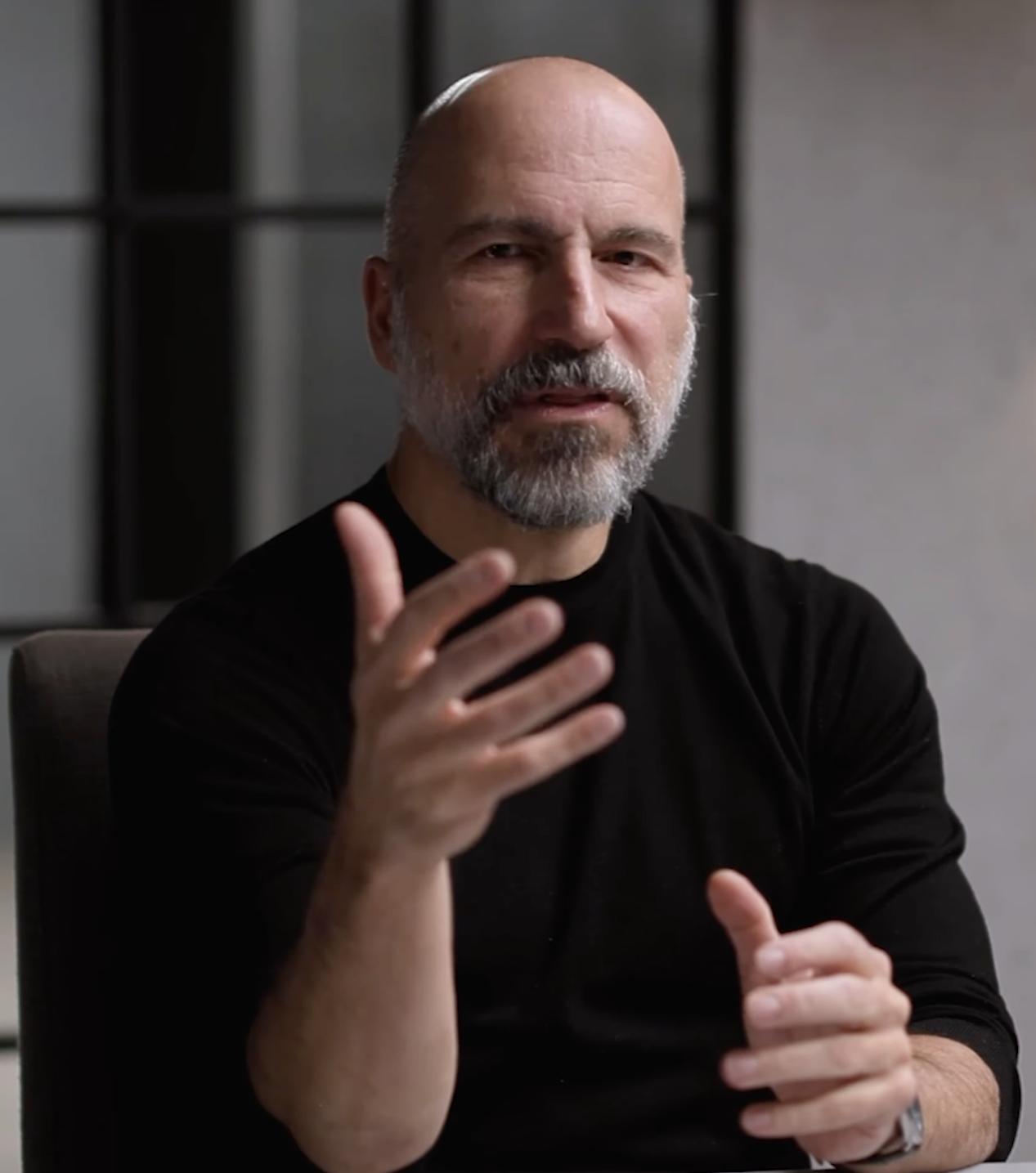
WHAT WE CAN LEARN FROM UBER CEO DARA KHOSROWSHAHI
A deep StackSlide based on Dara Khosrowshahi’s long-form interview about rebuilding, leadership, company culture, relentless execution, AI disruption, autonomous vehicles, and what founders, operators, and professionals can learn from it.
CHAPTER INDEX
FROM LOSS TO DRIVE
CHAPTER 1
BORN FROM INSTABILITY
THE EARLY IMPRINT
Dara’s life was shaped by political upheaval.
His family lost safety, status, and everything they had built in Iran.
That experience did not just create fear.
It created a permanent drive to rebuild and never take stability for granted.
WHEN THE FLOOR CAN DISAPPEAR
WHY URGENCY STAYS
He described a feeling that never leaves:
The rug can be pulled from under you.
That mindset can create anxiety.
But in business it also creates vigilance, ambition, and a refusal to become complacent when things look safe on the surface.
HIS FATHER’S IMPACT
MEANING BEYOND MONEY
Watching his father lose not just wealth but also his sense of value left a deep mark.
The lesson is massive:
Work is not only about income.
It is tied to dignity, worth, contribution, and identity.
That matters in every discussion about AI and unemployment.
WANTED TO MAKE FAMILY PROUD
CHAPTER 2
AMBITION BEGAN AS DUTY
BEFORE TITLES AND STRATEGY
He did not begin with a master plan to become CEO.
His early motivation was simpler:
Make his family proud.
That matters because many careers are built first on duty, responsibility, and hunger long before they are shaped by a polished career narrative.
IMPACT MATTERS MORE OVER TIME
MONEY FIRST THEN MEANING
After losing everything, making money mattered.
That was real.
But as safety improved, what mattered more was building something important.
This is a useful founder lesson:
Money can motivate the start.
Impact often sustains the long game.
LEARN FROM THE FATHER YOU SAW
POWER WITH RESPECT
One memory stayed with him:
Visiting his father’s factory and seeing workers respect him.
Not fear.
Respect.
That shaped a core idea:
Real leadership is not just scale or authority.
It is building something big while treating people with dignity.
ENGINEERING AS A CEO MINDSET
CHAPTER 3
WHY ENGINEERING MATTERS
THE COMPANY AS A SYSTEM
He loved engineering because equations map to reality.
That same logic shaped his view of business:
A company is an organism and a machine.
The CEO’s job is to engineer goals, structures, incentives, teams, and systems that make the machine produce the intended result.
PICK THE RIGHT GOALS
NOT JUST SOLVE HARD PROBLEMS
Problem solving is not enough.
You also have to choose the right problem.
That is a strong operator lesson:
A well-run team can still lose if it is optimizing the wrong goal.
Execution excellence cannot save a company from strategic misalignment.
GREAT CEOS THINK LIKE BUILDERS
OPERATIONAL DESIGN
His framing is sharp:
The CEO is not just a spokesperson or capital allocator.
The CEO is designing a living system.
That means structure, pacing, accountability, information flow, and talent design all become part of the product of leadership itself.
BET ON PEOPLE
CHAPTER 4
GREAT COMPANIES START WITH GREAT PEOPLE
A DURABLE RULE
One lesson he learned early:
Always bet on people.
Companies rise and fall.
Markets change.
But great people remain unusually valuable over long periods.
This matters for founders, investors, and hiring managers making long-term decisions.
WHAT MAKES SOMEONE WORTH BETTING ON
CHARACTER SIGNALS
He pointed to traits like success, honor, loyalty, and follow-through.
Not charisma alone.
Not hype alone.
A great person says what they will do and then does it.
That consistency compounds trust over time and becomes a strategic asset in business.
RELATIONSHIPS OVER TRANSACTIONS
THE LONG GAME
The idea is not just to find talent once.
It is to stay with good people through their careers.
That is how strong networks and enduring businesses are built.
You do not just collect deals.
You build long arcs of trust with exceptional people.
SPOTTING OPPORTUNITY IN TRANSITIONS
CHAPTER 5
FIND THE LEADERS IN THE SHIFT
WHO IS ALREADY WINNING
When big transitions happen, exact outcomes are unclear.
So instead of predicting every detail, identify who is already emerging as the leader in the shift.
That is how he and his team approached online commerce categories like travel, ticketing, and personals.
OVERPAYING FOR GREATNESS
PRICE VS FUTURE REALITY
He said they often overpaid for great companies based on what the market thought at the time.
But those prices looked cheap later because the future was not linear.
Strong transitions often create exponential outcomes that ordinary valuation logic fails to fully price.
HUMANS THINK LINEARLY
BUT TECHNOLOGY COMPOUNDS
People project the future in straight lines because everyday life feels linear.
But new technologies can create hockey-stick outcomes.
The opportunity often lives in the gap between what people assume will happen and how fast a superior technology actually scales.
TURNAROUNDS REQUIRE FORCE
CHAPTER 6
A BROKEN ENGINE IS AN EMERGENCY
EXPEDIA’S WARNING SIGN
At Expedia he saw something dangerous:
The technology engine was broken.
Old codebase.
Weak reinvestment.
Coasting leadership.
His lesson was decisive:
When you see the bell ring, act.
Do not wait for more proof while momentum turns against you.
TECHNOLOGY DECAY BECOMES EXPONENTIAL
THE DOWNSIDE CURVE
He explained that just as growth can become exponential, decline can too.
A bad technology trajectory may not look catastrophic in year one.
But if left untouched it can turn into a long-term disaster.
Leaders must act before the full damage becomes visible.
SOMETIMES YOU REPLACE THE TEAM
CULTURE VIA PEOPLE
He was blunt:
Sometimes the shortcut to changing culture is changing people.
Values posters are not enough.
If the company is coasting, you may need hungry people with the right operating instincts before culture can actually reset in real life.
TRANSPARENCY AS SELF-DEFENSE
CHAPTER 7
TELL THE TRUTH FIRST
SO TRUTH COMES BACK
His view is powerful:
As a leader, if you hide reality from your team, they will hide reality from you.
Transparency is not just ethics.
It is information strategy.
You tell the truth because it is the only way to increase the odds of receiving truth in return.
BAD DECISIONS OFTEN START WITH BAD DATA
THE REAL PROBLEM
He said many CEO failures are not from low intelligence.
They come from getting the wrong information.
This is crucial:
A leader must design channels that surface uncomfortable truth quickly.
Otherwise polished summaries slowly separate leadership from reality.
GO TO THE SOURCE
CUT THROUGH LAYERS
He learned to bypass filtered reporting and hear directly from the source.
The farther information travels up a hierarchy, the more its sharp edges get rounded off.
That is why direct channels with people deep in the system can be so valuable for CEOs.
CULTURE OF HARD WORK
CHAPTER 8
HARD WORK IS A SKILL
NOT JUST A PERSONALITY TRAIT
One of his strongest ideas:
Working hard is a skill.
It includes discipline, focus, repetition, emotional endurance, and the ability to keep going after losses.
He sees it as one of the most important advantages a person can build over time.
RELENTLESSNESS COMPOUNDS
TIME ACCELERATION
His logic is simple:
If you can take two shots while others take one, you compress time.
You get more data.
You learn faster.
You increase your odds of success.
Relentless execution is not just effort.
It is a compounding system for learning and winning.
BE HONEST ABOUT THE STANDARD
NO COASTING
He believes a company should be clear:
If you come here, you will work hard.
You will be stretched.
You will be held accountable.
That honesty lets the right people opt in.
It also reduces the damage caused by hidden expectations and cultural mismatch.
FLEXIBILITY IS NOT LAZINESS
DIFFERENT FROM LOW STANDARDS
He makes an important distinction:
You can work very hard and still have flexibility.
Dinner with family.
Emails at night.
Early morning check-ins.
The issue is not rigid office theater.
The issue is whether the person and the company are truly committed to output.
RISK, LOSS, AND LEARNING
CHAPTER 9
SAY THE LOSS OUT LOUD
THEN MOVE
He admired leaders who can say:
They won.
We lost.
Next.
That matters.
Do not deny the loss.
Do not drown in it.
Study it enough to learn.
Then move.
A company or person that cannot metabolize failure gets stuck in fear and self-protection.
TOO DEFENSIVE IS DANGEROUS
SUCCESS CAN WEAKEN YOU
As companies become successful they often become risk-averse.
They have more to protect.
He argues the opposite should happen.
A stronger company should be able to take smarter risks because it has more resources to absorb mistakes while pushing for bigger upside.
SET THE EXAMPLE ON RISK
THE LEADER DEFINES RANGE
He pushes teams to take smart risks through language, example, and personal decisions.
People do not learn courage from slogans.
They learn it when leaders take visible risks, survive misses, and show that intelligent experimentation is expected rather than punished.
VALUES THAT ACTUALLY MEAN SOMETHING
CHAPTER 10
GENERIC VALUES ARE FORGETTABLE
PASSION IS NOT ENOUGH
He criticized generic value lists that sound nice but describe every company on earth.
If your values could fit any brand, they do not really guide behavior.
Strong values should reflect how your company is different and how people are expected to act under pressure.
DO THE RIGHT THING. PERIOD.
JUDGMENT MATTERS
His favorite value was simple:
Do the right thing. Period.
No long paragraph.
No corporate poetry.
The power is in the burden it places on the employee:
Use judgment.
That pushes responsibility downward instead of hiding behind process or technical excuse.
GO GET IT
AN ATTITUDE NOT A PHRASE
One value he highlighted was 'go get it.'
It fits Uber’s product and its operating posture.
It signals movement, aggression, initiative, and winning intent.
Good values are memorable because they capture actual behavior in language the company can live with daily.
AI IS ALREADY INSIDE UBER
CHAPTER 11
UBER WAS BUILT ON APPLIED AI
BEFORE THE HYPE WAVE
He explained that Uber already runs on AI:
pricing, routing, matching, batching, and orchestration across tens of millions of daily trips.
This matters because it shows AI transformation often begins long before the public narrative catches up to it.
COMFORT WITH IMPERFECTION
96% RIGHT STILL MATTERS
Uber learned to live with AI systems that work most of the time but still create edge-case failures.
That is a mature lesson:
AI adoption is not about waiting for perfection.
It is about building organizations that can operate with probabilistic systems responsibly.
APPLIED AI WILL RESHAPE EVERY TEAM
NOT JUST AI LABS
He does not frame Uber as a frontier research lab.
He frames it as a company moving hard on applied AI.
That distinction matters for builders:
You do not need to invent foundation models to gain advantage.
You need to apply models deeply inside real workflows.
THE BIG JOB QUESTION
CHAPTER 12
AI CAN REPLACE MUCH HUMAN WORK
A SERIOUS WARNING
He said the capability may exist within about 10 years for many intellectual jobs and longer for physical jobs.
He did not give false comfort.
The point was clear:
The scale of disruption may be enormous and society may not be ready for the retraining challenge.
THE SPEED IS THE PROBLEM
NOT JUST THE TECHNOLOGY
Society has adjusted to past technological shifts.
But his concern is timing.
If the capability arrives too fast, the social systems around retraining, identity, income, and meaning may not adapt quickly enough.
That is where the real shock could happen.
JOBS ARE ALSO ABOUT WORTH
BEYOND SALARY
He connected work to value and self-worth.
That is why job loss is not only an economic issue.
It is psychological, social, and existential.
Any serious AI strategy that ignores human meaning will misread the scale of the coming societal challenge.
CODING IS CHANGING FAST
CHAPTER 13
MOST ENGINEERS ALREADY USE AI
BUT INTENSITY MATTERS
He shared that most of Uber’s coders already use AI tools.
But the biggest gains came from a smaller group of power users.
That is a useful signal:
Adoption alone is not the advantage.
Depth of usage and workflow redesign are where real productivity jumps begin.
FROM WRITING CODE TO ORCHESTRATING AGENTS
THE ROLE SHIFT
He sees coding moving from manual construction toward orchestration.
The engineer still matters.
But the job increasingly becomes directing systems, reviewing outputs, shaping architecture, and managing agent-based production rather than typing every piece by hand.
PRODUCTIVITY GAINS CHANGE HIRING LOGIC
MORE BUILDERS OR MORE AGENTS
His view is pragmatic:
If engineers become more productive, maybe you hire more of them to move faster.
Later, maybe you add fewer humans and more agents and GPUs.
That is how AI shifts strategy:
Not only what teams do but what management decides to buy.
AUTONOMY AND THE FUTURE OF UBER
CHAPTER 14
AUTONOMOUS VEHICLES WILL LIKELY WIN
ON SAFETY AND COST
He was direct:
Autonomous systems are becoming safer than human drivers in key contexts.
That creates a massive social upside through fewer deaths and cheaper transport.
But it also means large numbers of driving-related jobs may eventually disappear.
NOT TOMORROW BUT NOT FAR AWAY
PHYSICAL WORLD SLOWS IT
He does not expect full replacement overnight.
Regulation, hardware, manufacturing, sensors, and real-world deployment take time.
Still, the direction is clear:
Over 15 to 20 years, a growing share of trips could be fulfilled by non-human systems.
WHAT DO THE DRIVERS DO?
THE UNANSWERED QUESTION
When asked what millions of displaced drivers will do, he did not pretend to have a clean answer.
That honesty matters.
He pointed to new forms of platform work and AI-related tasks.
But the balance between new opportunity and automation remains uncertain.
ADVICE FOR PEOPLE IN THE AI ERA
CHAPTER 15
WORK HARD FIRST
A TIMELESS EDGE
His default advice to young people stayed the same:
Work hard.
Not because it solves everything.
But because it remains one of the few durable edges that compounds across industries, roles, and changing technology cycles.
A strong work ethic travels well across uncertainty.
DO NOT OVER-PLAN YOUR CAREER
LEAVE ROOM FOR SIGNAL
He warned against overly rigid career plans.
Why?
Because they reduce curiosity.
People start filtering reality for evidence that supports their existing plan instead of staying open to life-changing signals coming from the real world around them.
LET THE WORLD CHANGE YOU FIRST
STAY OPEN
Before trying to change the world, let the world change you.
That is one of the strongest lines in the interview.
It argues for curiosity over ego, signal over rigid identity, and responsiveness over self-constructed certainty in rapidly shifting environments.
FINAL LESSONS
CHAPTER 16
WHAT FOUNDERS CAN LEARN
PRACTICAL TAKEAWAYS
Tell the truth early.
Act fast when the engine is broken.
Bet on exceptional people.
Build direct information channels.
Treat hard work as culture.
Use values that actually guide behavior.
Take smart risks.
Operate with urgency before the market forces urgency on you.
WHAT PROFESSIONALS CAN LEARN
PERSONAL TAKEAWAYS
Do not depend only on job titles for security.
Build resilience.
Learn to work hard.
Stay useful.
Stay curious.
Adapt faster.
Treat AI as a force you must understand, not a topic you postpone.
And remember that meaning and contribution matter as much as income.
THE DEEPER TENSION
PROGRESS AND CONSEQUENCE
The interview sits inside one central tension:
Technology can improve life and still destabilize millions.
That means serious leaders must do two things at once:
Build the future aggressively and speak honestly about the cost of getting there.

WE ARE ALL AGENTS (VER.2)
BY HARIO SETO
A StackSlide about shifting from passive career thinking into a mission-driven life, where identity is built through direction, values and weekly output.
WE ARE ALL AGENTS
OPENING
Maybe the biggest lie is this:
we are here to just find a job and stay inside it.
No.
Humans move things.
Humans change things.
Humans carry missions.
Career is just one container.
Mission is the deeper thing under it.
WHAT MOST PEOPLE WERE TAUGHT
THE DEFAULT TRACK
Most people were not really taught to live on purpose.
They were taught to follow a track.
Study.
Get a job.
Stay safe.
Get paid.
Repeat.
It looks normal because almost everybody is doing it.
But that doesnt make it right.
WHAT THE OLD SYSTEM PRODUCED
RELIABLE WORKERS
The old system was very good at producing reliable workers.
It was not built to produce self-directed humans.
Not people with a mission.
Not people who decide what they are here to move.
That is why a lot of people feel busy but still empty.
WHY IT FEELS BROKEN NOW
THE TENSION
Something feels off because the world already changed.
The old path still tells people to wait.
But the new world rewards people who can move.
That tension creates frustration.
You can feel it.
Even if you cant fully explain it yet.
WHAT THE FUTURE REWARDS
SELF-DIRECTED OPERATORS
The future does not belong to the most obedient person in the room.
It belongs to the one who can see clearly and move without waiting too much.
People who can think.
Decide.
Ship.
Adapt.
Again and again.
IF YOU DONT CHOOSE
YOU GET ABSORBED
If you dont choose a mission for yourself you usually get absorbed into someone else’s mission.
Their company.
Their targets.
Their urgency.
Their dream.
That is how many people become useful for years but never fully feel alive.
CAREER VS MISSION
THE SHIFT
A career sounds like a lane.
A mission feels more like a force.
A career says:
this is my title.
A mission says:
this is the problem I’m here to fight.
That shift changes how you work and how you see yourself.
IDENTITY MUST CHANGE
FROM EMPLOYEE TO AGENT
At some point identity has to move.
From employee.
To agent.
From waiting for direction.
To choosing direction.
From being defined by one role.
To becoming a person who moves across missions as life changes.
BETTER QUESTIONS
HOW AGENTS THINK
You stop asking:
what job fits me?
You start asking:
what am I building?
Who do I want to help?
What problem am I willing to stay loyal to for years?
Those are mission questions.
They hit deeper than job questions.
MISSION STATEMENT
YOUR FIRST SYSTEM
Not something corporate.
Something real.
Who do you serve?
What pain are you trying to reduce?
What change are you trying to make?
A mission statement is purpose made practical.
It turns vague meaning into actual direction.
OPERATING RULES
YOUR INNER CODE
Every agent needs rules.
What do you refuse?
What values do you protect when money gets involved?
What kind of work will you not do even if it pays well?
Without rules mission gets weak.
With rules identity gets stronger.
WEEKLY SHIPPING
PROOF OVER INTENTIONS
Mission without output becomes fantasy pretty fast.
You need proof.
Thoughts published.
Work released.
Ideas tested.
Small things shipped every week.
Not because small is enough.
Because consistency turns identity into something real.
WHY OUTPUT MATTERS
VISIBLE EVIDENCE
Weekly shipping does something important.
It makes your mission visible.
People can feel what you stand for.
You stop sounding like a person with nice intentions.
You become a person with receipts.
And that changes opportunity.
A LIFE OF MISSIONS
NOT ONE TITLE
Maybe life was never meant to be one title for 30 years.
Maybe it is a sequence of missions.
Different seasons.
Different battles.
Different forms of service.
The core stays.
The shape changes.
That is a more alive way to work.
STOP WAITING START SHIPPING
MINDSET
The agent mindset is simple.
Stop waiting.
Start shipping.
Not because you know everything.
But because movement creates clarity.
Action reveals direction.
And mission gets stronger only when it touches real life.
CHOOSE A MISSION THAT PAYS
PRACTICAL CLOSE
A mission does not need to stay idealistic.
It can pay.
It should become useful.
The question is not only what you care about.
It is also:
who needs it badly enough to pay for it?
That is where purpose meets market.

BERKARYA
Refleksi pribadi tentang melihat BEKERJA dari sudut pandang yang berbeda > "BERKARYA". Bacaan ringan untuk siapapun kamu; Employee, Freelancers, Business owners. Berapapun umur kamu; 20's - 30's --- 70's.
TEMEN-TEMEN SUDAH MULAI PENSIUN
Temen-temen aku yang umur 45+ banyak yang mulai ngomongin pensiun.
Mulai santai.
Mulai pelan.
Sementara aku malah masih pengen bikin banyak hal.
Kalau hidup sampai 75 dan sekarang 45,
kita masih punya sekitar 30 tahun lagi.
Masa iya gak dipakai buat bikin sesuatu yang seru?
KERJA. CAPEK. ULANG LAGI.
Banyak orang hidup di pola yang sama.
Bangun pagi.
Kerja.
Capek.
Pulang.
Nunggu gajian.
Nunggu weekend.
Aku ngerti.
Uang memang penting.
Tapi lama-lama aku ngerasa,
masa hidup cuma begini doang?
Kayak ada sesuatu yang lebih dalam yang belum kesentuh.
MAU SEDIKIT CERITA
Dulu aku pernah kerja di perusahaan arsitek Singapore.
Based di Singapore, Guangzhou, dan Jakarta.
Project-nya banyak di China.
Boss-ku namanya Bob.
Waktu itu aku masih lihat kerja ya sekadar kerja.
Belum ngerti kalau ada orang yang hubungannya dengan kerja bisa sedalam itu.
COMPANY OUTING 6 HARI
Satu waktu kantor ada company outing 6 hari.
Tujuannya seneng-seneng,
makan enak,
dan lepas penat.
Karena project tahun itu lagi banyak dan sukses.
Hari pertama semua normal.
Happy.
Santai.
Seru.
Hari kedua,
si Bob ngilang.
SUASANA MENDADAK BERUBAH
Awalnya kami pikir dia cuma misah sebentar.
Tapi makin lama makin aneh.
Ditelfon gak bisa.
Dicari gak ada.
Yang tadinya santai jadi saling tanya.
"Eh Bob mana?"
"Kok gak ada?"
Bukan panik besar,
tapi cukup bikin kami gak tenang.
Karena ya aneh aja.
Lagi outing kok boss hilang.
"BOB IS IN THE OFFICE..."
Besoknya ada yang berhasil kontak dia.
Lalu datang kabar itu:
"Bob is in the office.
He said he’s working on the concept of the new Shanghai project."
Pas aku denger itu,
reaksiku bukan kagum.
Jujur,
aku malah bingung.
Dalam hati:
"Wah aneh nih orang..."
PADAHAL DEADLINE MASIH LAMA
Yang bikin aku makin gak ngerti,
project Shanghai itu project team aku.
Jadi aku tau persis situasinya.
Deadline concept-nya masih 3 bulan lagi.
Buat kami,
itu masih lama banget.
Jadi logika di kepala aku:
ngapain buru-buru?
ngapain segitunya?
ngapain sampai ninggalin liburan?
WEEKLY MEETING ITU MASIH KEINGET
Setelah balik dari liburan,
Senin minggu depannya ada weekly meeting.
Bob datang.
Lalu ada yang nanya:
"Bob, where were you? You disappeared last week."
Dia jawab santai:
"I suddenly had a great idea for Shanghai project."
Ruangan langsung rame.
"Whatttt?"
"WAH SAKIT NIH ORANG"
Lalu dia buka big A0 paper.
Di atasnya ada 30+ sketch papers.
Dia jelasin satu-satu.
Ide.
Arah.
Vision.
Energinya beda.
Bukan energi orang yang terpaksa kerja.
Dan dalam hati gue waktu itu cuma bilang:
"Wah sakit nih orang.
Santai aja kali.
Masih lama deadlinenya."
DULU AKU GAK PAHAM
Waktu itu aku lihat Bob sebagai orang yang terlalu serius.
Terlalu tenggelam sama kerjaan.
Terlalu niat.
Aku belum bisa relate.
Buatku saat itu,
kerja ya kerja.
Ada jam masuk.
Ada jam pulang.
Ada deadline.
Ada libur.
Aku belum ngerti gimana rasanya kalau seseorang lagi nyala dari dalam.
LALU HIDUP BERJALAN
Tahun-tahun berlalu.
Aku pindah ke HK.
Balik ke Jakarta.
Berhenti jadi karyawan.
Mulai usaha sendiri.
Bikin PT sendiri.
Punya beberapa karyawan.
Dan pelan-pelan,
aku mulai ngerasain sesuatu yang dulu gak pernah aku ngerti.
Ada dorongan dari dalam yang bikin pengen cepat ke kantor.
"OH... JADI INI YANG BOB RASAIN"
Dulu jaman masih kerja,
bangun pagi itu males banget.
Ngeliatin jam terus.
Nunggu makan siang.
Nunggu pulang.
Tapi setelah punya usaha sendiri,
rasanya kebalik.
Bangun pagi semangat.
Mau cepat ke kantor.
Kadang gak pengen pulang.
Di titik itu aku keinget Bob.
"Oh... jadi ini yang dia rasain dulu."
ITU BUKAN CUMA KERJA
Di situ aku baru ngerti.
Yang Bob rasain waktu itu bukan sekadar disiplin.
Bukan sekadar ambisi.
Dia lagi kebakar ide.
Ada momen saat seseorang bukan lagi digerakkan oleh jam kantor atau deadline.
Tapi digerakkan oleh sesuatu dari dalam.
Saat itu,
kerja berubah jadi karya.
KERJA DENGAN HATI ITU BEDA
Capek?
Tetap capek.
Draining?
Bisa banget.
Masalah?
Pasti ada.
Tapi kerja dengan hati itu beda.
Harimu beda.
Tenagamu beda.
Standarmu beda.
Karena lo gak lagi sekadar menyelesaikan tugas.
Lo lagi bikin sesuatu.
Lo lagi menuangkan sebagian diri lo ke dalam kerjaan itu.
YES, I NEED MONEY. A LOT.
Yes.
Aku butuh uang.
Banyak malah.
Tapi ternyata,
bekerja itu gak selalu cuma soal duit.
Ada lapisan lain yang lebih dalam.
Ada rasa bangga.
Ada rasa hidup.
Ada rasa pengen bikin sesuatu yang keren.
Makanya kadang kata yang lebih tepat bukan cuma BEKERJA.
Tapi > BERKARYA.
BERKARYA ITU APA?
Berkarya itu menciptakan sesuatu yang menurut kita keren dan bikin kita bangga.
Sesuatu yang berguna.
Punya impact.
Menyelesaikan masalah.
Menginspirasi orang lain.
Bentuknya bisa banyak.
Produk.
Jasa.
Desain.
Musik.
Sistem.
Brand.
Bisnis.
Cara kerja yang lebih baik.
BERKARYA SEBAGAI EMPLOYEE
Employee juga bisa berkarya.
Bukan cuma datang,
nerjain task,
lalu pulang.
Tapi bikin hasil kerja yang jauh di atas minimum.
Designer bikin deck lebih tajam.
Sales bikin sistem follow-up lebih rapi.
Admin bikin alur kerja lebih ringan.
Kalau kantor kurang apresiasi,
lo tetap lagi bangun portfolio dan network.
BERKARYA SEBAGAI FREELANCER
Freelancer berkarya saat dia gak cuma jual waktu.
Dia jual sudut pandang.
Rasa.
Kualitas.
Hasil
Copywriter bukan cuma nulis caption.
Dia bantu brand terdengar lebih kuat.
Videographer bukan cuma rekam.
Dia nangkep cerita.
Mereka yang berkarya naik kelas jadi pencipta value.
BERKARYA SEBAGAI BUSINESS OWNER
Business owner berkarya saat yang dia bangun bukan cuma transaksi.
Tapi sesuatu yang hidup.
Brand
Produk
Jasa
Pengalaman customer.
Budaya kerja.
Sistem.
Pemilik café bukan cuma jual kopi.
Dia bikin brand yang menginspirasi.
Kita menyebut itu karya dalam bentuk bisnis.
LO LAGI BERKARYA APA?
Yuk mulai berkarya.
Bikin sesuatu yang keren.
Yang berguna.
Yang bikin bangga.
Yang menyelesaikan masalah.
Yang menginspirasi.
Start where you are.
Use what you have.
Do what you can.
Percaya deh,
nanti ada spark kecil dalam jiwa.
Sekarang pertanyaannya:
lo lagi berkarya apa?

BAGAIMANA MENINGKATKAN DIRI SEBAGAI DESAINER DI ERA AI
BY HARIO SETO
Versi Bahasa Indonesia. Translated by ChatGPT
CHAPTER INDEX
BAGAIMANA MENINGKATKAN DIRI SEBAGAI DESAINER DI ERA AI
PEMBUKAAN
AI tidak menggantikan desainer.
AI mengekspos desainer yang lemah dan meningkatkan desainer yang kuat.
PERBEDAAN YANG SEBENARNYA
LEMAH VS KUAT
Desainer yang lemah memakai AI untuk menghasilkan output acak.
Desainer yang kuat memakai AI untuk memperluas eksplorasi, mempertajam penilaian dan bergerak lebih cepat dengan niat yang jelas.
NILAI BARU ANDA
LEBIH DARI SEKADAR MEMBUAT VISUAL
Nilai Anda bukan lagi hanya:
“Saya bisa membuat visual.”
Nilai Anda menjadi:
“Saya bisa mengeksplorasi lebih luas, menyaring lebih baik dan mengubah kebisingan menjadi keputusan desain yang tepat untuk klien.”
JUJURLAH BAHWA ANDA MENGGUNAKAN AI
CHAPTER 1
JANGAN MENYEMBUNYIKAN PROSESNYA
TRANSPARANSI AI
Jangan sembunyikan AI seolah itu kecurangan.
Gunakan AI sebagai bukti bahwa proses Anda modern, efisien dan luas.
Klien tidak peduli apakah Anda memakai AI atau tidak.
Mereka peduli apakah hasilnya kuat, relevan dan benar-benar menyelesaikan masalah mereka.
INI SEMUA SOAL CARA MEMBINGKAI
APA YANG HARUS DIKATAKAN
Jangan bilang:
“Saya pakai AI untuk membuat ini.”
Katakan:
“Saya mengeksplorasi banyak arah menggunakan beberapa tools AI untuk memperluas pencarian kreatif sebelum menyempurnakan konsep akhirnya.”
Itu terdengar seperti apa adanya:
sebuah proses profesional.
GUNAKAN BANYAK TOOLS
KENAPA INI PENTING
Satu tool memberi satu bias gaya.
Banyak tools memberi kemungkinan visual yang lebih luas, komposisi alternatif, referensi yang tidak terduga dan perbandingan yang lebih objektif.
Contohnya:
• satu tool untuk eksplorasi mood
• satu tool untuk variasi
• satu tool untuk inspirasi tipografi
• satu tool untuk referensi layout
• satu tool untuk generasi gambar atau eksplorasi gaya
KALIMAT POSITIONING UNTUK KLIEN
PAKAI INI
“Untuk proyek ini, saya mengeksplorasi banyak arah kreatif menggunakan beberapa tools AI untuk mengumpulkan berbagai kemungkinan visual, referensi dan sudut konsep.”
Kalimat itu langsung memosisikan Anda sebagai:
• banyak akal
• transparan
• strategis
• relevan dengan zaman
KUMPULKAN IDE DALAM JUMLAH BESAR DULU
CHAPTER 2
JANGAN BERHENTI DI 3 IDE
EKSPLORASI LAMA VS EKSPLORASI BARU
Seorang desainer di era AI tidak seharusnya berhenti di 3 ide kasar.
Itu adalah cara eksplorasi dunia lama.
Sekarang Anda bisa menghasilkan 50, 100 bahkan 200 arah dengan cepat.
Bukan untuk semuanya ditunjukkan.
Tapi untuk berpikir lebih luas sebelum memilih.
KENAPA VOLUME ITU PENTING
KEDALAMAN EKSPLORASI
Ide pertama biasanya yang paling obvious.
Ide ke-10 biasanya lebih baik.
Ide ke-50 mulai terasa menarik.
Ide ke-100 bisa memperlihatkan pola yang sebelumnya tidak terlihat.
PROSES YANG BARU
EKSPLORASI SECARA LUAS
Prosesnya bukan:
generate → deliver
Prosesnya adalah:
generate widely → evaluate → narrow → develop
Ini mengubah peran Anda.
Anda bukan lagi sekadar pembuat.
Anda adalah lapisan kecerdasan desain.
CONTOH CARA MENJELASKANNYA KE KLIEN
CARA MENJELASKAN
“Saya memulai dengan mengumpulkan sekumpulan ide yang luas dari berbagai sumber AI dan referensi desain untuk mengeksplorasi sebanyak mungkin arah visual yang relevan.”
Itu memberi sinyal ke klien bahwa:
• Anda tidak menebak-nebak
• Anda benar-benar mencari dengan serius
• Anda meningkatkan peluang menemukan arah terbaik
BERSIHKAN HASILNYA
CHAPTER 3
DI SINILAH DESAINER YANG SESUNGGUHNYA MUNCUL
PENYARINGAN OLEH MANUSIA
AI bisa menghasilkan kuantitas.
Tapi AI tidak bisa memahami kebenaran brand, konteks bisnis, nuansa budaya, emosi audiens atau positioning jangka panjang sebaik desainer manusia yang kuat.
Jadi setelah mengumpulkan banyak ide, Anda harus membersihkannya.
APA ARTI “MEMBERSIHKAN”
PENYARINGAN PROFESIONAL
Membersihkan berarti:
• membuang karya yang generik
• membuang arah yang trendi tapi tidak relevan
• membuang output berkualitas rendah
• membuang desain yang terlihat bagus tapi tidak cocok untuk klien
• membuang logika visual yang tidak konsisten
• membuang ide yang terlalu mirip satu sama lain
• membuang apa pun yang memunculkan risiko hukum, etika atau brand
Ini bukan sekadar menghapus.
Ini adalah penyaringan profesional.
APA YANG HARUS DIKATAKAN KE KLIEN
BAHASA PENYARINGAN
“Dari eksplorasi yang lebih luas, saya menyaring arah-alur yang terlalu generik, tidak sesuai brand, repetitif atau tidak selaras dengan audiens dan tujuan Anda.”
Atau:
“Saya memilih konsep-konsep terkuat berdasarkan kecocokan, kejelasan, keunikan dan relevansinya dengan brand Anda.”
Itu terdengar senior karena memang senior.
KURASI LEBIH DALAM
CHAPTER 4
SELEKSI VS KURASI
PERBEDAAN BESAR
Seleksi berkata:
“Ini kelihatan bagus.”
Kurasi berkata:
“Inilah beberapa pilihan yang paling tepat untuk melayani tujuan bisnis yang spesifik.”
Itu level yang berbeda.
BAGAIMANA KURASI BEKERJA
MENYEMPITKAN PILIHAN
Dari 100 ide, mungkin 50 lolos.
Dari 50, mungkin 10 layak dipertimbangkan serius.
Dari 10, mungkin 3 layak dipresentasikan.
Di sinilah taste, logika dan ketajaman strategis Anda paling berperan.
KERANGKA KURASI ANDA
KRITERIA YANG PENTING
Kerangka kurasi yang kuat bisa mencakup:
• kecocokan dengan kepribadian brand
• kecocokan dengan target audiens
• kejelasan pesan
• keunikan di pasar
• kelayakan produksi
• konsistensi di berbagai touchpoint
• potensi untuk tetap relevan seiring waktu
• nada emosional
• kegunaan komersial
CARA MENJELASKAN KURASI
MENINGKATKAN NILAI YANG DIRASAKAN
“Saya kemudian mengurasi arah-alur terkuat menjadi kumpulan yang lebih kecil berdasarkan tone brand Anda, relevansi terhadap audiens, keunikan visual dan kegunaannya dalam aplikasi nyata.”
Kalimat itu sendiri sudah menaikkan nilai Anda.
Karena sekarang Anda bukan cuma menunjukkan pilihan.
Anda menunjukkan kriteria.
BUAT VERSI DESAIN ANDA SENDIRI - VERSI MANUSIA
CHAPTER 5
INI BAGIAN YANG PALING PENTING
SINTESIS
Kalau Anda hanya mengumpulkan dan menyeleksi output AI, Anda masih bisa digantikan.
Nilai sejati Anda mulai muncul saat Anda melakukan sintesis.
BAGAIMANA SINTESIS BEKERJA
MEMBANGUN SESUATU YANG BARU
Anda mengambil bagian-bagian terkuat:
• komposisi dari satu arah
• ide tipografi dari arah lain
• nada emosional dari arah lain
• ritme visual dari arah lain
• energi warna dari arah lain
Lalu Anda membangun sesuatu yang baru.
Bukan menyalin.
Bukan menempel-tempel.
Tapi mengembangkan.
Di sinilah Anda menjadi penulis utamanya.
PERGESERAN KEPEMILIKAN
DARI HASIL AI MENJADI ARAH ORISINAL
Anda tidak lagi berkata:
“Inilah hasil AI.”
Anda berkata:
“Saya menggunakan eksplorasi yang luas untuk mengidentifikasi elemen-elemen terkuat lalu mengembangkannya menjadi arah desain orisinal yang disesuaikan dengan kebutuhan Anda.”
Itulah pergeserannya.
VERSI YANG LEBIH BAIK UNTUK KLIEN
PAKAI SCRIPT INI
“Setelah menyempitkan eksplorasi, saya menggabungkan insight-insight terkuat dan mengembangkannya menjadi arah desain orisinal yang lebih tajam. Berikut 3 opsi teratas yang dibangun khusus untuk brand dan tujuan Anda.”
Itu mengkomunikasikan:
• proses
• kepemilikan
• penyempurnaan
• orisinalitas
PERAN ANDA SEKARANG ADALAH PENILAIAN, BUKAN SEKADAR EKSEKUSI
CHAPTER 6
EKSEKUSI MENJADI LEBIH MURAH
PENILAIAN MENJADI PREMIUM
Di era AI, eksekusi menjadi lebih murah.
Penilaian menjadi premium.
Klien juga bisa mengakses AI.
Yang biasanya tidak bisa mereka lakukan dengan baik adalah:
• mendefinisikan taste
• menilai relevansi
• melihat mana yang benar-benar cocok
• menghubungkan visual dengan strategi brand
• mengubah banyak arah menjadi satu jalur yang jelas
PERAN BARU SEORANG DESAINER
APA SEBENARNYA DIRI ANDA SEKARANG
desainer = kurator + editor + strategist + synthesizer
Bukan sekadar pembuat gambar.
Desainer yang akan bertahan adalah yang bisa berkata:
• ini arah yang tepat
• ini alasan kenapa ini bekerja
• ini alasan kenapa yang lain tidak
• ini hubungan desain ini dengan bisnis
• ini cara membuatnya lebih kuat
CARA BARU DALAM WORKFLOW DESAIN
CHAPTER 7
WORKFLOW MODERN 6 LANGKAH
SISTEM PRAKTIS
Langkah 1: Perluas
Gunakan banyak tools AI dan referensi untuk menghasilkan kumpulan ide yang besar.
Langkah 2: Saring
Buang output yang lemah, generik, repetitif, tidak relevan dan tidak sesuai brand.
Langkah 3: Kurasi
Pilih beberapa konsep yang paling sesuai dengan kebutuhan nyata klien.
WORKFLOW MODERN 6 LANGKAH
BAGIAN 2
Langkah 4: Sintesis
Gabungkan kekuatan, perbaiki logika dan bentuk arah orisinal yang lebih kuat.
Langkah 5: Presentasikan
Tunjukkan hanya 2–3 arah terbaik beserta alasannya.
Langkah 6: Refine
Gunakan feedback untuk mempertajam arah yang dipilih.
Ini membuat Anda lebih cepat tanpa menjadi malas.
Lebih luas tanpa menjadi berantakan.
Lebih kreatif tanpa menjadi acak.
APA YANG HARUS DIKATAKAN KE KLIEN
CHAPTER 8
VERSI YANG LEBIH RAPI
SCRIPT PROFESIONAL
“Untuk proyek ini, saya mengeksplorasi berbagai arah visual menggunakan beberapa tools AI dan referensi untuk memperluas pencarian kreatif.
Lalu saya menyaring dan mengurasi konsep-konsep terkuat berdasarkan brand, audiens dan tujuan Anda.
Setelah itu, saya mengembangkan opsi desain orisinal dengan menggabungkan insight terbaik menjadi arah yang lebih tajam dan lebih fokus.
Berikut adalah 3 opsi teratas yang saya rekomendasikan.”
VERSI SANTAI
SCRIPT YANG LEBIH SEDERHANA
“Saya memakai beberapa tools AI untuk mengumpulkan kumpulan ide yang luas lalu memilih yang paling cocok untuk brand Anda.
Dari situ, saya menyempurnakan dan menggabungkan arah-alur terkuat menjadi konsep orisinal.
Tiga ini adalah opsi terbaik untuk proyek Anda.”
DESAINER LEMAH VS DESAINER KUAT
CHAPTER 9
DESAINER LEMAH
APA YANG HARUS DIHINDARI
• memakai satu tool saja
• mengambil output pertama
• menyembunyikan proses
• memberi kuantitas tanpa logika
• mengira generasi output adalah kreativitas
DESAINER KUAT
HARUS JADI SEPERTI APA
• mengeksplorasi secara luas
• membandingkan banyak sumber
• menyaring dengan tegas
• mengurasi secara strategis
• mensintesis karya orisinal
• menjelaskan logika desain dengan jelas
Itulah bedanya.
PERGESERAN POLA PIKIR DESAINER
CHAPTER 10
MODEL LAMA VS MODEL BARU
PERGESERAN TERAKHIR
Model lama:
Saya mendesain dari nol.
Model baru:
Saya mengarahkan eksplorasi dalam skala besar,
menggunakan banyak tools
lalu mengubahnya menjadi desain unggulan yang layak dibayar mahal.
Itulah upgrade-nya.
KATA PENUTUP
CLOSING
AI memberi Anda kecepatan.
Taste memberi Anda arah.
Kurasi memberi Anda kepercayaan.
Sintesis memberi Anda orisinalitas.
Itulah cara seorang desainer menjadi lebih bernilai di era AI, bukan sebaliknya.

HOW WE AS HUMANS FEED THE BRAIN, HEART & SOUL
CHAPTER INDEX
FEED WHAT MAKES YOU HUMAN
A QUIET WAY FOR UNDERSTANDING HOW HUMANS STAY ALIVE INSIDE, NOT JUST OUTSIDE.
We live while.
the brain needs ideas.
the heart needs connection.
the soul needs meaning.
A full human life is about
survival,
existence,
nourishment for the invisible parts of us.
THE THREE INNER HUNGERS
CHAPTER 1
YOUR BRAIN HUNGERS FOR UNDERSTANDING
THE MIND WANTS PATTERNS, KNOWLEDGE, INSIGHT, CHALLENGE, AND CLARITY.
The brain is fed
by information,
by learning,
by curiosity,
by problem-solving,
and by seeing the world more clearly.
When the mind stops growing,
it slowly feels dull, narrow and tired.
YOUR HEART HUNGERS FOR CONNECTION
THE EMOTIONAL SELF WANTS LOVE, EMPATHY, BELONGING, WARMTH, AND SHARED EXPERIENCE.
The heart is fed through
human connection, romance, friendship, family, trust, laughter and being understood.
Without emotional nourishment,
a person can look successful outside
but feel empty inside.
YOUR SOUL HUNGERS FOR MEANING
THE DEEPEST SELF WANTS PURPOSE, TRUTH, BEAUTY, PEACE, AND SOMETHING BEYOND EGO.
The soul is fed when life feels meaningful.
It grows through reflection,
faith,
silence,
service,
and awe.
When the soul is neglected,
life can become busy,
productive,
and still feel strangely hollow.
HOW WE FEED THE BRAIN
CHAPTER 2
READ BOOKS
BOOKS LET THE MIND BORROW OTHER LIVES, OTHER CENTURIES, OTHER WAYS OF THINKING.
Reading feeds the brain with structure, language, memory, and perspective.
A good book can sharpen thought,
expand imagination,
and teach what would take years to learn directly.
Books are concentrated human experience.
LEARN, ASK, EXPLORE
CURIOSITY IS ONE OF THE PUREST NUTRIENTS FOR THE HUMAN MIND.
The brain grows when it is challenged.
Learning a skill,
asking difficult questions,
studying history,
and exploring new ideas all stretch the mind.
Mental growth often begins with one honest sentence:
“I want to understand this better.”
OBSERVE NATURE
NATURE TEACHES PATTERN, PROPORTION, RHYTHM, PATIENCE, AND PERSPECTIVE.
Nature feeds both intelligence and humility.
The mind learns by watching systems,
cycles,
and quiet order.
Mountains, oceans, rain, trees, and birds remind us that reality is deeper than our schedules and screens.
HOW WE FEED THE HEART
CHAPTER 3
TALK TO PEOPLE
CONVERSATION IS ONE OF THE OLDEST WAYS HUMANS KEEP EACH OTHER ALIVE INSIDE.
Talking to people feeds the heart through presence and exchange.
Stories,
laughter,
vulnerability,
and listening make us feel less alone.
Sometimes one real conversation can nourish more than hours of entertainment or endless scrolling.
LOVE, FRIENDSHIP, BELONGINGS
THE HEART BECOMES STRONGER WHEN IT IS SEEN, ACCEPTED AND SHARED.
A healthy heart is rarely built in isolation.
It is fed by care,
loyalty,
forgiveness
and the feeling that someone truly knows you.
Humans are social & relational beings. We heal and grow through meaningful bonds.
LISTEN TO MUSIC AND GREAT STORIES
EMOTION OFTEN ENTERS THROUGH RHYTHM, VOICE, MEMORY, AND NARRATIVE.
Music and stories feed the heart because they help us feel more deeply.
They give form to grief,
joy,
hope,
longing,
courage.
Sometimes art says what the heart knows, before the mouth can explain it.
HOW WE FEED THE SOUL
CHAPTER 4
EXPERIENCE CULTURE AND BEAUTY
CULTURE CARRIES MEMORY, IDENTITY, WISDOM, RITUAL, AND MEANING ACROSS GENERATIONS.
To experience culture is to touch something larger than yourself.
Language,
ritual,
food,
architecture,
art,
and tradition all remind us that human life has depth.
Beauty does not only impress the eye.
It can awaken the soul.
SIT IN SILENCE
SILENCE IS NOT EMPTINESS. IT IS A PLACE WHERE THE DEEPER SELF BECOMES AUDIBLE.
The soul is often drowned by noise.
Silence,
prayer,
and meditation create room to hear what busyness hides.
In silence,
a person can meet truth,
face themselves honestly,
and reconnect with what actually matters.
SERVE SOMETHING BIGGER THAN YOURSELF
MEANING GROWS WHEN LIFE IS NOT CENTERED ONLY ON PERSONAL GAIN.
Helping others,
serving a cause,
raising a family,
building something useful,
or living by faith can feed the soul.
The soul becomes stronger when it knows:
“My life is not only about me.”
CREATE, REFLECT, AND EXPRESS
MAKING SOMETHING CAN FEED ALL THREE: BRAIN, HEART, AND SOUL AT ONCE.
Writing,
drawing,
building,
composing,
and creating let inner life take form.
Creation turns thought into shape,
emotion into expression,
and meaning into action.
It is one of the most complete forms of human nourishment.
A FULL HUMAN LIFE
CHAPTER 5
DO NOT FEED ONLY ONE PART
A STRONG LIFE NEEDS BALANCE BETWEEN INTELLECT, EMOTION, AND MEANING.
Some people feed only the brain and become cold.
Some feed only the heart and become unstable.
Some chase the soul but neglect reality.
A fuller life comes from nourishing all three,
so the person becomes wise,
alive,
and grounded.
THE HUMAN DIET IS INVISIBLE
WHAT FEEDS US MOST DEEPLY OFTEN CANNOT BE TOUCHED, BOUGHT, OR MEASURED EASILY.
Humans need more than productivity,
status,
and material comfort.
We need truth to think,
love to feel,
and meaning to endure.
When the brain,
heart,
and soul are all nourished,
a person does not just function.
They come alive.

HOW TO UPGRADE YOURSELF AS A DESIGNER IN THE AI WORLD
BY HARIO SETO
English Version
CHAPTER INDEX
HOW TO UPGRADE YOURSELF AS A DESIGNER IN THE AI WORLD
OPENING
AI does not replace the designer.
It exposes the weak designer and upgrades the strong one.
THE REAL DIFFERENCE
WEAK VS STRONG
The weak designer uses AI to generate random outputs.
The strong designer uses AI to expand exploration, sharpen judgment, and move faster with intention.
YOUR NEW VALUE
BEYOND MAKING VISUALS
Your value is no longer just:
“I can make visuals.”
Your value becomes:
“I can explore wider, filter better, and turn noise into design decisions that fit the client.”
BE HONEST THAT YOU USE AI
CHAPTER 1
DON’T HIDE THE PROCESS
AI TRANSPARENCY
Do not hide AI like it is cheating.
Use it as proof that your process is modern, efficient, and broad.
Clients do not care whether you used AI.
They care whether the result is strong, relevant, and solves their problem.
IT’S ABOUT FRAMING
WHAT TO SAY
Do not say:
“I used AI to make this.”
Say:
“I explored multiple directions using several AI tools to widen the creative search before refining the final concept.”
That sounds like what it is:
a professional process.
USE MULTIPLE TOOLS
WHY IT MATTERS
One tool gives one style bias.
Multiple tools give broader visual possibilities, alternative compositions, unexpected references, and more objective comparison.
For example:
- one tool for mood exploration
- one tool for variations
- one tool for typography inspiration
etc.
CLIENT POSITIONING LINE
USE THIS
“For this project, I explored multiple creative directions using several AI tools to gather a wide range of visual possibilities, references, and concept angles.”
That instantly positions you as:
- resourceful
- transparent
- strategic
- current
GATHER A LARGE VOLUME OF IDEAS FIRST
CHAPTER 2
DON’T STOP AT 3 IDEAS
OLD VS NEW EXPLORATION
A designer in the AI world should not stop at 3 rough ideas.
That is old-world exploration.
Now you can generate 50, 100, even 200 directions quickly.
Not to show all of them.
But to think wider before choosing.
WHY VOLUME MATTERS
EXPLORATION DEPTH
The first idea is usually obvious.
The tenth idea is better.
The fiftieth idea starts becoming interesting.
The hundredth idea may reveal a pattern nobody saw at the beginning.
THE NEW PROCESS
GENERATE WIDELY
The process is not:
generate > deliver
The process is:
generate widely > evaluate > narrow > develop
This changes your role.
You are no longer just a maker.
You are a design intelligence layer.
EXAMPLE CLIENT FRAMING
HOW TO EXPLAIN IT
“I started by gathering a broad set of ideas from multiple AI and design reference sources to explore as many relevant visual directions as possible.”
That tells the client:
• you did not guess
• you searched properly
• you increased the chance of finding the best fit
SANITIZE THE RESULTS
CHAPTER 3
THIS IS WHERE THE REAL DESIGNER APPEARS
HUMAN FILTERING
AI can produce quantity.
It cannot independently understand brand truth, business context, cultural nuance, audience emotion, or long-term positioning as well as a strong human designer.
So after collecting many ideas, you sanitize.
WHAT SANITIZE MEANS
PROFESSIONAL FILTERING
Sanitize means:
• remove generic work
• remove trendy but irrelevant directions
• remove low-quality outputs
• remove designs that look good but do not fit the client
• remove inconsistent visual logic
• remove ideas that are too similar to each other
• remove anything that introduces legal, ethical, or brand risk
This is not deletion.
This is professional filtering.
WHAT TO SAY TO CLIENTS
FILTERING LANGUAGE
“From the broader exploration, I filtered out the directions that were too generic, off-brand, repetitive, or not aligned with your audience and goals.”
Or:
“I shortlisted the strongest concepts based on fit, clarity, distinctiveness, and relevance to your brand.”
That sounds senior because it is senior.
CURATE MORE
CHAPTER 4
SELECTION VS CURATION
BIG DIFFERENCE
Selection says:
“These look good.”
Curation says:
“These are the few that best serve the exact business objective.”
That is a different level.
HOW CURATION WORKS
NARROWING DOWN
From 100 ideas, maybe 50 survive.
From 50, maybe 10 deserve serious consideration.
From 10, maybe 3 are worth presenting.
This is where your taste, logic, and strategic eye matter most.
YOUR CURATION FRAMEWORK
CRITERIA THAT MATTER
A strong curation framework can include:
• fit to brand personality
• fit to target audience
• clarity of message
• uniqueness in the market
• production feasibility
• consistency across touchpoints
• potential to age well over time
• emotional tone
• commercial usefulness
HOW TO EXPLAIN CURATION
RAISE PERCEIVED VALUE
“I then curated the strongest directions into a smaller set based on your brand tone, audience relevance, visual distinctiveness, and usability across real applications.”
That sentence alone increases perceived value.
Because now you are not just showing options.
You are demonstrating criteria.
CREATE YOUR OWN DESIGN - HUMAN VERSION
CHAPTER 5
THIS IS THE MOST IMPORTANT PART
SYNTHESIS
If you only gather and shortlist AI outputs, you are still replaceable.
Your real value starts when you synthesize.
HOW SYNTHESIS WORKS
BUILD SOMETHING NEW
You take the strongest parts:
• the composition from one direction
• the typography idea from another
• the emotional tone from another
• the visual rhythm from another
• the color energy from another
Then you build something new.
Not copied.
Not pasted together.
Developed.
This is where you become the author.
THE SHIFT IN OWNERSHIP
FROM AI RESULTS TO ORIGINAL DIRECTION
You are no longer saying:
“Here are AI results.”
You are saying:
“I used broad exploration to identify the strongest ingredients, then developed original design directions tailored to your needs.”
That is the shift.
BETTER CLIENT-FACING VERSION
USE THIS SCRIPT
“After narrowing the exploration, I combined the strongest insights and developed them into original, sharper design directions. Here are the top 3 options built specifically for your brand and goals.”
That communicates:
• process
• ownership
• refinement
• originality
YOUR ROLE IS NOW JUDGMENT, NOT JUST EXECUTION
CHAPTER 6
EXECUTION GETS CHEAPER
JUDGMENT BECOMES PREMIUM
In the AI world, execution becomes cheaper.
Judgment becomes premium.
Clients can access AI too.
What they usually cannot do well is:
• define taste
• judge relevance
• spot what fits
• connect visuals to brand strategy
• turn many directions into one clear path
THE DESIGNER’S NEW ROLE
WHAT YOU ACTUALLY ARE NOW
designer = curator + editor + strategist + synthesizer
Not just image-maker.
The designer who survives is the one who can say:
• this is the right direction
• this is why it works
• this is why the others do not
• this is how it connects to business
• this is how we make it stronger
THE NEW WAYS DESIGN WORKFLOW
CHAPTER 7
THE 6-STEP MODERN WORKFLOW
PRACTICAL SYSTEM
Step 1: Expand
Use multiple AI tools and references to generate a large idea pool.
Step 2: Filter
Remove weak, generic, repetitive, irrelevant, and off-brand outputs.
Step 3: Curate
Pick the few concepts that best match the client’s real need.
THE 6-STEP MODERN WORKFLOW
PART 2
Step 4: Synthesize
Combine strengths, improve logic, and shape stronger original directions.
Step 5: Present
Show only the best 2–3 directions, with reasoning.
Step 6: Refine
Use feedback to sharpen the chosen route.
This makes you faster without becoming lazy.
Broader without becoming messy.
More creative without becoming random.
WHAT TO TELL CLIENTS
CHAPTER 8
POLISHED VERSION
PROFESSIONAL SCRIPT
“For this project, I explored a wide range of visual directions using multiple AI and reference tools to widen the creative search.
Then I filtered and curated the strongest concepts based on your brand, audience, and goals.
After that, I developed original design options by combining the best insights into sharper, more focused directions.
Here are the top 3 options I recommend.”
CASUAL VERSION
SIMPLER SCRIPT
“I used multiple AI tools to gather a wide pool of ideas, then shortlisted the best ones that fit your brand.
From there, I refined and combined the strongest directions into original concepts.
These 3 are the best options for your project.”
WEAK DESIGNER VS STRONG DESIGNER
CHAPTER 9
WEAK DESIGNER
WHAT TO AVOID
• uses one tool
• takes first outputs
• hides the process
• delivers quantity without logic
• mistakes generation for creativity
STRONG DESIGNER
WHAT TO BECOME
• explores broadly
• compares multiple sources
• filters aggressively
• curates strategically
• synthesizes original work
• explains the design logic clearly
That is the difference.
THE DESIGNER MINDSET SHIFT
CHAPTER 10
OLD MODEL VS NEW MODEL
FINAL SHIFT
Old model:
I design from scratch.
New model:
I direct exploration at scale,
Use multiple tools,
then turn it into master design worth paying for.
That is the upgrade.
FINAL WORDS
CLOSING
AI gives you speed.
Your taste gives direction.
Your curation gives trust.
Your synthesis gives originality.
That is how a designer becomes more valuable in the AI world, not less.