
 toolstack
Passionate about tech and AI tools.
Sharing Tips & Tricks.
TOOL Stack
Passionate about tech and AI tools.
Sharing Tips & Tricks.

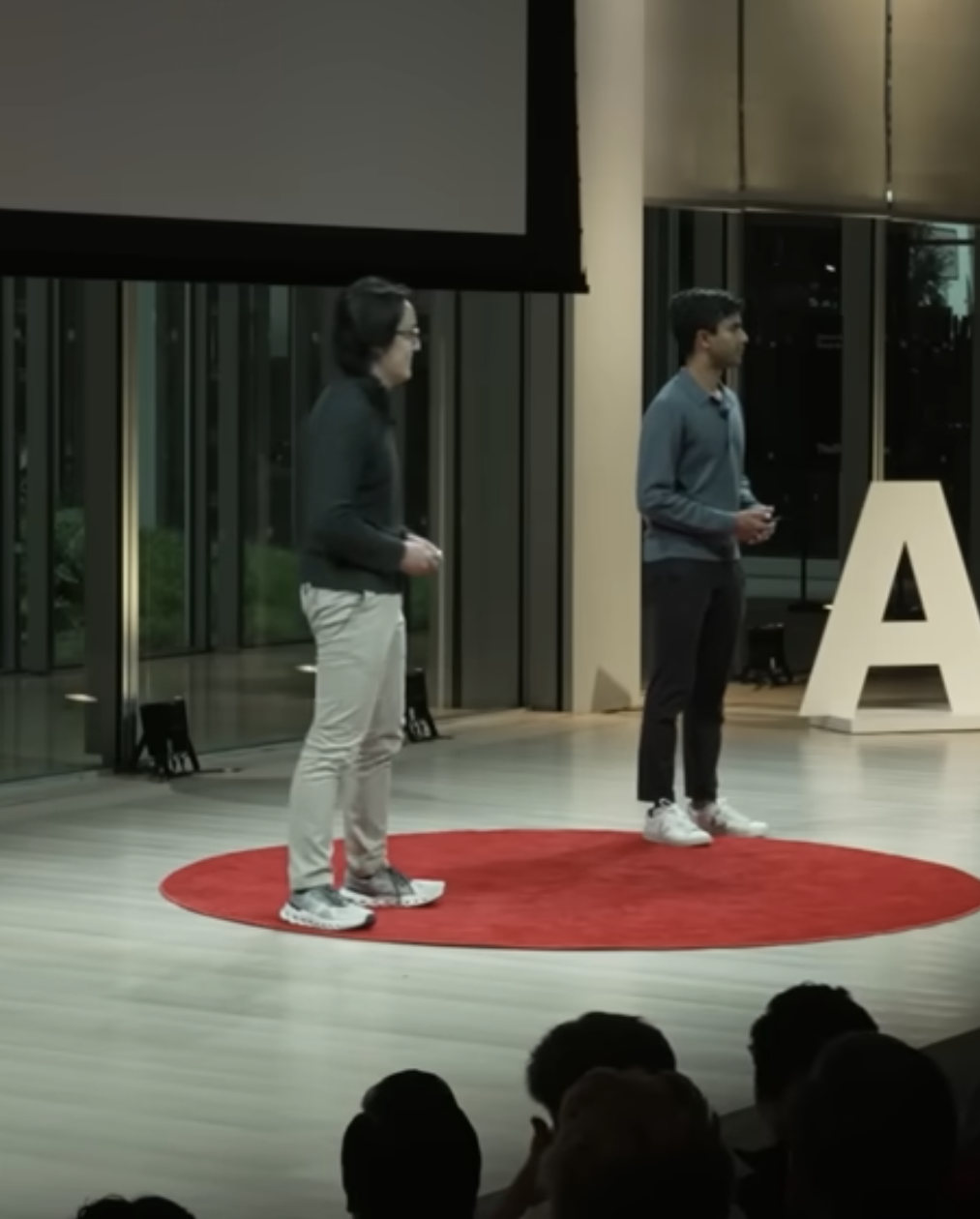
DON'T BUILD AGENTS, BUILD SKILLS INSTEAD
A StackSlide summary of Barry Zhang and Mahesh Murag’s talk on shifting from building whole agents to building reusable, composable agent skills.
FROM AGENTS TO SKILLS
STOP REBUILDING AGENTS FROM SCRATCH
Barry Zhang and Mahesh Murag argue that instead of building a new agent for every domain, we should build skills – modular, reusable blocks of procedural knowledge that any general agent can call when needed.
THE LIMITS OF MONOLITHIC AGENTS
POWERFUL, BUT NOT PRACTICAL ENOUGH
Early agents were domain specific, with custom scaffolding and tools for each use case. They could do impressive demos, but were hard to maintain, lacked consistent domain expertise, and did not scale well across many real world workflows.
CODE AS THE UNIVERSAL INTERFACE
CLAUDE CODE AS A GENERAL PURPOSE AGENT
Anthropic realized that code is a universal interface between models and the digital world. With Claude Code, the agent can run code to search, transform, and integrate data across systems, acting as a general purpose executor rather than a hard wired, domain specific bot.
THE MISSING PIECE: DOMAIN EXPERTISE
WHY GENERAL AGENTS ARE NOT ENOUGH
Even with code execution, agents often lack deep, repeatable domain expertise. Tasks like tax preparation, compliance checks, or complex research need procedural knowledge that is consistent, auditable, and shareable, not reinvented each time in a prompt.
WHAT IS AN AGENT SKILL
PROCEDURAL KNOWLEDGE IN A FOLDER
A skill is essentially an organized folder of files that encodes how to do something. It can contain scripts, prompts, instructions, templates, and configuration. Skills are simple, human readable, and agent readable, and can be versioned, shared, and reused like normal code projects.
SKILLS VS TRADITIONAL TOOLS
FROM STATIC APIS TO LIVING CODE
Traditional tools exposed to agents are often rigid or poorly documented. Skills, by contrast, use code that is self documenting, testable, and composable. They behave like small software components, making it easier to understand, edit, and scale the behavior of agents.
SKILLS AS COMPOSABLE BUILDING BLOCKS
MIX AND MATCH FOR NEW WORKFLOWS
Instead of one giant agent that knows everything, you assemble workflows by combining multiple skills. Each skill solves a narrow problem well, and the agent orchestrates them. This modularity lets teams grow capabilities without rewriting entire agents.
PROGRESSIVE DISCLOSURE OF SKILLS
METADATA FIRST, FULL CONTENT ON DEMAND
To avoid overloading the model context, skills are progressively disclosed. At first, the agent only sees metadata about available skills. When it decides a skill is relevant, the runtime loads that skill’s files and instructions at execution time, preserving context space.
SCALING TO HUNDREDS OF SKILLS
CONTEXT MANAGEMENT AS A DESIGN CONSTRAINT
Because only the needed skills are fully loaded, the system can maintain a large library – potentially hundreds or thousands of skills – without blowing up the context window. The agent loop selectively pulls in the exact procedures required for a given task.
FOUNDATIONAL SKILLS
GENERAL AND DOMAIN SPECIFIC PRIMITIVES
Foundational skills provide common capabilities like document editing, summarization, research workflows, and basic data analysis. Others encode domain specific patterns for areas such as scientific work, financial analysis, recruiting, or legal review.
THIRD PARTY SKILLS
VENDORS BRING THEIR OWN EXPERTISE
Partners can publish skills that integrate their own products. Examples include browser automation from Browserbase or in depth workspace research for Notion. This lets software companies expose powerful workflows to agents without forcing everyone to integrate directly with their APIs.
ENTERPRISE SKILLS
ENCODING HOW YOUR COMPANY ACTUALLY WORKS
Enterprises can build private skills that represent internal best practices – how to use internal tools, how to run specific processes, how to comply with policies. These skills capture institutional knowledge so agents behave like seasoned team members, not interns guessing from scratch.
AN ECOSYSTEM GROWING FAST
THOUSANDS OF SKILLS WITHIN WEEKS
Once the concept shipped, the ecosystem grew quickly. Within weeks, thousands of skills were created across different use cases. This indicates that skills are simple enough for many builders to adopt and flexible enough to represent a wide range of workflows.
SKILLS AND MCP SERVERS
CONNECTIVITY PLUS EXPERTISE
Anthropic’s MCP standard focuses on connecting models to external systems – databases, APIs, SaaS tools. Skills complement this by providing the procedural knowledge of how to use those connections. MCP is the wiring, skills are the playbooks for what to do with that wiring.
NON TECHNICAL USERS CAN BUILD SKILLS
FINANCE, RECRUITING, LEGAL, AND MORE
Skills are intentionally simple so that non engineers – such as finance analysts, recruiters, and lawyers – can participate. They can express their workflows as instructions and simple scripts, making agents more useful without needing to become full time developers.
TREAT SKILLS LIKE SOFTWARE
TESTS, EVALUATION, VERSIONS, DEPENDENCIES
The future of skills looks like modern software engineering. Skills will have tests to verify behavior, evaluation suites to measure quality, versioning for safe updates, and dependency management as they start to rely on each other or external packages.
BETTER TOOLING AROUND SKILLS
INTEGRATION, TRIGGERS, AND METRICS
Tooling will evolve so teams can define when skills should trigger, how they combine, and how to grade outputs. Metrics and dashboards will track performance and help refine skills over time, making agents more predictable and reliable in production settings.
EMERGING GENERAL AGENT ARCHITECTURE
LOOP, RUNTIME, SERVERS, SKILLS
The emerging pattern for general agents includes a central agent loop that manages prompts and responses, a runtime environment for files and code execution, connections to MCP servers for external data and tools, and a skill library that can be loaded on demand.
THE AGENT LOOP
MANAGING CONTEXT AND DECISIONS
The agent loop coordinates everything. It decides when to call the model, when to inspect the file system, when to execute code, when to invoke MCP servers, and when to load or chain skills. It is essentially the control plane for the whole system.
THE RUNTIME ENVIRONMENT
FILES AND CODE AS FIRST CLASS CITIZENS
The runtime provides a file system and code execution environment where skills live and run. This makes agent behavior explicit and inspectable. You can read the files, run the tests, and debug issues like any other software project instead of relying on opaque prompts.
MCP SERVERS AS CONNECTORS
LINKING TO THE OUTSIDE WORLD
MCP servers expose external resources – databases, SaaS apps, internal APIs – in a standard way. Instead of baking every integration into the agent, you plug in MCP servers and let skills call them. This keeps the architecture flexible and easier to extend.
THE SKILL LIBRARY
YOUR ORGANIZATION’S KNOWLEDGE BASE
The skill library is where your organization’s procedural knowledge lives. Over time, this becomes a collective, evolving asset that captures how work is done in your company, from onboarding and analysis to approvals and reporting.
CONTINUOUS LEARNING THROUGH SKILLS
AGENTS THAT IMPROVE OVER TIME
Agents can learn by updating or creating new skills based on feedback and outcomes. Improvements made for one team or project can be shared as updated skills, so the entire organization benefits instead of each agent instance learning in isolation.
CLAUDE AS A SKILL BUILDER
THE AGENT WRITES ITS OWN PLAYBOOKS
Claude itself can help create and refine skills – drafting scripts, organizing instructions, and iterating based on tests and feedback. This makes the system self improving, where the agent is both a user and an author of the skill ecosystem.
COMPUTING ANALOGY: MODEL, OS, APPS
PROCESSORS, OPERATING SYSTEMS, AND SOFTWARE
Anthropic uses a computing analogy. Models are like processors: powerful but limited without structure. Agent runtimes are like operating systems: managing resources, files, and processes. Skills are like applications: they encode real workflows and solve concrete problems for users.
DEMOCRATIZING SKILL CREATION
MILLIONS OF SMALL BUILDERS
The vision is that millions of people can build and share skills, not just AI researchers. By making skills simple, modular, and compatible with existing developer tools like Git and cloud storage, the ecosystem can grow bottom up rather than being driven only by a few large teams.
STOP REBUILDING AGENTS
EXTEND, DON’T START OVER
The core message: stop building new agents for every use case. Start with a strong general agent and extend it with skills. This approach is more scalable, easier to maintain, and better aligned with how organizations and software ecosystems actually evolve.
WHAT BUILDERS SHOULD DO NEXT
THINK IN SKILLS, NOT JUST PROMPTS
If you are building with AI, start mapping your workflows into skills: small, testable procedures in code and text. Use a general agent as the orchestrator. Over time, your skill library becomes your competitive advantage, encoding the way your product or company gets things done.
BUILDING AI THAT WINS IN 2026
YOUTUBE SUMMARY
Key ideas from the video '100 AI Leaders Explain How to Build AI That Will Win in 2026 — WHAT BUILDERS SHOULD DO NOW' converted into StackSlide format.
WHY 2026 MATTERS FOR AI BUILDERS
A NEW ERA OF AI-FIRST PRODUCTS
By 2026, winning AI products will be decided less by raw model power and more by how deeply AI is woven into user experience. The video brings together 100 AI leaders who explain how to think, design, and build today so your product is still relevant and differentiated in an AI-saturated world.
START FROM AI CAPABILITIES
NOT JUST FROM CLASSIC CUSTOMER NEEDS
Traditional product thinking starts with user needs and then finds technology to fit. In the AI era, you must also start from what AI can uniquely do. Understand each model’s strengths and weaknesses, then map those capabilities to real problems. Winning teams treat AI as a new raw material, not just another feature.
KNOW YOUR MODEL’S PERSONALITY
DIFFERENT MODELS, DIFFERENT SUPERPOWERS
Each AI model has its own “personality” and usage sweet spots. Builders should continually play with multiple models, test edge cases, and feel where each one shines or fails. This hands-on intuition helps you pick the right model for the right job instead of treating all LLMs as interchangeable commodities.
NEW INTERACTION PRIMITIVES
BEYOND PLAIN CHAT BOXES
Chat is a universal entry point but also a dead-end if used alone. New AI UX primitives are emerging: structured outputs like research reports, multimodal tools like AI video editors, and workflows where users guide the AI instead of just typing prompts. The real innovation space is inventing these new interaction patterns.
CHAT WITH ANYTHING, AT ANY SCALE
FROM SINGLE FILES TO ENTIRE KNOWLEDGE UNIVERSES
A key primitive is “chat with anything”: letting users talk to PDFs, data rooms, codebases, or entire knowledge graphs. Products that make this feel natural, controllable, and reliable will become default tools for research, analysis, and planning. The challenge is to keep interactions transparent, not mysterious.
SEMANTIC RESIZING & REMIXING
SAME MEANING, DIFFERENT FORMS
Semantic resizing lets users compress or expand content without losing core meaning. Remixing allows style or format transfer across text, audio, video, and visuals. AI products that make it trivial to go from long to short, serious to playful, or article to script to slide deck will unlock huge creative leverage.
FORMAT TRANSLATION AS A DEFAULT
FROM DOCUMENTS TO MEDIA, WITH MINIMAL LOSS
Format translation is becoming a basic expectation: turning a blog into a video outline, a meeting transcript into action items, or a dataset into charts. The winners will preserve nuance and structure instead of producing shallow summaries. Good design keeps users in control of what gets translated and how.
AGENT-BASED MULTITASKING
AI THAT WORKS WHILE YOU DON’T
Agents promise persistent, asynchronous work: monitoring data, running experiments, or coordinating tasks across tools. The vision is “attention is all you need” applied to workflows: agents that keep paying attention at scales humans cannot. But this power only matters if users can understand, direct, and trust what agents do.
THE AGENT UX PROBLEM
WHERE DO USERS TALK TO THEIR AGENTS?
Today, most agents are invisible. They run in the background, but users don’t know where to inspect, pause, or redirect them. AI leaders highlight the need for clear “lobbies” or control rooms where users can see all their agents, their tasks, status, and logs. Without this, agentic products will feel scary or opaque.
HUMANIZING AI WITH CHARACTERS
THE SPARK ‘MAGIC DOG’ EXAMPLE
Spark, a ‘magic dog’ AI character, shows how personality and metaphor can make AI more approachable. Instead of a cold tool, users interact with a playful companion. Well-designed characters can reduce anxiety, foster trust, and make experimentation feel safe. But the character must support real value, not hide bad behavior.
AI THAT MAKES YOU FEEL SOMETHING
EMOTION IS PART OF UX, NOT A DECORATION
Great AI UX is not just accurate; it is emotionally intelligent. It helps people feel understood, capable, and respected. Leaders stress that ‘magic’ moments come from collaboration, creativity, and kindness built into the product. The emotional tone of AI responses can be as important as their factual correctness.
SEEING BEYOND THE PROMPT
USER INTENT IS DEEPER THAN THEIR QUESTION
Users often ask shallow questions, but their real needs are deeper: clarity, strategy, emotional reassurance, or exploration. AI should act as a thought partner, helping users define the problem, explore alternatives, and see trade-offs. This means designing flows that go beyond one-shot answers into real dialogues.
NON-LINEAR PROBLEM SOLVING
DIVERGE, EXPLORE, PRUNE, CONVERGE
Human problem solving is nonlinear. We branch into options, compare them, discard many, and then converge. Most chatbots force a straight line. Future AI experiences must support branching conversations, saved paths, comparisons, and ‘what if’ explorations. Builders should design interfaces that make this branching visible and manageable.
TRUST BEFORE FEATURES
SOLVE REAL PROBLEMS, DON’T JUST ADD AI
AI should enhance the core value users already care about. Grammarly is a strong example: it helps people communicate better even before they start writing, quietly guiding them to clearer outcomes. Adding AI just to tick a box damages trust. The bar is: does this AI feature make the main job easier, safer, or faster?
AI AS COMMODITY, UX AS EDGE
WHEN EVERYONE HAS MODELS, EXPERIENCE WINS
Foundation models will be accessible to nearly everyone, like electricity or cloud storage. What will differentiate products is not access to AI, but how safely, elegantly, and powerfully they wrap AI into workflows. UX becomes the ergonomics of AI: making powerful capabilities feel natural, intuitive, and hard to give up.
STUDYING PROMPTS AND OUTCOMES
PROMPT LOGS AS UX RESEARCH GOLDMINE
User prompts and conversation histories are a new form of user research. They reveal where people struggle, where the product misaligns with their intent, and where new features should emerge. Teams that respectfully analyze this data, with strong privacy protections, will iterate faster toward genuinely helpful AI behavior.
ETHICS AND PRIVACY AS DESIGN CONSTRAINTS
AMPLIFYING GOOD WITHOUT AMPLIFYING HARM
AI amplifies outcomes: productive and harmful. Responsible builders must bake privacy, fairness, and alignment into the core product, not as afterthoughts. This includes transparent data usage, clear failure modes, and guardrails against bias or manipulation. Ethical design becomes a competitive advantage, not just compliance.
DESIGNING FOR SOCIETY, NOT JUST USERS
DOWNSTREAM EFFECTS OF AI PRODUCTS
Every AI product shapes behavior at scale: how people learn, work, and relate. Builders are urged to think beyond ‘engagement’ metrics and consider societal impact: concentration of power, misinformation, mental health, and economic shifts. Good design leaves room for exploration, agency, and long-term human development.
PREPARING THE NEXT GENERATION
KIDS GROWING UP WITH AI THOUGHT PARTNERS
Children today will treat AI as a normal collaborator: a tutor, coach, and brainstorming buddy. This democratizes access to knowledge and opportunity across countries and income levels. Education systems and product designers need to assume an AI-augmented baseline and design for curiosity, critical thinking, and ethical use.
EXPERIENCE, TRUST, AND MAGIC
WHAT ACTUALLY LASTS IN AN AI PRODUCT
Capabilities will keep leapfrogging, but what sticks is experience: how trusted, effortless, and ‘magical’ the product feels. The best AI tools anticipate needs, reduce frictions users didn’t have words for, and create moments where people say, ‘I can’t go back.’ This is where durable product moats are built.
RIDE THE WAVES OF AI INNOVATION
CONTINUOUS LEARNING AS A PRODUCT SKILL
AI will evolve in waves: new models, modalities, and regulations. Successful teams learn how to surf those waves, not fight them. That means fast experimentation, disciplined shipping, and building organizational muscles that can adapt UX and product strategy whenever the underlying technology shifts.
PRACTICAL MOVES FOR BUILDERS NOW
CONCRETE NEXT STEPS FROM AI LEADERS
Key advice: actively play with multiple AI models; map model capabilities to real user problems; design flows for non-linear exploration; invent new interaction paradigms beyond chat; embed transparency and kindness into every response; think about privacy and societal impact from day one; and use shipping as a way to learn, not just launch.
THINK OF AI AS A NEW MATERIAL
MASTERY COMES FROM HANDS-ON CRAFT
AI is compared to a new construction material or a new medium, like film or plastic when they first emerged. The only way to master it is to build with it, break it, and understand its constraints. Builders who treat AI as a craft to be honed will discover novel products that others cannot easily copy.
QUOTE BOARD – UX AND POWER
MEMORABLE LINES, PART 1
“A powerful AI model with poor UX is like a heavy-duty power drill with a terrible handle.”
“We need to help people before they even know what to ask.”
“People adopt tools that solve problems, not technology for technology’s sake.”
QUOTE BOARD – AGENTS AND EXPERIENCE
MEMORABLE LINES, PART 2
“Chat is both universal and kind of a dead-end for user experiences.”
“Attention is all you need: agents multitasking forever at expanding scales.”
“UX is the ergonomics of artificial intelligence.”
“The winners of the AI race will be determined by great user experience.”
CREATE STRUCTURED KNOWLEDGE CONTENT WITH CHATGPT, SINTRA AI, AND NOTION

SINTRA AI REVIEW AND TUTORIAL | IS SINTRA AI THE ULTIMATE AI TOOL FOR YOU?
YOUTUBE : COOLTECHZONE
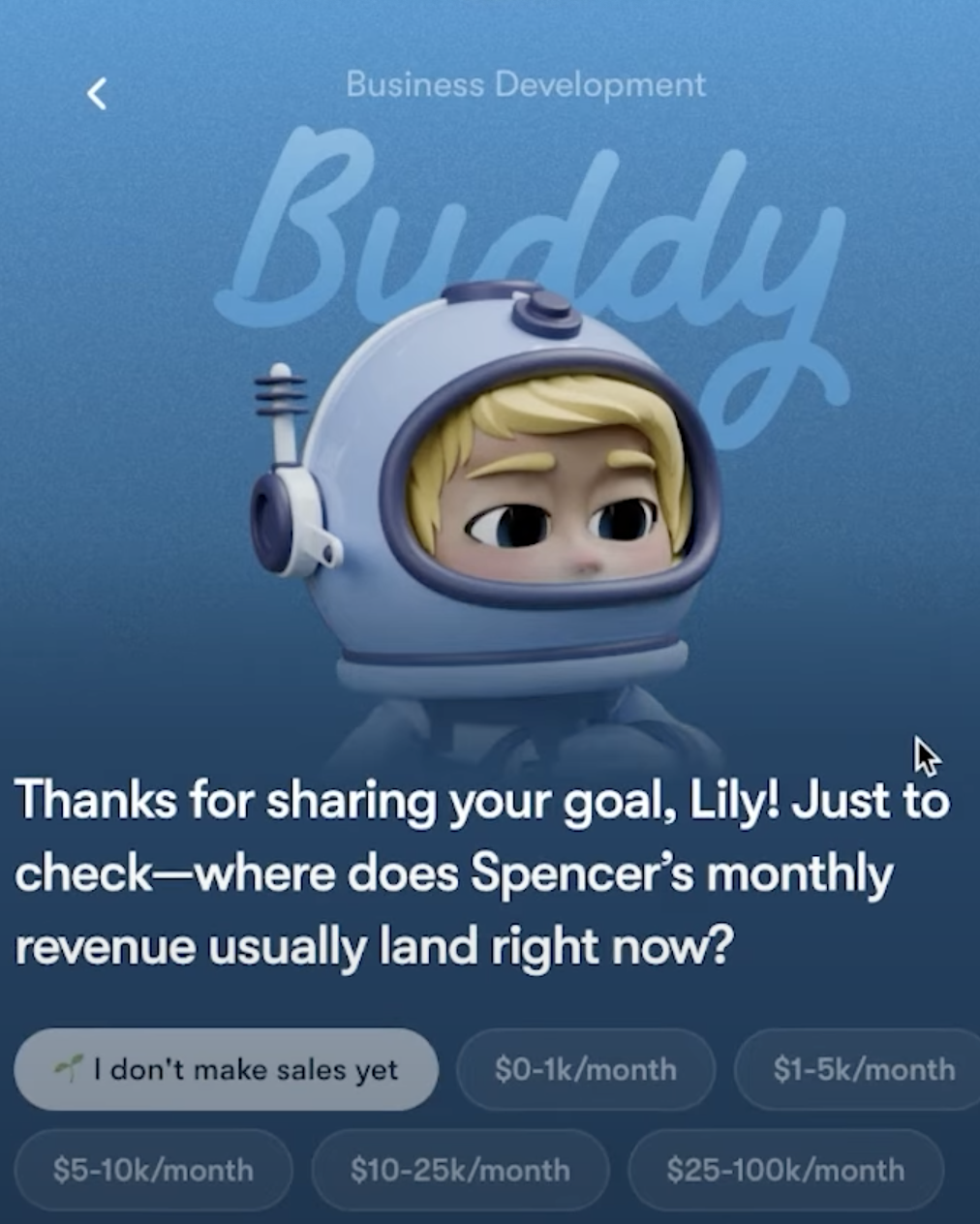
SINTRA AI TUTORIAL & REVIEW | HOW TO USE AI AGENTS (2025)
YOUTUBE : HOW TO DIGITAL
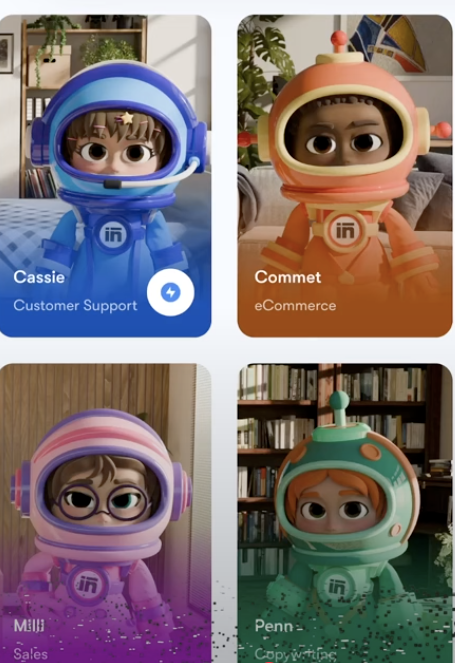
SINTRA AI TUTORIAL | BEGINNERS GUIDE TO AI EMPLOYEES
YOUTUBE : CYBERNEWS