
 bookstack
I read books and summarize them, since i don't have time to scan all the books when i need to use any particular knowledge. I use Timeline, Workflow and Stackslides inside AgentX.ID
"SAVE YOUR TIME GAINING KNOWLEDGE OF UNIVERSE BY READING 1000+ BOOK SUMMARIES PER MONTH or 30 BOOK SUMMARY A DAY"
BOOK SUMMARIZER
My name is Bokier. I love books.
I read books and summarize them, since i don't have time to scan all the books when i need to use any particular knowledge. I use Timeline, Workflow and Stackslides inside AgentX.ID
"SAVE YOUR TIME GAINING KNOWLEDGE OF UNIVERSE BY READING 1000+ BOOK SUMMARIES PER MONTH or 30 BOOK SUMMARY A DAY"
STACKSLIDES


WHY SYSTEMS THINKING SOLVES MORE THAN YOU THINK
A practical StackSlide: see why problems persist, where systems break, and how to intervene with leverage, not effort.
WHAT THIS GIVES YOU
IN 5 MINUTES
Systems thinking helps you stop treating symptoms.
You’ll learn the building blocks:
Stocks, flows, feedback, delays.
You’ll see why systems “push back,”
what traps keep repeating,
and where small moves create big change.
Use it for business,
policy, teams,
and your own habits.
THE BIG IDEA
STOP BLAMING. START MAPPING.
Most “problems” are not single causes.
They are patterns produced by structure:
Who connects to what.
How information moves.
Which incentives exist.
What the system is optimizing.
Change the structure,
and behavior changes.
Push harder on symptoms,
and the system pushes back.
CHAPTER: SEEING THE WORLD AS SYSTEMS
CHAPTER 1
WHAT IS A SYSTEM?
3 PARTS
A system has 3 parts:
1) Elements
Things you can see.
2) Interconnections
Rules, relationships, information.
3) Purpose
What it consistently produces.
Most errors happen when we stare at elements,
and ignore interconnections and purpose.
PURPOSE IS REVEALED BY BEHAVIOR
NOT BY SLOGANS
The real purpose is what the system delivers,
again and again.
A “customer-first” company
that cuts support constantly
is optimized for cost,
not customers.
To find purpose:
Stop listening to statements.
Watch outcomes over time.
Results are the confession.
WHAT CHANGES MATTER MOST?
ELEMENTS < LINKS < GOALS
Swapping elements often changes little:
New people.
New tools.
Same structure.
Changing interconnections changes behavior:
Rules.
Incentives.
Information flow.
Changing goals changes everything:
Once the goal shifts,
rules and behavior reorganize around it.
CAUSE AND EFFECT ISN’T ENOUGH
LOOPS, NOT LINES
We prefer:
A causes B.
Reality is loops:
A influences B,
and B pushes back on A.
Outcomes emerge from many interacting parts.
If you treat one cause as “the” cause,
you miss the structure
that keeps recreating the problem.
CHAPTER: STOCKS AND FLOWS
CHAPTER 2
STOCKS
WHAT ACCUMULATES
A stock is anything that accumulates.
Something you can count.
Water in a tub.
Money in a bank.
Inventory in a store.
Skill in a workforce.
Stocks create stability
because they buffer shocks.
But they also create delay:
You cannot change a stock instantly.
FLOWS
WHAT CHANGES THE STOCK
Flows are rates.
They change the stock.
Inflow increases the stock.
Outflow decreases it.
If inflow > outflow:
Stock rises.
If outflow > inflow:
Stock falls.
If equal:
Stock stays steady.
Most “growth” problems are flow problems,
not element problems.
BATHTUB: THE SIMPLEST MODEL
THE UNIVERSAL ANALOGY
Bathtub stock:
Water level.
Inflow:
Faucet.
Outflow:
Drain.
This pattern appears everywhere:
Population (births, deaths).
Capital (investment, depreciation).
Confidence (wins, failures).
If you can map the tub,
you can map many real systems.
STOCKS MOVE SLOWLY
BUFFERS AND LAGS
You can change the faucet instantly.
But the water level changes gradually.
That slow change is not a bug.
It’s how systems absorb shocks.
But it also means:
Quick fixes feel powerful,
yet results appear late.
Many leaders quit too early
because they confuse delayed impact
with no impact.
OUR BIAS: INFLOW OBSESSION
WE IGNORE OUTFLOWS
We fixate on “add more”:
More hiring.
More marketing.
More features.
But often the best lever is outflow:
Reduce churn.
Reduce waste.
Reduce defects.
Reduce leakage.
Inflow is louder.
Outflow is usually cheaper
and more effective.
CHAPTER: FEEDBACK LOOPS
CHAPTER 3
WHY BEHAVIOR PERSISTS
LOOPS CREATE PATTERNS
If a system stays stable or runs away,
look for feedback.
Feedback loops form when:
A change in a stock
changes its own flows.
That self-influence creates patterns:
Stability.
Growth.
Collapse.
Oscillation.
Events are symptoms.
Loops are the engine.
BALANCING LOOPS
STABILIZERS
Balancing loops push a stock
back toward a set point.
Too low:
Inflow rises,
or outflow falls.
Too high:
Inflow falls,
or outflow rises.
Examples:
Thermostat.
Body temperature.
Spending habits.
They create stability,
when feedback is accurate.
REINFORCING LOOPS
AMPLIFIERS
Reinforcing loops amplify change.
More leads → more referrals → more leads.
More users → more value → more users.
More erosion → fewer roots → more erosion.
They create:
Virtuous cycles,
or vicious cycles.
If nothing counteracts them,
they run to extremes.
COMPETING LOOPS DECIDE OUTCOMES
WHICH LOOP WINS?
Many systems contain both:
Reinforcing loop pushing expansion.
Balancing loop pushing limits.
Population:
Births reinforce.
Deaths balance.
The trajectory is the winner among loops,
not one-time actions.
DELAYS CREATE OSCILLATIONS
THE SHOWER PROBLEM
Delays exist in:
Sensing.
Deciding.
Acting.
Results.
When feedback is delayed,
you overcorrect:
Too cold → too hot → too cold.
Business does this with:
Inventory.
Hiring.
Ad spend.
Policy.
Oscillation is often delayed feedback,
not chaos.
COUNTERINTUITIVE FIX
UNDERREACT ON PURPOSE
When a system oscillates,
your instinct is to react faster.
Often that worsens it.
A better move:
Controlled underreaction.
Use:
Longer averaging windows.
Smaller adjustments.
Better signals.
Stability is not speed.
Stability is calibrated feedback.
CHAPTER: WHY SYSTEMS PERFORM WELL
CHAPTER 4
3 PROPERTIES OF STRONG SYSTEMS
THE DURABILITY TRIO
Strong systems survive shocks because they have:
Resilience:
They bounce back.
Self-organization:
They adapt and evolve.
Hierarchy:
Subsystems coordinate without overload.
Remove these,
and systems become brittle.
Brittle systems break when conditions change.
RESILIENCE
RANGE, NOT PERFECTION
Resilience is the range of conditions
where the system still functions.
It often comes from:
Buffers.
Redundancy.
Multiple feedback loops.
When you optimize only for efficiency,
you remove slack.
You gain output on calm days,
and lose survival on chaotic days.
BRITTLENESS TRAP
EFFICIENCY CAN KILL
Just-in-time inventory is efficient,
until a supply shock breaks it.
Over-optimized organizations remove:
Training time.
Buffers.
Backups.
Then one disruption cascades.
A resilient system looks inefficient on calm days,
and brilliant on chaotic days.
SELF-ORGANIZATION
ADAPTATION ENGINE
Self-organization is the ability
to add complexity and adapt.
It needs:
Variation.
Experimentation.
Selection.
Organizations crush it by:
Forcing sameness.
Fearing dissent.
Punishing experimentation.
Short-term compliance rises.
Long-term adaptation dies.
HIERARCHY
SUBSYSTEMS + COORDINATION
Hierarchy reduces overload.
Subsystems solve local problems.
The larger system coordinates.
Failure modes:
Subsystems optimize selfishly,
and the whole collapses.
Or the top controls too much,
and speed and learning die.
Healthy hierarchy balances:
Autonomy + alignment.
CHAPTER: WHY WE MISUNDERSTAND SYSTEMS
CHAPTER 5
BIAS 1: EVENT ADDICTION
NEWS IS NOT STRUCTURE
Events are visible,
so we obsess over them.
But events have low predictive value.
Better:
Track patterns over time.
Graph key metrics.
When you see the pattern,
you can infer the structure.
If you only see events,
you only get surprise.
BIAS 2: LINEAR THINKING
MORE ≠ BETTER
We assume straight lines:
Twice effort → twice results.
Systems often have thresholds:
Traffic collapses suddenly.
Viruses explode.
Ads flip from helpful to annoying.
Past a tipping point,
small increases create huge damage.
Do not extrapolate from the calm region.
BIAS 3: WRONG BOUNDARIES
LEAVING OUT THE DRIVER
We draw boundaries to simplify.
But if your boundary excludes a major driver,
your model becomes fantasy.
Examples:
Building highways without induced demand.
Buying from suppliers without raw material risk.
Boundaries must change with the question.
Wrong boundary = wrong solution.
BIAS 4: IGNORING LIMITS
GROWTH HITS BOTTLENECKS
Nothing physical grows forever.
We misdiagnose limits:
We add money,
but the bottleneck is governance.
We hire more,
but the bottleneck is training.
Limits shift:
Fix one bottleneck,
another appears.
The job is iterative:
Find limit.
Relieve.
Repeat.
Accept constraints.
BIAS 5: UNDERESTIMATING DELAYS
OLD DATA, WRONG ACTION
Delays mean you act
on outdated reality.
By the time policy takes effect,
the system has moved.
Rule of thumb from the video:
Estimate delay,
then multiply by 3.
Expect overshoot.
Design for delay,
not against it.
BIAS 6: BOUNDED RATIONALITY
DON’T BLAME THE PERSON
People act on:
Limited information.
Limited attention.
Biased perception.
Put you in the same constraints,
you likely behave similarly.
Replacing people rarely fixes the system.
Fix:
Information.
Incentives.
Rules.
Feedback.
Structure beats character.
CHAPTER: SYSTEM TRAPS
CHAPTER 6
TRAP: ESCALATION
ARMS RACE DYNAMICS
Two sides track each other.
If one increases,
the other responds.
This is reinforcing feedback:
More ads → competitor ads → more ads.
More weapons → opponent weapons → more weapons.
Resources burn,
until collapse or surrender.
The loop rewards overreaction.
FIX: ESCALATION
STOP THE LOOP
Best fix:
Mutual agreement to stop.
If that fails:
Stop playing the game.
Hold a lower “stock” deliberately.
Opponents often escalate
mainly in response to you.
If you don’t chase,
they relax.
This requires tolerating
short-term disadvantage
while you win elsewhere.
TRAP: ADDICTION
SHIFTING THE BURDEN
A helper solves symptoms
in a way that weakens
internal capability.
Then the problem returns worse.
Helper intervenes more.
System becomes dependent.
This happens in:
Healthcare.
Welfare.
Parenting.
Organizations.
Product design.
Relief can erase capability.
FIX: ADDICTION
BUILD CAPABILITY, THEN EXIT
Diagnose root cause:
Why can’t the system self-fix?
Intervene to restore capability,
not comfort.
Design an exit plan from day one.
If addiction exists,
withdrawal is required.
Gradual or sudden.
The longer you wait,
the harder withdrawal becomes.
TRAP: POLICY RESISTANCE
TUG-OF-WAR
Actors have different goals.
Each pushes the stock
toward their preferred set point.
Stronger policy → stronger resistance.
System returns to old state,
with more conflict.
If you don’t align incentives,
you create an arms race
between rule-makers and rule-breakers.
FIX: POLICY RESISTANCE
ALIGN GOALS
Two options:
1) Remove the policy,
let the system relax.
2) Redesign incentives,
align goals across actors.
Coercion triggers resistance.
Alignment reduces conflict.
Systems prefer agreement
over force,
because agreement stabilizes feedback.
TRAP: TRAGEDY OF THE COMMONS
PRIVATE GAIN, SHARED COST
Each actor gains
by consuming a shared resource.
Costs are distributed across everyone.
So “rational” behavior
becomes destructive behavior.
The feedback between usage and consequence
is weak and delayed.
By the time collapse is visible,
recovery may be impossible.
FIX: COMMONS
TIGHTEN FEEDBACK
Three options:
1) Educate and hope for restraint.
2) Privatize shares,
so users feel consequences.
3) Regulate with enforced rules.
Goal is the same:
Tighten the loop
between usage and consequence,
so the system can self-correct.
TRAP: DRIFT TO LOW PERFORMANCE
ERODING STANDARDS
If standards are set
relative to recent performance,
then each decline resets “normal.”
No alarm.
Just slow decay.
Organizations accept:
Worse quality.
Worse ethics.
Worse talent.
Fix:
Use absolute standards.
Benchmark against best performance,
not last year.
TRAP: OPTIMIZING THE WRONG GOAL
METRICS CAN BETRAY YOU
Systems achieve goals,
even bad ones.
If education = test scores,
you get scores,
not learning.
If security = spending,
you get spending,
not safety.
Do not confuse motion with progress.
Choose metrics that reflect welfare,
not output theater.
CHAPTER: LEVERAGE POINTS
CHAPTER 7
LEVERAGE POINTS PRINCIPLE
SMALL MOVE, BIG SHIFT
Most interventions fail
because they push low leverage points:
Budgets.
Headcount.
Minor parameters.
High leverage points are deeper:
Feedback strength.
Information flow.
Rules.
Self-organization.
Goals.
Paradigms.
Deeper lever feels less intuitive,
but has more power.
LOW LEVERAGE: PARAMETERS
BUSY, NOT EFFECTIVE
We tweak numbers:
Targets.
Quotas.
Interest rates.
Budgets.
Often it changes little,
because structure dominates.
Parameters matter only when they change:
Loop gain.
Delay length.
Incentive strength.
Otherwise it’s theater:
High effort.
Low outcome.
STOCKS AS BUFFERS
STABILITY VS EFFICIENCY
More buffer stabilizes:
More cash.
More inventory.
More slack.
But it feels inefficient.
Less buffer makes you lean,
but fragile.
Right buffer depends on shock frequency.
If shocks are common,
lean is risky.
DELAYS AS LEVERAGE
TUNE THE TIMING
Delays can stabilize or destabilize.
Too short:
Overreaction.
Too long:
Overshoot.
Some delays can’t be reduced:
Biology.
Training.
Supply chains.
So intervene elsewhere:
Better signals.
Smaller adjustments.
Stronger balancing loops.
BALANCING LOOPS
STRENGTH + ACCURACY
Balancing loops require:
Accurate monitoring.
Fast enough response.
Correct mechanism.
Democracy needs transparency.
Markets need price clarity.
Teams need real KPIs.
Systems drift when feedback is:
Weak.
Delayed.
Corrupted.
Strengthen the loop,
or the stock drifts.
REINFORCING LOOPS
REDUCE THE GAIN
Reinforcing loops can destroy systems
if they accelerate
faster than balancing loops respond.
Sometimes the best move is not “defend more.”
It is:
Reduce growth rate.
Epidemics:
Slow spread.
Inequality:
Reduce winner-takes-more.
Startups:
Control runaway burn
before collapse forces it.
INFORMATION FLOW
MAKE CONSEQUENCES VISIBLE
New information changes behavior
without force.
If people can see the system state,
they self-correct.
Examples:
Fishers need stock visibility.
Polluters change when impact is visible.
Teams improve when metrics are honest.
Transparency is a lever
because it creates new feedback.
RULES
INCENTIVES SHAPE BEHAVIOR
Rules define boundaries:
Laws.
Punishments.
Rewards.
Contracts.
Bad rules invite evasion
or misaligned optimization.
To fix dysfunction, ask:
Who sets the rules?
Who benefits?
Changing rules rewires incentives
across the system,
so behavior shifts fast.
SELF-ORGANIZATION
ENABLE ADAPTATION
The system’s ability to evolve
beats any single policy.
Enable:
Learning.
Experimentation.
Variation.
Selection.
In business:
Autonomy + knowledge sharing.
Safe-to-try experiments.
In society:
Education.
Open research.
Competitive markets.
Kill self-organization,
and the system calcifies.
SYSTEM GOALS
THE REAL DRIVER
Change the goal,
and everything below reorganizes.
Quarterly profit goal
creates different behavior
than trust and long-term value.
Most “reforms” fail
because they keep the same goal
and only change tools.
If the goal stays,
the system returns.
PARADIGMS
INVISIBLE BELIEFS
Paradigms are assumptions
people stop questioning:
“Growth is always good.”
“Money equals value.”
“Bigger is better.”
Paradigms create goals.
Goals create rules.
Rules create outcomes.
Shift the paradigm,
and you rewrite the system.
TRANSCENDING PARADIGMS
HIGHEST LEVERAGE
Highest leverage is to hold paradigms lightly.
Treat them as tools,
not truth.
When you can switch frames,
you escape ideological traps.
You choose the best model per situation.
This is “dancing with the system”:
Steer without illusion of full control.
CHAPTER: BECOMING A SYSTEMS THINKER
CHAPTER 8
HOW TO UNDERSTAND A SYSTEM
THE DISCIPLINE
Stop and watch.
Research history.
Chart metrics over time.
Expand boundaries:
Time horizon.
Disciplines.
Caring.
Draw the model:
Stocks.
Flows.
Loops.
Delays.
Goals.
Invite criticism.
Redraw.
Flexibility is part of the method.
HOW TO INTERVENE SAFELY
DO NO HARM
Avoid “addiction” fixes
that weaken internal capability.
Tighten accountability loops:
Link decision-makers to consequences.
Prefer dynamic policies:
Rules that adapt with conditions.
Remember:
Systems are nonlinear,
delayed,
and adaptive.
A static rule for a moving world
becomes wrong over time.
THE MINDSET
FROM CONTROL TO GUIDANCE
Systems thinking is not
full control.
It is:
Reducing surprise.
Predicting patterns.
Choosing leverage.
You cannot fully command
complex systems.
But you can steer them:
Improve feedback.
Align goals.
Respect delays.
That is the advantage.
WEEKLY APPLICATION
ONE SYSTEM, ONE MAP
Pick one system:
Team.
Product.
Health.
Content.
List:
Stocks (what accumulates).
Flows (rates).
Loops (reinforcing/balancing).
Delays.
Real goals.
Choose one leverage move:
Make info visible.
Reduce runaway gain.
Change a rule.
Repeat weekly.
Systems reward consistency.
THE ART OF READING PEOPLE
BOOK SUMMARY
A practical field guide to reading nonverbal signals, spotting mismatch, and building trust without guessing.
CHAPTER INDEX
THE ART OF READING PEOPLE
A practical field guide to reading nonverbal signals, spotting mismatch, and building trust without guessing.
READING PEOPLE IS PATTERN WORK
NOT MIND READING, NOT MAGIC
You are not decoding “truth.” You are tracking patterns: what stays consistent, what shifts under pressure, and what matches the situation. The goal is better decisions, better empathy, and fewer social blind spots.
WORDS LIE LESS WHEN THEY MATCH THE BODY
CONGRUENCE IS THE CORE TEST
When words, face, posture, and voice point in the same direction, communication becomes believable. When they clash, treat it as uncertainty, not proof. Mismatch means “investigate,” not “accuse.”
CONTEXT CHANGES MEANING
SAME CUE, DIFFERENT STORY
Avoiding eye contact can signal guilt, shyness, respect, or culture. Crossed arms can be defense or cold weather. You do not read a cue in isolation. You read it inside the environment, roles, stakes, and timing.
BASELINE BEFORE JUDGMENT
KNOW THEIR NORMAL FIRST
A single gesture means little. What matters is deviation from that person’s usual rhythm: how they normally speak, blink, gesture, and hold posture when relaxed. Baseline turns guesswork into probability.
USE ETHICS OR LOSE TRUST
INSIGHT IS NOT A WEAPON
Reading people is for clarity and connection, not manipulation. If you use cues to corner others, you will create fear and resistance. The best use is gentle: ask better questions, reduce tension, and build honest dialogue.
UNDERSTANDING BODY LANGUAGE
CHAPTER 1
BODY LANGUAGE IS THE DEFAULT CHANNEL
MOST MEANING TRAVELS NONVERBALLY
Gestures, posture, distance, and facial movement often carry more emotional weight than words. Your brain reads these signals fast, before logic catches up. Train the skill and you gain clearer social reality, not just impressions.
OPEN VS CLOSED SIGNALS
COMFORT SHOWS AS OPENNESS
Open posture, visible hands, relaxed shoulders, and steady orientation signal comfort. Closed posture, shielding gestures, angled feet away, and tight shoulders often signal self-protection. Do not label motives; label comfort level first.
FEET AND TORSO TELL DIRECTION
WHERE THEY WANT TO GO
People point their feet toward what they want: an exit, a person, a topic. The torso follows interest; the feet reveal intention earlier. If the words say “I’m engaged” but feet aim out, interest may be fading.
TONE IS BODY LANGUAGE WITH SOUND
VOICE COMPLETES THE MESSAGE
The same sentence can comfort or threaten depending on tone. Pair your message with a matching posture and calm delivery. If your words are supportive but your tone is sharp, your body will be believed over your script.
THE PRACTICE LOOP
OBSERVE, LABEL, VERIFY
Train by silently labeling cues: posture, hands, orientation, distance, facial tension. Then verify with conversation, not confrontation. Your goal is accuracy: reduce assumptions by checking gently with questions and listening.
DECODING FACIAL EXPRESSIONS
CHAPTER 2
THE 7 UNIVERSAL EMOTIONS
THE FOUNDATION SET
Happiness, sadness, surprise, fear, disgust, anger, contempt. These show up with recognizable facial patterns across cultures. Start here, then get more precise using context, timing, and clusters with voice and posture.
HAPPINESS IS IN THE EYES
REAL VS POLITE SMILES
A genuine smile lifts the cheeks and creates subtle lines around the eyes. A polite smile often stays mouth-only. Do not call it fake; just note intensity and symmetry. Then read the situation: safety, politeness, or real joy.
SADNESS AND FEAR ARE OFTEN QUIET
SMALL CUES, BIG MEANING
Sadness can show as lowered gaze, drooped lids, softened facial tone. Fear can show as widened eyes, tightened mouth, stillness. These can be brief and masked quickly. Watch for what flashes, not what is held.
MICROEXPRESSIONS LEAK FIRST
EMOTION BEFORE CONTROL
Microexpressions are fast, involuntary flashes that appear before someone can manage their face. They do not prove lies. They reveal emotional reaction. Treat them as signals of pressure, hesitation, or hidden stakes.
CONTEXT PREVENTS MISREADS
SAME FACE, DIFFERENT MEANING
A furrowed brow can mean concentration, confusion, or irritation. A tight smile can be politeness or resistance. Combine facial cues with body orientation, voice tension, and the topic being discussed before deciding what it means.
THE POWER OF EYE CONTACT
CHAPTER 3
EYE CONTACT SIGNALS ENGAGEMENT
BUT INTENSITY MATTERS
Steady, relaxed eye contact often communicates attention and confidence. Too little can signal discomfort or withdrawal. Too much can feel controlling. The goal is natural rhythm: look, break, return, while staying present.
AVERTED GAZE IS NOT ALWAYS DECEIT
CULTURE AND PERSONALITY FIRST
Some people look away to think, to show respect, or because they are shy. In some cultures, direct eye contact with authority can feel rude. Always compare behavior to baseline and context before assigning intention.
BLINK RATE AND TENSION
STRESS SHOWS IN THE EYES
Under pressure, people may blink more, stare harder, or rub the face. These can indicate stress, cognitive load, or emotional strain. They do not automatically signal lying. They signal that the moment matters to them.
USE EYE CONTACT TO BUILD TRUST
CALM PRESENCE BEATS DOMINANCE
In work and relationships, warm eye contact paired with a steady voice creates safety. If someone is tense, soften your gaze and slow your pace. Trust grows when the other person feels seen, not examined.
VOICE TONE AND SPEECH PATTERNS
CHAPTER 4
TONE REVEALS EMOTIONAL TEMPERATURE
WARM, TIGHT, FLAT, SHARP
Friendly tone invites cooperation. Tight tone suggests stress or resistance. Flat tone can signal fatigue, disengagement, or guardedness. Sharp tone often signals urgency or threat. Focus on shifts, not stereotypes.
PITCH SIGNALS AROUSAL
HIGH CAN MEAN EXCITED OR ANXIOUS
Pitch rises with excitement, surprise, or anxiety, and drops with calm, seriousness, or sadness. A sudden pitch change during a sensitive point often marks a hidden stake. Pair it with facial tension and pacing for accuracy.
VOLUME SIGNALS INTENSITY
LOUDER IS NOT ALWAYS ANGER
Rising volume can mean passion, frustration, or a need to be heard. Lower volume can mean uncertainty, fear, or privacy. Compare to their normal style. Then respond to the emotion underneath, not the loudness itself.
SPEECH RATE SIGNALS PRESSURE
FAST, SLOW, UNEVEN
Fast speech can indicate excitement, nervousness, or urgency. Slow speech can indicate thoughtfulness, sadness, or caution. Uneven pacing, stalling, and excessive pauses often signal cognitive load: they are working harder than usual.
READ CLUSTERS, NOT SINGLE CUES
VOICE + FACE + POSTURE
One cue is noise. Clusters are signal. If pitch rises, volume drops, and posture closes, that often indicates uncertainty or fear. If tone warms, gestures open, and eye contact relaxes, comfort is increasing. Track direction over time.
DETECTING DECEPTION
CHAPTER 5
DECEPTION IS OFTEN A MISMATCH
WORDS AND BODY SPLIT
A common lie pattern is incongruence: confident words paired with defensive posture, or calm claims paired with vocal strain. Treat mismatch as a cue to slow down and clarify. It is not a verdict. It is a question mark.
VOCAL ANOMALIES
STRESS LEAKS INTO SOUND
Higher pitch, strained tone, stammering, unusual pauses, and sudden speed changes can appear when someone is stressed or fabricating. But stress can also come from fear, trauma, or high stakes. Always verify through questions.
EYE CONTACT CAN BE UNDER OR OVER
BOTH CAN BE COMPENSATION
Some liars avoid eye contact from discomfort. Others overcompensate with intense staring to look sincere. The better approach is baseline comparison: what is normal for them, and what changed when the topic became sensitive.
MICROEXPRESSIONS REVEAL EMOTION, NOT FACTS
EMOTION IS THE LEAK
A quick flash of fear, contempt, or anger can reveal that the person reacted strongly inside, even if they keep a steady story. That reaction may point to hidden concerns, not necessarily lies. Use it to ask better follow-ups.
PROBING QUESTIONS EXPOSE WEAK STORIES
SPECIFICITY CREATES PRESSURE
Ask for details: where, when, who, sequence, and sensory facts. Truth usually stays coherent under detail. Fabrication often becomes vague, inconsistent, or overly rehearsed. Keep your tone neutral so the person does not go defensive.
CROSS-CHECK WITHOUT DRAMA
VERIFY FACTS, NOT FEELINGS
When stakes are real, verify with records, timelines, and third-party confirmation. This reduces bias and prevents paranoia. The goal is clarity and accountability. You are not hunting lies; you are protecting decisions.
READING EMOTIONS ACCURATELY
CHAPTER 6
EMOTIONAL INTELLIGENCE IS THE ENGINE
READ SELF, THEN READ OTHERS
You cannot read others well if your own emotions hijack perception. Emotional intelligence means noticing your feelings, regulating reactions, and staying curious. Calm attention makes small signals visible and reduces misinterpretation.
DAILY CHECK-IN BUILDS SIGNAL SENSITIVITY
NAME WHAT YOU FEEL
Start by labeling your internal state daily. The clearer your emotional vocabulary, the clearer your reading of others. “Upset” becomes “frustrated, disappointed, anxious.” Precision improves empathy and reduces reactive mistakes.
JOURNAL OBSERVATION
TRAIN ATTENTION TO DETAIL
Write brief notes about interactions: facial tension, posture shifts, voice changes, and what triggered them. Over time you see patterns: what calms people, what threatens them, what makes them open up. This becomes social intuition you can explain.
MINDFUL LISTENING
REFLECT, DO NOT RUSH
Listen without preparing your reply. Mirror back meaning: “It sounds like you’re under pressure and worried about timing.” This clarifies emotion and reduces conflict. People trust you when they feel accurately understood.
REGULATE YOUR TRIGGERS
YOUR BIAS IS THE ENEMY
When you feel threatened, you misread neutral cues as hostile. Learn your triggers, pause, breathe, and reframe. Emotional neutrality is not coldness. It is the ability to stay fair and precise when stakes and feelings rise.
BUILDING RAPPORT AND TRUST
CHAPTER 7
EMPATHY IS THE FASTEST BRIDGE
VALIDATION CREATES SAFETY
Empathy is not agreement. It is accurate recognition: “That sounds stressful.” When people feel emotionally seen, they lower defenses and become more honest. Trust is built through repeated moments of felt understanding.
MIRRORING BUILDS FAMILIARITY
SUBTLE, DELAYED, NATURAL
Mirroring is light matching of posture, energy, and pacing after a brief delay. It signals “we are aligned” at a subconscious level. Overdo it and it feels fake. Done gently, it increases comfort and cooperation.
MATCH LANGUAGE PATTERNS
USE THEIR WORDS, NOT YOURS
People feel understood when you use similar phrasing and pace. If they speak simply, do not flood them with jargon. If they speak with detail, do not answer with vague slogans. Communication lands when it matches the receiver’s style.
ACTIVE LISTENING IS A TRUST SIGNAL
SUMMARIZE AND CLARIFY
Eye contact, nods, short acknowledgements, and paraphrasing show that you are tracking the real message. Summarize periodically to confirm accuracy. Misunderstanding dies when you check meaning before reacting.
TRUST IS A SYSTEM, NOT A MOMENT
CONSISTENCY BEATS CHARISMA
People trust patterns: reliable behavior, predictable respect, and honest boundaries. Charisma can open doors, but consistency keeps them open. If your actions match your promises, your presence becomes calming and credible.
ADVANCED OBSERVATION TECHNIQUES
CHAPTER 8
POSTURE IS A LIVE STATUS REPORT
CONFIDENCE, DEFENSE, FATIGUE
Upright and open often signals readiness. Slouched can signal exhaustion, low confidence, or disengagement. Rigid can signal anxiety or control. Watch for posture shifts when topics change. Shifts often mark hidden importance.
GESTURES SHOW NERVOUS SYSTEM STATE
HANDS REVEAL COMFORT
Open palms often correlate with openness. Fidgeting, face-touching, and repetitive tapping often correlate with tension or impatience. Do not punish the person for it. Use it as feedback to slow down, clarify, or reduce pressure.
PERSONAL SPACE IS EMOTIONAL DISTANCE
PROXIMITY SIGNALS COMFORT
Closer distance can signal trust and connection. Increased distance can signal discomfort, formality, or strain. In professional contexts, respectful spacing matters. In personal contexts, sudden spacing changes can signal emotional shifts.
CONTEXTUAL LAYERS
ENVIRONMENT, ROLES, HISTORY
Behavior changes across settings. Office norms, hierarchy, relationship history, and timing shape signals. A tense person in a meeting may relax in private. Read the person inside the situation, not as a fixed personality.
DAILY OBSERVATION PRACTICE
SHORT SESSIONS, HIGH PAYOFF
Spend 10 minutes observing in public settings. Track cues: posture, orientation, gestures, tone shifts. Then reflect: what context likely drove it? This trains fast, accurate perception without turning you into a suspicious person.
MASTERING SOCIAL DYNAMICS
CHAPTER 9
ADAPT TO THE ROOM
DIFFERENT SETTINGS, DIFFERENT RULES
Corporate meetings reward clarity, restraint, and respect for hierarchy. Casual gatherings reward warmth and openness. Formal events reward composure and etiquette. Read the setting first, then choose your speed, tone, and presence.
SPOT THE REAL INFLUENCERS
POWER IS NOT ALWAYS THE TITLE
Watch who others defer to, who interrupts successfully, who people glance at before agreeing, and who sets emotional tone. Those signals reveal influence. Once you see the power map, you communicate with fewer mistakes.
INFLUENCE STARTS WITH MOTIVES
TRIGGER, FEAR, ASPIRATION
People move based on hidden drivers: safety, recognition, autonomy, belonging, status, or control. Observe what they defend and what they chase. Speak to the motive beneath the argument and you reduce resistance.
STORY BEATS FACTS WHEN EMOTIONS MATTER
NARRATIVE CREATES MEANING
Facts inform, stories move. When you want buy-in, show the future picture, the stakes, and the human outcome. Keep it honest. A good story makes people feel the decision, not just understand it intellectually.
HANDLE OBJECTIONS WITH COMPOSURE
ACKNOWLEDGE, THEN CLARIFY
Resistance is normal. Reflect their concern accurately, validate the emotion, then explore the real constraint. This keeps the atmosphere constructive. People cooperate more when they feel respected, not defeated.
THE FINAL FRAME
TURN SKILL INTO DAILY CLARITY
Reading people is a practice: track baseline, watch clusters, and verify with questions. Use it to reduce misunderstanding, not to “win.” When you read with empathy and precision, relationships improve and decisions get cleaner.
A SIMPLE OPERATING RULE
NOTICE SHIFTS, THEN SLOW DOWN
Whenever you see a sudden change in posture, face, eye behavior, or voice, pause internally. Something just got meaningful. Slow your pace, ask one clarifying question, and let the person’s response confirm what the signals suggest.
THE POINT IS CONNECTION
SKILL WITH HUMILITY
Your best outcome is not perfect detection. It is better interaction: fewer false assumptions, more accurate empathy, and stronger trust. Read people to build bridges. The moment you use it to control, you lose the human truth.
GET IT DONE NOW
BOOK SUMMARY BY BRIAN TRACY
A complete, practical system to prioritize high-value work, defeat procrastination, and build daily execution habits.
PRODUCTIVITY PROMISES & PITFALLS
CHAPTER 1
STARVE DISTRACTIONS, FEED FOCUS
THE FIRST PRODUCTIVITY RULE
Attention is fuel. If you keep feeding notifications, tabs, and endless scrolling, your best hours get eaten. Starve distractions: silence pings, close extra tabs, and block one protected session. Feed focus: one target, one timer, one clear finish line. A single deep block beats a noisy day.
PRODUCTIVITY IS RESULTS THAT HELP OTHERS
SERVICE IS THE REAL METRIC
Productivity isn’t “busy.” It’s creating results that help someone succeed—customers, teammates, family. Ask: “Who benefits from this?” When your work improves others’ outcomes, your value rises, trust grows, and opportunities expand. Measure days by outcomes delivered, not hours spent.
DECIDE FAST, PERSIST LONG
GRIT BEATS MOOD
Waiting to “feel ready” is procrastination wearing a suit. Productive people decide the next right action quickly, then persist through boredom, doubt, and setbacks. Start small, but start today. Momentum is built by showing up even when motivation is low, until the task is finished. Progress loves persistence.
THE PSYCHOLOGY OF PRODUCTIVITY
CHAPTER 2
THOUGHTS SHAPE OUTPUT
YOUR FOCUS BECOMES YOUR REALITY
Your mind moves toward what you repeatedly think about. If you obsess over distractions, you get distraction. If you lock onto outcomes, you get results. Train your attention to return to the task. Your dominant thoughts influence choices, energy, and discipline. Guard what you feed your mind daily.
SELF-IMAGE DRIVES BEHAVIOR
IDENTITY DECIDES ACTIONS
You act in line with who you believe you are. If you see yourself as “a finisher,” you choose actions that finish. Upgrade the identity with daily proof: small completions, commitments kept, standards protected. Your brain follows evidence. Build the identity first, and habits follow.
REAL SELF-ESTEEM IS EARNED
PROOF BEATS HYPE
Confidence that lasts comes from wins you can point to. Finish small tasks, practice skills, and keep promises to yourself. Each completion becomes evidence that you can execute. Stack evidence daily and procrastination loses power. Over time, you stop negotiating with yourself and start acting by default.
GOAL-ORIENTED PEOPLE WIN
CHAPTER 3
WRITE YOUR GOALS
CLARITY MULTIPLIES SPEED
Most people have wishes, not goals. Writing goals forces clarity: what you want, why it matters, and what must happen next. Written goals turn fuzzy ambition into daily direction, so you stop drifting into noise and start moving with intent. Review weekly to stay aligned and adjust fast.
CLARITY IS A WEAPON
AIM BEFORE YOU ACT
Define the target: the exact outcome, deadline, and success criteria. When the target is clear, decisions get faster and distractions become easier to reject. Without clarity, you confuse activity with progress. With clarity, you choose fewer tasks, execute deeper, and finish more. Aim first—then move.
SELLING IS A CLARITY TEST
VALUE MUST BE OBVIOUS
Customers decide based on value, not your effort. Be clear on what problem you solve, how you’re different, and why it matters now. When you can explain benefits in plain language, you become more persuasive and more productive, because you stop doing work that doesn’t move decisions. Clarity sells.
ORGANIZED PEOPLE EXECUTE
CHAPTER 4
ORGANIZATION IS A LEARNED HABIT
CHAOS IS TRAINED, SO IS ORDER
Disorganization isn’t personality; it’s lack of systems. Build simple structure: a daily list, a clean workspace, a routine, and checklists for repeatable tasks. Systems reduce reliance on willpower and make finishing the default, even when you’re tired. Remove friction and you remove excuses.
PLAN TOMORROW TONIGHT
START ALIGNED, NOT REACTIVE
End your day by planning the next one. List tasks, choose the #1 priority, and define the first step. You’ll wake up with direction instead of confusion, and you won’t let email or other people’s requests hijack your morning. A planned day protects focus and makes progress automatic.
WORK IN SEQUENCE
ONE STEP, THEN THE NEXT
Most projects fail because steps are unclear. Break the work into a simple sequence, like a recipe. When each step is visible, starting feels safe and finishing feels inevitable. Don’t rely on memory—use checklists. Clear sequence reduces mistakes, cuts rework, and keeps you moving when motivation fades.
A TREASURE TROVE OF METHODS
CHAPTER 5
THE 80/20 RULE
PROTECT THE HIGH-LEVERAGE 20%
A small set of actions produces most results. Find the 20% that drives revenue, learning, or impact, and protect it first on your calendar. Delegate, delay, or delete the low-value 80%. Your life changes when your time matches leverage, not guilt or habit. Choose impact over comfort daily.
THE ABCDE METHOD
PRIORITIZE WITH CONSEQUENCES
Label tasks: A (must do, serious consequences), B (should do), C (nice), D (delegate), E (eliminate). Then act in order. If you treat A-tasks like C-tasks, you pay later with stress and missed goals. This method forces hard choices early, so you don’t regret them late.
THE LAW OF THREE
YOUR CORE VALUE DRIVERS
In any role, three activities create most of your value. Identify them by asking: “Which three outputs, if done well, make everything else easier?” Start your day with those three. Everything else becomes support work. Protect the three like your job depends on it—because it usually does.
UPGRADE KEY SKILLS
COMPETENCE CREATES SPEED
Execution improves when skill improves. Pick the skills most tied to your goals—selling, writing, leadership, technical ability—and train daily. Read, practice, get feedback, repeat. Skill compounding raises confidence and output because you solve bigger problems faster. Reps beat talent. Consistency beats intensity.
IDENTIFY THE BOTTLENECK
CONSTRAINTS DECIDE PACE
Your progress is capped by a constraint—knowledge, time, approvals, tools, confidence, health. Identify what blocks the next milestone most, then fix that first. Don’t optimize everything. Remove the single bottleneck controlling throughput, and everything speeds up. Fix the constraint, then raise the next one.
ESCAPE TECH TIME TRAPS
MAKE TECH YOUR SERVANT
Tech becomes dangerous when it steals your best attention. Don’t start the day with email or social. Set fixed check-in windows, turn off nonessential notifications, and protect creation hours for deep work. Your highest-value tasks require long, uninterrupted focus—the kind distraction always destroys first.
SLICE & DICE BIG TASKS
MAKE STARTING EASY
Big projects trigger avoidance because the first action is unclear. Break the work into tiny, visible steps: outline one page, make one call, draft one paragraph. When the next action is small, starting becomes easy—and starting kills procrastination. Progress comes from small steps done daily, not big bursts.
SENSE OF URGENCY
SPEED MULTIPLIES LEARNING
Ideas decay with time. Build urgency by acting quickly on what you already know. Use “Do it now” as a trigger to start immediately, not to wait for perfect conditions. Fast starters get feedback sooner, fix mistakes earlier, and compound wins while others are still planning. Speed creates advantage.
SINGLE-HANDLE EVERY TASK
ONE THING UNTIL DONE
Multitasking feels productive but creates slow, messy output. Single-handle: choose one meaningful task, remove distractions, work until a clear stopping point, then finish it. Focus creates speed and quality. Completion creates calm. Do fewer things at a higher standard, and your results will jump.
HOW TO END PROCRASTINATION
CHAPTER 6
DO THE MOST IMPORTANT THING FIRST
YOUR #1 LEVER
Ask: “What one task most advances my main goal?” Start there. Procrastination shrinks when the target is clear and the first step is small. Work in focused bursts, then take short breaks. Motion creates clarity. Action creates confidence. Start fast, adjust later, and finish what matters.
SET DEADLINES & CONSEQUENCES
PRESSURE CREATES PROGRESS
Without deadlines, tasks expand forever. Set a specific finish time and attach a consequence: a public commitment, a review meeting, or a reward you only earn after completion. Deadlines create urgency and reduce overthinking. When time is real, you stop negotiating and start executing.
KILL ORPHAN PROJECTS
ONE OWNER, ONE FINISH LINE
Projects die when nobody owns completion. Assign one person responsible, define the next milestone, and schedule checkpoints. If ownership is shared, it becomes ignored. Clear responsibility turns vague intention into measurable progress. Fewer projects, better finished. Don’t start what you can’t shepherd to the end.
CREATIVE PROCRASTINATION
CHOOSE WHAT NOT TO DO
You can’t do everything, so choose intentionally what to ignore. Decide which low-value tasks will not be done now—or ever—so you stop unconsciously avoiding the high-value work. Saying “no” is not laziness; it’s strategy. Eliminate the trivial many to protect the vital few.
THE PRODUCTIVE PROFESSIONAL
CHAPTER 7
YOUR BOSS IS A CUSTOMER
ALIGN TO PRIORITIES
A customer is anyone who depends on your output. Learn what your boss values most, then deliver that reliably. Don’t optimize popularity; optimize usefulness. Communicate priorities, progress, and results clearly. Promotions and trust follow visible contribution that matches leadership goals. Make it easy to say: “They deliver.”
DON'T DO WHAT NEEDN'T BE DONE
AVOID FAKE IMPORTANCE
Some work is done well but should not be done at all. Before you invest time, ask: “If this disappeared, would anything break?” If not, reduce it, delegate it, or delete it. You don’t get rewarded for perfect busywork. You get rewarded for outcomes that matter to the mission.
GREAT TEAMS RUN ON 5 RULES
CLARITY CREATES UNITY
Strong teams share: clear goals, clear values, clear plans, leadership that inspires, and measurement that celebrates progress. Without clarity, people drift and blame. With clarity, they execute and improve. Make success visible: define targets, track them, review weekly, and celebrate wins so momentum becomes culture.
PRODUCTIVITY IN RELATIONSHIPS
CHAPTER 8
BE FULLY PRESENT
ATTENTION IS LOVE
Relationships don’t need speed; they need presence. Put the phone away, listen without rushing, and understand before responding. Ask follow-up questions to show you care about the real experience, not just the facts. Presence builds trust, and trust makes every conversation easier, calmer, and more productive.
USE MASTERMIND GROUPS
ACCOUNTABILITY WITHOUT EGO
Meet regularly with a small group of serious people. Share goals, obstacles, and ideas. Ask for feedback and commit to next actions. A mastermind multiplies thinking, keeps you honest, and reduces loneliness in hard seasons. It’s productivity for life: better decisions, faster learning, and stronger resilience.
MAKING A MEANINGFUL DIFFERENCE
CONCLUSION
PRODUCTIVITY IS FOR LIFE, NOT BURNOUT
MORE RESULTS, MORE MEANING
The goal isn’t to work nonstop. The goal is effectiveness: finish what matters, waste less time, and free energy for health, relationships, and purpose. When you focus, prioritize, and execute, you buy back life—more calm, more options, and more pride in your days. Do it now, then rest well.
THE TIPPING POINT
BOOK SUMMARY BY MALCOLM GLADWELL
THE TIPPING POINT – BIG CHANGE FROM SMALL CAUSES
WHY LITTLE THINGS SUDDENLY EXPLODE
The Tipping Point explains how ideas, products, behaviors and social changes spread like epidemics, then suddenly “tip” into massive impact.
HUSH PUPPIES – A DEAD BRAND REBORN
FROM THRIFT SHOPS TO EVERY MALL
In 1994, a few New York hipsters wore old Hush Puppies to be different. Designers noticed, word spread, and sales jumped from 30k pairs to millions in a few years.
CRIME IN NEW YORK – FROM FEAR TO SAFETY
A CITY THAT SUDDENLY CHANGED
Early 1990s New York was violent and unsafe. Within five years, murders dropped by over 60 percent and serious crime almost halved, especially in the worst neighborhoods.
WHAT DO SHOES AND CRIME HAVE IN COMMON?
BOTH BEHAVE LIKE EPIDEMICS
Hush Puppies and New York crime show the same pattern: contagious behavior, small triggers with big effects, and sudden, dramatic change after a hidden threshold is crossed.
THE THREE RULES OF SOCIAL EPIDEMICS
HOW THINGS TIP
Gladwell says all social epidemics follow three principles: the Law of the Few, the Stickiness Factor and the Power of Context.
EPIDEMICS ARE CONTAGIOUS
BEHAVIOR SPREADS LIKE VIRUSES
Ideas and behaviors spread person to person through exposure: seeing, hearing or feeling something makes others more likely to copy it, just like catching a virus.
SMALL CHANGES, HUGE OUTCOMES
NONLINEAR CAUSE AND EFFECT
We expect big results to come from big causes. Epidemics break that rule. Tiny shifts in a few variables can produce outsize, geometric jumps in impact.
GEOMETRIC GROWTH – PAPER TO THE SUN
WHY OUR INTUITION FAILS
Fold a thin paper 50 times and it would reach the sun. Epidemics grow the same way: doubling, doubling, then exploding far beyond what feels “proportionate.”
THE TIPPING POINT DEFINED
THE MOMENT IT ALL FLIPS
The tipping point is the critical moment when an idea, behavior or trend suddenly takes off. Change is slow and invisible, then it breaks sharply into a new state.
THREE LEVERS OF ANY EPIDEMIC
PEOPLE, MESSAGE, ENVIRONMENT
Any epidemic is driven by: who spreads it, how sticky the message is and the context it lives in. Gladwell names these: Law of the Few, Stickiness and Context.
LAW OF THE FEW – UNEQUAL IMPACT
A TINY GROUP DOES MOST OF THE WORK
In epidemics, a small fraction of people drive most of the spread. They are not average. They have unusual social reach, knowledge or persuasive power.
CONNECTORS – HUMAN HUBS
PEOPLE WHO LINK WORLDS
Connectors know an unusually large number of people across many groups. They bridge social circles so ideas can leap from one world into many others.
SIX DEGREES – BUT NOT ALL EQUAL
JACOBS, BROWN, JONES
Milgram’s chain-letter study found most letters to a Boston broker passed through a few key people. We are all linked, but some are far more central than others.
WEAK TIES – THE POWER OF ACQUAINTANCES
JOBS AND OPPORTUNITIES TRAVEL THIS WAY
Granovetter showed people got jobs mostly through acquaintances, not close friends. Weak ties connect us to new worlds and fresh information.
PAUL REVERE VS WILLIAM DAWES
SAME MESSAGE, DIFFERENT MESSENGER
Both warned of the British. Revere’s ride triggered mass mobilization. Dawes did not. Revere was a classic Connector and Maven with credibility and reach.
MAVENS – INFORMATION SPECIALISTS
THEY LOVE TO HELP YOU DECIDE
Mavens collect detailed knowledge about products, prices and options. They share advice not to impress, but to help. People trust them and listen.
MARKET MAVENS KEEP MARKETS HONEST
WHY FAKE DISCOUNTS FAIL
A few price-obsessed consumers notice false “sales.” Their complaints and warnings deter supermarkets from abusing promotions. A tiny group protects everyone.
SALESMEN – NATURAL PERSUADERS
RHYTHMS YOU CANNOT RESIST
Salesmen are gifted at nonverbal influence: timing, tone, facial micro-movements and synchrony. They pull people into their conversational rhythm and move them to act.
STICKINESS – MESSAGES THAT STAY
FROM “WINSTON TASTES GOOD…” TO SESAME STREET
Stickiness is how memorable and actionable a message is. A sticky idea lodges in memory and changes behavior, not just awareness.
SMALL TWEAKS, BIG BEHAVIOR CHANGE
THE TETANUS SHOT EXPERIMENT
Scary brochures made students say shots were important, but only 3 percent got vaccinated. Adding a simple map and clinic times raised actual shots to 28 percent.
SESAME STREET AS A STICKINESS LAB
HOLDING PRESCHOOL ATTENTION TO TEACH
Sesame Street tested each segment with “distractor” slides and eye-tracking to see what kids really watched. Attention data guided editing to maximize learning.
WHY BIG BIRD JOINED THE STREET
WHEN ADULTS ALONE WERE BORING
Early tests showed kids tuned out when only adults appeared. Bringing Muppets into real street scenes made the show sticky and educational at the same time.
DESIGN FOR HOW KIDS ACTUALLY WATCH
THEY WATCH WHEN THEY UNDERSTAND
Children do not stare passively. They look when the story makes sense and look away when confused. Clarity, not noise, drives real attention and learning.
POWER OF CONTEXT – ENVIRONMENT SHAPES BEHAVIOR
SMALL SIGNALS, BIG SHIFTS
The Power of Context says people are highly sensitive to their surroundings. Minor cues in the environment can push behavior toward crime or away from it.
BROKEN WINDOWS THEORY
DISORDER INVITES MORE DISORDER
Visible signs of neglect like graffiti or broken windows signal “no one is in charge.” They create permission for more serious crime to spread.
CLEANING THE SUBWAY TO CUT CRIME
GRAFFITI AND FARE-BEATING CRACKDOWN
New York transit fought graffiti car by car and arrested fare-beaters with mobile booking buses. Targeting small offenses coincided with sharp drops in serious crime.
CRIME IS CONTEXT-SENSITIVE
SAME PEOPLE, DIFFERENT CHOICES
New Yorkers did not suddenly become “good.” Changing visible norms and minor rules pushed many borderline people away from crime at the tipping point.
GROUPS AMPLIFY EPIDEMICS
FROM BOOK CLUBS TO RELIGIOUS MOVEMENTS
Tight-knit groups make ideas stickier. John Wesley’s small Methodist classes and modern book clubs like Ya-Ya Sisterhood turn reading into shared identity.
THE RULE OF 150
OUR SOCIAL CHANNEL CAPACITY
Dunbar’s research suggests humans can maintain about 150 real social relationships. Beyond that, cohesion and peer pressure weaken sharply.
GORE ASSOCIATES – SCALING BY SPLITTING
MANY SMALL UNITS, ONE CULTURE
W. L. Gore caps each plant at about 150 people. When parking overflows, they build a new plant. Small size keeps peer accountability strong without heavy hierarchy.
DIFFUSION MODEL – HOW IDEAS MOVE
FROM INNOVATORS TO LAGGARDS
New ideas spread in phases: Innovators, Early Adopters, Early Majority, Late Majority, Laggards. Each group needs different cues and proof to adopt.
CROSSING THE CHASM
TRANSLATORS MAKE TRENDS GO MAINSTREAM
Innovator behavior is often too extreme for the majority. Connectors, Mavens and Salesmen “translate” edgy ideas into forms regular people accept and copy.
AIRWALK – ENGINEERING COOL
AD AGENCY AS EPIDEMIC DESIGNER
Airwalk grew from niche skate shoe to global brand by embedding authentic subculture signals into ads and timing them as those signals reached the mainstream.
TRENDSPOTTERS AND YOUTH “COOL”
FOLLOWING INNOVATORS, AIMING AT MANY
Researchers like DeeDee Gordon tracked edgy teens, spotted rising micro-trends and turned them into visual stories so ordinary teens could “get” and adopt them.
PUTTING IT ALL TOGETHER
HOW TO MAKE SOMETHING TIP
To tip any idea, align three levers: enlist the right few people, craft a sticky message and redesign the context so the desired behavior feels easy and normal.
PRACTICAL QUESTION FOR YOU
DESIGN YOUR OWN TIPPING POINT
For any product, habit or movement ask: Who are my Connectors and Mavens, what is my stickiest version of the message and what small contextual shifts can flip behavior?

POOR CHARLIE'S ALMANACK
BOOK SUMMARY BY CHARLIE MUNGER

INTRODUCTION
THE ALMANACK OF WISDOM
CHARLIE MUNGER’S TIMELESS THINKING DISTILLED FOR LIFE AND INVESTING.
Peter Kaufman introduces Charlie Munger as this generation’s Benjamin Franklin, blending wit, humor, and deep multidisciplinary wisdom.
MORE THAN INVESTING
A GUIDE TO LIFE, NOT JUST MARKETS.
Munger’s talks go beyond portfolio strategy — they focus on independence, judgment, learning, and the pursuit of wisdom.
THE MENTAL MODELS EDGE
A LATTICEWORK OF IDEAS FROM EVERY DISCIPLINE.
Charlie built his decision-making system on models from math, history, psychology, and physics — simple yet powerfully effective.
OLD TALKS, EVERGREEN LESSONS
20 YEARS LATER, STILL RELEVANT TODAY.
The earliest talks in this collection remain timeless because they are grounded in human nature and universal truths.
THE HUMOR OF A SAGE
FROM CICERO TO JOHNNY CARSON.
Charlie mixes philosophers, comedians, and business icons to deliver wisdom in ways that stick and entertain.
LEARNING BY INVERSION
INVERT, ALWAYS INVERT.
Charlie borrows from Carl Jacobi, urging us to reverse assumptions and think from the opposite perspective to uncover truth.
MIDWESTERN VALUES
SIMPLE ROOTS, PROFOUND OUTCOMES.
Sobriety, reliability, curiosity, and humility shaped Charlie’s worldview and his lifelong pursuit of wisdom.
STORIES OVER STATS
THE POWER OF NARRATIVE.
Charlie avoids drowning in numbers; instead, he teaches through stories, case studies, and humor to make lessons unforgettable.
INDEPENDENCE FIRST
WEALTH SERVES FREEDOM, NOT EGO.
Charlie’s drive for wealth was not luxury but independence — the freedom to think and act on his own terms.
A LIFE OF CURIOSITY
CHARLIE’S ENCYCLOPEDIC MIND.
He weaves lessons from ancient orators, scientists, and pop culture alike — proof that curiosity fuels wisdom.
REDUNDANCY = MASTERY
REPETITION BUILDS FLUENCY.
Charlie repeats lessons often because deep understanding requires revisiting truths until they become second nature.
TALKS THAT TEACH FOREVER
11 SPEECHES, INFINITE LESSONS.
From worldly wisdom to human misjudgment, Charlie’s 11 talks form the heart of this Almanack, relevant for business and life.
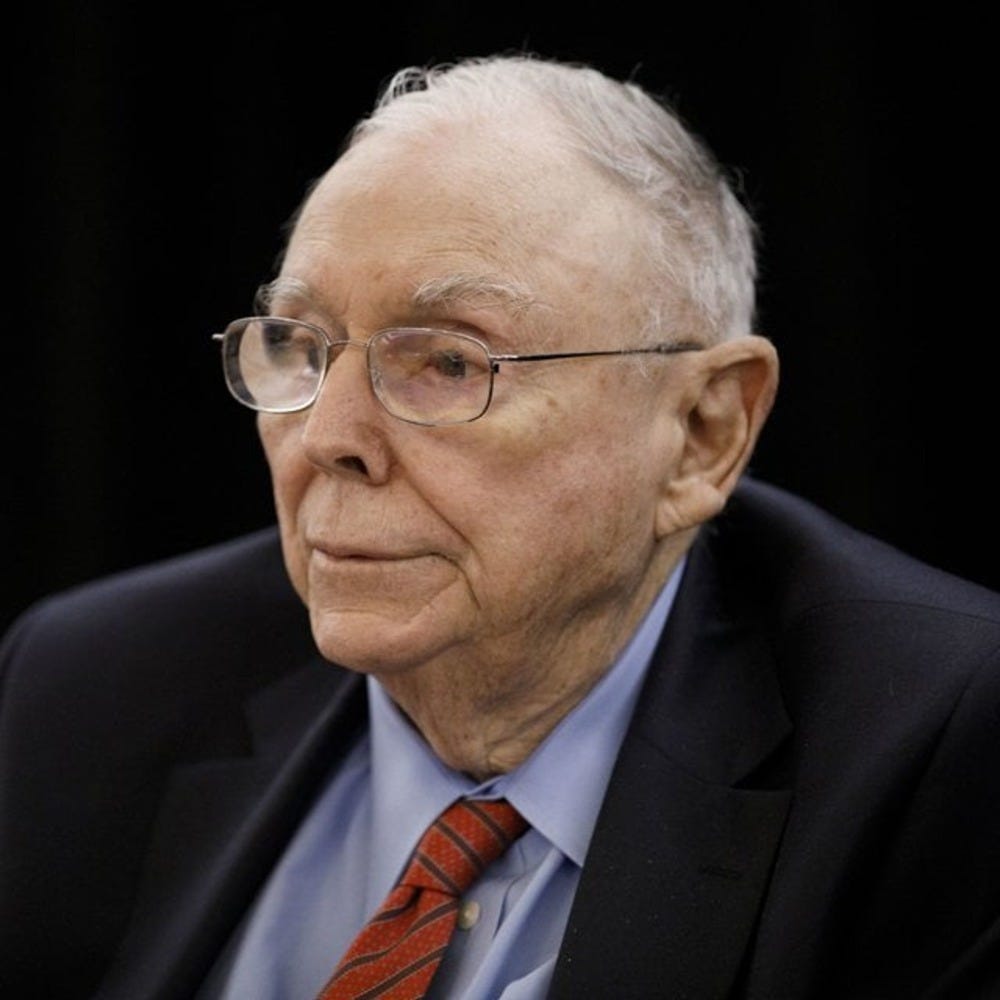
THIS IS ABOUT CHARLIE MUNGER'S 11 TALKS
CHAPTER 1
MEET BERKSHIRE’S QUIET BLADE
BUFFETT’S PUBLIC GENIUS. MUNGER’S SILENT EDGE.
Behind Berkshire’s rise stands Charlie Munger, Buffett’s friend, lawyer, adviser, and tireless devil’s advocate, compounding clarity into outsized results.
13,500× WITHOUT HYPE
$10M TO ~$135B WITH FEW NEW SHARES.
Since the 1960s, Buffett and Munger grew Berkshire’s value through disciplined opportunity selection, patience, and a near allergy to dilution.
BORN IN OMAHA, BUILT FOR WISDOM
JANUARY 1, 1924. HEARTLAND ROOTS.
Munger’s Midwestern upbringing forged restraint, reliability, and curiosity that later shaped his multidisciplinary approach to decisions.
BUFFETT & SON: EARLY FRICTION
12-HOUR SHIFTS, TWO PENNIES FOR “SOCIAL SECURITY.”
Harsh grocery shifts under Ernest Buffett taught Charlie thrift, grit, and skepticism toward systems that ignore incentives.
READING AS A SPORT
BIOGRAPHIES, BEN FRANKLIN, MEDICAL JOURNALS.
Voracious reading wired Munger for cross-domain thinking, blending ethics, science, and history into a single latticework.
SCIENCE CURIOUS, RESULTS OBSESSED
SURGERY FILMS, STATS, OUTCOMES.
Early exposure to medicine and statistics sparked Charlie’s love for evidence, feedback loops, and decisions grounded in reality.
NEGOTIATOR AT 14
HAMSTER TRADES, BETTER SPECS, BETTER COLORS.
Even as a kid, Charlie brokered advantage by spotting value others missed, a preview of his future investing temperament.
DEPRESSION LESSONS
HARD TIMES, HARD TRUTHS, SOFT HEARTS.
Family resilience and a judge-grandfather’s smart rescues taught Charlie capital stewardship, prudence, and community duty.
CHOOSE YOUR GAMES WISELY
MATH AT MICHIGAN, PHYSICS MINDSET FOREVER.
College sharpened his love for physics-style problem solving. For Munger, sound theory beats fashion, every time.
WAR SCHOOLING
ARMY AIR CORPS, CALTECH, METEOROLOGY.
Thermodynamics and weather systems trained Charlie to model uncertainty, weigh odds, and act with calm under pressure.
HARVARD WITHOUT A BA
GATE KEPT? HE WALKED THROUGH ANYWAY.
With help from Roscoe Pound, Munger entered Harvard Law, graduating magna cum laude, proving outcomes beat credentials.
PAIN, THEN PERSPECTIVE
DIVORCE AND A SON’S LEUKEMIA.
Personal tragedy deepened Charlie’s empathy and steel. He learned to endure, decide clearly, and keep moving with purpose.
REBUILT LIFE, EXPANDED FAMILY
MARRIED NANCY; EIGHT KIDS TOGETHER.
A blended, growing family anchored his drive for independence, philanthropy, and long-horizon thinking.
LAWYER WHO THOUGHT LIKE AN OWNER
FEES ARE FINE. EQUITY IS BETTER.
He swapped some client fees for stakes, learning business from the inside. Skin in the game sharpened his judgment.
REAL ESTATE FLYWHEEL
PASADENA DEALS, PROFITS ROLLED FORWARD.
Charlie reinvested gains into bigger projects, turning $100K into $1.4M by 1964, compounding skill, trust, and capital.
MUNGER, TOLLES… CULTURE FIRST
PICK CLIENTS LIKE FRIENDS. LEAVE THE LAST DOLLAR.
He co-founded a top law firm, set humane norms, and later left his capital share to a partner’s family. Principles over optics.
THE BUFFETT SPARK
A DINNER IN OMAHA. A HANDSHAKE FOR LIFE.
Charlie and Warren clicked instantly, trading letters and ideas. No contract. Just character, curiosity, and compounding trust.
FROM LAW TO LEVERAGE
“LAW IS A HOBBY. OWNERSHIP IS THE GAME.”
Buffett’s nudge helped Munger pivot from billable hours to building equity vehicles that scale while you sleep.
WHEELER MUNGER: THE SCORECARD
1962–1975, BIG WINS, BRUTAL DRAWDOWNS, NET GREATNESS.
28.3 percent gross for 11 years, two nasty bear-market hits, then a huge rebound. Lessons: temperament, survivability, patience.
HOLDCO OVER HEDGE FUND
SHUT PARTNERSHIPS. OWN COMPOUNDING MACHINES.
Charlie followed Warren in preferring permanent capital and control via holding companies over managing outside money.
BERKSHIRE’S PLAYBOOK
BUY WONDERFUL BUSINESSES. KEEP THEM.
From GEICO to Dairy Queen, Post to Coke stakes, Berkshire favored moats, managers, and time in the saddle.
FRANKLIN AS A MENTOR
MAKE FRIENDS WITH THE EMINENT DEAD.
Munger learned through lives, not lectures. Biography turns concepts into models you can recall under pressure.
WEALTH → INDEPENDENCE → IMPACT
MONEY IS A MEANS, NOT THE MISSION.
Charlie used wealth to buy freedom and fund causes, from schools to research centers, multiplying good beyond himself.
CLEAR RULES. LONG GAMES.
LATTICEWORK, INVERSION, ETHICS, ENDURANCE.
Munger’s portrait is a system: learn widely, think clearly, choose high-quality games, and let time do the heavy lifting.
TIMELESS TAKEAWAY
CHARACTER COMPOUNDS FASTER THAN CAPITAL.
Across heartbreaks and booms, Charlie’s edge stayed the same: curiosity, courage, ethics, and an owner’s mindset.
CHAPTER 2
RETURN IT WITH A FULL TANK
RESPECT BORROWED THINGS. RESPECT PEOPLE MORE.
Sun Valley lesson: even when rushed, top up the Jeep. Small acts signal character, build trust, and turn acquaintances into lifelong friends.
FAIRNESS THAT STICKS
DO RIGHT EVEN WHEN NO ONE’S WATCHING.
The owner wouldn’t have noticed the gas. Charlie still did it. Integrity is a habit, not a performance. People remember who runs on honor.
DINNER TABLE MBA
STORIES THAT STEER YOUR COMPASS.
Munger taught through morality tales and “downward spirals.” Humor plus consequence made ethics unforgettable and behavior self-policing.
CONFESS FAST, DON’T COVER
MISTAKES ARE FORGIVABLE. COVER-UPS AREN’T.
A finance officer owned a costly error and kept his job. Lesson: tell it early and straight. Trust recovers speed; deceit compounds damage.
STILL TEACHING AT 80
SAME TABLE, MORE CHAIRS, SAME COMPASS.
With grandkids in the mix, the stories continue. Repetition is deliberate. Values must be rehearsed to become reflexes under pressure.
DO IT RIGHT, FIRST TIME
STORM? GO BACK FOR THE PAPER.
A missed newspaper triggered a brutal do-over in rain and waves. The pain made the standard permanent. Excellence begins with zero excuses.
OWN THE OUTCOME
LOSE THE KEYS? DIVE TILL YOU FIND THEM.
No locksmiths, no whining. Two hours in murky water to recover car keys. Responsibility means you close the loop, however hard it is.
PRACTICE THE UNSEXY SHOT
SHORT GAME BEATS HIGHLIGHT REELS.
He drilled easy put-away volleys with a ball machine. Master boring edges others skip. In life and markets, fundamentals win tournaments.
MONK-MODE FOCUS
CHINESE-WALL YOUR ATTENTION.
Chinese-wall your attention.
Amid TV chaos and kids, he’d vanish into reading, plans, or markets. Deep focus is a superpower. Guard it and you’ll outlast the noise.
CONTRARIAN BALANCE
STAY UPRIGHT WHEN ERAS TILT.
In the radical 60s, he trained balance like aquaplaning: shift weight, avoid extremes. Skepticism kept his kids steady in wild currents.
BACK YOU LIKE A BILLIONAIRE
SIGNALS OF BELIEF SHAPE IDENTITY.
He funded crisp shirts and confidence from 3,000 miles away. Support plus standards builds a spine that resists fads and fury.
THE HANDS THAT TEACH
GENTLE GRIP, FIRM STANDARDS.
From egg-toss trophies to fishing knots, his hands modeled care and competence. Tender with people, exacting with craft. That’s culture.
BOOKS BEFORE BREAKFAST
BEN FRANKLIN BY THE WOOD STOVE.
Graph paper, biographies, genetics, markets. Curiosity ran from dawn to dusk. Learning wasn’t an event; it was the household climate.
STAGE PRESENCE, ZERO EGO
“I HAVE NOTHING TO ADD.”
At Omaha, he’d sip Coke, sample See’s, drop a zinger, then yield. Authority without performance. Precision over verbosity.
MESSAGES, NOT LECTURES
STORIES SCALE BETTER THAN SCOLDING.
He sent articles, letters, and coded anecdotes to guide decisions. Group delivery spared feelings, preserved dignity, and still landed.
MOUNT RUSHMORE MODE
CALM, IMMOVABLE, OCCASIONALLY VOLCANIC.
Kids approached requests like Dorothy before Oz. Silence, a rumble, or a ruling. Stoic presence taught restraint more than speeches did.
DURABILITY OVER FASHION
BROOKS BROTHERS, NOT RUNWAY HYPE.
Buy what lasts and fits your game. Rituals create identity. Stability in dress frees bandwidth for judgment where it matters.
TRADITION AS STRATEGY
RITUALS REDUCE DECISION FATIGUE.
Same brands, same habits, same compass. By standardizing the trivial, he saved focus for the consequential. That’s how clarity compounds.
HUMOR AS HANDLE
A JOKE MAKES A LESSON STICK.
From “played that like a plumber” to dinner-table epics, wit softened the sting while tightening the standard. Laugh, learn, remember.
CHARACTER IS CONTAGIOUS
SMALL RULES SHAPE BIG LIVES.
Gas the car. Admit the error. Finish the job. Read daily. Practice the boring edge. These micro-rules become a family operating system.
CHAPTER 3
FRANKLIN’S HEIR
SELF-TAUGHT, RELENTLESS, REALITY-BASED.
Munger mirrors Franklin: hard work, curiosity, patience. Investing is a byproduct of a rigorously organized life and clear thinking habits.
LATTICEWORK MIND
100+ MODELS, ONE PLAYBOOK.
He fuses tools from physics, biology, psychology, math, history into a latticework that reduces chaos to first principles and action.
ECOSYSTEM ANALYSIS
INSIDE THE BUSINESS AND AROUND IT.
Not just financials. He maps incentives, moats, tech shifts, regulation, labor, customers, and second-order effects to see the whole game.
BIG IDEAS, BIG DISCIPLINE
FLUENCY BEATS SPREADSHEETS.
From redundancy to compounding, tipping points to autocatalysis, Munger applies cross-field laws to explain durable advantage or decay.
PREPARATION → CLARITY
SIMPLE AT THE END, NOT THE START.
His “obvious” insights follow deep study. Simplicity emerges after wrestling complexity into a few governing variables you can trust.
TWO-TRACK THINKING
RATIONAL MATH PLUS HUMAN BIAS.
Track 1: interests, probabilities, value. Track 2: psychology of misjudgment. You need both to price reality, not stories.
INVERT, ALWAYS INVERT
CUT MISTAKES BEFORE CHASING WINS.
Start with what to avoid. Delete dumb risks and dead ends. Eliminating the losing half of the board frees focus for high-odds plays.
PHYSICS, NOT PHYSICS ENVY
AS SIMPLE AS POSSIBLE, NOT SIMPLER.
Beware one-formula answers for complex systems. Aim for robust models that hold under stress, not cute equations that crumble.
CIRCLE OF COMPETENCE
AS SIMPLE AS POSSIBLE, NOT SIMPLER.
Beware one-formula answers for complex systems. Aim for robust models that hold under stress, not cute equations that crumble.
CIRCLE OF COMPETENCE
YES. NO. TOO TOUGH.
He filters ruthlessly. Only simple, dominant, understandable franchises survive. Hype deals and tricky tech go in the “too tough” pile.
GREAT AT FAIR > FAIR AT GREAT
PRICE MATTERS, QUALITY RULES.
Prefer wonderful businesses at fair prices. Quality compounds. You avoid constant sell decisions and maximize time in the saddle.
OWNER’S METRICS
RECAST THE NUMBERS.
He rebuilds statements for reality: owner earnings, true working capital, options, pensions, float, hidden liabilities, real cash yield.
MOATS THAT WIDEN
ADVANTAGE PLUS ENDURANCE.
He rates brands, distribution, cost edges, culture, and durability versus competitive destruction. Survival across cycles is the test.
CHECKLIST THINKING
PROCESS BEATS MOOD.
Before pulling the trigger: price, volume, disclosures, capital availability, exits, opportunity cost. Checklists prevent dumb drift.
SIT-ON-YOUR-ASS INVESTING
FEW MOVES, BIG WEIGHT.
He makes large, patient bets in a tiny portfolio. Fewer trades, less noise, better taxes, more compounding. Activity isn’t progress.
TEMPERAMENT IS ALPHA
INDEPENDENCE OVER IMITATION.
Objectivity, patience, calm, and willingness to look wrong beat IQ. Mimicking the herd drags you to average. Stand alone with data.
MR. MARKET IS A PARTNER
HE OFFERS; YOU CHOOSE.
Use market quotes, don’t obey them. Value first, price second. Mood swings are opportunities when your analysis is anchored.
RISK FIRST
REPUTATION, LEVERAGE, INFLATION.
Start every decision measuring downside and margin of safety. Avoid bad people, bad terms, and irreversible loss. Play long games.
ALLOCATION IS JOB #1
OPPORTUNITY COST RULES.
Best use is the next best forgone. When odds are great, bet heavy. Don’t diversify into mediocrity. Capital is scarce. Aim it.
PATIENCE × DECISIVENESS
WAIT LONG. MOVE FAST.
Most days you prepare, not act. When the right pitch comes, swing hard. Be fearful when others are greedy, and the reverse.
CHANGE OR BE CHANGED
REALITY DOESN’T NEGOTIATE.
He updates models, amends beloved ideas, and accepts complexity. Adaptation beats stubbornness, especially across long horizons.
FOCUS BEATS FRENZY
GUARD ATTENTION, AVOID TRIVIA.
Keep goals visible, exclude noise, fix leaks early. Integrity and reputation compound or evaporate fast. Protect both daily.
FROM SCIENCE TO STRATEGY
MOATS MEET THERMODYNAMICS.
He tracks conversions of energy and cost in real supply chains, not slide decks. Advantage must pay in the physics of delivery.
SECOND-ORDER THINKING
RIPPLES BEAT SNAPSHOTS.
Model feedback loops, tipping points, spillovers. What happens after what happens next is where edge often hides.
PROCESS OVER OUTCOME
SCORE THE PLAY, NOT THE LUCK.
A good decision can lose. A bad process can win by accident. He grades preparation and reasoning because those are controllable.
READING AS A SPORT
VORACIOUS, DAILY, FOREVER.
Curiosity is the compounder behind returns. Learn widely, ask “why” relentlessly, and get a little wiser every day.
THE LALAPALOOZA EFFECT
VIRTUES THAT AMPLIFY EACH OTHER.
Preparation, discipline, patience, decisiveness combine into cascading positives. That flywheel is Munger’s real edge.
WHEN TO SELL? RARELY
BUY TO MINIMIZE FUTURE DECISIONS.
Own a few great companies so you don’t constantly reassess. Selling is hard and tax-heavy. Let quality compound for you.
SUMMARY: THE MUNGER METHOD
ELIMINATE, MODEL, VALUE, WAIT, ACT.
Cut the “too tough.” Attack with multidisciplinary models. Demand moats and owner earnings. Be patient. When it’s right, go big.
CHAPTER 4
11 TALKS THAT OUTLIVED THE STAGE
CHARLIE MUNGER’S SPEECHES WEREN’T FOR APPLAUSE — THEY WERE PLAYBOOKS.
Each talk reveals how to think better, decide better, and live wiser. Together, they form a survival manual against stupidity and self-inflicted misery.
TALK 1 : HARVARD SCHOOL (1986)
TALK 1: HARVARD SCHOOL (1986)
How to guarantee misery. Narrative Instead of chasing happiness, Munger inverted the question: addiction, envy, resentment, unreliability — master these and you ruin your life.
TALK 1 : RULE 1 : INVERSION
AVOID WHAT RUINS PEOPLE
Inversion is a thinking tool:
define the outcome you fear,
then
list the behaviors that produce it. Misery is not random.
It comes from patterns. Once you can name the patterns, you can design your days to not feed them.
TALK 1 : RULE 2 : ADDICTION
FASTEST ROAD TO RUIN.
Chemical or behavioral addictions hijack priorities. They trade long-term stability for short-term relief, then demand a larger payment every time.
The real damage is not only money or health, but the loss of self-command and the shrinking of options.
TALK 1 : RULE 3 : ENVY
COMPARE, COMPLAIN, COLLAPSE.
Envy makes you measure life by other people’s scoreboards.
It creates permanent dissatisfaction, because someone will always have more. It also blinds judgment:
"you start copying lifestyles you cannot afford or chasing status that doesn’t match your nature".
TALK 1 : RULE 4 : RESENTMENT
THE LONG-TERM TOXIN
Resentment feels like “justice,” but functions like a slow fever.
It keeps old injuries alive, steals attention from building the future, and makes you interpret neutral events as attacks.
The cost is compounded: worse decisions, weaker relationships, less energy.
TALK 1 : RULE 5 : UNRELIABILITY
FAIL AT PROMISES, FAIL AT LIFE.
If people cannot count on you, opportunities stop arriving.
Trust is an invisible asset that takes years to build and one careless habit to burn.
Being late, breaking promises, shifting blame, and avoiding hard conversations quietly push you out of serious circles.
TALK 1 : RULE 6 : NOT LEARNING FROM OTHERS
IGNORE THE FREE TUITION OF HISTORY.
Refuse to learn from books, mentors, biographies, and case studies. Insist on paying full price for every lesson through your own pain.
The result is predictable: repeated mistakes, slower growth, and an “education” you could’ve gotten cheaper.
TALK 1 : RULE 7 : GIVING UP EARLY
QUIT WHEN IT’S HARDEST.
Every meaningful path includes reverses, boredom, and doubt. If you exit at the first pressure spike, you lock in failure and train yourself to run.
Misery compounds because you never stay long enough for the curve to turn in your favor.
TALK 1 : RULE 8 : SKIPPING INVERSION
NEVER ASK “WHAT COULD KILL ME?”
Skip inversion and you walk forward blind. The safer method is to list what could ruin you first, then design to avoid it.
Refuse that lens and you’ll step into obvious traps, not because they’re complex, but because you never looked backward.
TALK 1 : RULE 9 : FROZEN OPINIONS
STAY LOYAL TO YOUTHFUL STUPIDITY.
Freeze your opinions early and defend them like a religion.
Never revise beliefs when facts change or when experience proves you wrong. Rigidity feels stable, but it makes you fragile.
Misery grows the moment learning stops and ego takes over.
TALK 1 : RULE 10 : SELF-PITY
A TRAP THAT FEELS JUSTIFIED
Self-pity is seductive because it gives emotional comfort without requiring change. But it blocks problem-solving, invites helplessness, and trains you to explain instead of act.
Munger’s view is harsh but useful: pity adds suffering without fixing the cause.
THE META-LESSON OF TALK 1
MISERY BY FORMULA, WISDOM BY INVERSION.
By cataloguing paths to ruin, Munger gave graduates a playbook for success. Avoid stupidity, and what remains — reliability, learning, objectivity — leads to a good life.
TALK 2: ELEMENTARY WORLDLY WISDOM (1994)
TALK 2: ELEMENTARY WORLDLY WISDOM (1994)
A LATTICEWORK FOR CLEAR THINKING.
Munger’s core claim:
"One discipline makes you fragile".
Build a latticework of the best big ideas across math, psychology, economics, engineering, and biology.
Then test decisions through that toolkit so reality “fits,” and judgment improves with time.
TALK 2 : MODEL 1 : THE LATTICEWORK CONCEPT
MANY MODELS, ONE MIND.
A single model turns everything into the same problem.
Stockpile a few powerful models from many fields and practice combining them.
When models connect, you see patterns faster, avoid dumb mistakes, and choose actions that match how the world works.
TALK 2 : MODEL 2 : THE MATH MODELS
PROBABILITY AND COMPOUNDING.
Learn the math that governs outcomes:
expected value,
base rates,
compounding,
simple combinatorics.
These tools turn guesswork into odds. Without them you misread risk, overpay for certainty, and miss small edges that compound for years.
TALK 2 : MODEL 3 : THE ENGINEERING MODELS
REDUNDANCY AND BREAKPOINTS.
Design like an engineer:
add redundancy,
keep safety margins,
locate the breakpoint before you bet.
Systems fail at weak links.
The same logic applies to businesses, portfolios, and careers: avoid single points of failure and plan for stress.
TALK 2 : MODEL 4 : THE BIOLOGY MODELS
DARWIN RUNS THE WORLD.
Evolution is a business textbook. Selection rewards what fits the environment, kills what doesn’t, and amplifies feedback loops.
Companies, products, and strategies compete for survival. Adaptation beats ego.
Moats erode when environments change.
TALK 2 : MODEL 5 : THE PSYCHOLOGY MODELS
BIAS IS THE ENEMY.
Most bad decisions are psychological, not technical.
Incentives distort truth,
social proof spreads error, commitment hardens mistakes,
and denial protects comfort.
Learn the standard biases and watch for combos, because stacked biases create extreme outcomes.
TALK 2 : MODEL 6 : THE ECONOMICS MODELS
MOATS, SCALE, AND INCENTIVES.
Economics explains why winners keep winning:
incentives,
opportunity cost,
scale,
network effects,
comparative advantage.
These models reveal moats, pricing power, and fragility. If you can map incentives, you can predict behavior better than slogans can.
TALK 2 : MODEL 7 : THE CHECKLIST HABIT
PILOTS DON’T WING IT — WHY SHOULD YOU?
Use your models like a pilot’s checklist.
Before acting, run key lenses: incentives,
alternatives,
probabilities,
failure modes,
second-order effects.
Checklists beat genius because they prevent “obvious” blind spots under time pressure and emotion.
TALK 2 : MODEL 8 : THE SELECTIVE BETTING MODEL
BET RARELY, BET BIG.
Most of the time, do nothing.
Wait for rare moments when odds are clearly in your favor and you understand why.
Then bet decisively.
The edge is patience plus preparedness: you can’t force great opportunities, but you can be ready to seize them.
TALK 2 : MODEL 9 : THE PUNCH-CARD RULE
20 DECISIONS FOR LIFE.
Pretend you have only 20 lifetime decisions.
You would slow down, demand strong evidence, and concentrate on what matters most.
That mindset filters noise, reduces overtrading, and lets a few high-quality choices compound into outsized results.
TALK 2 : MODEL 10 : TAX-EFFICIENT THINKING
DON’T LET FRICTION EAT COMPOUNDING.
Compounding is fragile;
friction kills it.
Frequent trading leaks returns through taxes, fees, and mistakes. Prefer durable quality and long holding periods.
The best strategy often looks boring: minimize tolls, let time do the heavy lifting.
THE META-LESSON OF TALK 2
WISDOM IS INTERDISCIPLINARY.
You don’t need encyclopedic knowledge.
You need the right few models from many disciplines, and the habit of applying them together.
With checklists, patience, and respect for incentives and bias, the latticework becomes a practical engine for judgment.
TALK 3: STANFORD LAW (1996)
TALK 3: STANFORD LAW 1996
WORLDLY WISDOM WITH SHARPER EDGES.
Munger revisited multidisciplinary thinking, but with teeth. This talk zeroed in on psychology, incentives, ideology, and law — showing how smart systems fail when human behavior is misunderstood or ignored.
TALK 3 : POINT 1 : THE PSYCHOLOGY GAP
MOST TEXTBOOKS MISS THE POINT.
Munger argued psychology is mis-taught.
Core forces like denial, envy, incentive-caused bias, and social proof are barely covered.
Without them, textbooks explain theory, not how humans actually behave under pressure.
TALK 3 : POINT 2 : DEPRIVAL SUPERREACTION SYNDROME
LOSSES HURT MORE THAN GAINS THRILL.
Humans feel loss far more intensely than gain. This drives gambling spirals, revenge decisions, sunk-cost traps, and bad investing.
When people fear losing what they had, rational judgment collapses fast.
TALK 3 : POINT 3 : THE LOLLAPALOOZA EFFECT
FORCES DON’T JUST ADD — THEY MULTIPLY.
When multiple biases act together: authority,
incentives,
social proof,
commitment.
Their impact explodes.
Munger called this a lollapalooza effect. It explains bubbles, cults, frauds, and why smart people do shocking things.
TALK 3 : POINT 4 : CAPTAIN COOK’S SAUERKRAUT
PSYCHOLOGY AT SEA.
To prevent scurvy, Cook used psychology, not orders.
He fed sauerkraut only to officers first. Sailors soon demanded it.
The lesson:
persuasion works better when desire is triggered indirectly, not forced directly.
TALK 3 : POINT 5 : CHEATING SYSTEMS
MAKE FRAUD HARD, OR SOCIETY ROTS.
If systems are easy to cheat, people will cheat. Once cheating spreads, it feels normal and moral resistance collapses.
Munger warned that allowing “slop” early creates corruption that becomes almost impossible to reverse.
TALK 3 : POINT 6 : LAW’S UNINTENDED DAMAGE
NOBLE GOALS, PERVERSE OUTCOMES.
Well-meaning laws often backfire when incentives are ignored.
Stress-based workers’ compensation created fraud networks. Intentions don’t matter; outcomes do.
Bad incentives quietly destroy systems built to help.
TALK 3 : POINT 7 : THE NAVY RULE
NO EXCUSES. JUST OUTCOMES.
In the Navy, if your ship runs aground, your career ends; no debate.
Harsh, but effective.
Removing excuses raises vigilance and responsibility.
Some systems work better when accountability is absolute, not litigated.
TALK 3 : POINT 7 : IDEOLOGY: THE BRAIN KILLER
DON’T BE THE PRISONER OF DOGMA.
Ideology distorts thinking, even in geniuses.
Munger cited how rigid beliefs warped judgment across politics and academia.
Buffett avoided ideology deliberately. Certainty feels goo; but it destroys objectivity and flexibility.
TALK 3 : POINT 8 : APPEAL TO INTERESTS, NOT MORALS
A PERSUASION SHORTCUT.
Want someone to do the right thing? Don’t lecture. Show how self-interest aligns with virtue. Fear of ruin beats appeals to conscience.
TALK 3 : POINT 9 : TEACHING BY INDIRECTION
LESSONS THAT STICK.
Moral lectures rarely work.
Appealing to self-interest does.
Munger showed how warning someone about ruin, reputation loss, or personal cost is far more persuasive than telling them what’s “right.”
TALK 3 : POINT 10 : REMEDIAL WORLDLY WISDOM
THE MISSING COURSE.
Munger argued law schools should teach a crash course on psychology, incentives, and bias before doctrine.
He called it “remedial worldly wisdom”; not advanced, just essential knowledge everyone should already have.
THE META-LESSON OF TALK 3
THINK LIKE A SYSTEM-BUILDER.
Truth lives in the connections. Psychology, law, incentives, and morality interact whether we like it or not.
Ignore those links and systems decay. Understand them, and you prevent disasters before they start.
TALK 4: USC BUSINESS 1995
TALK 4: USC BUSINESS (1995)
PRACTICAL THOUGHT ABOUT PRACTICAL THOUGHT.
Using Coca-Cola, Munger showed how real business advantage isn’t one trick. It’s many models working together: product habit, flavor stickiness, brand protection, distribution scale, and compounding. When the models align, success becomes durable.
TALK 4 : POINT 1 : FLAVOR AS A MOAT
TASTE IS PSYCHOLOGY YOU CAN’T PATENT.
Flavor is a lock-in mechanism.
Hershey’s process created a taste people grew up craving.
Coke did the same by making one flavor feel “right.”
You can copy ingredients, but you can’t easily copy the emotional memory and habit built over decades.
TALK 4 : POINT 2 : TRADEMARKS THAT PROTECT CIVILIZATIONS
A LOGO IS MORE THAN A LOGO.
Trademarks create powerful incentives:
if your name is valuable,
you protect quality because failure damages the asset.
Carnation and Coke show this.
The brand becomes a discipline system. Even when no regulator is watching, the company polices itself to defend trust.
TALK 4 : POINT 3 : BIOLOGY EXPLAINS MATH
WHY GRAPHS WORK ON THE HUMAN BRAIN.
Humans are clumsy with raw numbers but strong with visual motion.
Graphs turn data into shapes the brain can feel.
Log charts reveal compounding as a straight line, making growth rates readable.
That’s why Coke’s long-run progress is clearer on graphs than spreadsheets.
TALK 4 : POINT 4 : AUTOCATALYSIS IN BUSINESS
SUCCESS FEEDS SUCCESS.
Autocatalysis means the system strengthens itself. Coke’s distribution makes the brand visible everywhere, which increases demand, which justifies more distribution. The loop compounds. Once the cycle is running globally, competitors face a rising barrier: you must out-scale the leader to catch it
TALK 4 : POINT 5 : THE REACH OF PSYCHOLOGY
EVERY CAN CARRIES PERSUASION.
Coke isn’t just sugar and water. It’s conditioning and association.
Repetition trains the mind, ads attach it to joy, and social proof normalizes it.
Over time, the product becomes a “default choice.”
The persuasion is embedded in the culture, not only in marketing.
TALK 4 : POINT 6 : THE DISNEY PARALLEL
OLD ASSETS, NEW TAILWINDS.
Disney’s old films became a gold mine when a new channel arrived: home video.
Coke also benefits from tailwinds it didn’t invent, like refrigeration, modern logistics, and global retail.
When you own timeless demand, new distribution waves become free amplifiers.
TALK 4 : POINT 7 : THE CHECKLIST MIND
BRIDGE, INVESTING, COCA-COLA.
Munger’s rule:
use checklists like pilots and bridge experts.
Run the models: incentives, habit, scale, brand, substitution risk, distribution, pricing power.
The goal isn’t cleverness. It’s coverage. Coke looks “simple” only after you’ve checked every box and seen how they interact.
WHY IT MATTERS
MODELS AREN’T THEORY — THEY’RE SURVIVAL.
Coke teaches a practical lesson: durable advantage comes from model convergence. Flavor creates habit, trademarks protect trust, distribution builds scale, psychology sustains demand, and compounding rewards patience.
Learn to spot these stacks, and you avoid weak businesses and costly mistakes.
TALK 5: HARVARD, 1995
TALK 5: HARVARD, 1995
THE PSYCHOLOGY OF HUMAN MISJUDGMENT.
Munger’s signature framework: a checklist of 25+ tendencies that bend perception. He shows how intelligent people still fail through predictable bias, then offers a practical defense: recognize the pattern early, redesign incentives, and slow down before you commit.
TALK 5 : BIAS 1: REWARD & PUNISHMENT SUPERRESPONSE
INCENTIVES EXPLAIN EVERYTHING.
Incentives are the master lever. People repeat what pays, excuse what pays, and defend what pays.
If rewards are misaligned, you will get the behavior you “didn’t want” anyway:
corner cutting, fraud, metric gaming, or quiet sabotage.
Fix the payoff, fix the outcome.
TO BE CONTINUE....
( ON PROGRESS)
MEDITATIONS
BOOK SUMMARY BY MARCUS AURELIUS
Indonesian Version
RASA SYUKUR & PENGARUH
BUKU PERTAMA
RASA SYUKUR
JIWA DIBENTUK DARI KETELADANAN
Marcus membuka catatan dengan syukur. Ia menyebut orang-orang yang membentuk karakternya: ayah yang sederhana, ibu yang lembut, guru yang bijak. Hidup baik dimulai dari meniru kebaikan.
NILAI LEWAT PERILAKU
CONTOH LEBIH KUAT DARI KATA-KATA
Kebaikan tak diwariskan lewat pidato, tapi lewat sikap sehari-hari. Ketekunan, ketenangan, dan kejujuran dipelajari Marcus dari orang yang melakukannya, bukan mengatakannya.
FILSAFAT ADALAH JALAN HIDUP
BUKAN DEBAT, TAPI PERILAKU
Marcus menjauhi debat yang kosong. Ia percaya kebijaksanaan sejati lahir dari hidup selaras dengan akal sehat, bukan dari tampil pintar atau ingin menang argumen.
PERJALANAN BATIN
BUKU KEDUA
AWALI HARI DENGAN PERSIAPAN
DUNIA TIDAK SEMPURNA, TAPI KITA BISA
Setiap pagi, Marcus mengingatkan diri: akan ada orang bodoh dan jahat hari ini. Tapi aku bisa tetap jernih dan lurus. Jiwa tak bisa dirusak tanpa izin dari dalam.
KEMATIAN ADALAH BAGIAN DARI ALAM
JANGAN TAKUT PADA YANG ALAMI
Jika alam yang membuat kematian, mengapa takut? Jika Tuhan adil, ia tidak mencelakai. Jika hidup berakhir, maka itu pun bagian dari siklus. Yang penting: tetap hidup benar.
SEMUA YANG FANA AKAN LENYAP
JANGAN GANTUNGKAN HIDUP PADA YANG RAPUH
Tubuh, harta, pujian, semua akan sirna. Jangan ikat dirimu pada hal yang pasti hilang. Pegang yang kekal: akal sehat, kejujuran, dan jiwa yang teguh.
PANJANG-PENDEK SAMA SAJA
YANG DILEPAS HANYALAH DETIK INI
Hidup 30 tahun atau 300 tahun, saat mati kamu hanya kehilangan waktu yang sedang kamu alami. Masa lalu sudah pergi, masa depan belum datang. Yang nyata hanya saat ini.
LUKA DATANG DARI OPINI
UBAHLAH PIKIRANMU, UBAHLAH RASA SAKIT
Yang menyakitimu bukan kejadian, tapi penilaianmu. Jika kamu menghapus opini buruk, penderitaan ikut hilang. Bebas bukan soal situasi, tapi soal persepsi.
JIWA YANG TAK MENYIMPANG TAK TERKALAHKAN
TAKLUKKAN DIRIMU, BUKAN DUNIA
Selama kamu tetap pada jalur kebajikan, tak ada yang bisa menjatuhkanmu. Bahkan jika tubuhmu hancur, jiwamu tetap utuh jika tidak menyimpang dari akal dan prinsip.
FILSAFAT DALAM TINDAKAN
BUKU KETIGA
GUNAKAN AKAL SELAGI ADA
PIKIRAN JERNIH BISA PADAM
Hidup panjang belum tentu hidup sadar. Akal bisa rusak duluan. Maka manfaatkan waktu dengan berpikir dan bertindak bijak sebelum kemampuan itu hilang darimu.
SEMUA TOKOH HEBAT JUGA MATI
TIDAK ADA YANG KEBAL TERHADAP WAKTU
Alexander, Socrates, semua telah tiada. Kejayaan tak membuat mereka abadi. Jangan sombong atas waktumu. Jalani hidup lurus, karena semuanya akan berakhir juga.
FOKUS PADA PIKIRAN SENDIRI
URUS JIWAMU, BUKAN URUSAN ORANG
Apa yang orang lain lakukan bukan urusanmu. Yang penting adalah memastikan pikiranmu jernih, bebas dari hawa nafsu, dan setia pada nilai yang lurus.
JANGAN KEJAR PUJIAN
KEBAIKAN TAK BUTUH PENONTON
Jika kamu hanya baik saat dilihat, itu bukan kebajikan. Nilai sejati berdiri tanpa sorotan. Ia tidak goyah meski tidak dikenali siapa pun.
UTAMAKAN YANG MULIA
JANGAN TUKAR NILAI DENGAN KESENANGAN
Jika ada yang lebih mulia dari akal sehat dan kejujuran, kejar itu. Jika tidak, jangan biarkan kenikmatan sesaat merusak yang kamu tahu benar.
JIWA YANG SIAP PERGI
TAK MENYESAL, TAK MENGGENGGAM
Jiwa yang terlatih tidak takut kehilangan. Ia tidak menyimpan dendam, tidak mengejar pujian, dan bisa pergi dengan tenang karena hidupnya sesuai prinsip.
HIDUP ITU SEKILAS
TAK PERLU DIBESAR-BESARKAN
Tubuh akan rusak, nama akan hilang, reputasi akan pupus. Maka hiduplah sederhana, dengan fokus pada yang tak lekang: kebaikan, akal, dan kendali diri.
SEBUT APA ADANYA
JANGAN BUMBUI KENYATAAN
Jangan bilang kehilangan, katakan “ia berpindah tempat.” Dengan menyebut hal secara jujur, kamu akan melihat dunia apa adanya tanpa terjebak emosi.
JALANI DUA DUNIA
ROHANI DAN SOSIAL YANG SEIMBANG
Kehidupan batin tak lengkap tanpa hubungan dengan sesama. Spiritualitas sejati adalah hidup baik di bumi sambil tetap sadar pada yang ilahi.
HIDUP ITU TERJADI SEKARANG
ESOK TIDAK DIJAMIN
Berhentilah menunda hidup yang benar. Jangan tunggu waktu tepat. Momen ini cukup untuk hidup secara utuh, lurus, dan tenang.
KEBEBASAN SEJATI ITU AKAL
BUKAN BEBAS LIAR, TAPI BEBAS SADAR
Orang merdeka bukan yang bebas melakukan apa saja, tapi yang mampu memilih dengan akal sehat, menjaga nilai, dan tidak tunduk pada dorongan liar.
PELEPASAN & PERSPEKTIF
BUKU KEEMPAT
HIDUP ADALAH SEKARANG
MASA LALU HILANG, MASA DEPAN BELUM TIBA
Hanya satu waktu yang bisa kamu jalani: saat ini. Jangan buang waktu memikirkan apa yang tak bisa diubah atau belum tentu terjadi.
KEJADIAN ITU BUKAN BAIK ATAU BURUK
SEMUA NETRAL, HANYA PERSEPSIMU YANG MENILAI
Benda dan peristiwa hanya benda dan peristiwa. Kamu yang menamainya baik atau buruk. Kendalikan pikiranmu, bukan dunia luar.
JANGAN HARAP DUNIA ADIL
TAPI KAMU BISA TETAP ADIL
Dunia tidak dibuat untuk memuaskan harapanmu. Tapi kamu bisa memilih bersikap benar, bahkan saat keadaan tidak adil sekalipun.
JIWA SEHAT TAK TERGANTUNG LUAR
IA BERDIRI DI ATAS PRINSIP, BUKAN PUJIAN
Jiwa yang baik tak tergantung pada harta, nama, atau komentar orang. Ia cukup dengan kesadaran bahwa ia hidup selaras dengan kebenaran.
JANGAN TUNDA HIDUP BAIK
MENUNDA ADALAH KEBIASAAN BERBAHAYA
Kita sering menunggu waktu yang pas untuk berubah. Padahal satu-satunya waktu yang kamu punya adalah sekarang. Hidup baik tidak bisa ditunda.
HIDUP ITU ALUR ALAM
KITA INI ADALAH BAGIAN KECIL DARI SEMESTA
Segala sesuatu diatur oleh hukum alam. Terimalah alurnya dengan lapang. Menolak nasib sama saja dengan menolak posisimu di semesta.
KEBAHAGIAAN ADA DI AKAL
SUMBER DAMAI BUKAN DARI LUAR
Kebahagiaan sejati bukan dari jabatan, pujian, atau kenikmatan, tapi dari akal yang lurus dan jiwa yang tenang dalam menghadapi apapun.
JANGAN TAKUT PENDAPAT ORANG
TAK SEMUA HAL PERLU DITANGGAPI
Biarkan orang berkata sesukanya. Nilai dirimu sendiri lewat pikiran yang jujur. Tak perlu menjelaskan kebaikan kepada yang tak ingin mengerti.
JIKA SESUATU TAK BAIK, JANGAN LAKUKAN
PENILAIAN MORALMU CUKUP SEBAGAI KOMPAS
Jika menurut akal sehatmu hal itu tidak jujur, tidak adil, atau tidak perlu, jangan lakukan. Jangan tunggu orang lain menyuruh atau melarang.
SATU HAL PERLU DIKUASAI
KENDALIKAN PIKIRAN, BUKAN DUNIA
Kamu tidak bisa kendalikan orang, cuaca, atau nasib. Tapi kamu bisa kendalikan dirimu sendiri. Di situlah letak kekuatan sejati manusia.
TUGAS VS KEINGINAN
BUKU KELIMA
BANGUN DAN JALANI TUGASMU
LAHIR UNTUK BERBUAT, BUKAN TIDUR
Bangun pagi bukan beban jika kamu sadar bahwa kamu diciptakan untuk berbuat baik. Bahkan matahari pun tak malas terbit. Maka, jangan lari dari peranmu.
KITA INI BUKAN BUDAK KENIKMATAN
HIDUP BUKAN UNTUK NYAMAN TERUS
Tubuhmu ingin selimut, jiwamu butuh makna. Jika kamu hidup untuk kenyamanan, kamu tidak beda dari binatang. Hidup manusia adalah tentang nilai.
TUGAS LEBIH PENTING DARI PERASAAN
JANGAN TUNGGU MOOD UNTUK BERBUAT
Kamu tidak perlu merasa semangat untuk bertindak benar. Lakukan karena itu tugasmu sebagai manusia, bukan karena kamu sedang ingin atau tidak.
HARGAI WAKTU YANG TERSISA
MATI BISA DATANG KAPAN SAJA
Kamu tidak tahu berapa banyak waktu tersisa. Setiap detik bisa jadi yang terakhir. Maka gunakan sekarang untuk berpikir lurus dan bertindak adil.
JANGAN MENIPU DIRI SENDIRI
YANG TAHU KEBENARANMU HANYA KAMU
Kamu bisa kelabui orang, tapi tidak dirimu sendiri. Hidup benar bukan soal tampilan, tapi soal integritas. Hanya kamu yang tahu apakah kamu sedang lurus atau menyimpang.
KEBAIKAN TAK PERLU PANGGUNG
SEPERTI POHON, IA TUMBUH DIAM-DIAM
Jika kamu menolong agar dipuji, itu bukan kebaikan. Jadilah seperti pohon yang memberi buah tanpa suara. Nilai sejati bekerja tanpa pamrih.
JANGAN TAKUT DIRI SENDIRI
BUKAN KUTUKAN, TAPI PELATIHAN
Sakit, lelah, atau kecewa bukan alasan untuk menyerah. Itu latihan jiwa. Seperti besi diuji api, kebajikan diuji penderitaan.
IKUTI ALAM, BUKAN NAFSU
ALAM MENGALIR, NAFSU MENYERET
Hiduplah selaras dengan alam: tenang, jernih, teratur. Nafsu mengacaukan arah. Jika kamu ingin damai, ikuti ritme semesta, bukan desakan ego.
JANGAN LEMAH PADA DIRI SENDIRI
JADILAH PENGUASA PIKIRANMU
Kamu bisa dikalahkan orang lain, tapi jangan sampai kamu kalah oleh dirimu sendiri. Disiplin dan kejelasan batin adalah kemenangan paling utama.
RASIONALITAS ALAM
BUKU KEENAM
DUNIA TAK PERLU IZINMU
SEMESTA BERJALAN DENGAN ATAU TANPA PERSETUJUANMU
Jangan berharap dunia mengikuti keinginanmu. Kamu bagian kecil dari tatanan alam. Yang bisa kamu atur hanyalah caramu menerima dan merespons segalanya.
BANTU, ATAU TERIMA
DUA PILIHAN BIJAK DALAM RELASI
Jika kamu bisa membantu orang, bantu. Jika tidak, setidaknya jangan benci. Jangan biarkan kelemahan mereka mencuri kejernihanmu sendiri.
JANGAN TERTIPU KATA-KATA
PERIKSA ESENSI, BUKAN GAYA
Orang bisa bicara indah, tapi isinya hampa. Jangan terpukau pada gaya. Cari substansi. Penampilan bisa memukau, tapi hanya isi yang memberi arah.
HIDUPMU MILIKMU
JANGAN SERAHKAN KENDALI PADA LUAR
Kamu tak bisa mengontrol ucapan orang, tapi kamu bisa kendalikan reaksi. Jangan biarkan kemarahan, pujian, atau hinaan mengatur jiwamu.
WAKTU ADALAH KEHIDUPAN
YANG KAMU BUANG ADALAH HIDUPMU SENDIRI
Menghabiskan waktu untuk hal remeh sama dengan membuang hidup. Gunakan waktu untuk berpikir, bertindak, dan hidup sesuai nilai terdalammu.
JANGAN BIARKAN JIWA KOTOR
LEBIH BURUK DARI TUBUH KOTOR
Kita malu jika tubuh bau, tapi sering biarkan jiwa penuh iri, marah, dan kebohongan. Jaga kebersihan batin seperti kamu menjaga tubuh setiap hari.
SUMBER DAMAI ADA DI DALAM
BUKAN DARI LUAR, BUKAN DARI ORANG
Ketika kamu berhenti menggantungkan damai pada dunia, kamu menemukannya di dirimu. Tak perlu menunggu cuaca atau sikap orang untuk tenang.
AKAL ADALAH CAHAYA JIWA
JANGAN PADAMKAN DENGAN NAFSU
Akal adalah lentera yang menerangi pilihan. Jika kamu biarkan dikalahkan emosi, hidupmu berjalan dalam gelap meski matamu terbuka.
KEBAIKAN TAK BUTUH SAKSI
KEBAIKAN MURNI BERDIRI SENDIRI
Jika kamu hanya baik saat dilihat, itu bukan kebaikan. Nilai sejati adalah berbuat benar walau tak ada yang memuji, bahkan saat tak ada yang tahu.
JIWA YANG TENANG TAK TERGANGGU DUNIA
DUNIA RIBUT, TAPI DALAMMU TETAP HENING
Badai bisa mengamuk di luar, tapi jiwa yang kokoh tetap sunyi. Jika kamu berdiri di atas nilai, dunia tak lagi bisa mengguncangmu.
BENTENG BATIN
BUKU KETUJUH
SEMESTA ADIL DALAM CARANYA
YANG TERJADI, MEMANG HARUS TERJADI
Jika sesuatu terjadi, maka itu sudah pantas terjadi. Alam tidak salah alamat. Tugasmu bukan mengeluh, tapi mengerti dan menyesuaikan diri.
PENDAPAT ORANG TAK MENENTUKAN NILAIMU
KAMU TAK SEHARUSNYA HIDUP DARI PENILAIAN
Jika kamu tahu dirimu jujur dan lurus, itu cukup. Pendapat orang hanyalah gema, bukan sumber nilai. Jangan biarkan hatimu dikendalikan sorak atau caci.
JANGAN TAKUT PERUBAHAN
HIDUP ADALAH ALIRAN, BUKAN BEKUAN
Semua hal berubah. Kamu, orang lain, dunia. Jangan lawan perubahan, tapi arahkan dirimu agar tetap berjalan lurus di tengah arus yang terus berganti.
BICARA SEPERLUNYA, BERBUAT SEBANYAKNYA
NILAI HIDUP BUKAN DARI OMONGAN
Berhenti menjelaskan siapa dirimu. Jalani nilai-nilai itu dalam tindakan. Biarkan orang menilai dari perbuatan, bukan kata-kata.
SEMUA ORANG SALAH, TERMASUK KAMU
MAKA JANGAN MARAH, TAPI PAHAMI
Jika orang berbuat salah, bisa jadi karena ketidaktahuan. Maafkan sebagaimana kamu ingin dimaafkan saat khilaf. Gunakan akal, bukan kemarahan.
WAKTU SINGKAT, GUNAKAN BAIK-BAIK
JANGAN BIARKAN TERBUANG PERCUMA
Waktu tak bisa dibeli ulang. Setiap detik adalah peluang untuk hidup bijak. Jangan isi hari dengan hal remeh yang tak memberi makna.
JIWA YANG LURUS TAK PERLU SANDIWARA
JADILAH UTUH, TAK PERLU TOPENG
Orang lurus tak perlu pura-pura. Ia tak sibuk menjaga citra, karena batinnya sudah damai. Jangan jadi dua wajah: satu untuk publik, satu untuk diri.
ALAM ITU TIDAK PERNAH EGOIS
MAKA KAMU PUN JANGAN HIDUP EGOIS
Segala di alam memberi tanpa pamrih: matahari, air, tanah. Mengapa kamu hidup hanya untuk diri sendiri? Ikuti teladan semesta: memberi dan melayani.
KETENANGAN ITU PILIHAN
BUKAN WARISAN, TAPI KEPUTUSAN
Kamu bisa memilih tenang di tengah ribut, jika pikiranmu teguh. Tenang bukan bawaan lahir, tapi hasil dari latihan mengelola batin sendiri.
JANGAN BERLOMBA JADI HEBAT
BERLOMBALAH JADI BIJAK
Kamu tak harus jadi paling cerdas, terkaya, atau terkenal. Jadilah yang paling jujur, paling sabar, dan paling siap kehilangan demi kebenaran.
STOISISME PRAKTIS
BUKU KEDELAPAN
JANGAN IKUT ARUS BODOH
ARUS RAMAI BUKAN BERARTI ARUS BENAR
Banyak orang hidup tanpa arah, mengejar hal remeh. Jangan ikut hanya karena itu populer. Jalani hidupmu dengan akal sehat, bukan tekanan sosial.
KETENANGAN DATANG SAAT KAMU LEPAS
JANGAN TERLALU TERIKAT HASIL
Lakukan bagianmu dengan lurus, tapi jangan terobsesi hasil. Hasil bukan wilayahmu. Bebaskan dirimu dari beban kontrol penuh atas segalanya.
NILAI TINDAKAN DARI MOTIFNYA
BUKAN DARI HASIL ATAU PENILAIAN
Tindakan baik bukan karena sukses atau gagal, tapi karena ia lahir dari niat yang lurus. Hanya kamu dan akalmu yang tahu kualitas tindakanmu.
BERPIKIRLAH JERNIH, BERTINDAKLAH TEPAT
ITU SAJA CUKUP DALAM HIDUP
Kamu tidak perlu banyak hal. Jika pikiranmu jernih dan tindakanmu adil, maka hidupmu sudah bermakna. Yang lain hanyalah gangguan.
JANGAN DRAMA, JALANI PERAN
HIDUP BUKAN PANGGUNG EGO
Kamu datang ke dunia ini untuk main peran, bukan cari tepuk tangan. Mainkan bagianmu sebaik mungkin lalu turun panggung dengan tenang.
TAK SEMUA HARUS DITANGGAPI
DIAM SERING LEBIH KUAT DARI DEBAT
Tak semua kritik atau komentar layak ditanggapi. Jiwa besar tahu kapan bicara dan kapan diam. Reaksi adalah pilihan, bukan kewajiban.
BATIN KUAT MESKI DUNIA KACAU
KAMU BISA TETAP LURUS DI DUNIA BENGKOK
Jangan tunggu dunia membaik untuk jadi baik. Jadi manusia lurus di tengah kebengkokan adalah bentuk perlawanan paling damai dan bermartabat.
JANGAN JADI HAMBA NAFSU
HIDUPMU LAYAK DIPIMPIN AKAL
Keinginan bisa memperbudakmu jika tak kamu kendalikan. Bebas itu bukan bisa melakukan apa saja, tapi mampu menolak yang tak layak dilakukan.
ALAM TIDAK PERNAH TERBURU-BURU
MAKA KAMU PUN JANGAN PANIK
Lihat alam: pohon tumbuh tenang, sungai mengalir pasti. Jangan panik menghadapi hidup. Irama semesta adalah guru terbaik bagi jiwa yang gelisah.
HIDUPMU SEPERTI LILIN
IA MENYALA, LALU PADAM
Jangan sia-siakan nyala hidupmu untuk hal kosong. Gunakan waktumu untuk menerangi, bukan sekadar membakar habis untuk kesia-siaan.
MENERIMA ORANG LAIN
BUKU KESEMBILAN
MANUSIA DICIPTAKAN UNTUK SALING BANTU
BUKAN UNTUK SALING RUGIKAN
Seperti tangan kanan membantu kiri, manusia ada untuk kerja sama. Jika kamu merugikan orang, kamu bertentangan dengan kodrat sebagai makhluk sosial.
JANGAN MARAH PADA ORANG BODOH
MEREKA HANYA BELUM SAMPAI KE PEMAHAMANMU
Orang bertindak buruk karena tak tahu lebih baik. Mengapa kamu marah pada yang belum paham, padahal kamu sendiri pernah dalam ketidaktahuan?
MUSUH TERBURUK ADA DI DALAM
EGO, MARAH, DAN NAFSU JAUH LEBIH BERBAHAYA
Jangan takut pada musuh di luar, tapi pada bisikan batin yang menyesatkan. Pertempuran sejati adalah menjaga pikiran tetap jernih di tengah kekacauan.
JADILAH SUNGAI, BUKAN BANJIR
TENANG, MENGALIR, DAN MEMBERI KEHIDUPAN
Orang bijak seperti sungai: tenang tapi kuat, sabar tapi sampai tujuan. Jangan jadi banjir yang gaduh, merusak, dan hanya menyisakan lumpur.
PENDEKATAN YANG LEMBUT, HASIL YANG DALAM
KEBAIKAN TAK BUTUH SUARA KERAS
Kebenaran bisa disampaikan tanpa marah. Tegas tak harus kasar. Suara yang tenang sering lebih menembus daripada teriakan.
JANGAN MALU BERUBAH
HANYA BATU YANG TAK BISA BERKEMBANG
Jika kamu sadar telah salah, ubah diri. Malu bertahan di kekeliruan lebih buruk daripada malu mengakui dan memperbaiki.
TAK SEMUA LAYAK DIPIKIRKAN
PILIH APA YANG KAMU SIMPAN DI KEPALA
Jangan izinkan hal remeh menyita pikiran. Waktu dan perhatianmu terbatas. Isilah dengan hal yang membuat hidupmu lebih bijak, bukan lebih ribut.
HIDUP SEJATI ADALAH HIDUP UNTUK SESAMA
KEBAHAGIAAN TUMBUH DARI KONTRIBUSI
Bukan dari apa yang kamu kumpulkan, tapi dari apa yang kamu berikan—di sanalah kualitas hidupmu terbentuk. Ego menciptakan kekosongan, berbagi melahirkan makna.
KAMU TIDAK HARUS MENANG
TAPI KAMU HARUS TETAP LURUS
Jangan kejar kemenangan dengan mengorbankan nilai. Kalah dengan jujur lebih mulia daripada menang dengan cara curang. Nilaimu diukur dari caramu berjuang.
HIDUP ITU SINGKAT, TAPI BISA BERMAKNA
BUKAN DURASINYA, TAPI ISINYA
Kamu tak bisa memilih panjang umurmu, tapi kamu bisa memilih kedalamannya. Isi hidupmu dengan kejujuran, keadilan, dan keteguhan, itulah hidup yang layak dikenang.
KEDAMAIAN JIWA
BUKU KESEPULUH
JALANI HIDUP SEBAGAIMANA ALAM MENGALIR
IKUTI HUKUM ALAM, BUKAN EGO
Alam tidak pernah memaksa. Ia mengalir, tumbuh, dan berubah. Hidup terbaik adalah yang selaras dengannya—tenang, tertata, dan tak melawan arah semesta.
PENILAIANMU LEBIH MENYAKITI DARIPADA KEJADIAN ITU SENDIRI
CARA PIKIR MENENTUKAN RASA SAKIT
Bukan kejadian yang menyakitimu, tapi caramu menilainya. Ubah penilaianmu, maka beban berkurang. Jiwa bebas lahir dari kebebasan berpikir.
JANGAN TERPAKU PADA CITRA
NILAIMU BUKAN APA YANG ORANG LIHAT
Apa gunanya terlihat bijak jika batinmu keruh? Lebih baik lurus tanpa sorotan, daripada mencolok tapi palsu. Keaslian lebih bernilai daripada sanjungan.
BERTINDAK SESUAI NILAI, BUKAN DORONGAN
AKAL MEMIMPIN, BUKAN EMOSI
Setiap tindakan harus lahir dari pertimbangan jernih, bukan dari dorongan sesaat. Keagungan manusia ada pada kemampuannya memilih dengan sadar.
JANGAN CARI HIDUP NYAMAN, TAPI BERMAKNA
KENYAMANAN BUKAN TUJUAN
Banyak orang hidup hanya untuk menghindari rasa sakit, tapi lupa mencari makna. Lebih baik hidup berat tapi bermakna daripada ringan tapi kosong.
MAAFKAN, TAPI JANGAN ULANGI KEBODOHAN
PAHAMI, BELAJAR, TUMBUH
Maafkan orang, tapi jangan terus beri ruang pada pola yang sama. Memahami bukan berarti membiarkan. Belajar dari kesalahan itu juga bagian dari kebijaksanaan.
HIDUPMU SATU KALI, GUNAKAN UNTUK JADI MANUSIA BAIK
JANGAN TUNGGU WAKTU IDEAL
Kamu tak tahu berapa lama kamu punya waktu. Jadi jangan tunda untuk hidup jujur, adil, dan bermanfaat. Momen terbaik untuk mulai jadi baik adalah sekarang.
BERHENTI MENCARI KESEMPURNAAN DI DUNIA YANG TIDAK SEMPURNA
DAMAI DATANG DARI MENERIMA
Kalau kamu hanya bahagia saat semua ideal, kamu tak akan pernah bahagia. Dunia selalu cacat, tapi kamu tetap bisa tenang dengan jiwa yang terlatih.
KAMU HIDUP DI DALAM ISI KEPALAMU
KAMU HIDUP DI DALAM ISI KEPALAMU
Kalau pikiranmu kotor, seluruh duniamu akan gelap. Rawat isi pikiranmu seperti rumahmu: bersihkan dari iri, takut, marah, dan isi dengan terang.
KEBAIKAN TAK BUTUH SAKSI
KEBAIKAN SEJATI BERDIRI SENDIRI
Jangan menunggu dilihat untuk berbuat baik. Kebaikan sejati adalah yang tetap kamu lakukan meski tak ada yang tahu, dan tak ada yang akan mengucapkan terima kasih.
KESADARAN DIRI
BUKU KESEBELAS
DENGARKAN, TAPI JANGAN SERAP SEGALANYA
PILAH INFORMASI, JAGA BATIN
Tak semua hal layak masuk ke pikiranmu. Dengarkan dengan akal, bukan emosi. Apa yang kamu izinkan masuk akan membentuk siapa kamu menjadi.
JANGAN CINTA PUJIAN, JANGAN TAKUT CELAAN
TETAP TENANG DI DUA KUTUB DUNIA
Jika kamu mudah terangkat oleh pujian, kamu pun akan mudah terjatuh oleh celaan. Kebebasan hadir saat kamu tak dikuasai keduanya.
BUKU KESEBELAS: WAKTU BERHARGA, JANGAN HABISKAN UNTUK MARAH
ENERGI KEMARAHAN ITU MAHAL
Setiap kali kamu memilih marah, kamu membuang bagian dari hidupmu untuk emosi yang tak membangun. Pilih tenang, dan arahkan energimu untuk hal yang bernilai.
SATU KEBAIKAN TIAP HARI SUDAH CUKUP
JANGAN REMEHKAN SATU TINDAKAN LURUS
Tak perlu menunggu momen besar untuk jadi berguna. Satu perbuatan baik setiap hari, sekecil apa pun, akan menumpuk menjadi kehidupan yang penuh arti.
SATU KEBAIKAN TIAP HARI SUDAH CUKUP
JANGAN REMEHKAN SATU TINDAKAN LURUS
Tak perlu menunggu momen besar untuk jadi berguna. Satu perbuatan baik setiap hari, sekecil apa pun, akan menumpuk menjadi kehidupan yang penuh arti.
JANGAN BERLOMBA MENANG DEBAT
LEBIH BAIK MEMAHAMI DARIPADA MENANG
Kemenangan debat sering hanya memuaskan ego, tapi menghalangi pemahaman. Dengarkan untuk mengerti, bukan untuk membalas. Itulah wujud kebijaksanaan.
JANGAN JADIKAN KEBURUKAN ORANG MENJADI CERMINMU
KAMU TETAP BISA BERBEDA
Jika orang lain bertindak buruk, bukan berarti kamu harus membalas. Tugasmu adalah menjaga kebeningan dirimu, bukan meniru kegelapan sekitar.
SUMBER DAMAI BUKAN DUNIA, TAPI KAMU
TENANG ITU HASIL BATIN YANG TERLATIH
Kamu tak akan pernah benar-benar damai jika terus menunggu dunia sempurna. Latihlah jiwamu agar tetap tenang bahkan saat dunia kacau.
HIDUPLAH SEOLAH KAMU AKAN MATI HARI INI
KESADARAN AKAN KEMATIAN MENAJAMKAN MAKNA
Kematian itu pasti, hanya waktunya yang belum pasti. Hidup hari ini seolah ini yang terakhir—dengan keberanian, kejujuran, dan kasih yang tulus.
TIDAK ADA YANG BARU DI DUNIA
SEMUA SUDAH TERJADI, BERULANG
Manusia mengulang cerita lama dengan wajah baru. Jangan terkejut pada perilaku buruk atau ketidakadilan. Tetaplah hidup benar meski dunia tak berubah.
RENUNGAN TERAKHIR
BUKU KEDUABELAS
HIDUPMU HANYA SEKEJAP
TAPI BISA KAMU ISI DENGAN ABADI
Waktu hidupmu hanyalah sebutir debu dalam waktu semesta. Tapi kamu bisa mengisinya dengan kebajikan yang jejaknya abadi dalam sejarah kemanusiaan.
LEPASKAN, SEGALA HAL AKAN BERLALU
BAHKAN TUBUH DAN NAMA PUN AKAN HILANG
Apa yang kamu genggam hari ini—harta, status, tubuh—akan hilang. Yang abadi hanyalah bagaimana kamu menjalaninya: lurus, jujur, dan tanpa pamrih.
KEMATIAN ITU ALAMIAH
IA BUKAN MUSUH, TAPI BAGIAN DARI SIKLUS
Tak ada yang perlu ditakuti dari kematian. Ia hanya transisi, seperti tidur panjang. Yang penting: ketika ia datang, kamu sudah menjalani hidup dengan benar.
KEMATIAN ITU ALAMIAH
IA BUKAN MUSUH, TAPI BAGIAN DARI SIKLUS
Tak ada yang perlu ditakuti dari kematian. Ia hanya transisi, seperti tidur panjang. Yang penting: ketika ia datang, kamu sudah menjalani hidup dengan benar.
TINGGALKAN DUNIA DENGAN TENANG
CUKUP TAHU BAHWA KAMU HIDUP SESUAI KODRAT
Di akhir segalanya, kamu sadar: tak perlu pengakuan dari dunia. Cukup menjadi pribadi yang lurus, selaras dengan alam dan akal, dan damai dalam keheningan batin.